Post Contents
- Marseille at a glance, the high-end traveller’s first day
- Vieux Port to Notre-Dame de la Garde views are worth a visit for things to do in Marseille
- Le Panier and the art of a gourmet Marseille afternoon
- Calanques National Park: yacht and hike in the South of France
- MuCEM and travel tips for a seamless Marseille design for travel tips
- F.A.Qs
- After Marseille, what stays with you
Marseille at a glance, the high-end traveller’s first day
For a day in Marseille luxury itinerary, Marseille, France, is less about rushing and more about Design—an easy rhythm that lets the city reveal itself with Trust. As the second-largest city in France, Marseille carries a creative edge: a port city that feels cinematic at first glance, then surprisingly intimate once you slow down. Imagine stepping into salt air and café chatter, where the harbour light changes by the minute and every terrace invites you to linger.
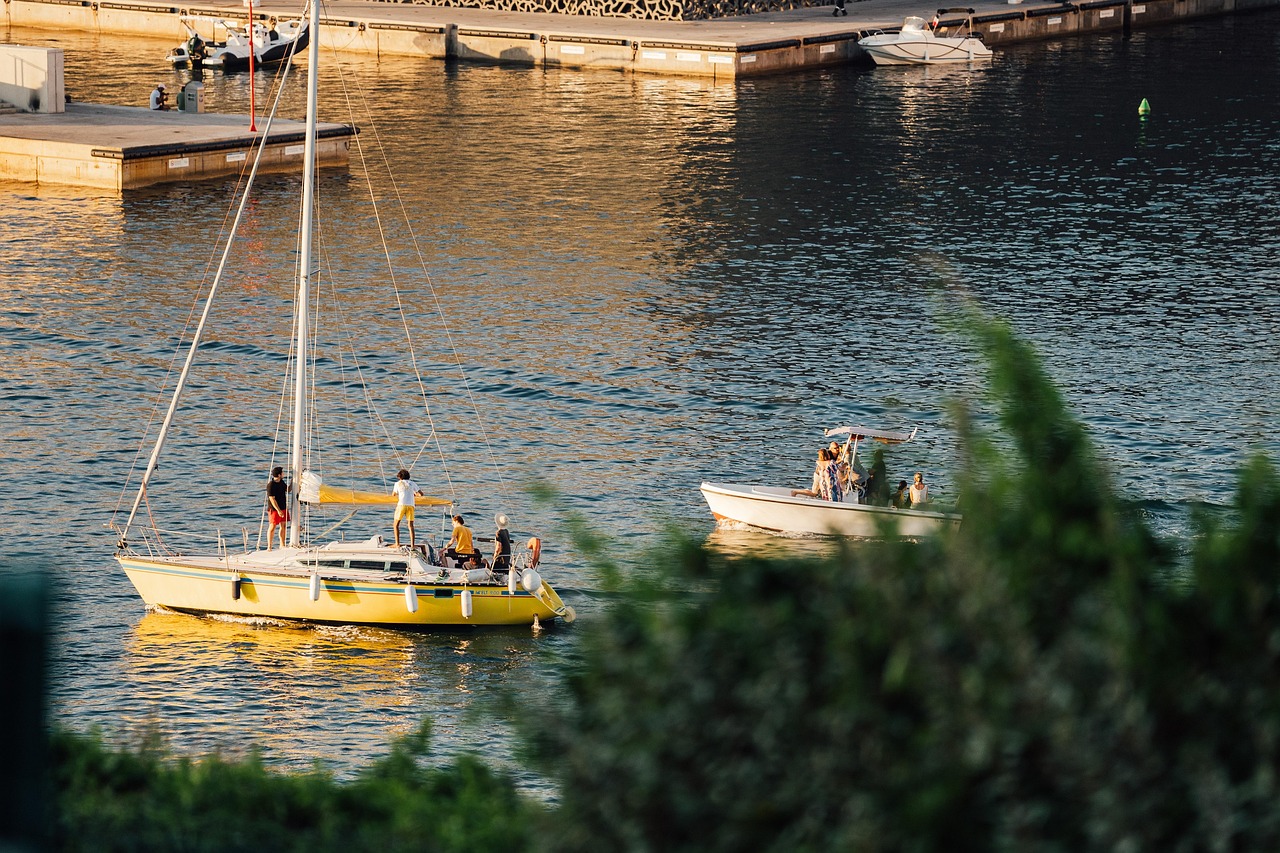
Marseille at a glance the high-end traveller’s first day with boats in the Old Port
Hotels in Marseille and where to base yourself near the Vieux Port
Where you stay quietly shapes everything—how early you’ll walk, how late you’ll dine, and how Seamless the in-between moments feel. For first-timers, hotels in Marseille around the Vieux Port are the polished choice: you’re next to the waterfront, within minutes of museums, and perfectly placed for a morning promenade. If you want character and a little creative buzz, choose a boutique stay in Le Panier—a more layered neighbourhood where you’ll hear locals greeting one another before you’ve finished your first coffee.
Marseille is home to influences from North Africa to Italy and Corsica, and you’ll feel that blend instantly—on menus, in markets, and in the Local welcome. It’s a city that asks you to arrive with curiosity, then gives you back warmth in return.
Old Port orientation and getting around with Confidence
Begin with an orientation loop around the Old Port—Marseille’s gentle way of saying “you’re here”. You’ll see working boats alongside luxury yachts, hear rigging click in the breeze, and find a place to stroll that makes you feel grounded before the day unfolds. Aim for an early wander: the light is softer, the waterfront feels calmer, and the city’s tempo becomes easier to read.
For transport, keep it simple and supportive. A private transfer is ideal if you’re arriving late or travelling with luggage; taxis work well for short hops. The metro lines are efficient for quick connections—particularly around hubs like Castellane—and a bus can be surprisingly scenic when you’re moving along the coast. The city’s buses and trams are useful for short routes, and a single tram ride can be a relaxed way to watch neighbourhoods shift from classic to contemporary.
- Start point: coffee on a waterfront terrace by the Vieux Port, then a slow loop around the harbour.
- Transport choice: taxi for hills and heels; metro for speed; bus for coastal views.
- Style note: keep plans crafted, but allow a little unplanned time for galleries, markets, and pauses.
If you’re planning a longer escape beyond the city, keep inspiration bookmarked via our Trip gallery—a gentle way to create a wider South-of-France storyline without overloading your first day.
Vieux Port to Notre-Dame de la Garde views are worth a visit for things to do in Marseille
A classic thing to do in Marseille, the Vieux-Port Notre-Dame-de-la-Garde day begins at the Vieux-Port, while the city is still stretching out. Come early enough to beat the busiest arrivals—especially when cruise ships are in—and you’ll find a quieter waterfront that feels more Local than performative. From here, Marseille’s energy makes sense: fishing boats, espresso cups, and polished decks sharing the same horizon.
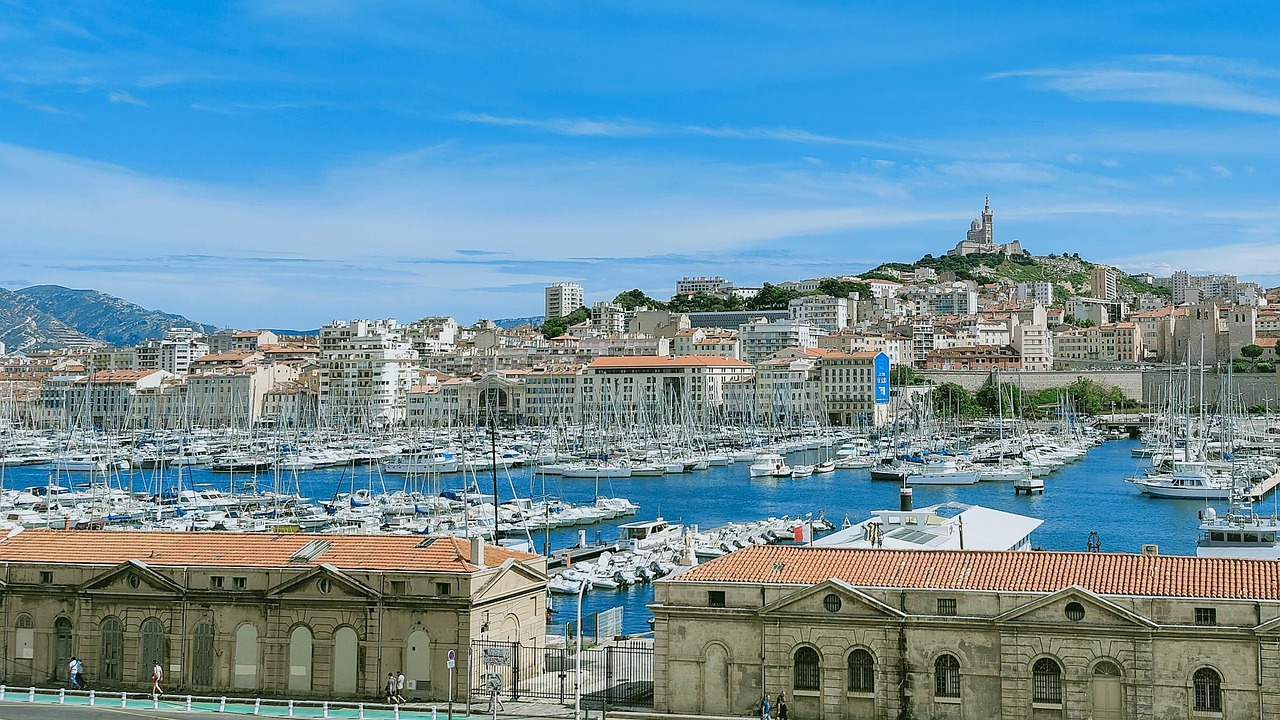
Vieux Port to Notre-Dame de la Garde views worth a visit above Marseille
Notre-Dame de la Garde and La Bonne Mère without the stress
The ascent to Notre-Dame de la Garde (known tenderly as La Bonne Mère) is part of the theatre, but it needn’t be strenuous. Take a taxi for a smooth, elegant ride, or hop on the bus if you’re happy to move as the locals do. If you want something gently nostalgic, the tourist train adds a touch of holiday ease—particularly nice if you’d rather keep your shoes for the dinner plans ahead.
At the basilica, pause before you lift your phone. This is the one moment that earns your attention in full: panoramic views that hold the coastline, rooftops, and the Mediterranean in one sweep. Choose one still point, breathe, and let it land—this is your single “views of the city” moment that will quietly shape the rest of your Marseille memory. The church itself is often free to enter, and that small generosity feels very Marseille.
Marseille’s old port romance and a sunset story
Later, return to Marseille’s old port as evening approaches. One high-end traveller told us their most unforgettable memory wasn’t a monument—it was a sunset cruise departing from Vieux-Port. Champagne in hand, a Crafted soundtrack low enough to hear the water, they sailed past coastal cliffs and slipped into twilight near secluded coves. Marseille doesn’t insist; it invites, and that is its quiet power.
For cultural texture as you drift back into the city, look towards the harbour’s fortress presence. Fort Saint-Jean and its neighbouring defences were shaped by royal force—Louis XIV left his mark here—yet today they frame Marseille with a softer beauty. And if you love literary romance, the offshore château and the chateau d’if connect to the Count of Monte Cristo, adding just enough myth to make the sea feel like a story.
Le Panier and the art of a gourmet Marseille afternoon
For le panier marseille france seafood bouillabaisse dining, the best approach is to uncover the neighbourhood slowly, letting the lanes do what they do best—surprise you. Le Panier is Marseille’s old soul: colonial architecture, linen-draped balconies, and tiny squares where conversations spill outward. It’s ideal when you want to explore with warmth and ease rather than ticking off sights.
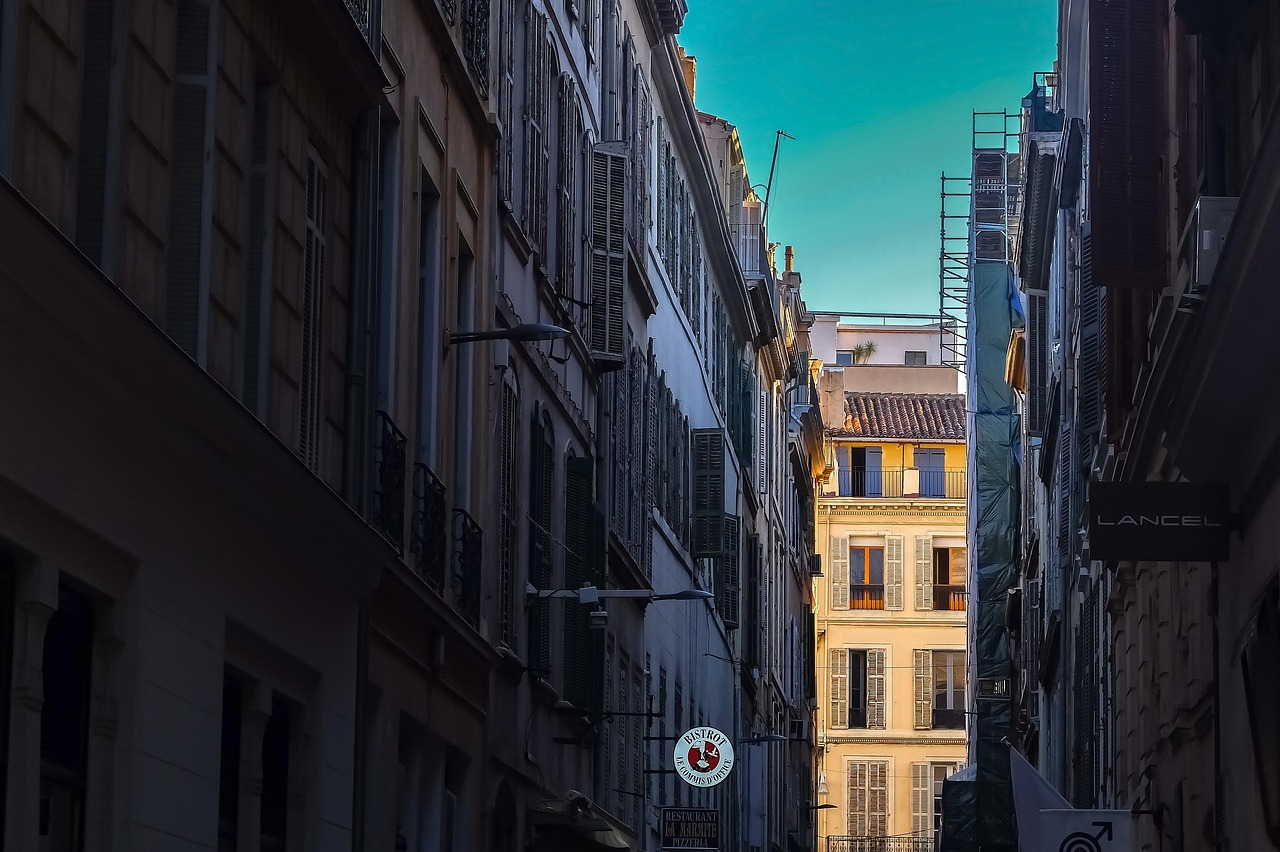
Le Panier and the art of a gourmet Marseille afternoon among artisan streets
Visiting Marseille through artisans and La Vieille Charité
Anchor your wander around La Vieille Charité, where the pace naturally quietens. An art lover once shared how they found hidden galleries tucked behind unassuming doors—places where Local makers welcomed genuine interest. The simplest etiquette opens everything: step inside with a smile, offer a soft “Bonjour”, and ask before photographing. That small Care creates a connection, and you’ll often leave not just with an object, but with Insight into Marseille’s artistic revival.
Le Panier is also where you can feel the city’s layered identity without explanation. You’ll sense how Marseille life is shaped by arrivals and departures, and how creativity becomes a kind of daily language.
Bouillabaisse, Michelin seafood, and a harbour-view moment
Marseille’s seafood culture is both heritage and reinvention. Traditional bouillabaisse is more than a dish—it’s a ritual of broth, rouille, and fish that tastes of the Mediterranean. But the city also excels at modern tasting menus, where chefs create something new from old waters. One couple described a gourmet seafood experience at a Michelin-starred dining room overlooking the harbour: familiar flavours refined, with a glass of chilled white arriving exactly when the sun hit the waterline.
For a richer narrative in one afternoon, let the neighbourhoods contrast each other. Noailles and the marché de Noailles (also known as marché des Capucins) bring spice, fruit, and everyday energy—an aromatic reminder of Marseille’s links with North Africa. Then drift to Cours Julien for cafés and creative life; this is Marseille for street art, where murals change like playlists, and the street art feels like a public conversation.
- Lunch strategy: book your bouillabaisse or seafood tasting in advance during peak season.
- Neighbourhood pairing: Le Panier for artisan calm, Noailles for market colour, Cours Julien for cafés and restaurants.
- Seamless finish: return via a slow terrace aperitif route towards the Old Port.
If you’re choosing where to dine, reserve early from June to September. The most sought-after tables—especially those with a harbour view—fill quickly, and a little Expert planning keeps the evening feeling effortless.
Calanques National Park: yacht and hike in the South of France
The phrase Calanques National Park private yacht tour from Marseille ” may read like an itinerary line, but in real life, it feels like exhale. The calanques are one of the best things Marseille offers high-end travellers who want beauty with breathing space: dramatic limestone cliffs, a hidden inlet of turquoise calm, and the bright clarity of the Mediterranean coast. You’re still close to the city, yet it feels a world away.
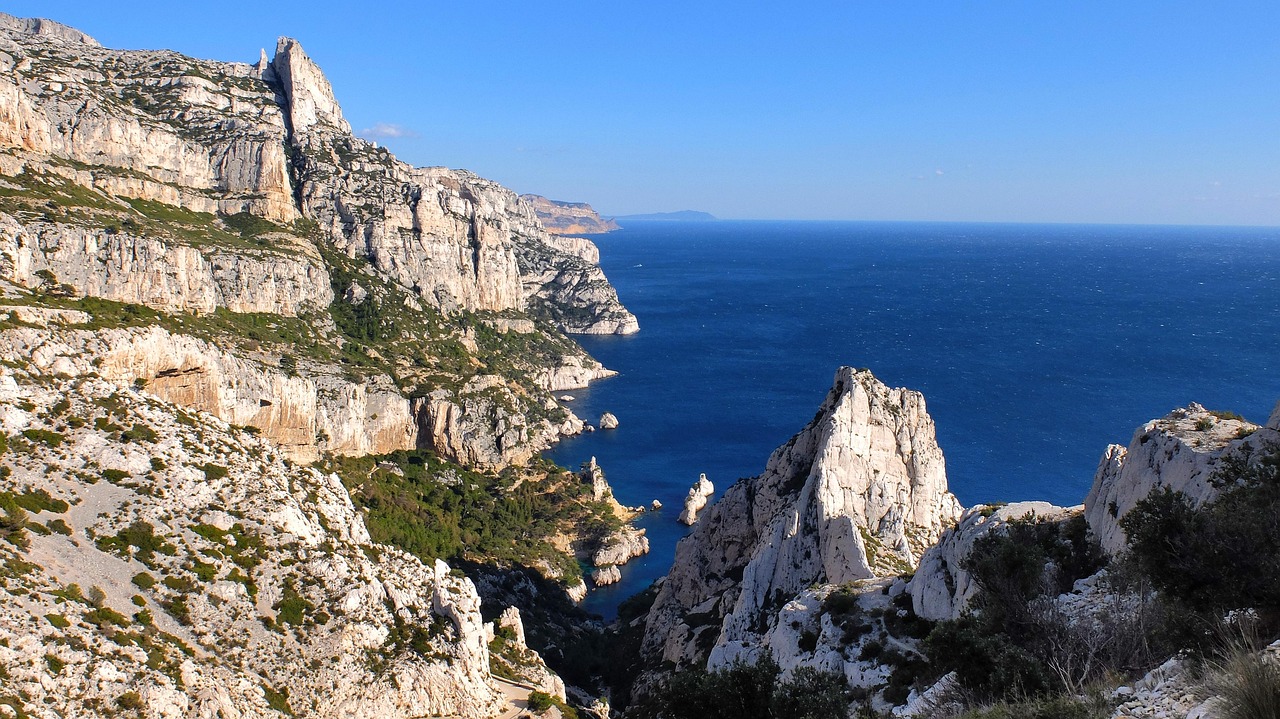
Calanques National Park yacht and hike in South of France light near Marseille
Private yacht tour around the Vieux Port with Crafted luxury
A private yacht day usually begins around the Vieux Port, where your crew can tailor timing and route to sea conditions and your mood. “Luxury” here isn’t just the boat—it’s the flexibility: unhurried departures, refreshments that suit you, and quiet coves chosen to match the light. In high season (June to September), book in advance to secure the best vessels and departure windows.
As you glide along the Mediterranean coast, Marseille’s edges soften into cliffs and pine. The calanque scenery feels sculpted—white rock against saturated blue—yet it’s also deeply fragile, which is why gentle travel matters.
Visit the Calanques on foot for solitude with Support
Not every luxury experience is glossy; sometimes it’s space. A solo traveller once described hiking to visit the calanques for solace—choosing a safer, well-marked trail and carrying plenty of water so the day felt supportive rather than strenuous. If you want that same calm Confidence, start early, avoid the hottest midday hours, and keep your pace honest.
For variety, consider an extension to Cassis, a charming fishing village that feels like a softer postcard of Provence. You could take a half-day in Cassis for harbour strolls and a long lunch, then return by boat for a gentler finish. Back nearer Marseille, small pockets like Vallon des Auffes offer a quieter shoreline mood—just keep voices low and respect residents in this small fishing village-like enclave.
Travel responsibly: stay on paths, take litter with you, and keep noise down near inlets where swimmers and kayaks share the water. Care is part of what makes the day truly high-end—because it protects what you came to discover.
MuCEM and travel tips for a seamless Marseille design for travel tips
For travel tips on visiting the Marseille MuCEM in Marseille, France, the goal is to build a day that feels cultured, comfortable, and delightfully flexible. Start with a modern icon: MuCEM, the Museum of European and Mediterranean Civilisations, where contemporary architecture and sea air mingle in a way that feels unmistakably Marseille. Pair it with Fort Saint-Jean on the same afternoon so the story flows—from exhibition rooms to open-air ramparts—without unnecessary backtracking.

MuCEM and travel tips for a seamless Marseille design by the waterfront
Exhibition pacing and a museum alternative for a deeper context
Choose one exhibition you’ll genuinely enjoy rather than trying to see everything. That single decision keeps the afternoon calm and intentional—and leaves room for a terrace drink with the sea in view. For deeper context, the Marseille history museum adds grounding detail: a clear line through centuries that supports the idea of Marseille as France’s oldest city, and indeed the oldest city in France by many accounts.
This is where the city’s layers come into focus: not just a backdrop, but a living, evolving place with deep roots and constant reinvention.
Travel tips for luxury comfort and logistics that feel Seamless
These travel tips help you move with ease. Visit in late spring or early autumn for the best balance of weather and lighter crowds. Budget thoughtfully: upscale dining and private experiences can be pricey, but the quality is exceptional when planned with Expert guidance. Many top sights—such as Notre-Dame—offer free entry, which helps balance out splurge moments like yacht charters and tasting menus.
- Arrivals: Marseille Provence Airport offers direct international options; pre-book a chauffeur if you want door-to-door calm.
- Connections: the Saint-Charles train station is convenient for onward travel, including routes to Avignon.
- Getting around: a chauffeured car beats public transport for dinner reservations, but buses can be lovely for short scenic hops.
- Etiquette and safety: greet shopkeepers with “Bonjour”, and stay alert for pickpocketing in crowded areas—Marseille is generally safe with sensible Awareness.
If you’d like to keep your days light but elevated, lean on concierge Support for restaurant bookings and drivers. That’s how a trip to the Marseille waterfront becomes Seamless: not by doing more, but by being looked after together, so you can stay present for the moments that matter.
F.A.Qs
Is Marseille, France, worth visiting?
Yes—Marseille is worth visiting if you enjoy cities with character, sea air, and layered culture. It rewards travellers who balance curated plans with unhurried time, especially around the Old Port, Le Panier, and the Calanques. With sensible awareness in crowded areas and a little etiquette (a simple “Bonjour”), it feels welcoming and memorable.
What is Marseille, France, best known for?
Marseille is best known for its historic port, the Vieux-Port waterfront, and its Mediterranean identity, shaped by many cultures. It’s also celebrated for Notre-Dame de la Garde’s views, seafood traditions like bouillabaisse, and access to the Calanques’ dramatic limestone coves—experiences that combine nature, design, and atmosphere.
What is the number one thing to see in Marseille, France?
For many visitors, the number one sight is Notre-Dame de la Garde. The basilica sits high above the city and delivers panoramic views across Marseille and the Mediterranean coast. It’s an easy, uplifting visit by taxi or bus, and it captures Marseille’s spirit—proud, protective, and deeply connected to the sea.
What to do in a day in Marseille?
In one day, start with a morning stroll at the Vieux Port, then head up to Notre-Dame de la Garde for the view. Spend the afternoon in Le Panier for artisan boutiques and seafood, and finish with a waterfront aperitif or a sunset cruise. If you have extra time, consider a short boat or yacht outing towards the Calanques.
And when you think back on Marseille, you may find it isn’t a checklist at all, but a feeling—the Mediterranean light, the easy human warmth, and a calm Confidence that comes from a journey designed with Trust. Perhaps one day you’ll return, not to chase countless things, but to uncover what a different season quietly reveals.
After Marseille, what stays with you
There are cities you admire, and cities that quietly change the way you notice the world. In the days after leaving Marseille, it’s often the smallest details that return first: the salt on your skin after the sea, the low afternoon light on pale stone, and the soft chorus of “Bonjour” exchanged as if it were a form of kindness. Marseille doesn’t ask you to perform your holiday; it holds you gently and gives you room to be both exhilarated and at ease.
A high-end journey here is built from Personal moments rather than spectacle. Champagne at dusk as the shoreline darkens; a studio visit in Le Panier where an artist speaks with pride about their work; the hush of the calanques when you find a quiet corner of water and the city feels a long way off. These are the memories that create meaning—not because they’re loud, but because they’re true.
Marseille’s blend of cultures can feel like a lesson in belonging: different histories sharing the same streets, the same harbour, the same bright air. With a little Care—choosing respectful language, moving thoughtfully, trusting Local expertise—you’ll find the city meets you warmly, and that warmth tends to last.