How Far Is Japan From South Korea? Distance Map, Closest Route, and Geography
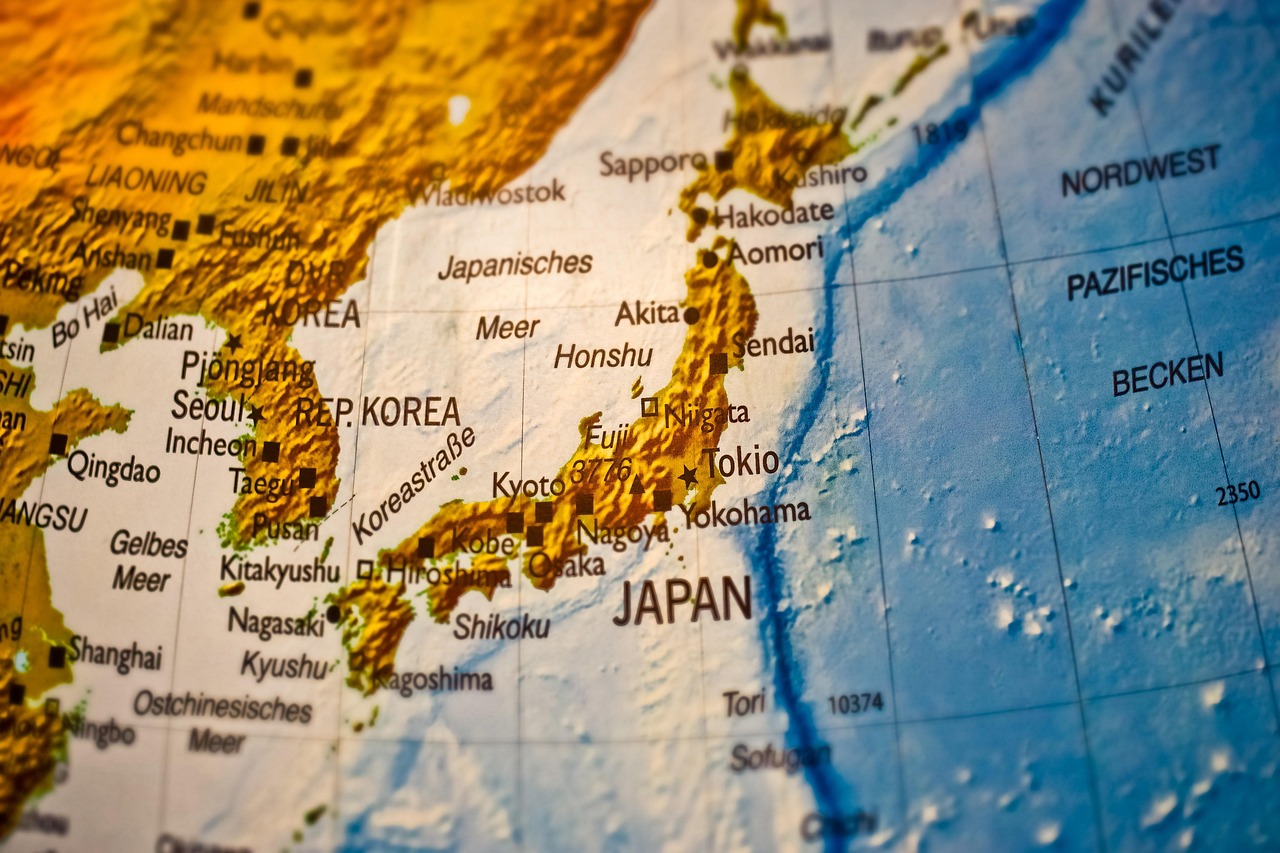
Japan and South Korea distance map: how far is Japan from South Korea at a glance
When you’re asking how far Japan is from South Korea, it helps to view a map with a calm, traveller-first mindset and focus on the destination points you’ll actually use. The closest locations sit across the Korea Strait, where the sea feels like a gentle line of separation rather than a barrier. In practice, the distance is very workable—making south korea and japan easy to pair in one well-designed trip.
As the crow flies, the straight line distance between the nearest shores is approximately 200–300 kilometres (200–300 km), or about 125–185 miles. For more precise planning, the great-circle distance is the standard metric used by aviation systems to calculate routes. That’s why a map can look deceptively short, while real schedules vary a little with wind and air-traffic flow.
Widen the frame, and you’ll see the wider area context: Japan sits to the east of the Korean Peninsula, while China lies to the west across the Yellow Sea. This perspective helps you compare gateways without overwhelm—especially if your itinerary includes more than one city and you want to track travel mileage realistically.
And if “far away” is your worry, here’s the reassuring insight: for luxury travellers, this is one of the world’s most efficient two-destination combinations, with frequent international transportation options and minimal time cost.
Seoul to Tokyo Flight Time: Direct Flights, Airports, and Distance From Tokyo
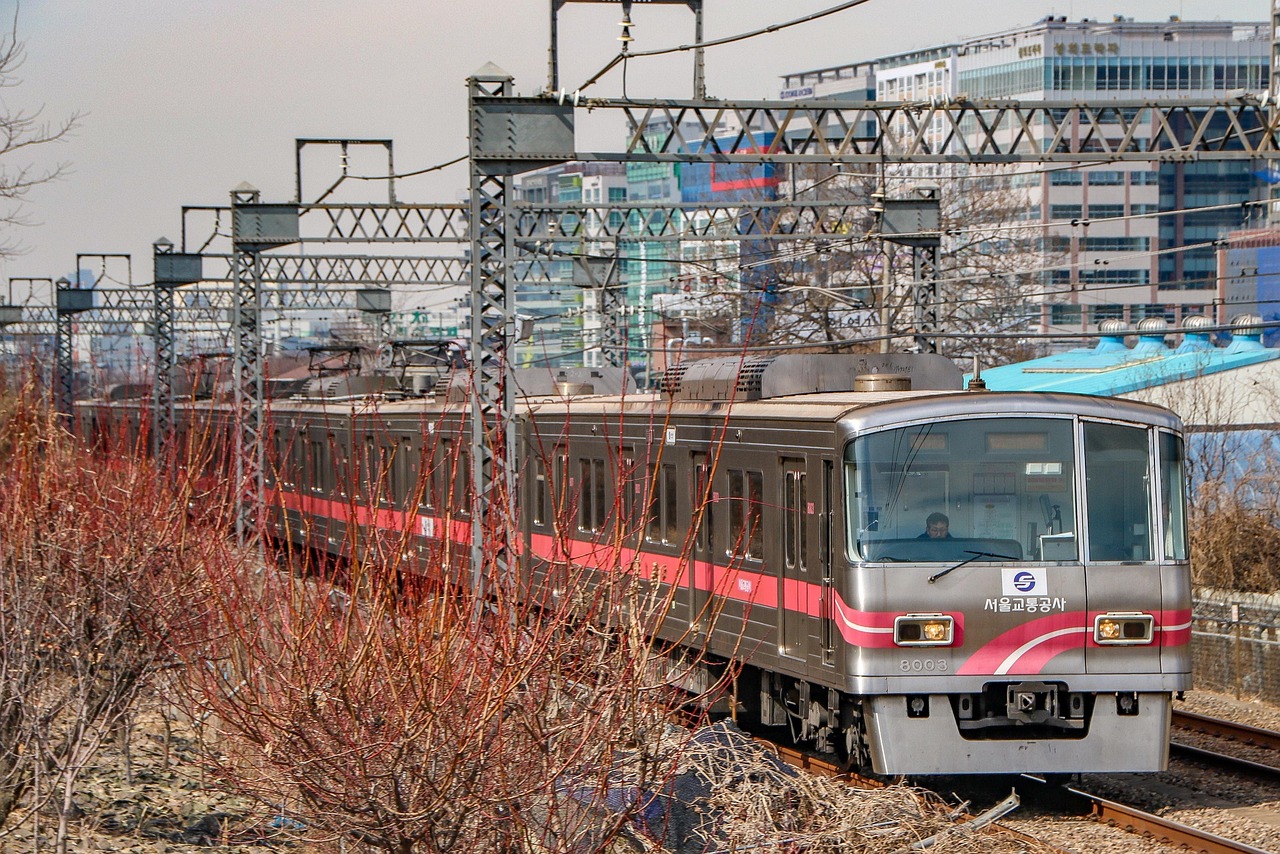
Seoul to Tokyo flight time: direct options and distance from Tokyo planning
If you’re comparing Seoul to Tokyo flight time, the key is separating gate-to-gate time from door-to-door reality. The flight time is often about 2h in the aeroplane, and the average door-to-door window can feel like 5–7h once you add pickup location, the airport, security, and boarding. With the right support—private transfers, fast-track where available, and lounge access—you can arrive feeling composed rather than rushed.
Direct flights, airline schedules, and airport choices to fly in comfort
Direct options typically connect Seoul’s Incheon (and sometimes Gimpo) with Tokyo’s Haneda or Narita, and you can also find easy timings throughout the week. For premium travel, “direct” matters: it reduces connection stress, protects your rest, and keeps your buffer intact if you’re managing meetings or a tight trip plan. The speed and operational range of modern aircraft can slightly affect schedule padding, even on short sectors.
Distance from Tokyo to Seoul: km, miles, and smarter gateway comparisons
The distance from Tokyo to Seoul is roughly 1,150 km (around 715 miles)—a useful benchmark if you’re planning Japan to Seoul or the reverse. Travellers sometimes ask, “How far is it from Tokyo to other Japanese gateways?” The distance between Tokyo and Fukuoka is about 880–900 km, which can affect whether you fly into southern Japan after South Korea. A solo traveller once told us that the warm local hospitality felt consistent on both sides—helpful hands at a Seoul café, then gentle guidance from staff in Japan—proof that logistics can be handled with trust, not tension.
Busan to Fukuoka High-Speed Ferry: Korea Strait Route for a South Korea to Japan Trip
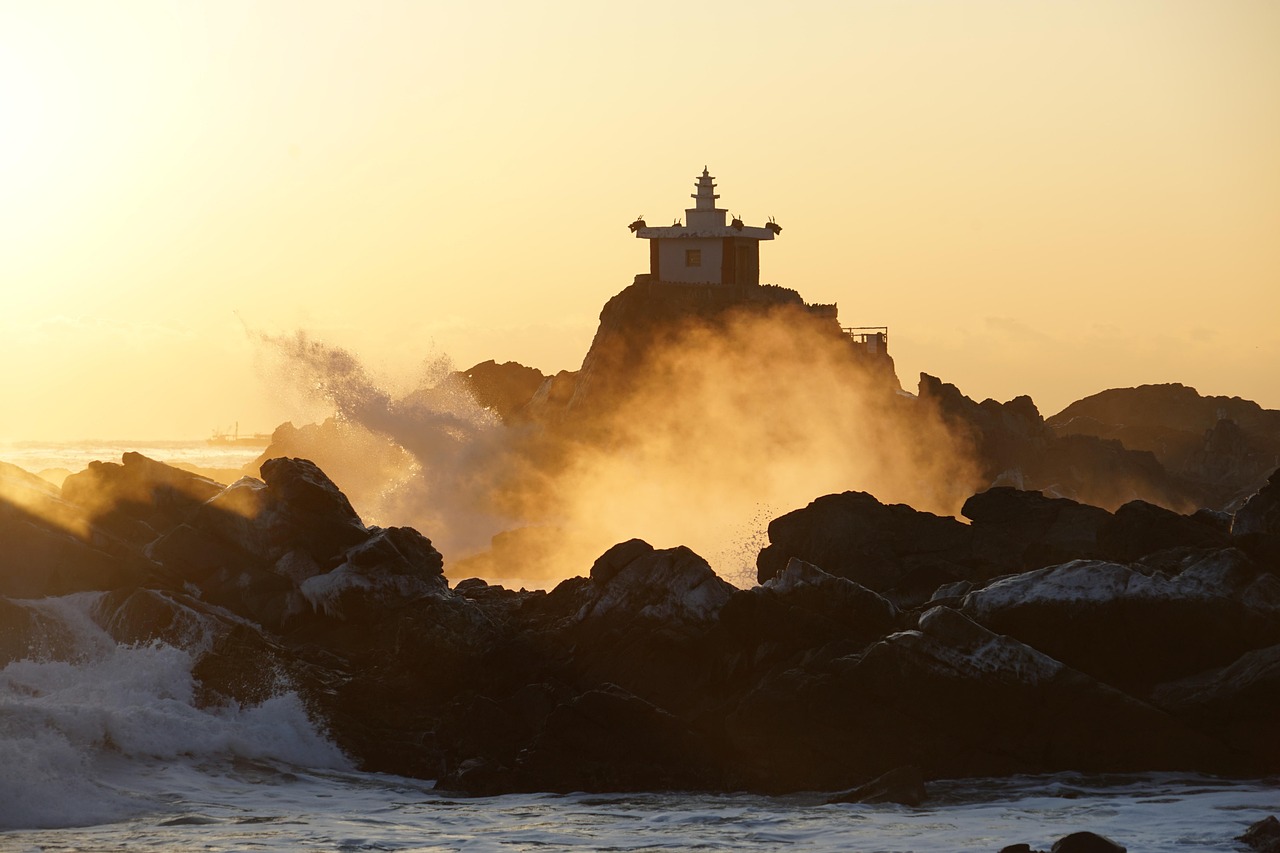
Busan to Fukuoka high-speed ferry: a scenic Korea Strait crossing
The Busan to Fukuoka high-speed ferry is one of the most elegant ways to cross the Korea Strait—part transportation, part scenic cruise. You’ll watch the horizon open, sea light shifting as the ferry gains speed, and it becomes clear why this route feels like a natural bridge between Japan and South Korea. For many travellers, this is the closest-feeling crossing because the transition is smooth and visual, not just a terminal-to-terminal jump.
Services operate multiple times a day (season- and operator-dependent), with seating classes ranging from standard to more spacious, quiet-zone comfort. Prices commonly range from about $50 to $150, depending on class, timing, and demand—so it’s wise to book early for spring and autumn travel.
A luxury traveller once shared how the ferry created an effortless cultural transition: Busan’s energy at the terminal, then a calm cabin, and a smooth arrival into Fukuoka without the compressed pace of airports. Luggage handling is straightforward, and the check-in flow is usually clear—arrive early and let the system work for you on this short international route over water, not land.
To create a designer-feeling crossing, pack with intention:
- A light layer (cabins can feel cool) and noise-cancelling headphones for quiet comfort
- Your passport and a pen in an easy-access pocket for international forms
- A small snack and water, plus skincare for a fresh arrival
Explore Seoul, South Korea: Gyeongbokgung Palace, Markets, and Local Style
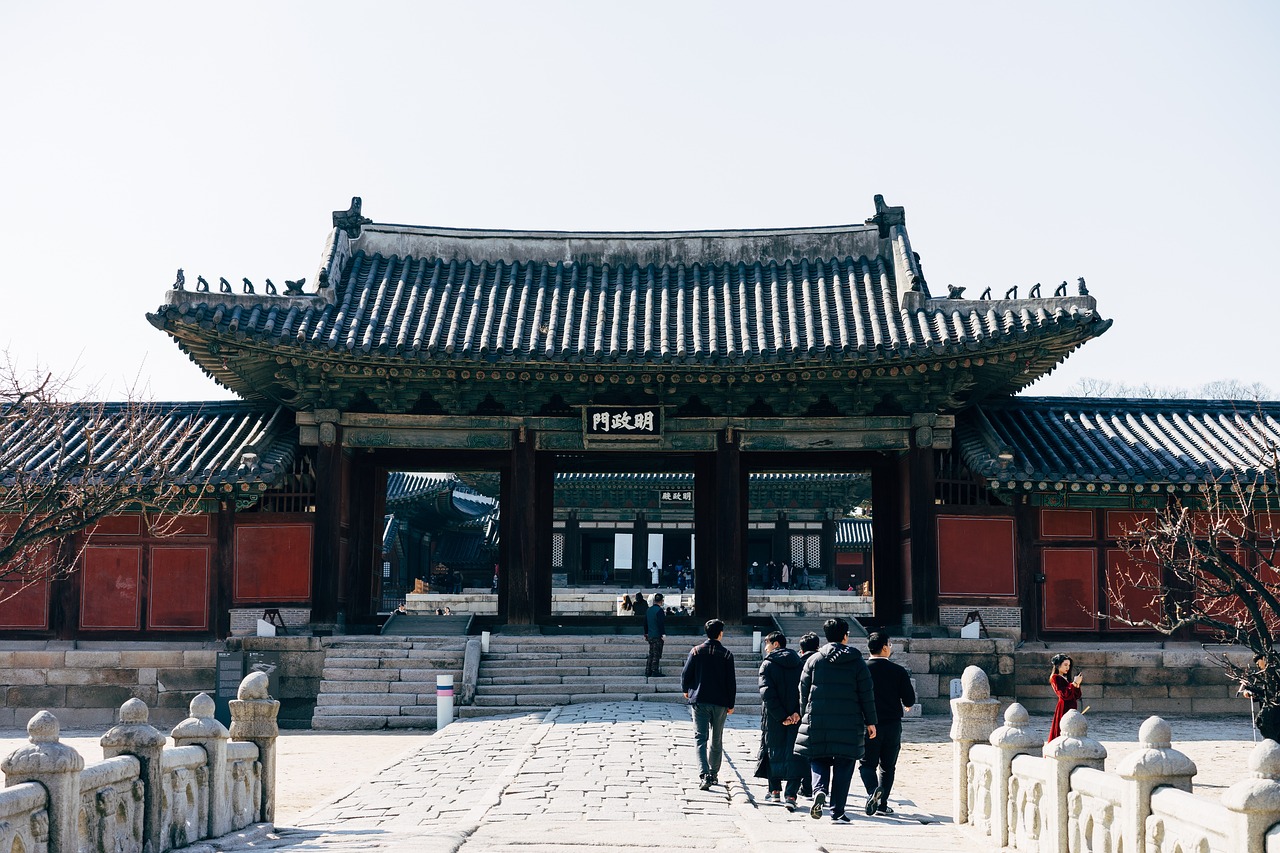
Explore Seoul: Gyeongbokgung, local markets, and design-led luxury
For high-end travellers, exploring Seoul is really about balance—modern style and deep heritage, curated with ease. Seoul is the modern heartbeat of the country: fashion districts, galleries, and design hotels that help you travel with confidence while keeping the pace beautifully controlled. It’s a city where a well-placed reservation can make the whole day feel effortless.
Gyeongbokgung Palace: expert timing, quiet corners, and the Korean story
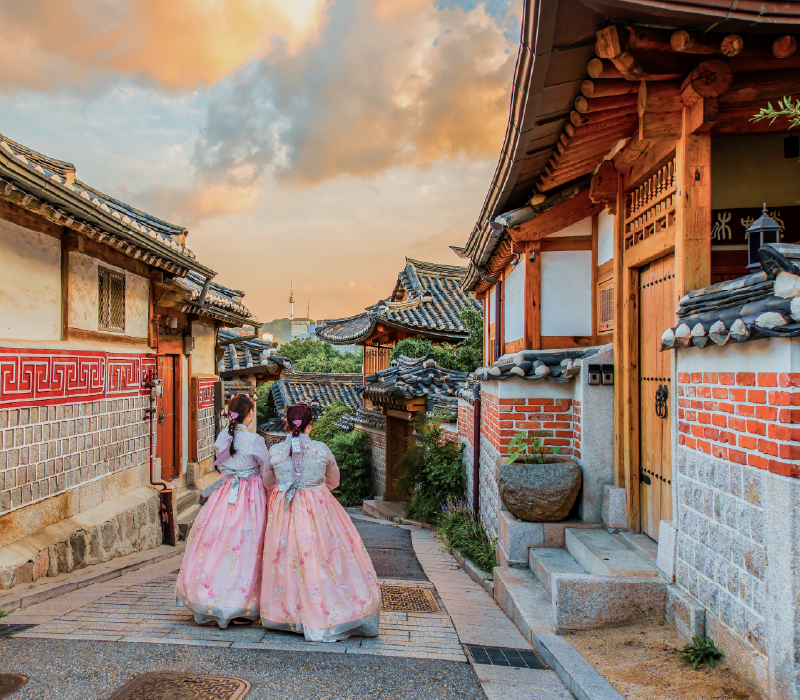
At Gyeongbokgung Palace, the architecture reads as disciplined and spacious—rooflines, gates, and courtyards designed for ceremony and authority. Time your visit around guard-changing moments, then uncover calmer spaces by drifting slightly away from the main axis; the atmosphere softens as crowds disperse. A couple we know compared palaces across Japan and South Korea and felt a surprising connection—shared histories, yet different design languages in proportion, colour, and ritual movement.
Local etiquette, private guiding, and a smoother travel rhythm
Small etiquette details build trust: a respectful greeting, a measured volume in quieter areas, and mindful language when asking for help. A private guide can offer local insight without rushing you, and can design micro-moments—like a photo stop with perfect light—rather than pushing a checklist. If you’d like inspiration for crafted itineraries, start with our Trip gallery and imagine how Seoul can be shaped around your personal rhythm.
Kyoto and Nara After Seoul, Japan: UNESCO Calm and a Japan and Seoul Itinerary
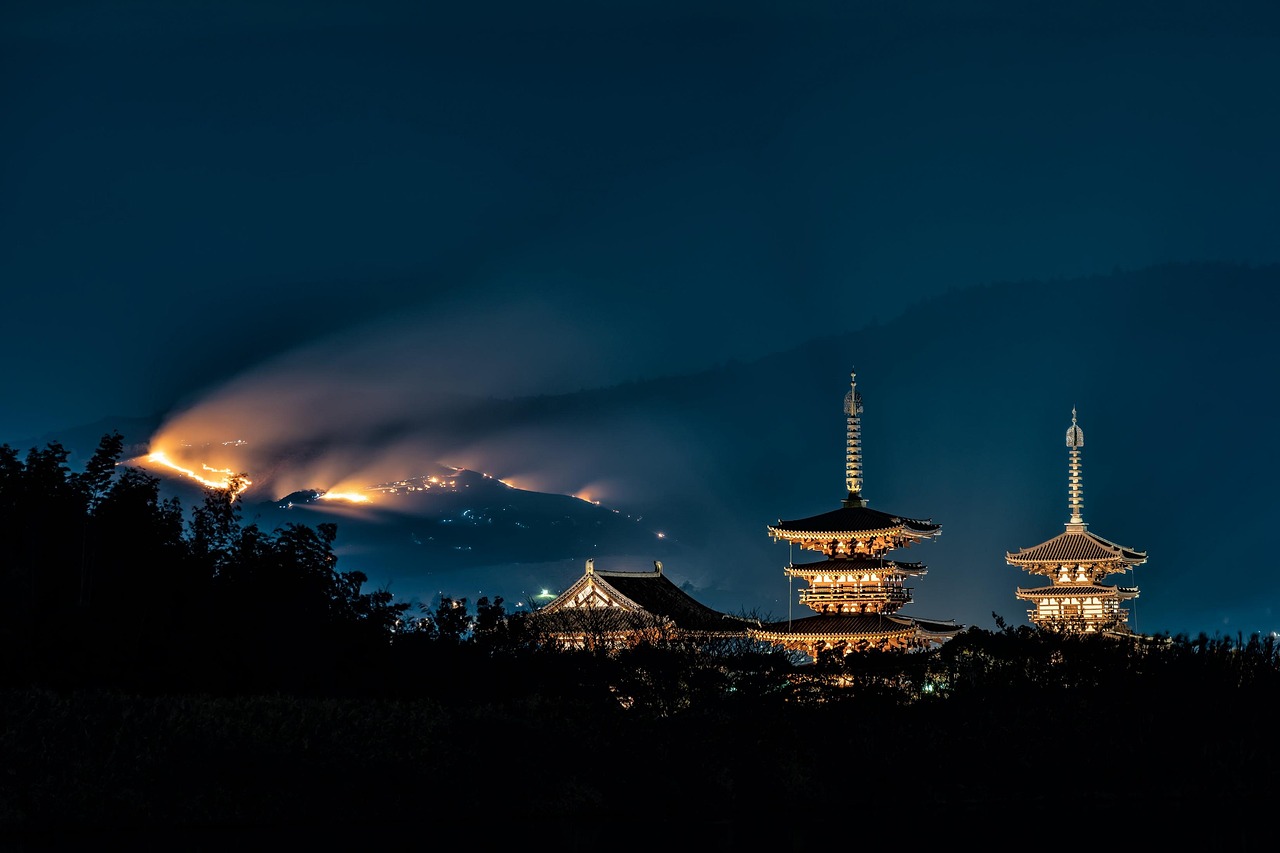
Kyoto and Nara after Seoul: UNESCO calm for a Japan and Seoul itinerary
When travellers search for Kyoto UNESCO sites after Seoul, they’re often craving a gentle pace shift. After Seoul’s polished momentum, Kyoto’s UNESCO World Heritage sites feel like a quiet exhale—gardens, wooden temples, and a reverence for craft that complements palace culture rather than competing with it. This contrast is one of the reasons Japan and Seoul pair so well in a single, curated route.
One privileged moment stays with us: after a Korean traditional music concert in Seoul, we later wandered through illuminated temples in Nara. The light was soft, the paths felt safe and serene, and the distance between those nights—two places held together—felt surprisingly small.
How to use a calculator approach for trip calculations (without overpacking days)
To avoid overpacking days, use a simple calculator approach for trip calculations: hotel check-out + transfer + station time + train + check-in window. As a quick formula, add 30 minutes of buffer at each handover; that one small calculation protects calm and gives you room to discover rather than dash.
If you’re mapping out segments, you can use travelmath to estimate timings and get the distance between major points—useful if you want to get the distance in advance and calculate options quickly—but always compare against real timetables. And remember: there is no true driving distance between Japan and South Korea across open water, so your route will be ferry or flight, planned for comfort.
Food Journey: Korean BBQ to Kaiseki and Sushi Across South Korea and Japan
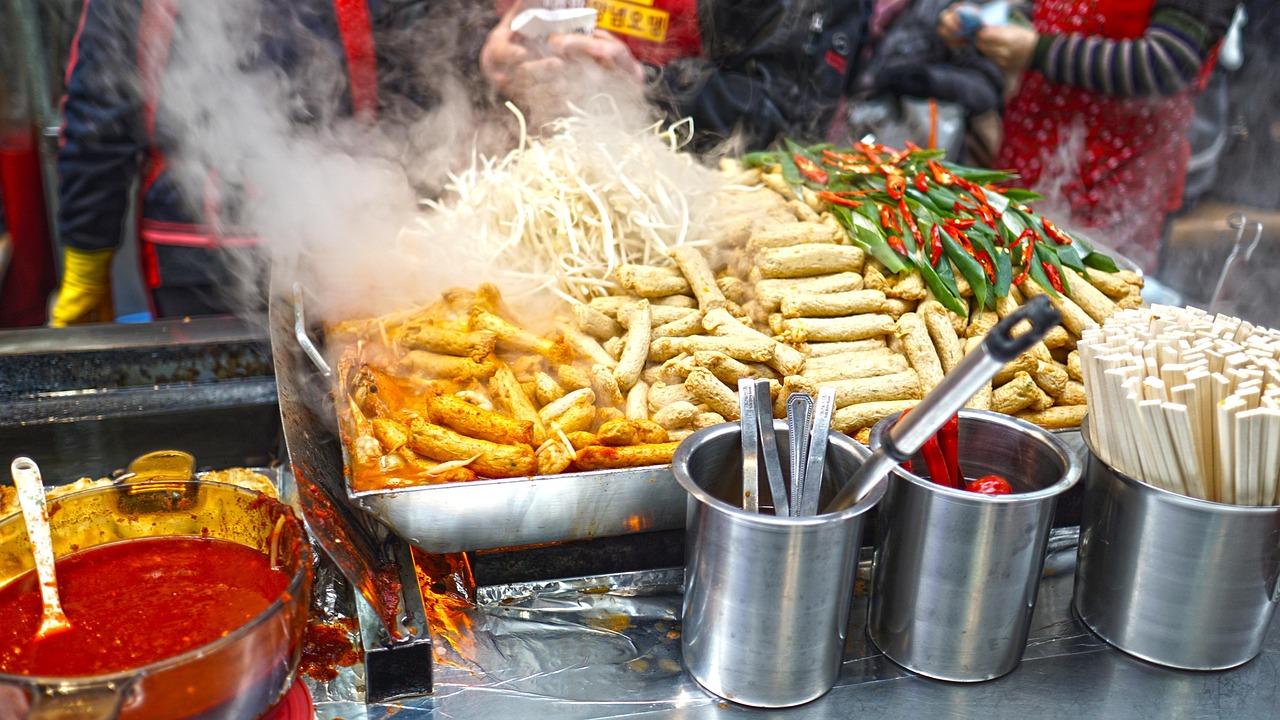
Food journey: Korean BBQ, kaiseki, and sushi across South Korea and Japan
The phrase “South Korea and Japan luxury food” sounds like a dream because it is—if you plan carefully. In South Korea, Korean BBQ can be both convivial and refined: premium cuts, attentive service, and the joy of building flavours together. Then, in Japan, kaiseki dining becomes an edible season—each course a crafted expression of place and time —followed by sushi, where restraint is the luxury.
Use concierge support for crafted reservations and better pacing
For high-end travel, let your hotel concierge secure counters and seasonal menus that are hard to book independently. This is where support becomes part of the experience: dietary notes handled discreetly, appropriate seating, and pacing that feels personal rather than performative. It’s an easy way to compare restaurants by style and mood, not just ratings.
In a local market, a solo traveller once described small conversations that made the trip feel intimate—an extra slice offered with a smile, a vendor explaining a sauce with patient warmth. These are the moments that build confidence, even in a bustling city.
A light budget calculation to keep dining balanced:
- Street food and casual lunches: often £8–£20 per person
- Quality Korean BBQ dinner: roughly £35–£90+ per person (depending on cuts)
- Kaiseki or top sushi: commonly £120–£300+ per person (season and prestige)
If you estimate a mix across the route, you’ll protect space for the special nights without overspending on every meal.
Beppu Hot Springs and Haeundae Beach: A Restorative Reset Between Busan and Japan
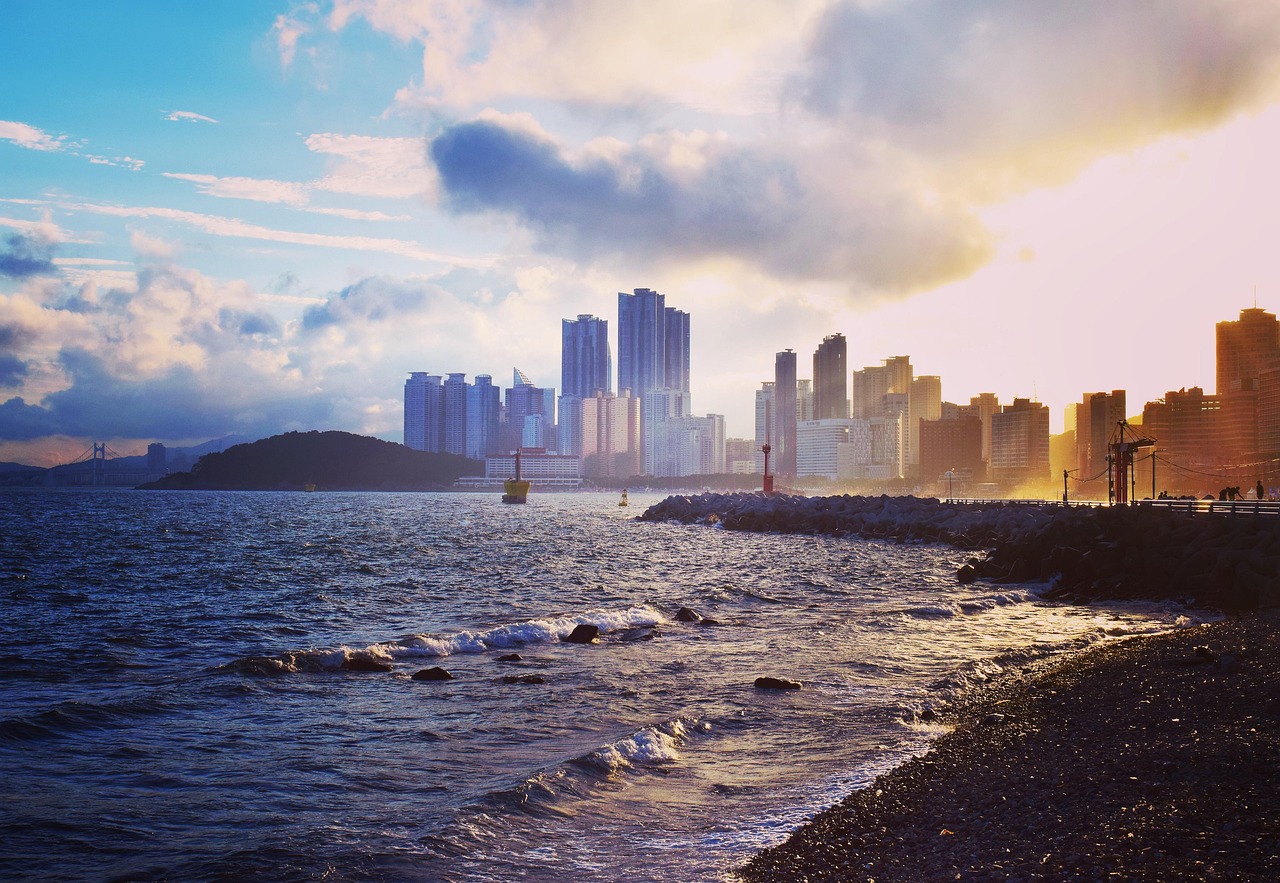
Beppu onsen and Busan’s Haeundae Beach: a restorative reset
If your search is Busan Haeundae Beach to Beppu onsen, you’re likely designing a restorative arc—ocean to hot springs, energy to stillness. Busan’s Haeundae Beach offers an easy reset within South Korea: salt air, long walks, and ocean-view suites that make a city break feel spacious. Then Japan meets you with Beppu’s onsen culture, where wellness is ritualised and deeply calming.
Wellness etiquette and onsen norms that keep you comfortable
In Japan, onsen bathing norms matter: wash thoroughly before entering, keep towels out of the water, and move quietly to respect the shared space. In South Korea, beach culture is relaxed but courteous—keep belongings close in busy spots and follow local guidance for swimming areas.
For a luxury rhythm, plan a slower morning after travel days: spa time, late breakfast, and a gentle return to the itinerary. If you want the closest, least-friction feeling connection for relaxation-focused travellers, southern links (ferry to Fukuoka, then onward) often make the distance feel measured in comfort, not effort.
F.A.Qs: How Far Is Japan From South Korea for Flights, Ferry, and Planning
How many hours is it from Korea to Japan?
It depends on your route and departure city. A direct flight is often around 60–120 minutes in the air, while door-to-door can be longer once you add airport processes and transfers. By high-speed ferry (commonly Busan to Fukuoka), crossings are typically a few hours plus check-in and arrival procedures.
How long is a plane ride from Japan to Korea?
A plane from Japan to South Korea is usually short: many direct routes take roughly 60–120 minutes in the air, depending on the city pair and winds. Always allow extra time for transfers, security, and boarding so you arrive relaxed.
How far is Korea from Japan by flight?
By flight, the distance varies by departure and arrival locations. The shortest routes between southern South Korea and western Japan can be only a few hundred kilometres (a few hundred km), while Seoul to Tokyo is over 1,000 km. Airlines base their routing on great-circle distance, which may differ slightly from a simple map view.
Can I travel from Japan to Korea by train?
Not directly. There is no train that runs under the sea between Japan and South Korea, so you can’t complete the journey solely by rail. A common approach is to use rail within each country, then connect across the Korea Strait by ferry or a short flight.
After South Korea and Japan: What Stays With You Beyond the Distance
In the end, reflections on South Korea and Japan are less about the number of km and more about how the space between places changes you. The distance becomes part of the story: a ferry horizon, a bowed greeting, the hush of a temple path—small moments that make two journeys feel beautifully linked. If this article helped you find clarity, let that insight guide your next itinerary choice.
You might remember Seoul’s late-night glow and the quiet confidence of its design-forward streets, then recall how Japan softened the edges with calm rituals and deliberate beauty. There’s no need to judge one against the other; the contrast is the gift, and it lingers long after the return flight.
What stays, too, is the feeling of being cared for—by strangers in markets, by guides who offered insight gently, and by the simple trust that you can move through new places with warmth. And perhaps, when you next glance at a map, you’ll imagine another stretch of sea and sky—waiting to be crossed when curiosity feels ready.