Post Contents
- Pointe du Hoc D-Day 1944 and James Earl Rudder on 6 June 1944
- Visiting Pointe du Hoc, France, practical tips Bayeux Caen tours
- Pointe du Hoc cliff trail
- Pointe du Hoc bunker artillery positions, Atlantic Wall, Germans, Normandy, France
- Pointe du Hoc Ranger Monument, Omaha Beach, Normandy American Cemetery, France
- F.A.Qs
- Final Thoughts
Pointe du Hoc D-Day 1944 and James Earl Rudder on 6 June 1944
Pointe du Hoc D-Day 1944 and James Earl Rudder on 6 June 1944
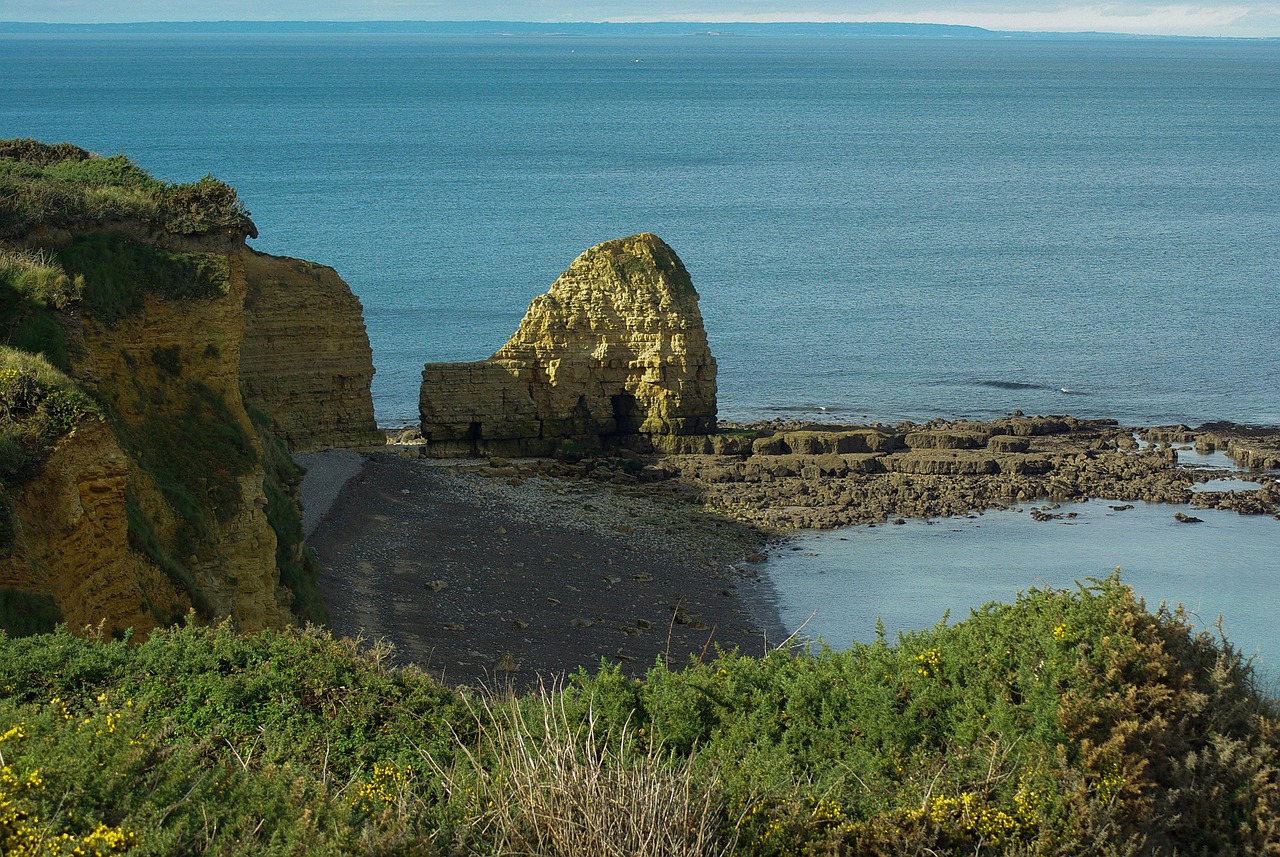
Pointe du Hoc D-Day 1944 James Earl Rudder Army Rangers Normandy France isn’t just a string of search terms—it’s the doorway into a coastline where the Normandy invasion depended on minutes, tides, and nerve. Du Hoc is a high headland set between the landing beaches, positioned like a clenched fist between Utah and Omaha. That geography explains the strategic importance of Pointe du: from here, German batteries could threaten the fragile corridor of the D-Day landings and the flow of reinforcements that had to move along the shore.
To uncover the importance of Pointe du Hoc, imagine the Allied planners looking at a map and seeing a single elevated point that could rake the beach with artillery and disrupt the landing. If the headland remained active, it could have turned the already brutal Omaha sector into something even more catastrophic. For today’s traveller, that same viewpoint becomes a powerful, sobering balcony—one that frames the beaches in Normandy as both landscape and testimony.
Pointe du Hoc on 6 June 1944 and Rudder’s Rangers
On 6 June 1944, an assault by U.S. Rangers was assigned the Rangers as a near-impossible task: climb the cliff, seize the position, and disable the guns. The assault on Pointe du Hoc was led by Lieutenant Colonel James Earl Rudder—often referenced as lieutenant colonel james e and simply James E. in accounts. The unit on D-Day included the 2nd Ranger Battalion (a Ranger battalion whose name still carries a particular weight here), and they approached by landing craft through smoke, swell, and direct enemy fire.
Human detail matters because it keeps this from becoming a cold timeline. The original 225 who set out—225 rangers in all for the assault element—were the faces behind the phrase “boys of Pointe du Hoc”, words that still resonate for families returning together to understand where relatives lived and died. Many visitors tell me the air feels different here: wind that never quite settles, and a silence that arrives abruptly when you step away from the car park and onto cratered earth.
Capture of Pointe du Hoc and what went wrong and right
The capture of Pointe du Hoc hinged on speed, improvisation, and sheer will. Rangers scaled the cliff using ropes and ladders while the rock face shed debris under fire; some lines failed, and some men were forced to start again at the base of the cliff. Yet others reached the top and pushed inland, moving through smoke and shattered turf, looking for the very guns they had come to destroy.
What they hoped to destroy were coastal artillery pieces believed to be positioned to hit the beach and the sea lanes. In a twist that deepens the site’s tension even now, the main guns weren’t sitting neatly in place. The story doesn’t lose meaning because of that—if anything, it gains it, showing how war is shaped by uncertainty. Actions at Pointe du Hoc continued well beyond the first moments, and the Rangers’ fight here later helped end a war by protecting the broader landing corridor. The courage displayed was later awarded a presidential unit citation, but standing on this ground makes the honour feel less like a ceremony and more like a quiet reckoning.
For cultural enthusiasts, this is where Insight lives: an ally effort made real in soil and sea-spray. Cooperation isn’t abstract here; it’s etched into the landscape, and into the way France preserves these places with Trust—so we can learn without turning tragedy into spectacle.
Visiting Pointe du Hoc, France, practical tips Bayeux Caen tours
Visiting Pointe du Hoc France practical tips Bayeux Caen tours
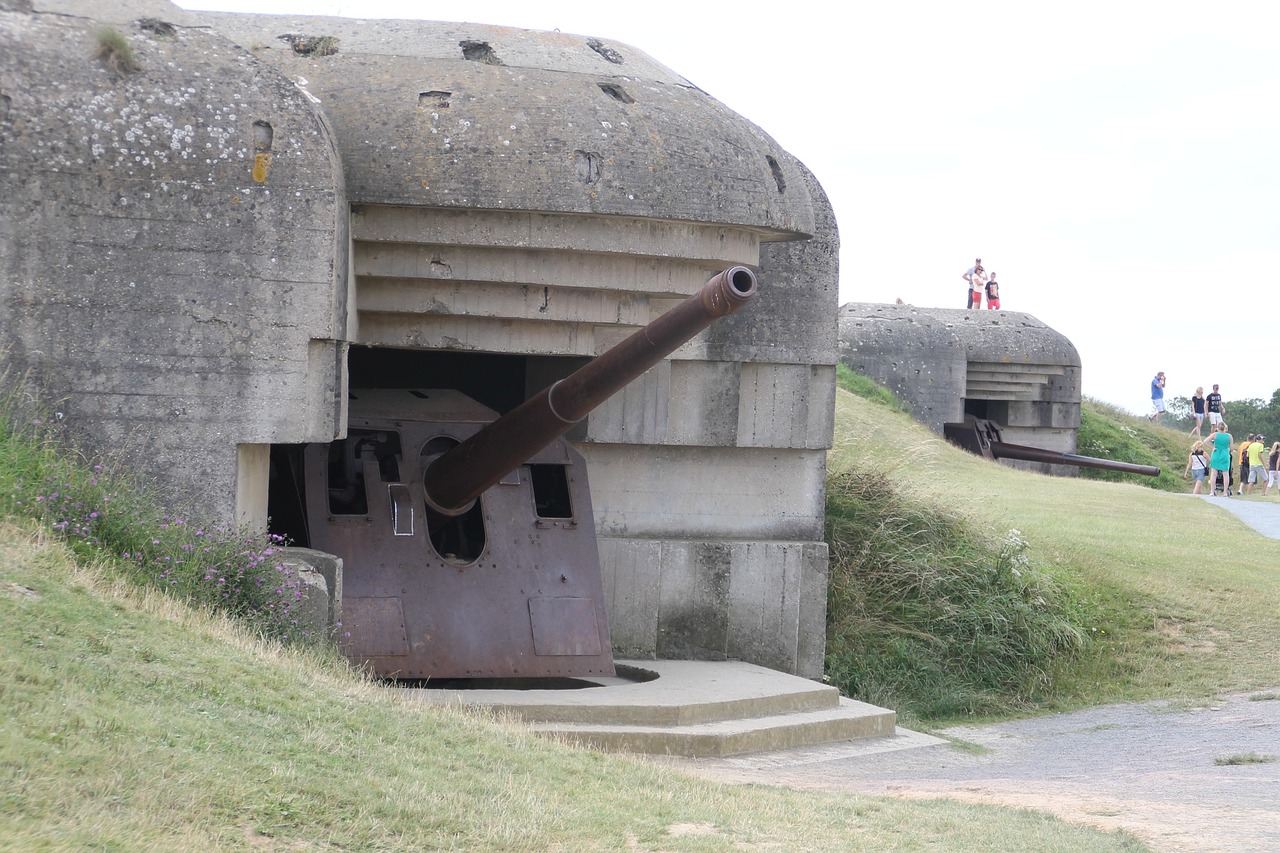
Visiting Pointe du Hoc, France, practical tips, Bayeux, and Caen tours is the difference between a hurried stop and a day that feels Seamless, thoughtful, and calm. This headland is best reached by car, though organised tours from Bayeux and Caen can be wonderfully supportive if you want Expert narration and someone else to handle the timings. Parking is available close to the site, and arriving earlier in the morning often brings the gift of quiet—when the wind is louder than conversation.
I like to design a route that allows you to arrive unhurried, walk first, then return to the historical panels and bunkers once your eyes have adjusted to the scale. If you’re pairing it with other stops, keep your day gently paced; Pointe du Hoc asks for attention, not a tick-box rhythm.
Planning your visit to Pointe du Hoc with Confidence
Allow 2–3 hours as a minimum for a visit to Pointe du Hoc, and give yourself permission to stay longer if you find a viewpoint that holds you. The ground is uneven, and the emotional weight can be unexpectedly tiring—both reasons to slow your pace. If you’re travelling as a family, it helps to agree in advance that you’ll move together and pause as needed, especially if someone is carrying Personal connections to the story.
Cost-wise, entry is free, and that openness feels aligned with the spirit of remembrance. Optional guided tours and audio guides may carry a small fee, but what you gain is narrative clarity: context for what you’re seeing, and the ability to place each bunker aperture and crater into the lived reality of the landing.
Seamless packing and practical Support
Set expectations kindly: there are no public facilities on-site, so plan to use nearby visitor centres for refreshments and information. Bring water, and consider a light snack if you’re coming from Bayeux or Caen. Check forecasts carefully; coastal weather can change quickly, and rain turns chalky paths slick.
- Wear: sturdy shoes with grip; the paths cross broken ground and steep edges.
- Bring: layers for wind, and a light waterproof even in late spring.
- Time: aim for softer light for photographs, but don’t chase it—reflection matters more.
- Care: keep a respectful tone; this is a memorial landscape, not an adventure park.
If you’d like to create a larger Normandy day with high-end ease—driver, guide, and carefully chosen stops—our Trip gallery can help you picture what a Crafted itinerary looks like.
Pointe du Hoc cliff trail
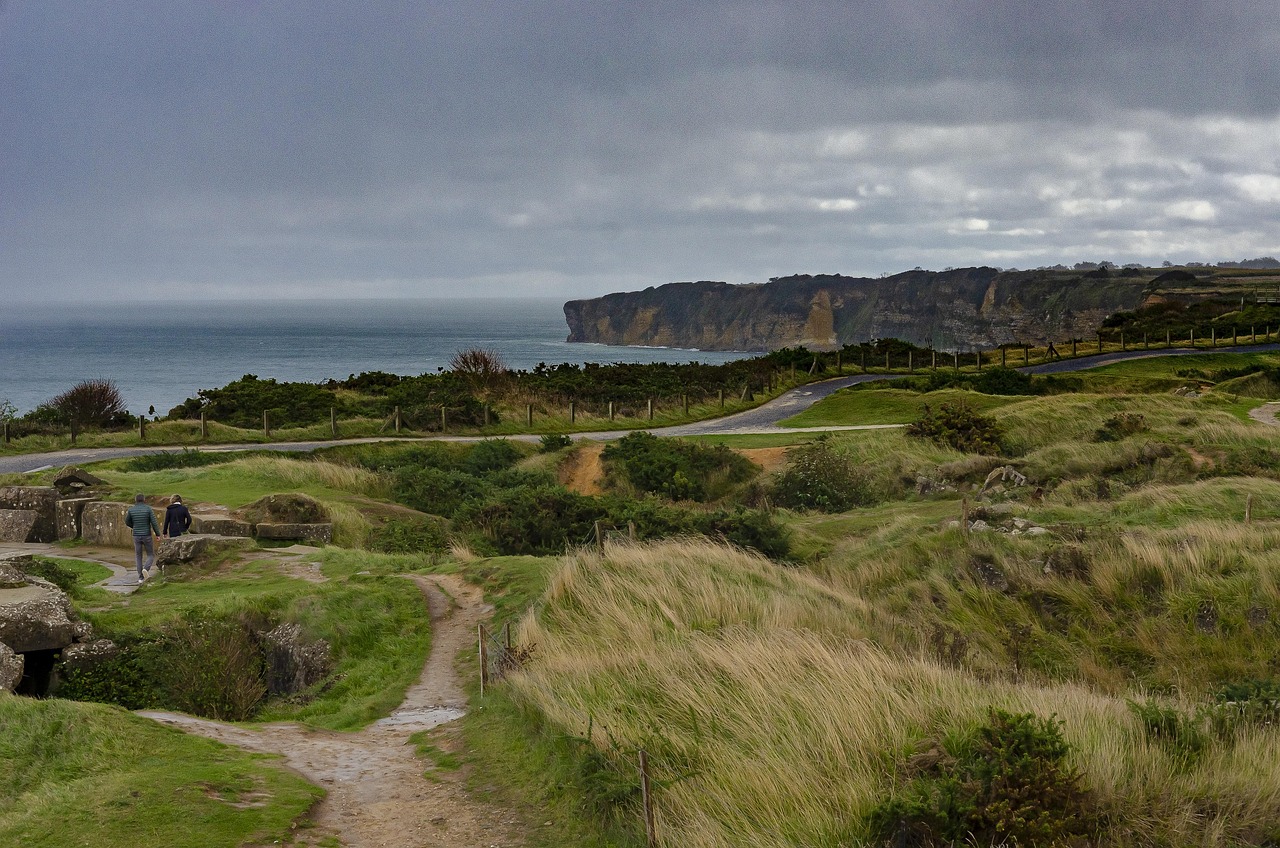
Pointe du Hoc cliff trail bomb craters Omaha Beach views France
Pointe du Hoc: cliff trail, bomb craters, Omaha Beach views. France is where the site becomes physical—felt in your calves, your balance, and your breath. The main loop across the cliffs of Pointe du Hoc threads between vast bomb craters and torn turf, preserved so faithfully that it can feel as though the ground itself is still mid-sentence. Walk slowly, keep to marked paths, and hold a respectful distance from fragile edges where erosion and old damage meet.
One of the most moving things to discover is how quickly the mood changes. A shaft of sun can make the sea gleam like polished metal; a cloud can turn the headland slate-grey within seconds. The English Channel is constant, yet never the same twice, and that shifting light seems to mirror the way memory works—clear one moment, elusive the next.
Omaha Beach lookouts and the changing light on the cliff
From several points, you’ll see Omaha Beach stretching away, and the coastline bending with a kind of calm that feels almost impossible to reconcile with the day of the landing. These panoramic views are not “pretty” in the usual sense—they are beautiful, yes, but also heavy with context. Many travellers describe a sudden hush when they first spot the beach from above, as if their bodies understand before their minds find words.
For orientation, note the east of Pointe du Hoc: look along the coast and try to picture where forces hoped to land at Pointe du Hoc and where Rangers reached the plateau. The distance is short on a map, but long when imagined through smoke and stress, and it helps you grasp why timing mattered so much.
Adventure with Care and what not to scale
Adventure seekers often feel the urge to scale the cliffs—to test themselves against the slope and feel a trace of what the Rangers faced. It’s natural to dare a little here, but it must be done with Care. Do not climb on ruins or unstable faces; seek the thrill instead on the steep paths and viewpoints designed for visitors, where your footing can be managed safely.
Give yourself Support by pacing: take smaller steps, pause on flatter ground, and accept that emotions may arrive unexpectedly. A walk here is active, but it’s also an act of remembrance. The best moments often come when you stop trying to “do” the site and simply allow it to speak.
Pointe du Hoc bunker artillery positions, Atlantic Wall, Germans, Normandy, France
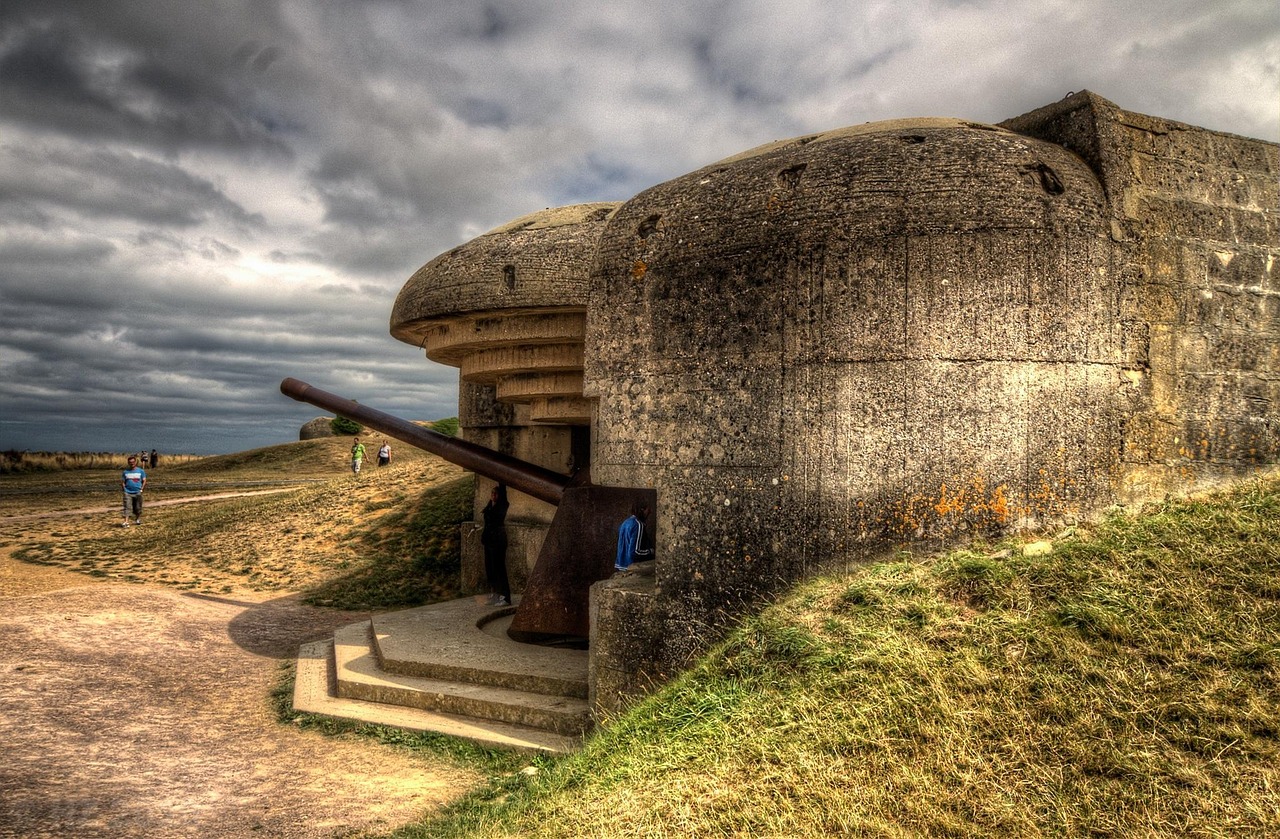
Pointe du Hoc bunker artillery positions, Atlantic Wall Germans Normandy France
Pointe du Hoc bunker artillery positions, Atlantic Wall, Germans, Normandy, France, invites you to explore the built environment of the conflict—spaces designed for sightlines, angles, and control. As you step near the concrete structures, you begin to understand how German forces shaped the coast into the Atlantic Wall, with interlocking fields of fire intended to protect approaches to the beach and sea lanes. Some openings were cut by the Germans to widen visibility or improve coverage, and you can still trace the intention in the geometry.
These bunkers feel starkly modern in their materials, which makes their age unsettling. The wind whistles through embrasures; shadows fill corners; and the sea remains in view, as if the landscape refuses to let you forget the stakes.
German positions and the story of the guns
Here, the artillery story needs gentle handling. The guns mattered because they could threaten Utah and Omaha, and because they symbolised control of the coastline during the Normandy invasion. Yet many visitors arrive having heard the mysterious detail—five of the six—referring to the number of guns reportedly located and disabled away from their expected casemates. That detail lingers because it highlights a reality of war that books sometimes smooth over: plans collide with improvisation, deception, and confusion.
As you move through tunnels and observation points, keep Rudder and the Rangers in mind, but stay grounded in what you can see: the thickness of concrete, the angles towards the sea, the way one bunker aligns with another. It’s an architectural argument made in wartime, and it still stands.
Actions at Pointe du Hoc and a vivid historical detail
Accounts of the fight include small, specific tactics that cut through abstraction. One such detail is thermite grenades, used to disable equipment quickly under pressure—mentioned here not for drama, but to underline the intensity of problem-solving in those minutes. The Rangers’ success relied on training and ingenuity as much as on strength.
Please keep a steady safety-and-respect mindset: do not climb on fragile ruins, and avoid entering areas that are clearly unstable. Preservation isn’t merely administrative—it is a form of Care that keeps the place intact for future generations, and helps transform a site of violence into a space for learning with Trust.
Pointe du Hoc Ranger Monument, Omaha Beach, Normandy American Cemetery, France

Pointe du Hoc Ranger Monument Omaha Beach Normandy American Cemetery France
Pointe du Hoc Ranger Monument, Omaha Beach, Normandy American Cemetery, France, is the chapter where your day widens from a single headland into a connected landscape of memory. The Pointe du Hoc Ranger Monument is a slender, steadfast marker, erected by the French as a tribute to the men who climbed and fought here. It’s a focal point for Personal pilgrimages, where travellers often fall quiet without being asked—because the shape of the monument seems to request stillness.
One visitor I met, a veteran’s grandson, stood close to the stone for a long time before speaking. He told me his family had carried fragments of this story for decades, but only here did it knit into something whole. That’s the gift this place offers: a way to bring private memory into respectful contact with public history.
Pairing Pointe du Hoc with Omaha and Utah beaches
If you’re building a broader day, Pointe du Hoc pairs naturally with Omaha and Utah beaches, but the key is to avoid rushing. Choose a small number of stops and let each one land. A simple sequence can work beautifully: begin at Pointe du Hoc while the light is gentle, then continue towards Omaha for a sense of scale and shoreline, and finish with a quieter late-afternoon visit to a cemetery when you’re ready for reflection.
In practical geography, Pointe du Hoc sits roughly 10 miles west of the Normandy American sites associated with Omaha’s memorial landscape. You may also hear directions framed as west of Normandy American Cemetery, which helps you orient your drive along the coast without obsessing over exact minutes.
Normandy American Cemetery and the language of commemoration
At the Normandy American Cemetery, the horizon feels different—less raw, more composed—yet emotionally intertwined with the cliff and the beach. The American Battle Monuments Commission maintains the grounds with extraordinary precision, and that order carries its own meaning: a promise that the names will remain tended, even when living memory fades.
Commemoration has changed over time. The anniversary of D-Day draws crowds and ceremony, while the 40th anniversary of D-Day shaped many of the modern rituals that visitors recognise today. Yet ordinary days can be just as profound, precisely because they’re quiet—because you can stand, breathe, and let the places speak in a Local rhythm.
Before you leave this part of Normandy, consider a simple Together moment: share a name, read a letter excerpt, or speak aloud what you’re grateful for. It’s not performative; it’s a small act of connection that turns history into lived understanding.
F.A.Qs
What happened at Pointe du Hoc?
On D-Day, U.S. Rangers attacked Pointe du Hoc to seize the headland between the landing beaches and prevent coastal guns from threatening the landings. They climbed the cliffs under heavy fire, fought across the top, and searched for the artillery positions. The site today preserves craters, bunkers, and viewpoints that help you understand why this objective mattered to the wider Normandy operation.
How many Rangers were killed at Pointe du Hoc?
Casualty figures vary by source and by whether they include wounded and missing, but the losses were severe. Of the roughly 225 Rangers who took part in the assault element, only a small fraction remained combat-effective soon after the initial fighting. When you visit, the terrain’s scale helps explain why the cost was so high, even for an elite force.
Where is Pointe du Hoc, France?
Pointe du Hoc is on the Normandy coast in northern France, set between the Omaha and Utah sectors. It’s an easy drive from Bayeux or Caen, and many travellers visit as part of a D-Day route along the coast. From the cliff-top, you can look out over the Channel and along the shoreline towards Omaha Beach, which helps with orientation.
What was the most brutal beach on D-Day?
Many historians and visitors describe Omaha as the most brutal beach on D-Day because of intense defensive fire, difficult terrain, and heavy casualties during the landing. That said, each sector had its own dangers and losses, and Pointe du Hoc adds another dimension to the story: a cliff assault carried out to reduce threats to the beaches and support the broader landings.
Long after you’ve rinsed the sea salt from your hair, Normandy can return in small, quiet ways—through a sudden gust on a city street, or the sight of waves folding into shore. Pointe du Hoc reminds us that courage is rarely loud, memory is never finished, and coming home can mean carrying questions gently, rather than answering them.
Final Thoughts
Pointe du Hoc, France, reflection D-Day Rangers Normandy is not something I “complete” and file away. It stays in the body: the feel of wind pressing against your jacket, the sound of footsteps on broken ground, and the sudden, clear view of the beach far below that makes conversation fall away. Even when you’ve left the car park, the cliff seems to follow you in flashes—sea-glitter, rough grass, and the outlines of concrete against sky.
I think about how quickly the senses take over here. You don’t have to force meaning; you simply stand, and it arrives. There’s wonder in the landscape, gratitude for the courage it witnessed, and a heaviness that doesn’t ask to be “fixed”. The craters hold their shape without explanation, and that in itself becomes a kind of lesson: some parts of history remain open-ended, resisting neat closure.
What I carry most is a renewed Trust in travelling with Care. In places marked by loss, our role is not to extract a dramatic story, but to meet the site with attention—lower voices, steady steps, and respect for fragile remains. That ethic changes you. It makes other journeys feel richer, too, because you begin to notice what is preserved, what is forgotten, and what is quietly asked of us as visitors.
And sometimes, on the drive away, I remember a single detail—how the assault began in the morning swell at 07:10 a.m., how exhaustion and resolve coexisted, how survivors held their position until June 8. History becomes less like a film and more like a human scale of minutes and decisions.