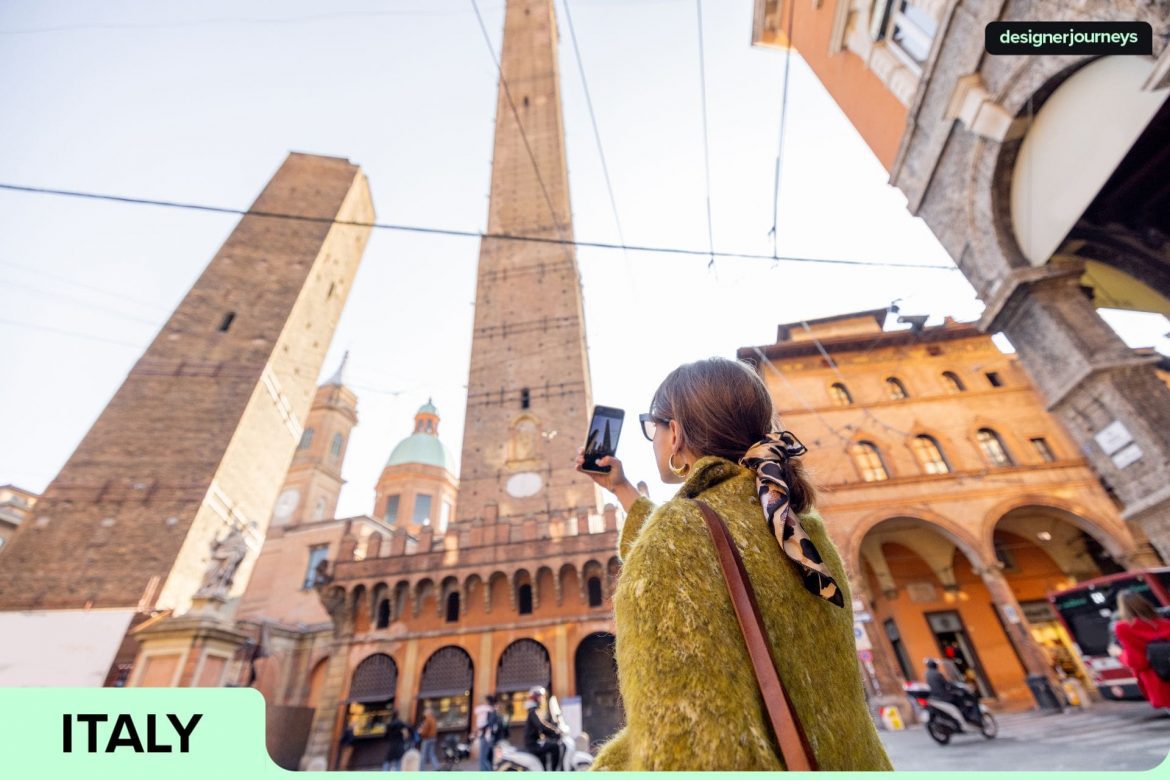
Imagine strolling beneath Bologna’s endless arcades – graceful porticoes that wind through medieval streets like ribbons of terracotta and shadow. The air is thick with the aroma of fresh pasta, slow-cooked ragù, and warm bread from hidden trattorias where time seems to pause. Above you, ancient towers rise over a sea of red rooftops, while every cobblestone whispers stories of scholars, merchants, and artists from centuries past.
Unlike Italy’s more crowded cities, Bologna remains blissfully authentic, a place where life moves at its own delicious pace. Nestled in the heart of the Emilia-Romagna region, this captivating city invites you to experience Italy as the locals do – unhurried, flavourful, and full of heart. Step inside family-run osterias where recipes have been perfected over generations, sip bold regional wines at the oldest wine bar in Europe, and watch as students, locals, and travellers gather in sunlit piazzas to share laughter and espresso.
Post Contents
- Explore Piazza Maggiore: Bologna’s Central Square
- Ascend the Two Towers: Bologna’s Iconic Symbols
- Experience Bologna’s Legendary Food Scene
- Uncover Religious and Spiritual Heritage
- Discover Art and Cultural Treasures
- Uncover Hidden Gems in Plain Sight
- Experience Day Trips from Bologna
- Navigate Bologna with Confidence
- Create Your Personalised Bologna Experience
Explore Piazza Maggiore: Bologna’s Central Square
Begin your journey in Piazza Maggiore, the magnificent central square that has served as Bologna’s beating heart since the Middle Ages. This sprawling space in the city centre, surrounded by the city’s main sights, offers an ideal introduction to Bologna’s architectural and cultural legacy.
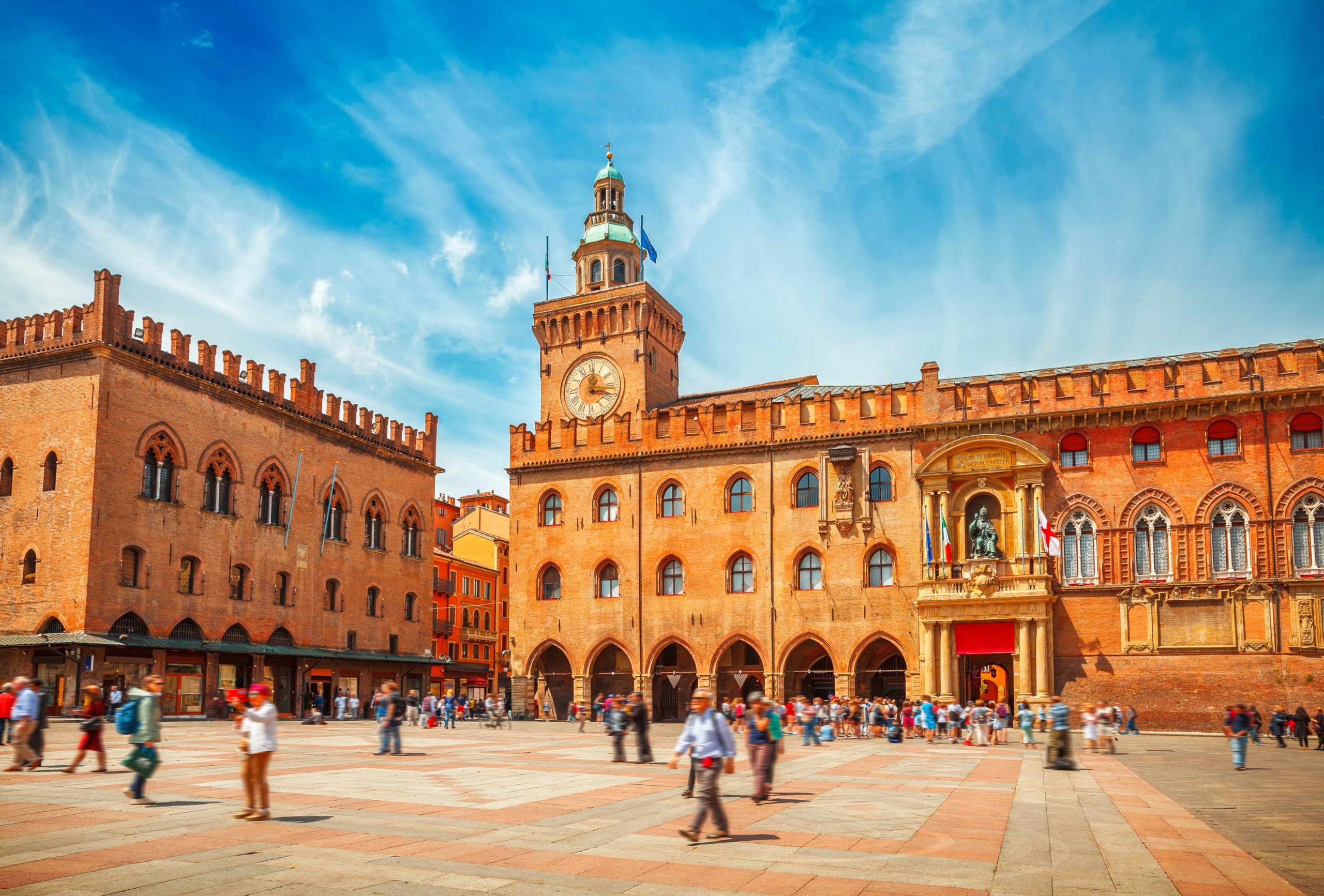
Piazza Maggiore is the central, main square of Bologna, Italy.
Palazzo d’Accursio, the imposing medieval town hall, dominates the western flank with its clock tower rising above the roofline. The Basilica di San Petronio anchors the southern edge, creating one of the most impressive urban spaces in Northern Italy. Just steps away, Piazza del Nettuno features the famous Neptune Fountain, adding to the area’s grandeur.
Settle into one of the outdoor cafes lining Bologna’s central square and uncover the joy of people-watching. Throughout the day, locals cross the piazza on their daily routines, students gather in animated conversation, and street musicians fill the air with melodies that echo off the ancient walls.
Practical Tips:
- Piazza Maggiore is free to access year-round and particularly enchanting at sunset.
- The square hosts various cultural events and markets throughout the year.
- For the finest perspective, climb the Palazzo d’Accursio’s museum for elevated views across the entire piazza and Bologna’s city centre.




Ascend the Two Towers: Bologna’s Iconic Symbols
No Bologna visit would be complete without experiencing the Asinelli Tower, the taller of the city’s famous Two Towers that have defined the skyline since the 12th century. These medieval structures, built by noble families as symbols of wealth and power, lean at dramatic angles that captivate every visitor.
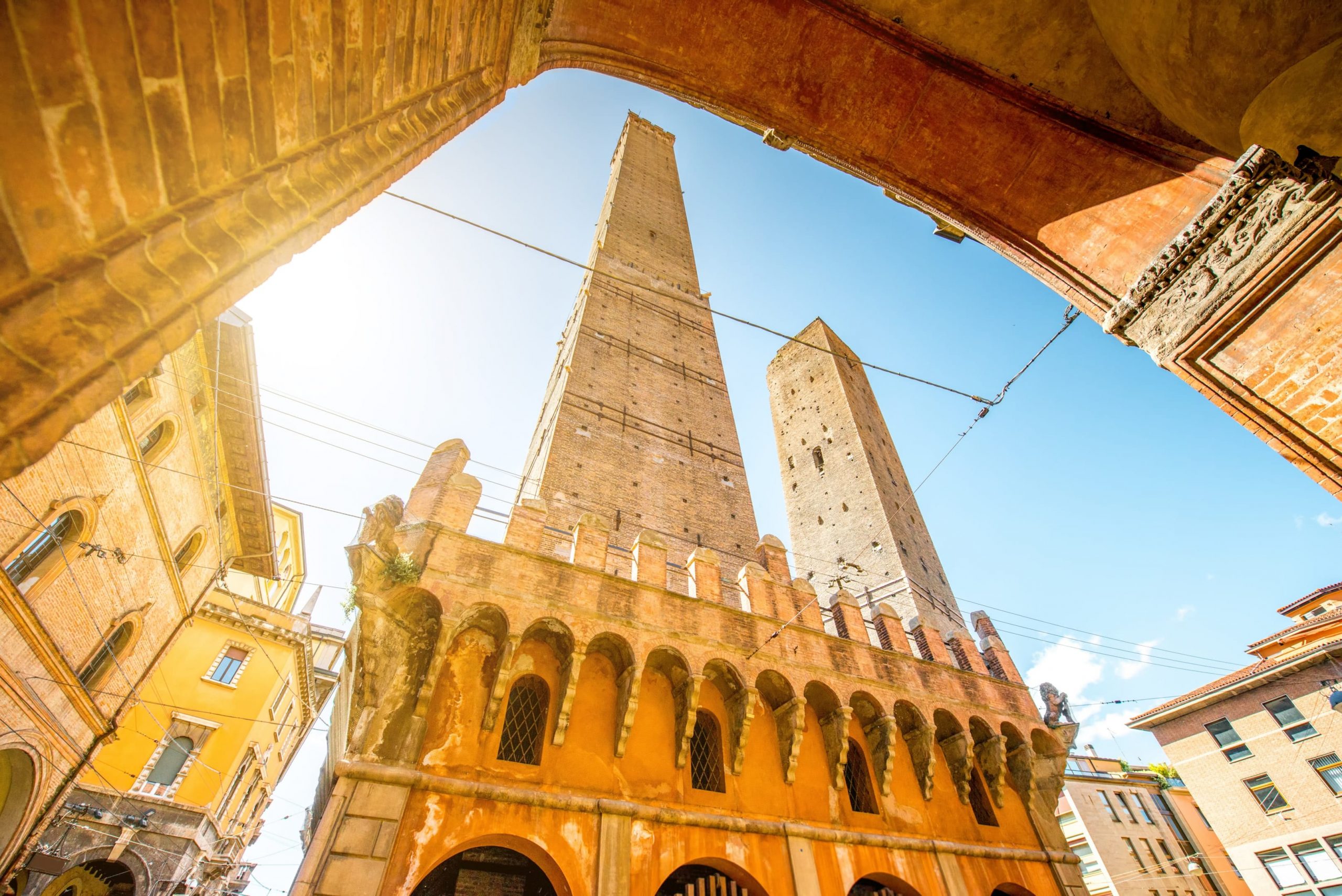
The two towers are named after the families traditionally credited with building them.
The Asinelli Tower stands at an impressive 97 meters, making it one of the tallest leaning towers in Italy. Climbing its 498 wooden steps requires determination, but the reward justifies every breathless moment. From the tower’s top platform, Bologna unfolds in every direction—a sea of terracotta rooftops punctuated by church domes and the distinctive porticoes that line virtually every street in the historic centre.
Practical Information:
- Torre degli Asinelli admission costs approximately €5.
- Advance booking is recommended during peak seasons (April-October).
- Opens daily at 10:00 AM, with last entry at 6:00 PM.
- Consider purchasing a Bologna Welcome Card for discounted access to the Two Towers and other attractions.
Experience Bologna’s Legendary Food Scene
Bologna has earned its reputation as Italy’s culinary capital through centuries of dedication to gastronomic excellence. The city’s food culture runs deep—this is where some of the country’s most celebrated dishes were born, where traditional techniques remain unchanged, and where food is approached with reverence and joy.
Join a Bologna Food Tour
A Bologna food tour represents the most enriching way to discover the city’s culinary identity. Expert local guides lead you through the historic centre, stopping at family-run shops, bustling markets, and hidden trattorias that have perfected their craft over generations.
These immersive experiences on a day food tour typically include visits to traditional pasta shops where you’ll witness artisans rolling fresh pasta to translucent perfection. You’ll sample authentic Parmigiano Reggiano (Parmesan cheese) aged in temperature-controlled caves, taste the region’s famous balsamic vinegar ranging from young and bright to aged and syrupy, and savour mortadella and other cured meats that showcase the Emilia-Romagna region’s charcuterie mastery.
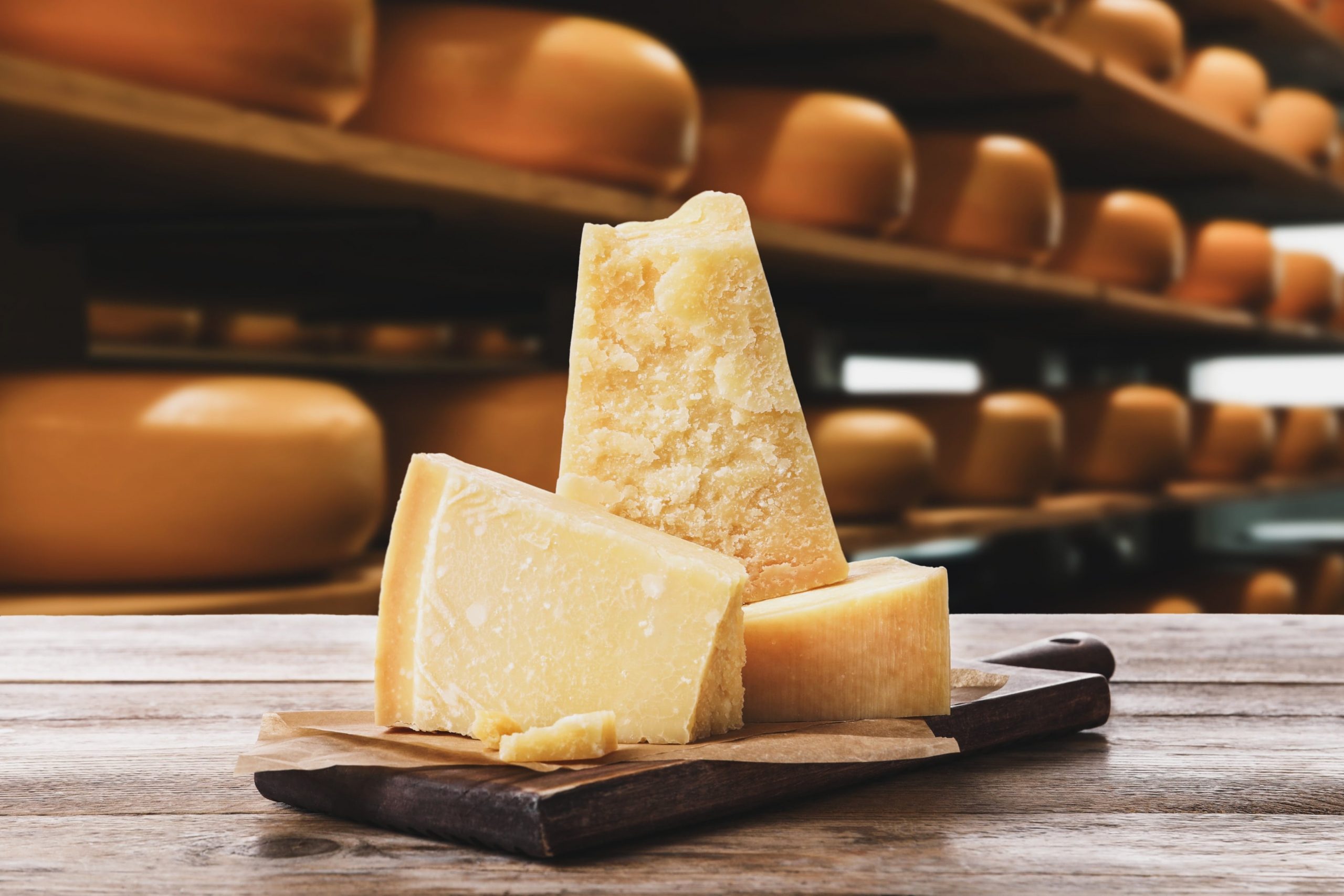
The milk must come from cows in the defined geographical area.
The insight these food tours provide extends beyond mere tasting. Knowledgeable guides share stories about local producers, ingredient sourcing, production methods, and the cultural significance of each dish. You’ll learn why Bologna’s ragù differs fundamentally from what the world calls “Bolognese sauce,” and understand the strict regulations governing local meats and traditional balsamic vinegar production.
Booking Tips: Premium Bologna food tours range from €75-150 per person for 3-4 hour experiences. Book at least two weeks ahead, especially for weekend tours. Morning tours often include visits to fresh produce markets when vendors’ energy runs high. Look for small group walking tours (maximum 8-10 people) for more personal attention and authentic interactions with local cuisine experts.
Discover Traditional Fresh Pasta
Fresh pasta forms the foundation of local cuisine. The city’s signature dish, tagliatelle al ragù (slow-cooked meat sauce), features wide ribbon pasta tossed with a meat sauce that must be experienced to be truly understood.
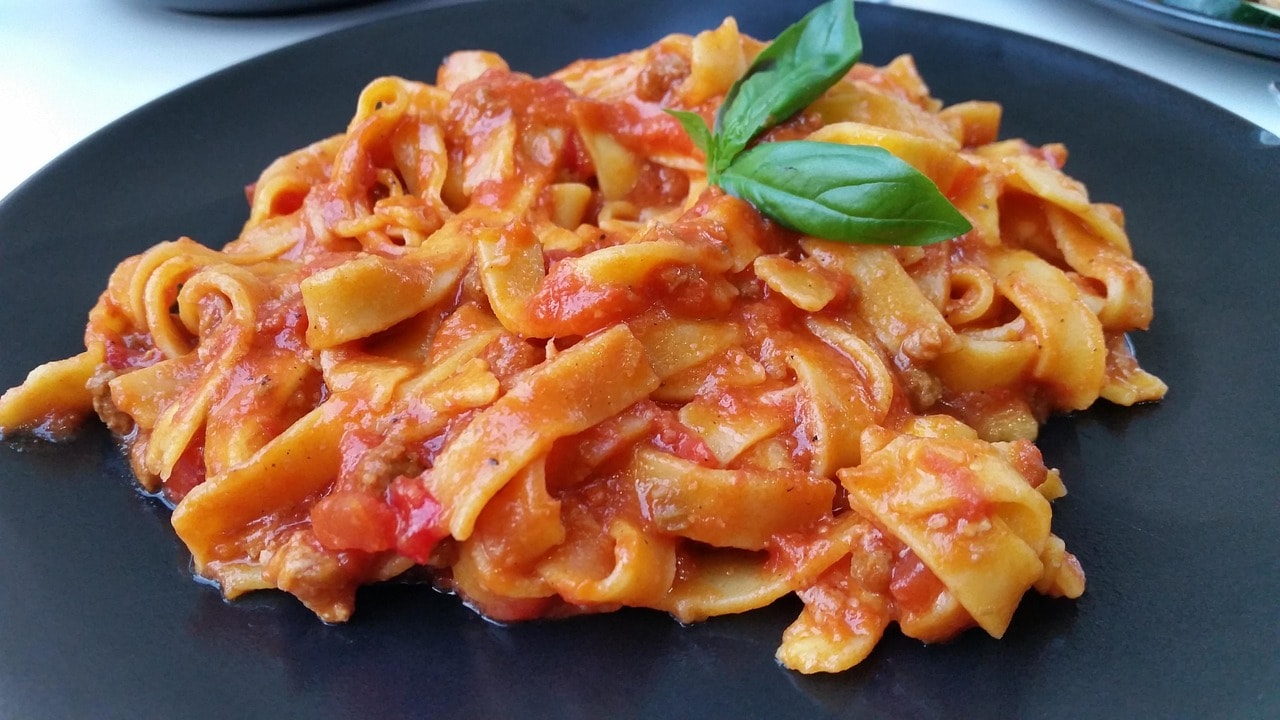
The traditional pairing is tagliatelle, which are flat ribbons of egg pasta.
Several cooking schools and local restaurants offer pasta-making classes where you’ll learn to create authentic handmade pasta, including tagliatelle, tortellini, and lasagne, using traditional techniques. The process reveals why fresh pasta tastes distinctly different from dried varieties—fresh egg pasta possesses a tender texture that captures sauce beautifully.
Practical Details:
- Pasta-making classes typically cost €80-120 per person for 2-3 hour sessions, usually including the meal you prepare.
- Book through reputable cooking schools or your hotel concierge for quality assurance.
Savour Authentic Slow-Cooked Meat Sauce
The slow-cooked meat sauce known worldwide as “Bolognese” bears little resemblance to what’s served when you visit Bologna. Authentic ragù alla bolognese requires patient simmering for hours, allowing ground meat, tomato, wine, milk, and aromatics to meld into a rich, complex sauce of extraordinary depth.
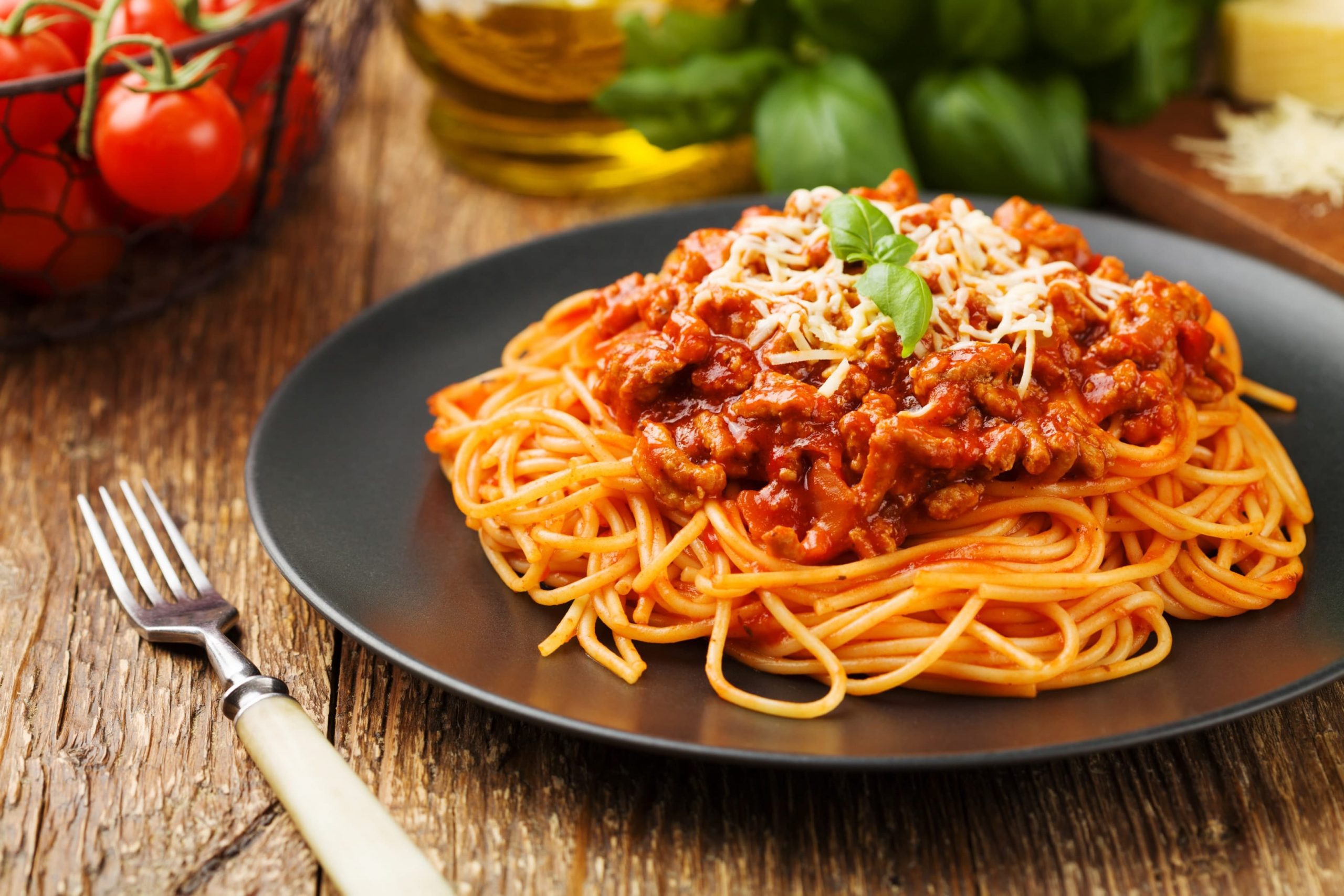
The key to an authentic ragù is a long, gentle simmer, usually for 2 to 3 hours or even longer.
Seek out historic trattorias like Diana, Trattoria del Rosso, and Osteria dell’Orsa, trusted by locals for their authentic preparation. The sauce should appear more brown than red, cling beautifully to wide tagliatelle, and taste of meat above all else.
Restaurant Recommendations:
- Expect to pay €12-18 for tagliatelle al ragù at quality trattorias.
- Lunch service typically runs 12:30-2:30 PM, dinner from 7:30-10:30 PM.
- Reservations are essential at popular establishments in Bologna’s city centre.
Explore Fresh Produce Markets
The city’s food culture pulses with energy at markets like Mercato di Mezzo and the larger Mercato delle Erbe. These vibrant spaces offer sensory feasts where regional fresh produce, artisanal products, and prepared foods showcase the Emilia-Romagna region’s bounty.
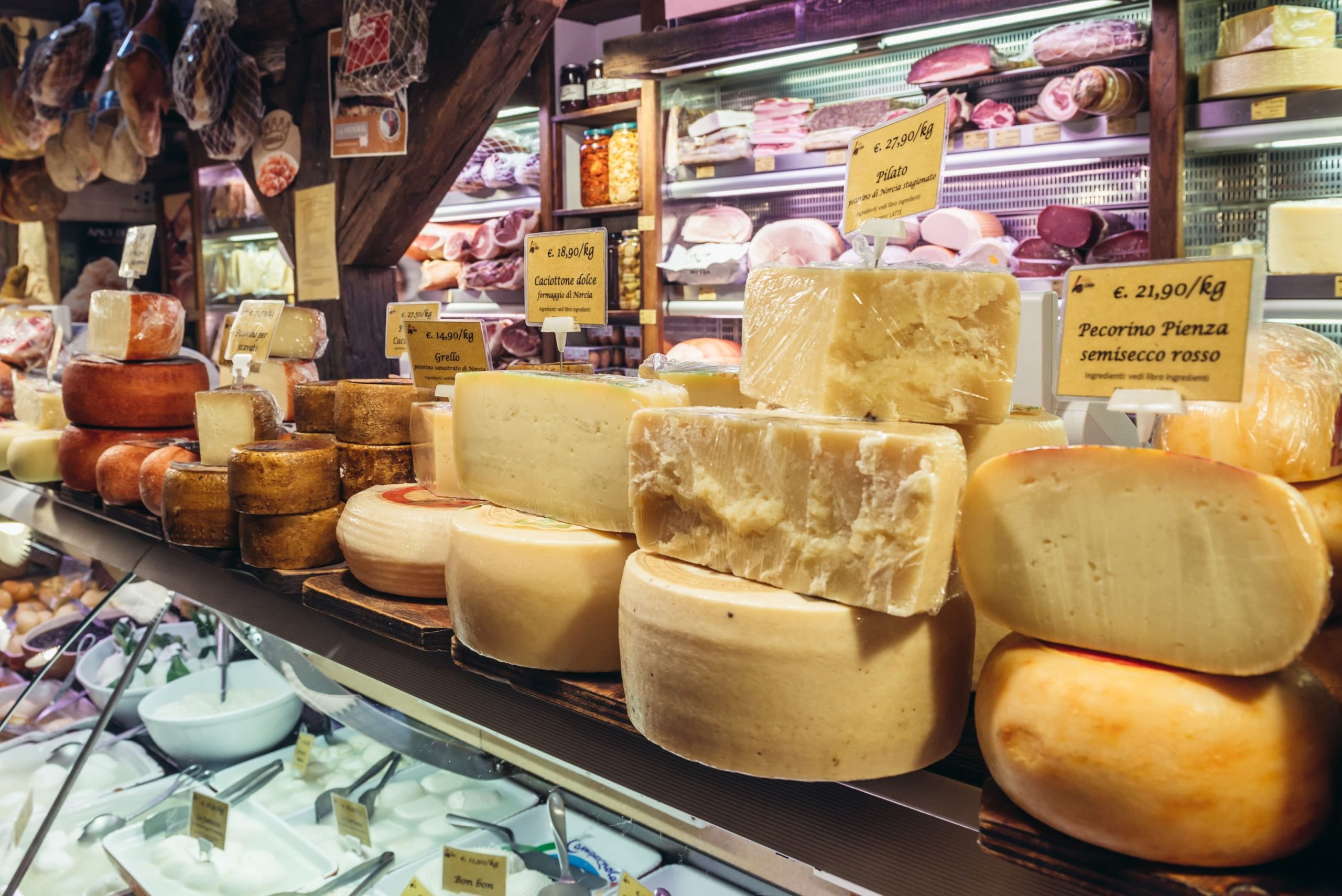
The market has been a place of commerce, flavors, and gastronomic tradition since the Middle Ages.
Wander among stalls piled high with seasonal vegetables, fragrant herbs, local cheeses, Parmesan cheese, fresh pasta, and countless other ingredients. Vendors offer samples generously and share cooking tips with genuine enthusiasm, embodying the warmth that characterises Bologna’s food scene.
Visiting Tips:
- Markets open early (around 7:00 AM) and close by early afternoon, with peak activity between 9:00 AM and 1:00 PM.
- Mercato di Mezzo (Via Clavature) is more central and tourist-friendly, while Mercato delle Erbe (Via Ugo Bassi) attracts more locals.
Taste Artisanal Gelato
Bologna’s gelaterias craft frozen perfections using traditional methods and seasonal ingredients sourced from trusted local producers. Seek out establishments displaying artisanal gelato in covered metal tins rather than heaping mounds—this signals commitment to proper temperature maintenance and quality.
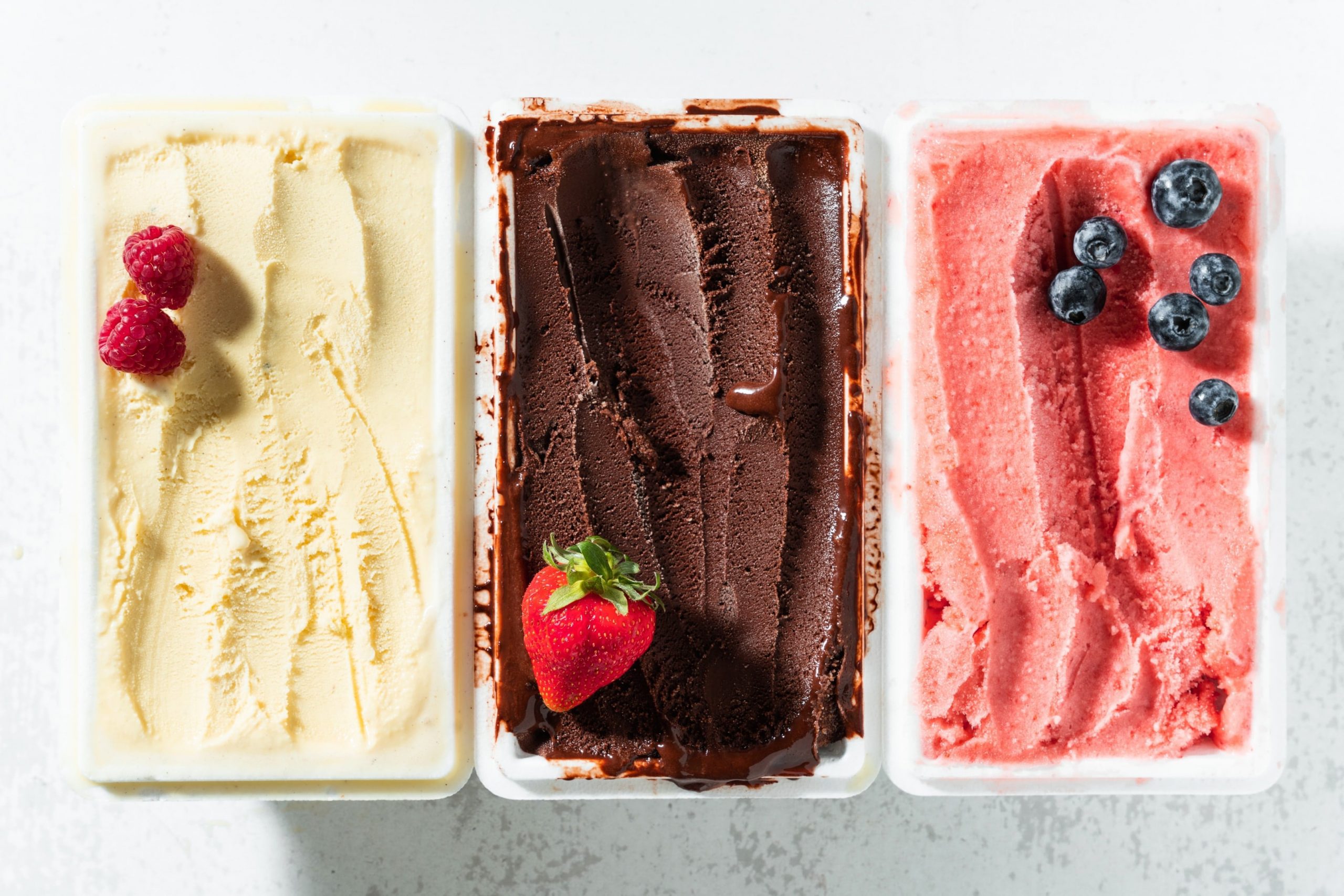
It has a dense, creamy, and velvety texture.
Cremeria Funivia, Galliera 49, and Cremeria Santo Stefano consistently receive praise from locals. Try traditional flavours like crema, nocciola, and pistachio before adventuring into seasonal options.
Gelato Etiquette: Small cups or cones typically cost €2.50-4.00. Most gelaterias allow you to sample flavours before committing.
Uncover Religious and Spiritual Heritage
Visit the Basilica of San Petronio
The Basilica di San Petronio dominates Piazza Maggiore with its massive yet unfinished facade—a testament to Bologna’s grand ambitions. Construction began in 1390 with plans to create a church larger than St. Peter’s in Rome, but political constraints, including intervention by Pope Pius IV, ultimately left the upper facade clad in bare brick.
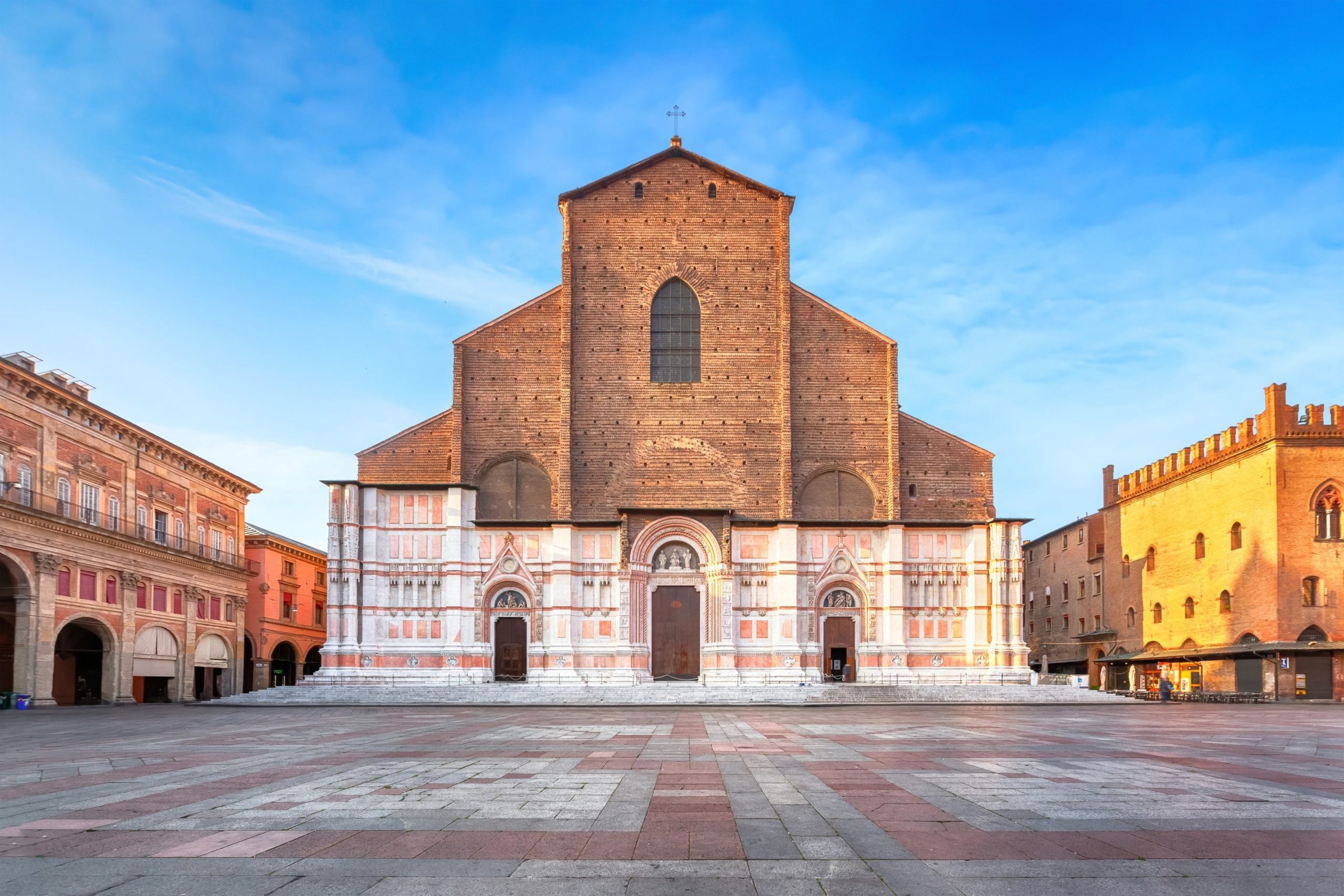
The Basilica of San Petronio is the largest and most important church in Bologna, Italy.
Step inside the Basilica of San Petronio to discover a vast interior spanning 132 meters. Along the left aisle, don’t miss the meridian line, an astronomical instrument designed by astronomer Giovanni Domenico Cassini in 1655. Twenty-two chapels line San Petronio’s sides, each decorated by different artists and noble families. The Stabat Mater Hall within the basilica complex occasionally hosts concerts, adding to the basilica’s cultural significance.
Visitor Information:
- Entrance is free, though donations are appreciated. Modest dress required.
- Opens Monday-Saturday 8:30 AM-1:30 PM and 3:00-6:00 PM, Sunday 3:00-6:00 PM.
- Audio guides (€5) provide deeper context.
- Allow 45 minutes to an hour for your visit to this magnificent Basilica di San.
Climb to the Sanctuary of the Madonna di San Luca
One of the most distinctive things to do in Bologna involves ascending the world’s longest portico to reach the Sanctuary of the Madonna di San Luca. The Portico di San Luca stretches for an astonishing 3.8 kilometres, comprising 666 arches that climb steadily from Porta Saragozza to the hilltop sanctuary dedicated to the city’s patron saint.
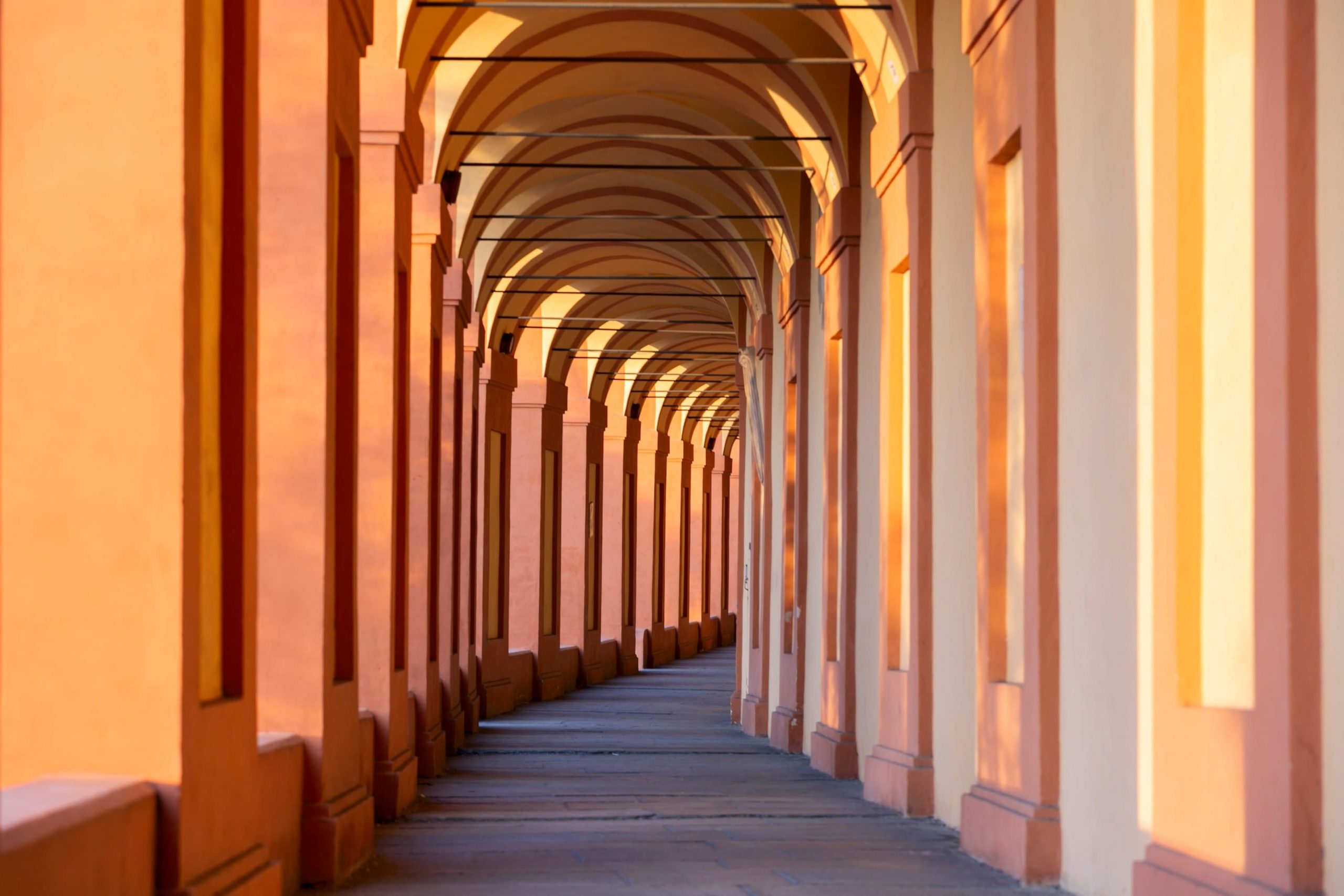
It is the longest portico in the world, stretching about 3.8 km and consisting of 666 arches.
This remarkable architectural feat was constructed between 1674 and 1793, designed to allow the faithful to walk to San Luca while remaining sheltered from the weather. The sanctuary houses a Byzantine icon of the Madonna and Child, while the hilltop plaza offers sweeping panoramas across the city centre and the Emilia-Romagna region beyond.
Walking the Portico di San Luca is one of the most rewarding experiences in Bologna, combining spiritual heritage with breathtaking views. The pilgrimage route has become a UNESCO World Heritage site, recognised for its extraordinary architectural and cultural significance.
Planning Your Visit:
- The walk to Madonna di San Luca takes approximately 1.5-2 hours one way at a leisurely pace.
- For those unable to complete the full walk, the Portico di San Luca tourist train (€10 round trip) or city bus #20 (€1.50 each way) provides alternatives from the city centre.
- The Sanctuary of the Madonna di San Luca opens daily 7:00 AM-12:30 PM and 2:30-6:00 PM.
Explore the Seven Churches Complex
The Basilica di Santo Stefano, affectionately known as the Seven Churches, stands as one of Bologna’s most fascinating religious sites. This interconnected complex of medieval religious buildings in Piazza Santo Stefano creates a labyrinth of sacred spaces, courtyards, and cloisters. The oldest sections of Santo Stefano date to the 5th century, built atop Roman ruins during the Middle Ages.
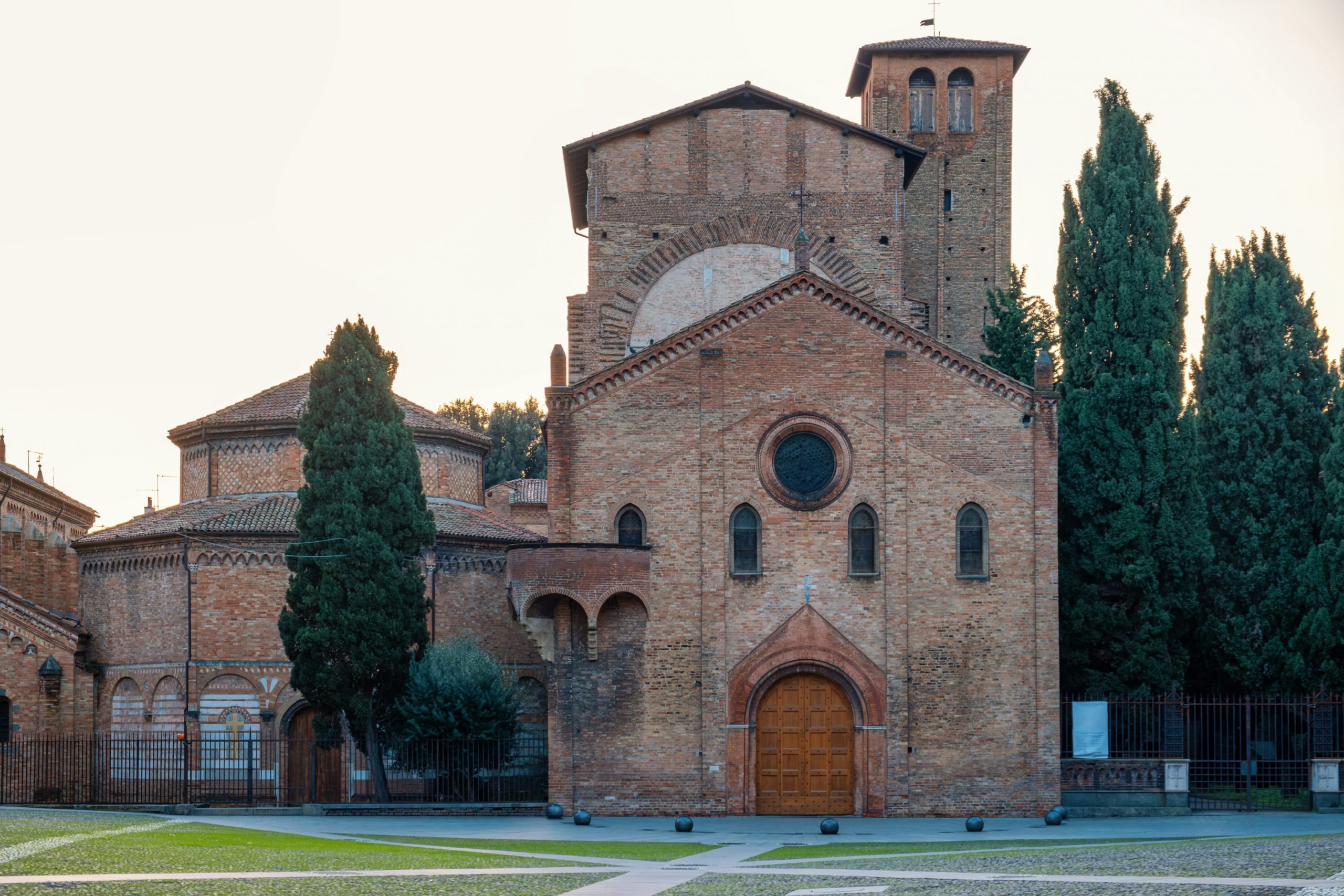
It is located in the center of Bologna, on Piazza Santo Stefano.
The Basilica of San Stefano includes the Church of the Crucifix, leading to the Church of the Holy Sepulchre with its unusual octagonal design. The atmospheric Courtyard of Pilate, surrounded by brick arcades, centres on an 8th-century basin. The quiet Benedictine cloister offers a peaceful retreat, its elegant double colonnade framing a garden where time seems to pause.
Visiting Information:
- Entry is free, open daily 8:00 AM-7:00 PM. Modest dress required.
- Piazza Santo Stefano, the elegant square fronting the Basilica di Santo Stefano complex, ranks among the most beautiful urban spaces in the historic centre—perfect for afternoon relaxation at surrounding cafes.
Discover Art and Cultural Treasures
Visit the Pinacoteca Nazionale
The Pinacoteca Nazionale di Bologna (National Art Gallery) houses one of Italy’s most important collections of Emilian paintings, spanning from the 13th through the 18th centuries. Encounter masterworks by Raphael, Giotto, Guido Reni, and the Carracci family—artists who defined the region’s artistic identity.
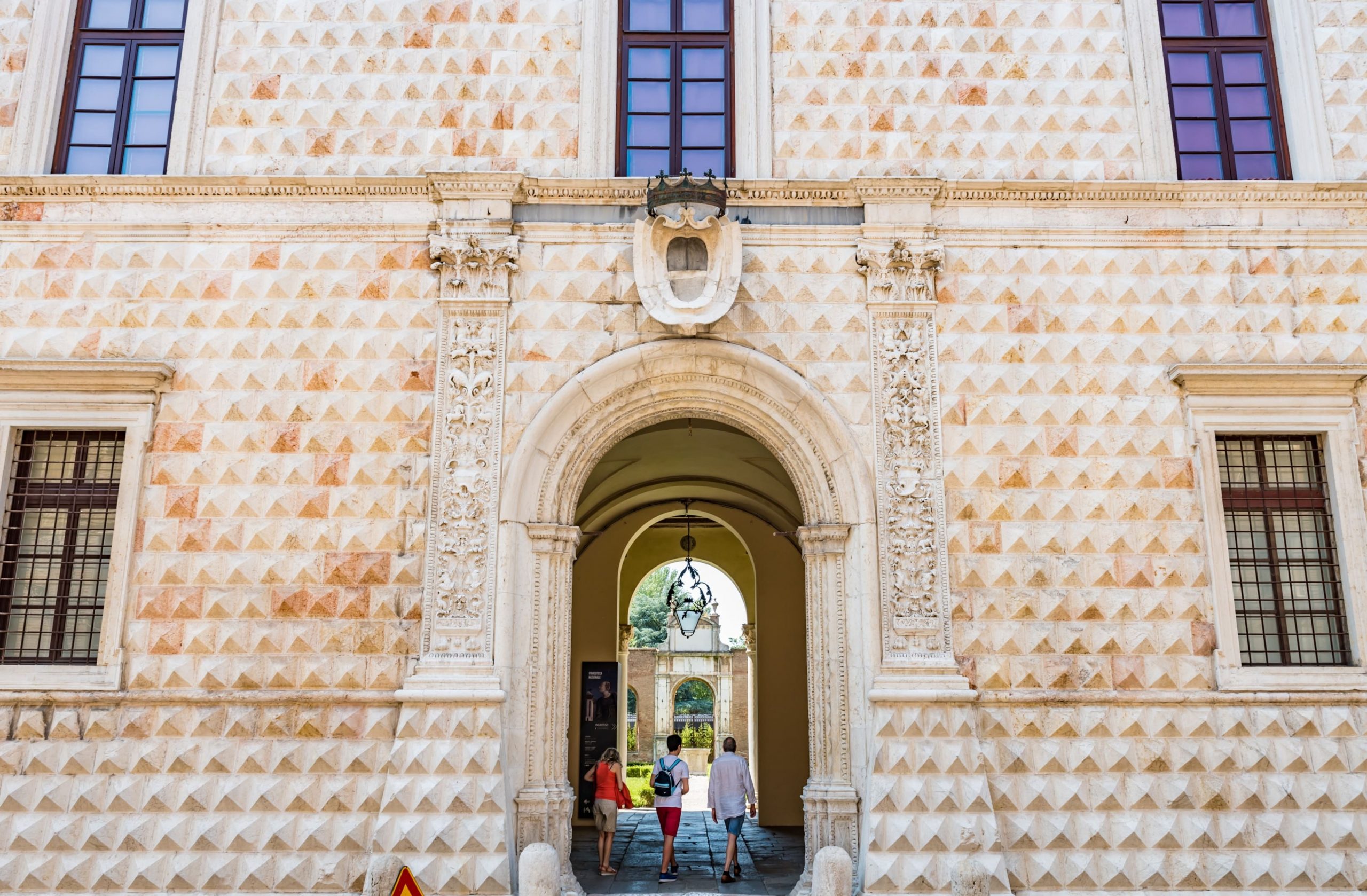
It features a wide collection of Emilian paintings from the 13th to the 18th century.
The collection’s strength lies in works from the Bolognese School, which flourished during the 16th and 17th centuries. The gallery occupies a former Jesuit novitiate, and the building itself merits attention with its elegant architecture. The Pinacoteca Nazionale di Bologna represents essential viewing for art enthusiasts visiting Northern Italy.
Practical Details:
- Entry costs €6 (€2 reduced for EU citizens aged 18-25).
- Open Tuesday-Sunday 9:00 AM-7:00 PM, closed Mondays.
- Located at Via delle Belle Arti 56.
- The Bologna Welcome Card offers discounted admission.
Explore Bologna’s Archaeological Museum
Bologna’s Archaeological Museum presents an extraordinary journey through ancient civilisations, with particular strength in Etruscan and Egyptian collections. The Egyptian section ranks among Italy’s finest, while Etruscan galleries showcase treasures from Bologna’s ancient past when the city was known as Felsina during pre-Roman times.
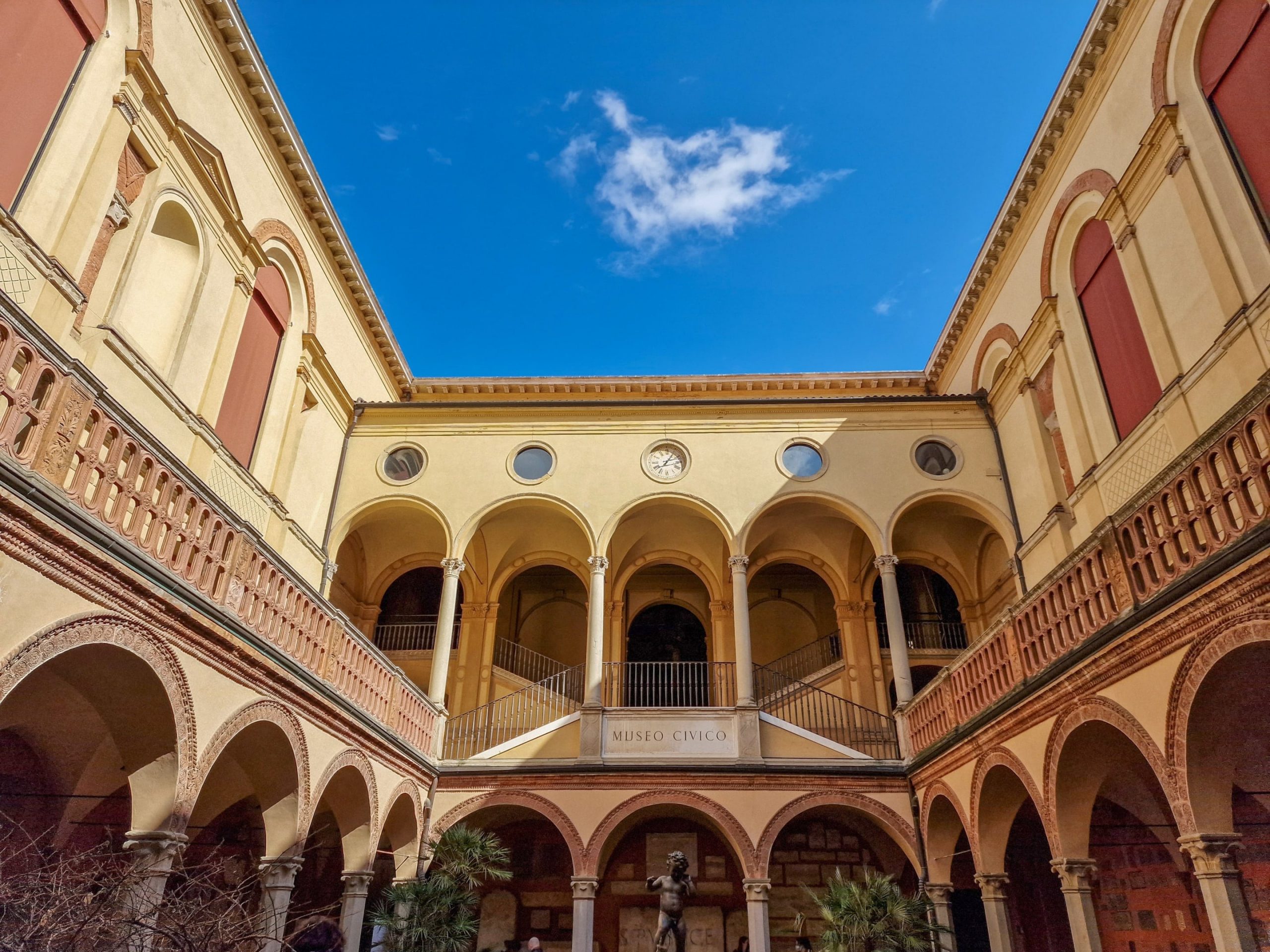
With approximately 3,500 objects, this is considered one of the most important Egyptian collections.
The museum provides essential context for understanding the city’s deep historical roots, predating the Middle Ages by many centuries. Roman artefacts, Greek pottery, and Renaissance collections complete the offerings at Bologna’s Archaeological Museum.
Visitor Information:
- Entry €5 (€3 reduced).
- Open Tuesday-Friday 9:00 AM-3:00 PM, Saturday-Sunday 10:00 AM-7:00 PM, closed Mondays.
- Located at Via dell’Archiginnasio 2, steps from Piazza Maggiore in the city centre.
- The Bologna Welcome Card provides access to multiple museums, including this one.
Marvel at the Anatomical Theatre
Hidden within the Archiginnasio Palace lies the Anatomical Theatre, a wooden amphitheatre where medical students from the oldest university in the Western world once gathered to observe human dissections. Built in 1637, this extraordinary room served the University of Bologna’s anatomy department until 1803.
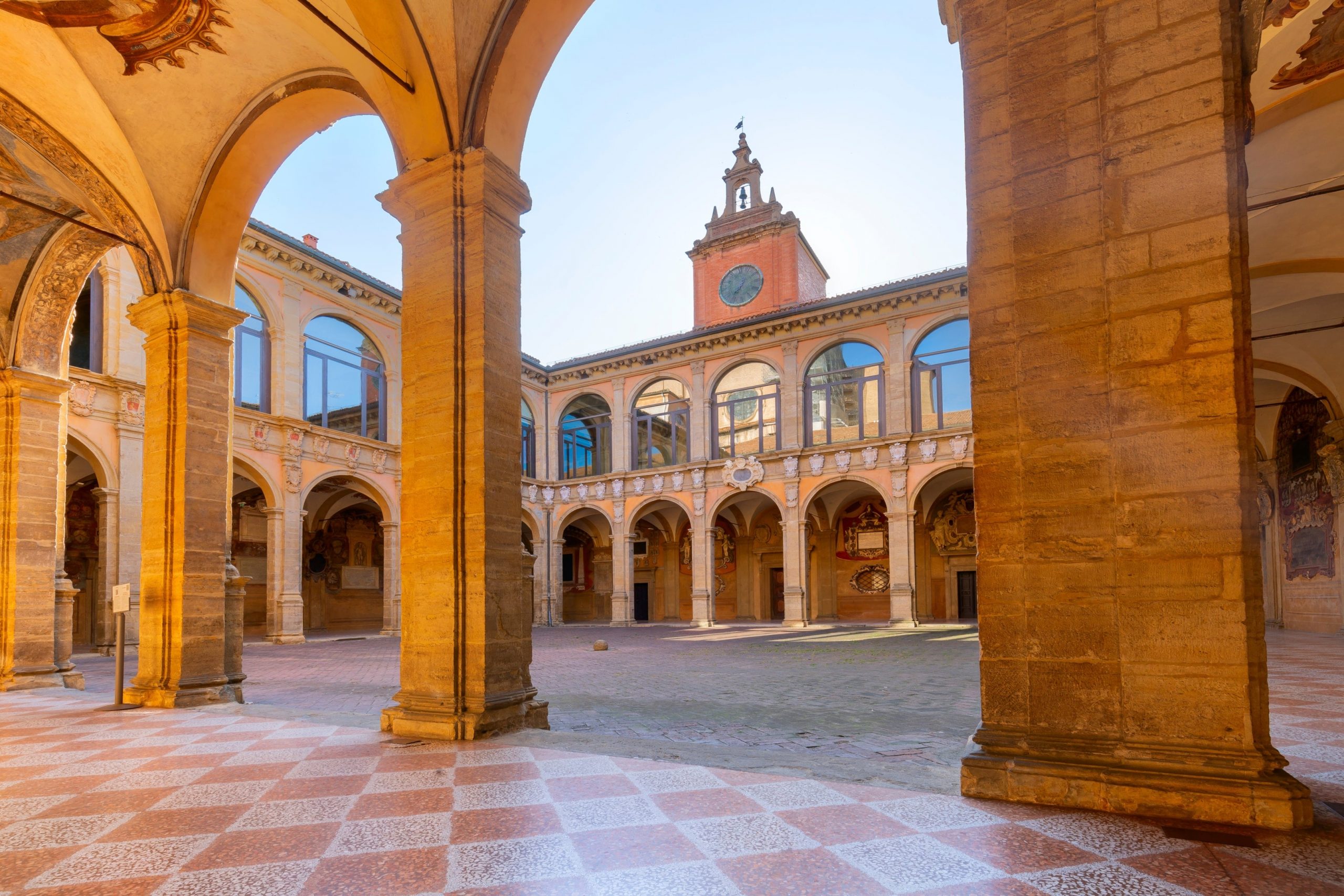
The theater was designed in 1637 by Bolognese architect Antonio Levanti.
The theatre’s tiered wooden benches encircle a central marble table. Intricate wooden carvings cover every surface, with anatomical figures and decorative elements creating a dense visual narrative. The space represents the pinnacle of Baroque decoration applied to a scientific purpose—a must-see among Bologna-based attractions.
Practical Information:
- Entry €3. Open Monday-Friday 10:00 AM-6:00 PM, Saturday 10:00 AM-7:00 PM, Sunday 10:00 AM-2:00 PM.
- Located at Piazza Galvani 1.
- Combine with the nearby Civic Art Collection for a comprehensive cultural experience.
Discover the Civic Art Collection and Modern Art
The Civic Art Collection (Collezioni Comunali d’Arte), housed within Palazzo d’Accursio, showcases paintings, sculptures, and decorative arts from the 14th through 19th centuries. For those interested in modern art, Bologna offers several contemporary galleries in the university quarter, reflecting the city’s ongoing creative evolution beyond its Middle Ages heritage.
Uncover Hidden Gems in Plain Sight
Find Bologna’s Canals: The Hidden Canal Network
Few first-time visitors realise that Bologna once featured an extensive network of canals that powered mills and transported goods through the city centre. Most of Bologna’s canals were covered in the early 20th century, but traces of the hidden canal system remain for those who know where to look.
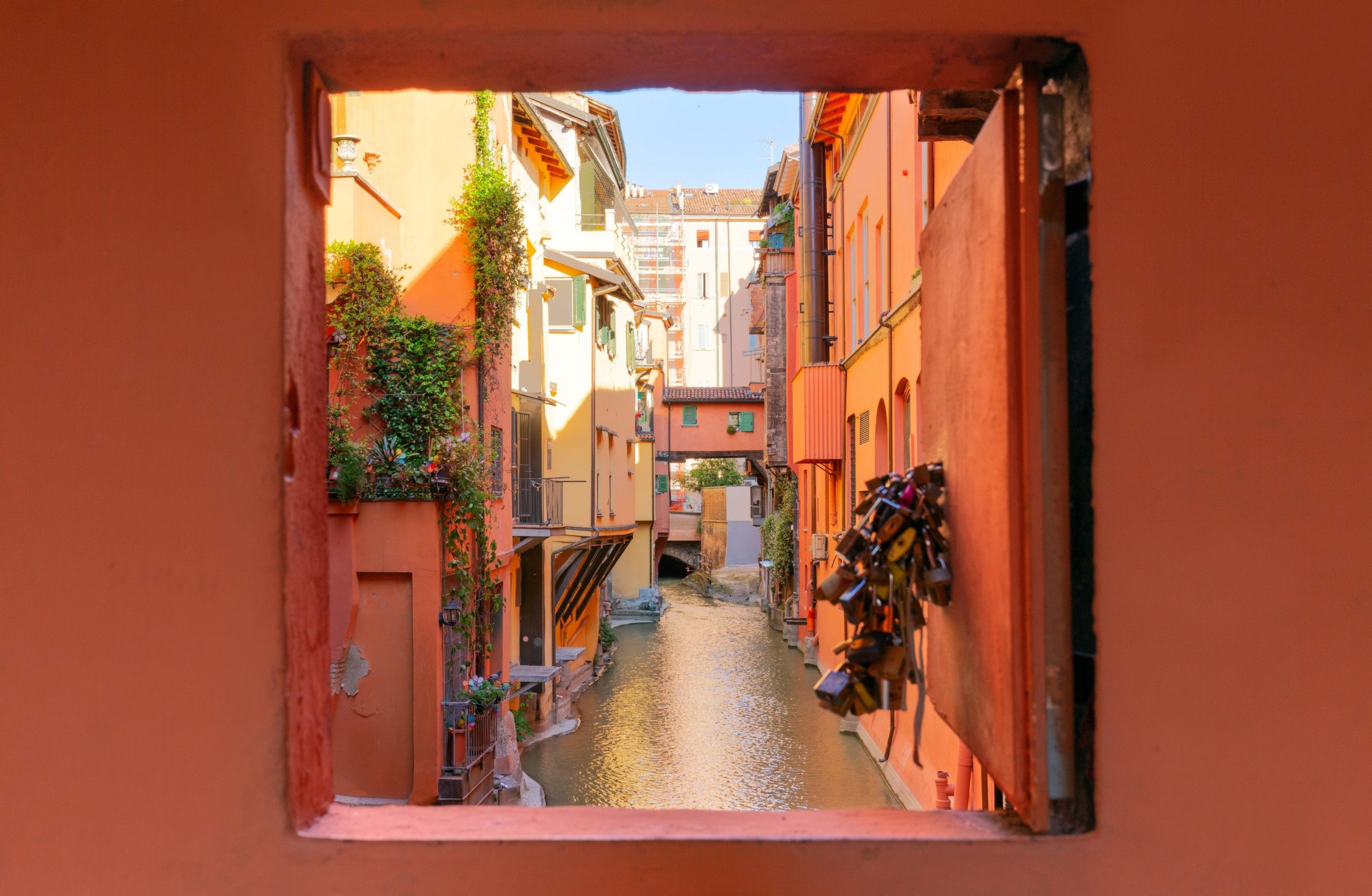
This street is named for the canal that once flowed openly beneath it.
The most accessible viewing point is Via Piella, where a small window called “finestrella” frames an unexpected glimpse of water flowing beneath medieval buildings, often called “Little Venice.” This hidden canal viewing spot offers one of Bologna’s most surprising sights, completely in plain sight yet overlooked by most visitors.
More ambitious explorers can follow Via delle Moline, where portions of Bologna’s canals remain visible along the street. The Canale delle Moline once powered numerous mills that ground grain for the city’s pasta production during the Middle Ages.
Locating the Canals:
- Via Piella is near Via Oberdan in the city centre.
- The “finestrella” is clearly marked but easy to miss among residential buildings.
- No entrance fee.
- These waterways represent fascinating historical elements hiding in plain sight throughout the historic centre.
Visit Osteria del Sole: The Oldest Wine Bar
Osteria del Sole claims the title of the oldest wine bar in Bologna and possibly the oldest wine bar in Italy, having poured local varieties since 1465. This no-frills establishment embodies authentic Bologna, where locals gather at communal tables, and wine flows generously at remarkably modest prices.
The osteria’s unique tradition allows patrons to bring their own food, while the bar supplies only wine and beer. Purchase bread, cheese, and cured meats from nearby shops showcasing local meats and Parmesan cheese, then settle in with a carafe of Pignoletto or Sangiovese at the oldest wine bar.
Practical Details:
- Located at Vicolo Ranocchi 1/d in the city centre.
- Open Monday-Saturday approximately 10:00 AM-9:00 PM, closed Sundays.
- Wine by the glass costs €2-4.
- Cash only.
- The atmosphere is casual and sometimes rowdy—embrace the authentic energy of this historic gem.
Discover Santa Maria della Vita
Santa Maria della Vita conceals one of Bologna’s most powerful artistic treasures: a terracotta lamentation scene by Niccolò dell’Arca that stands among Renaissance sculpture’s most emotionally intense creations. The group of seven life-sized figures surrounding Christ’s dead body captures grief with almost unbearable rawness—a masterpiece hiding in plain sight.
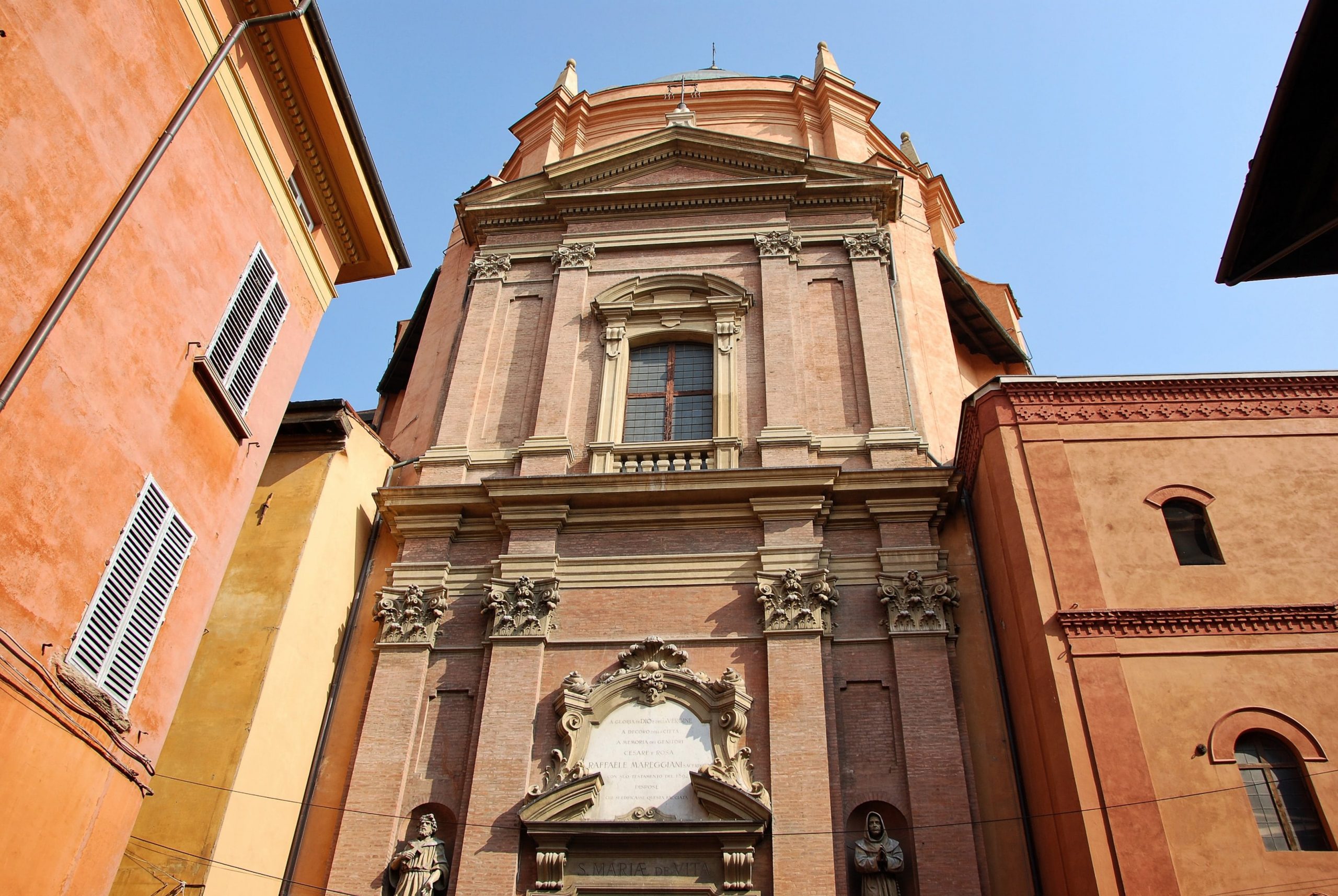
The sculptural group was created by Niccolò dell’Arca between 1463 and 1494.
Visitor Information:
- Located at Via Clavature 8/10.
- Generally Tuesday-Sunday 10:00 AM-7:00 PM.
- Entry approximately €5.
- Combine with the nearby Mercato di Mezzo for a perfect morning.
Experience Day Trips from Bologna
Bologna’s central location in the Emilia-Romagna region makes it an ideal base for exploring diverse attractions accessible as day trips from the city.
Ferrari Museum in Maranello
Automotive enthusiasts will find pilgrimage-worthy experiences at the Ferrari Museum in Maranello, approximately 45 kilometres south of Bologna. The museum celebrates Italy’s most iconic automotive brand through rotating exhibitions showcasing historic race cars, technological innovations, and the passion that defines Ferrari’s identity in the Emilia-Romagna region.
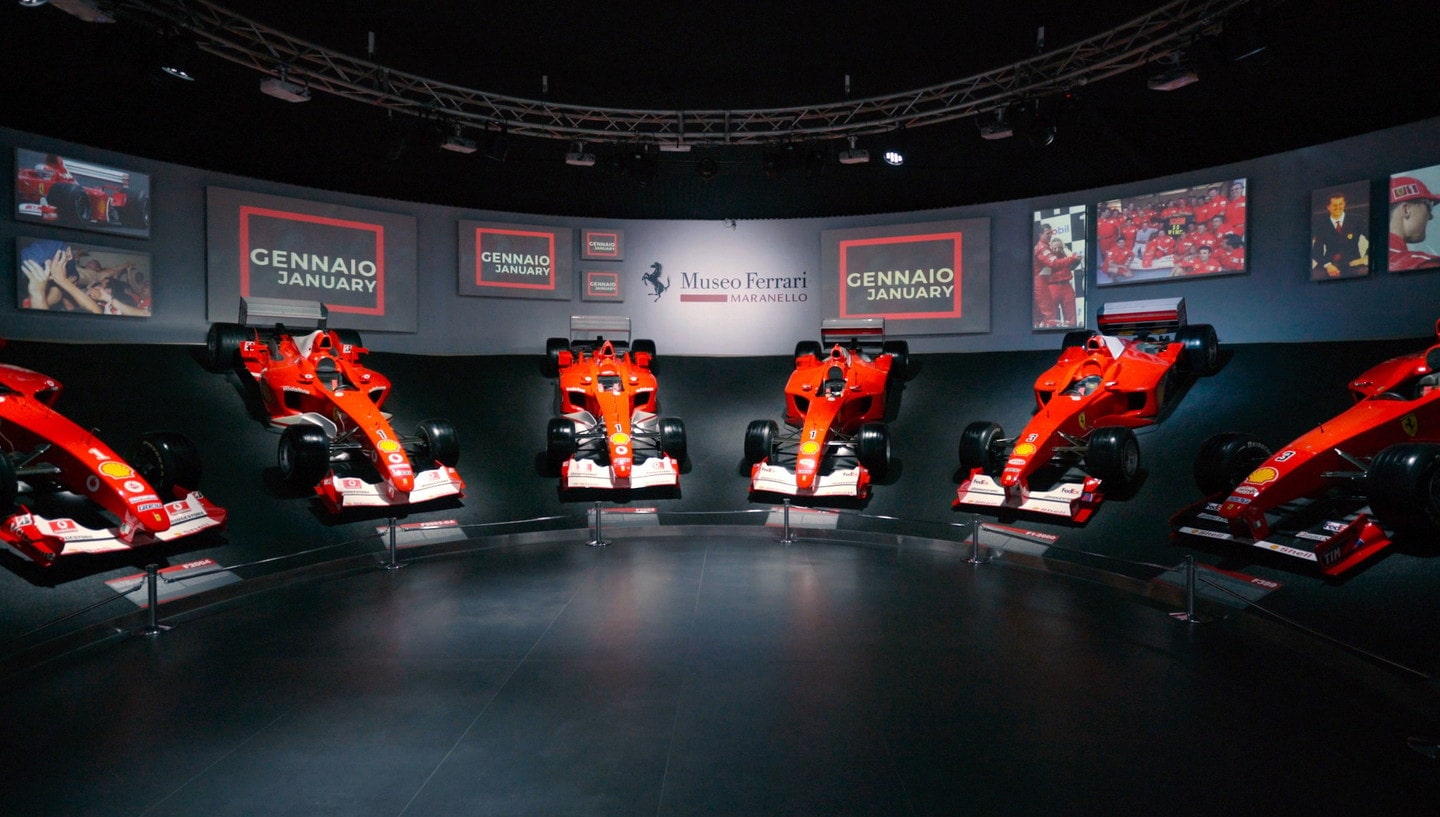
Various engines that have powered the racing and production models are also on display.
Planning Your Visit:
- Located at Via Alfredo Dino Ferrari 43, Maranello.
- Open daily 9:30 AM-6:00 PM.
- Reach via rental car (45-minute drive from Bologna Centrale) or organised day trip tours.
- Tours typically cost €120-180 for full-day experiences combining Ferrari with other attractions.
Ducati Museum
The Ducati Museum in Borgo Panigale, on Bologna’s outskirts, chronicles the legendary Italian manufacturer’s history from 1926 through contemporary superbikes. The collection spans decades of evolution, from vintage models to cutting-edge racing machines. Factory tours can be arranged for behind-the-scenes access to this Bologna-based manufacturing icon.
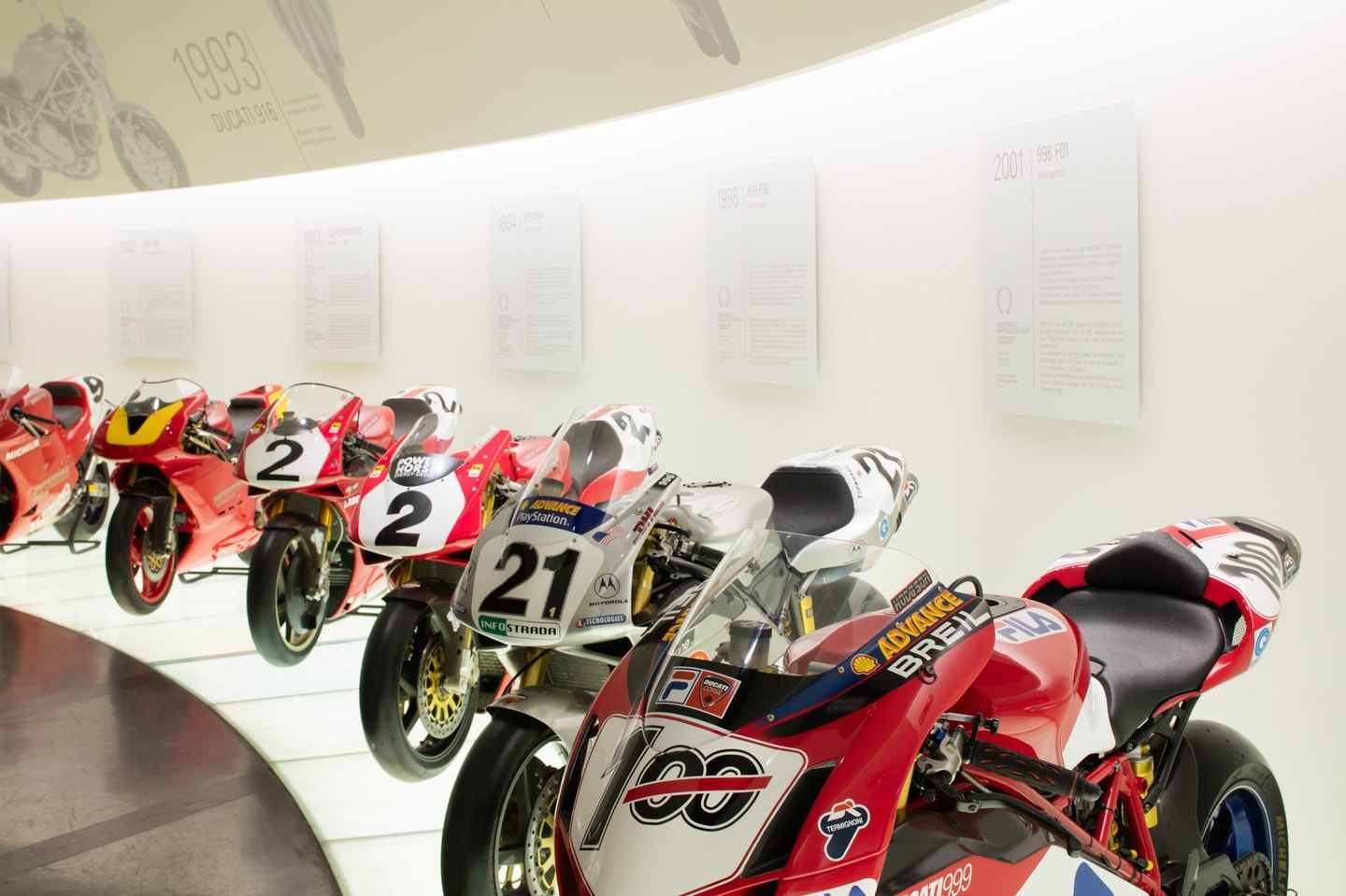
There is an opportunity to book a test ride session to experience the latest Ducati models.
Practical Information:
- Located at Via Cavalieri Ducati 3, Borgo Panigale.
- Museum entry €15.
- Open Monday-Sunday 9:00 AM-6:00 PM.
- Factory tours must be pre-booked (typically an additional €10-15).
Modena: Balsamic Vinegar and UNESCO World Heritage Sites
The nearby city of Modena, just 40 kilometres northwest, offers compelling reasons for a day trip from Bologna. This elegant provincial capital in the Emilia-Romagna region is renowned for traditional balsamic vinegar production and a magnificent Romanesque cathedral that earned UNESCO World Heritage site status.
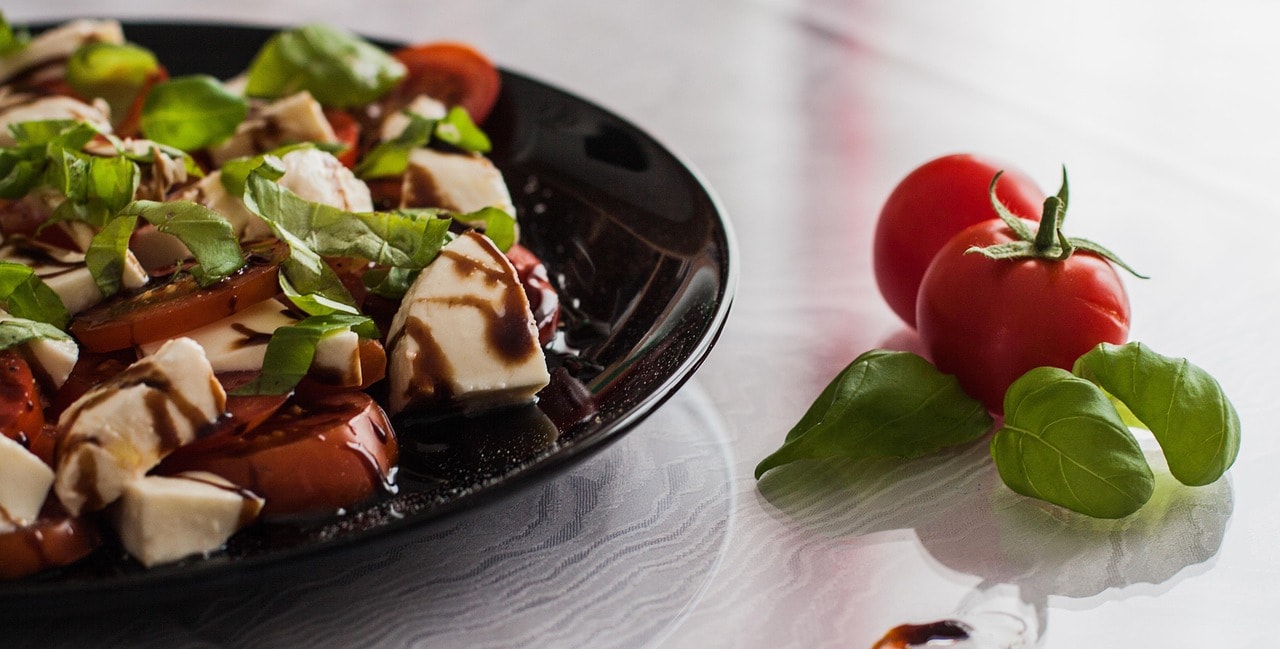
The grapes are typically local varieties like Trebbiano and Lambrusco.
Traditional balsamic vinegar requires ageing grape must for a minimum of 12 years in successively smaller wooden barrels. Several acetaie (vinegar producers) near Modena offer tours and tastings with local producers that reveal why genuine aged balsamic vinegar commands premium prices—essential experiences for food culture enthusiasts.
Getting There: Frequent trains connect Bologna Centrale and Modena (20-35 minutes, €5-10). Trains depart every 30-60 minutes. Consider joining an organised food tour to visit an acetaie in the countryside, as they’re difficult to reach via public transport. Full-day tours exploring local cuisine typically cost €140-200 per person.
Getting Around the City
Bologna’s compact historic centre makes walking the ideal transportation mode. The city’s main sights cluster within a roughly one-kilometre radius of Piazza Maggiore, all easily reached through atmospheric porticoed streets in the city centre.
The city’s network of porticoes—covered walkways totalling nearly 40 kilometres—represents one of Bologna’s most distinctive features and UNESCO World Heritage sites. These elegant arcades allow comfortable exploration regardless of the weather, embodying the practical beauty that characterises architecture from the Middle Ages forward.
Transportation Tips: Bologna’s ZTL (Limited Traffic Zone) restricts vehicle access in the city centre. If arriving by car from Bologna Airport (approximately 20 minutes away) or other locations, park in peripheral parking areas. Daily parking costs €15-25. Bologna Airport (Guglielmo Marconi Airport) offers regular bus service to Bologna Centrale for €6.
Best Times to Visit Bologna
- Spring (April-May): Ideal weather with temperatures ranging 15-22°C, blooming gardens, and manageable tourist numbers compared to other major Italian cities. Restaurant patios in the city centre are open for outdoor dining.
- Summer (June-August): Warm to hot temperatures (25-35°C), with quieter conditions as locals escape to coastal resorts. Some restaurants close in August. The nickname “La Rossa” (the red one) becomes especially apparent as terracotta rooftops glow in summer light.
- Fall (September-October): Perhaps the finest time to visit Bologna, with comfortable temperatures, harvest season’s culinary bounty showcasing fresh produce and local meats, and university students energising the city.
- Winter (November-March): Fewer tourists, lower prices, authentic local atmosphere. Temperatures range 2-10°C. Christmas markets add festive charm to the historic centre.
Where to Stay
- Historic Centre: Prioritise locations near Piazza Maggiore and the city’s main sights for maximum convenience. Grand Hotel Majestic “già Baglioni” delivers five-star elegance with period details. Expect rates from €250-400 nightly in Bologna’s city centre.
- University Quarter: The area around Via Zamboni offers a vibrant neighbourhood atmosphere with excellent restaurants showcasing local cuisine. Properties here typically run slightly less expensive while maintaining quality.
- Near Bologna Centrale: Practical for travellers with extensive rail plans to other Italian cities. Quality hotels like Hotel Internazionale provide comfort at €120-180 nightly near the central train station.
Create Your Personalised Bologna Experience
Bologna rewards travellers who approach it with curiosity, openness to authentic experiences, and an appetite for both culinary and cultural excellence. Unlike Venice’s crowds or Florence’s museum queues, this gem among Northern Italy’s major cities reveals itself gradually to those willing to wander porticoed streets in the historic centre and trust in serendipitous discoveries.
Trust in local recommendations from the oldest wine bar patrons, embrace the slower pace, and allow yourself to be guided by curiosity. Your visit to Bologna promises cherished travel memories—a destination where luxury means savouring artisanal gelato while strolling under porticoes, understanding why this city’s food scene defines excellence, and discovering why Bologna deserves recognition among the greatest Italian cities.
Visit Italy in another place? Check out Designer Journeys guide for your best travel inspiration.