Post Contents
- Why Milan Cathedral Still Stops You in Your Tracks – Duomo history, scale, and first impressions
- Exploring the Duomo of Milan façade – statues, spires, and Gothic architecture up close
- Rooftop terrace adventure among the spires – skyline views and the Madonnina
- Inside the cathedral church: art, light, and stillness beneath the nave
- Duomo Museum tickets and the Archaeological Area – plan a seamless tour in Milan
- F.A.Qs: Milan Cathedral and Duomo basics for first-time visitors
- What stayed with me after the cathedral at night – illumination, calm, and perspective
Why Milan Cathedral Still Stops You in Your Tracks – Duomo history, scale, and first impressions
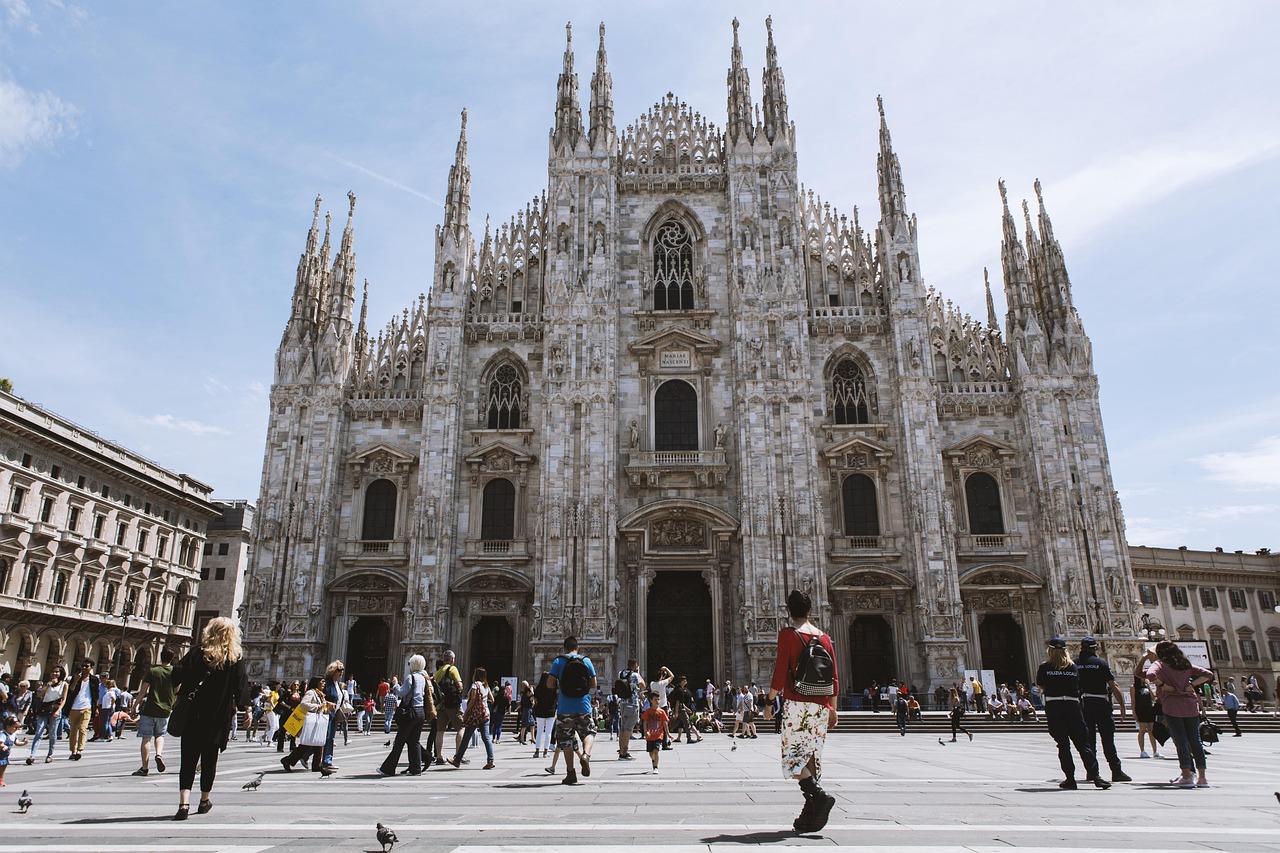
Arriving at Milan Cathedral (the Duomo) and feeling its scale up close
The milan italy cathedral experience is the kind of encounter that makes you slow down without being told to. The Duomo of Milan isn’t just a cathedral you photograph; it’s a historical complex that still functions as a working church and a symbol of Milan, right in the centre of Milan, where city life keeps moving around it.
The construction began in 1386 under the Visconti, set in motion by Gian Galeazzo, and it never truly stood still—each generation made choices that shaped the façade, the upper silhouette, and the spaces within. Think of it as a long-running project where an architect had to respect what came before, add what the era demanded, and still protect a single, coherent vision for the cathedral.
Construction that unfolded century after century – timelines, 1418 milestones, and Gothic continuity
If you’ve ever wondered why the building feels both unified and richly layered, it’s because the construction of the Duomo unfolded across time rather than across one fixed plan. You’ll hear dates like 1418, and you’ll notice how styles and techniques shifted, yet the cathedral kept its overall Gothic ambition intact. That continuity is part of its pull: many hands, one landmark, built to last.
The Fabbrica, Candoglia marble, and the institution that keeps the cathedral glowing
Behind the scenes, the Veneranda Fabbrica del Duomo di Milano remains the institution responsible for daily care and long-term restoration, coordinating specialists whose seriousness is evident in every repaired carving. Look for Candoglia and the prized Candoglia marble, which can read as white marble when light softens, and the spires sharpen into silhouette. On your first tour, expect a small emotional jolt—scale, sound, and reverence—then give yourself permission to take it slowly with water, shade, and steady pauses.




Exploring the Duomo of Milan façade – statues, spires, and Gothic architecture up close
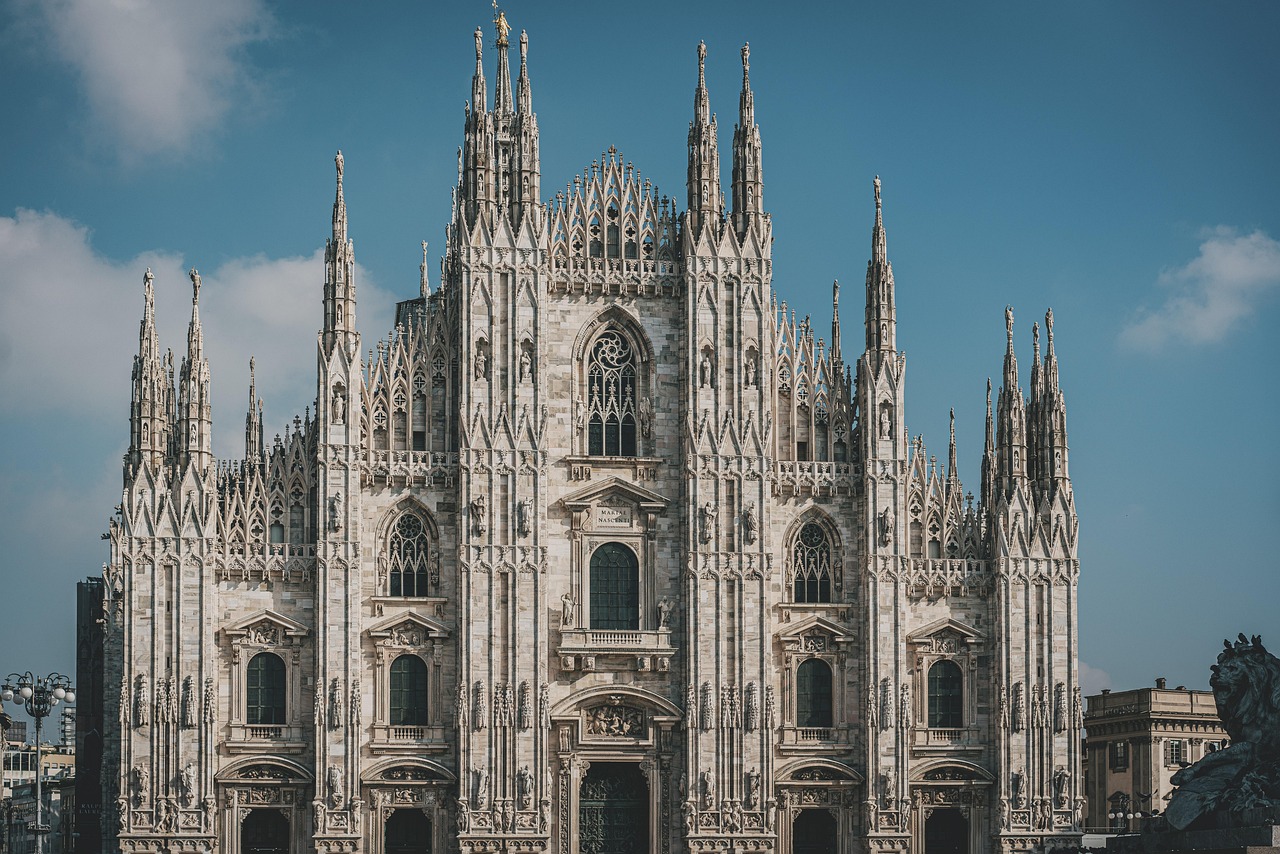
The cathedral façade up close: statues, pinnacles, and a skyline of stone
The façade becomes easier to read when you treat the exterior as a gallery to explore, not a wall to rush past. From a distance, it looks like lace; up close, you start to see a carefully managed system of choices, refined by more than one architect into a single architectural statement.
Stand still for a moment and follow the geometry of a spire, then let your gaze drop to the figures clustered beneath it. Saints, symbols, and tiny scenes reward the visitor who looks with patience and curiosity rather than rushing through a checklist.
Spot the sculptor’s storytelling in the detail – one statue at a time
Try reading one cluster of carvings at a time: posture, expression, and the small objects worked into hands or robes. A fellow traveller once told me they laughed out loud when they noticed a mischievous gargoyle close-up during a later rooftop walk—suddenly the stonework wasn’t “old”; it was full of character. That’s the secret: this cathedral can feel solemn, but it’s never dull.
Plan a calm viewing loop around the square – best angles and changing light
To create calm in a busy place, design a simple loop around the plaza before you commit to your next step. It keeps crowds from pushing you into rushed angles and helps you settle into your own pace.
- Early light: start on the east side for softer tones on the stone.
- Mid-loop pause: step back for a full view of the façade and the repeating pinnacles.
- Late light: finish with a side perspective that highlights the massing at its most dramatic.
For context, it helps to remember that Milan’s creative energy didn’t stop at one era—Leonardo da Vinci is part of the city’s broader Renaissance confidence, even as the Duomo maintains its own distinctive visual language.
Rooftop terrace adventure among the spires – skyline views and the Madonnina
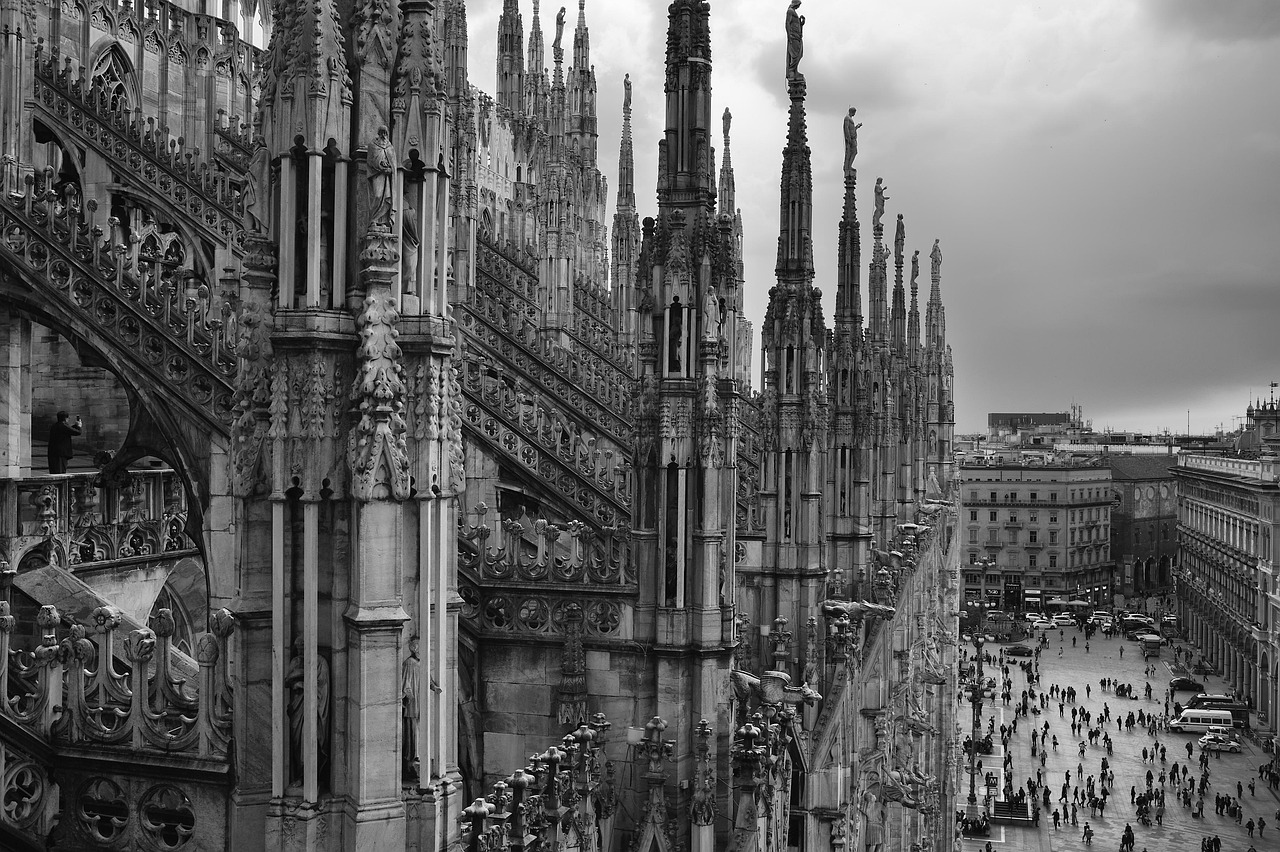
Walking high above the city on the cathedral rooftop among pinnacles and statues
For many travellers, the rooftop is the high point of a Milan cathedral day because you’re no longer just looking at the building—you’re moving through it. This is where the roof becomes a walkable landscape of pinnacles, narrow passages, and sudden viewpoints, making the whole visit feel immersive.
Stairs versus elevator is a personal choice, and either option is valid if it helps you enjoy the terrace with confidence. If heat or time is tight, the lift gives you more time up top; if you love earning your view, the stairs add a quiet sense of achievement. In summer, carry water and keep a steady pace, especially if you’re climbing.
Sunset stairs and a moment of personal awe on the rooftop walkways
One traveller described climbing the narrow stairways at sunset as a thrilling adventure layered with spiritual awe. The final steps opened into golden light, and Milan spread out below in a way that felt both intimate and vast—like the city was inviting them in, but on their terms.
Close-up lacework and a quieter way to photograph the cathedral rooftops
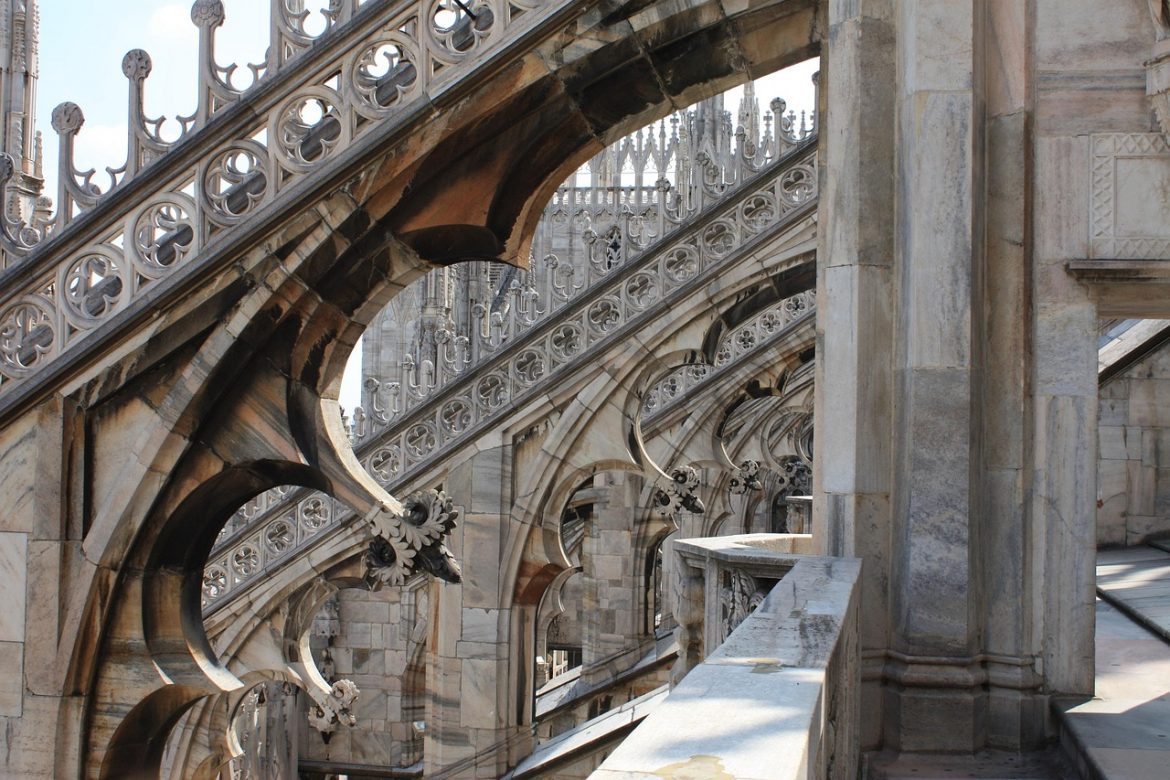
Up here, you can finally see how the stone is worked: delicate lace-like screens, small guardians along ledges, and weathered edges that show time without hiding it. Keep an eye out for playful faces and tiny symbols carved where most people never think to look.
Create your photo moments checklist: choose one wide skyline shot, one close-up of a pinnacle, and one “through the stone screens” frame. Let others pass, keep your voice low, and remember that even up high, you’re still within a religious cathedral setting.
Inside the cathedral: tall columns, dim light, and a sense of stillness
After the rooftop, the pace changes immediately: the interior asks you to slow down. The nave pulls you forward in long lines of shadow and light, each pillar guiding the eye, while the transept proportions create a quiet sense of order.
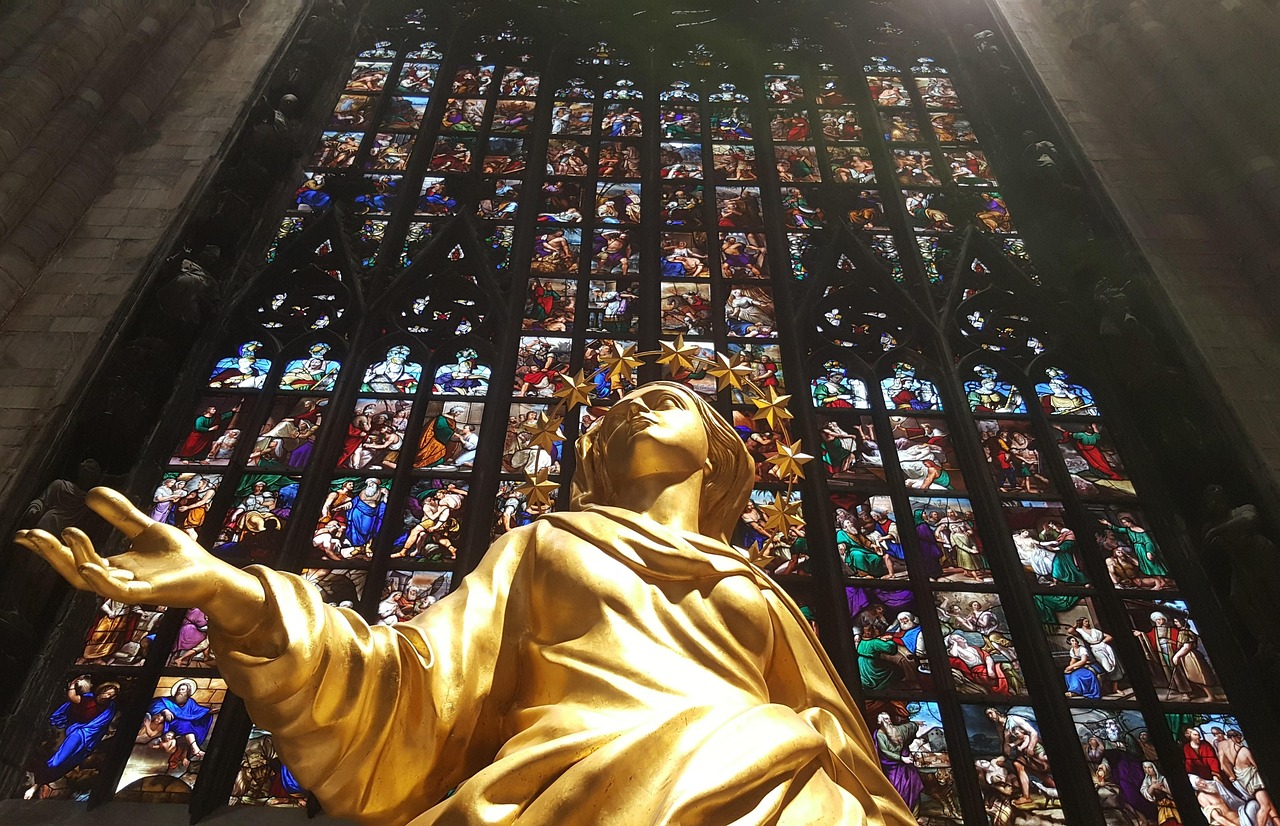
The stained glass windows are not background decoration; they’re storytelling that shifts as the day changes. Watch how colour gathers on stone, then thins and moves—those travelling pools of light become part of the cathedral’s atmosphere.
Stained-glass windows are moving stories you can read in layers
Give yourself time to look up and then back down again, as if you’re reading a scene in layers. Figures and symbols appear, disappear, and reappear depending on where you stand, and the entire space feels subtly alive as the light changes. If you enjoy craft, this is where you start noticing how carefully each panel balances image, structure, and illumination.
The Saint Bartholomew Flayed sculpture, respectful worship, and Catholic etiquette
The statue of Saint Bartholomew Flayed is intense and unforgettable, and it’s normal to feel unsettled by its realism. I suggest a gentle approach: look, read the plaque if available, then step away and let your response settle. If you’re attending an evening mass, remember this is a Catholic service—keep silence, avoid flash photography, and let the ritual set the tone without interruption.
To discover the history in quieter layers, notice the apse and choir area, then look for access points that lead toward the crypt. These spaces hold ancient heritage, and they often feel calmer than the central aisle.
Duomo Museum tickets and the Archaeological Area – plan a seamless tour in Milan
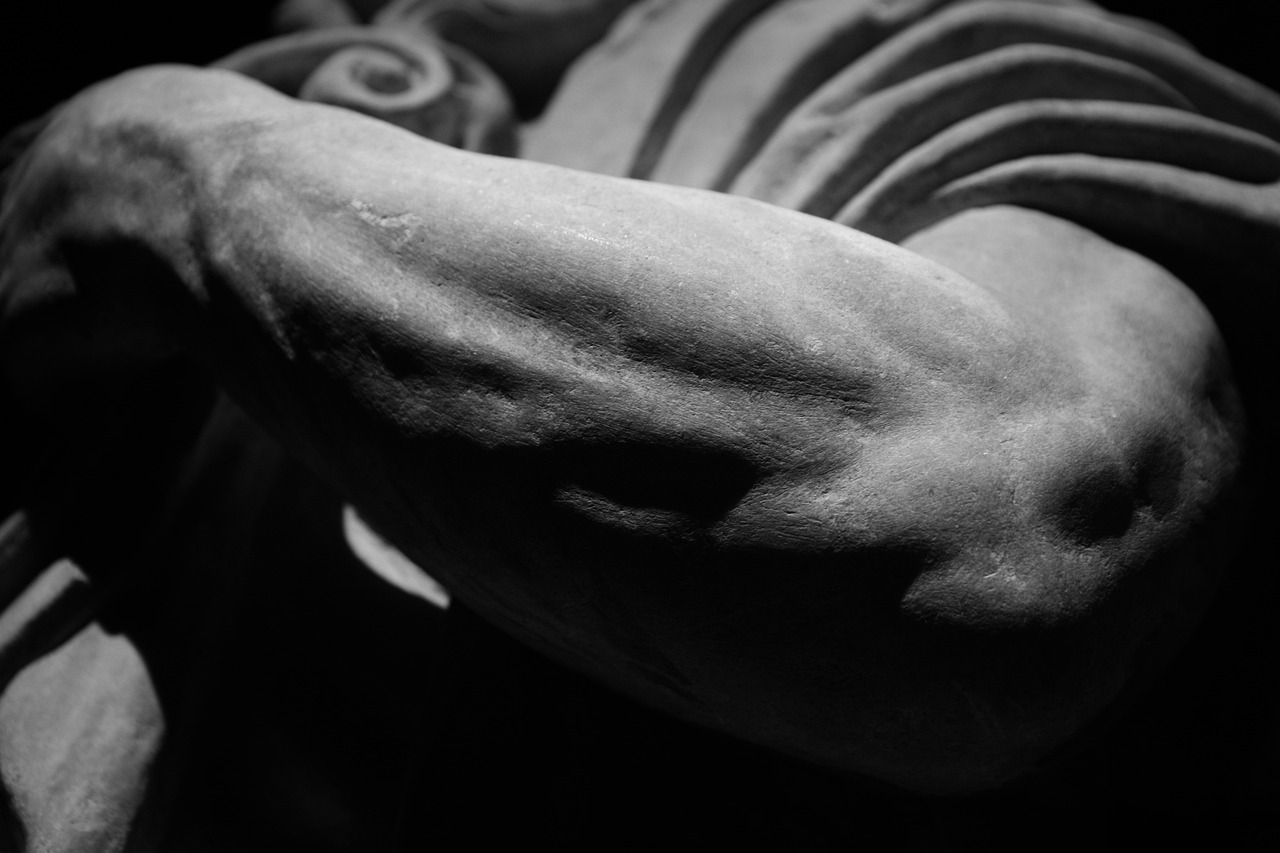
Museum exhibits and an underground route that adds depth to your visit
Smart planning is what turns a beautiful visit into a seamless day, especially if you want to visit the roof, the cathedral, and the museum without feeling rushed. The museum adds depth through models, original sculptures, and behind-the-scenes context that shows how each element was designed, moved, repaired, and preserved as part of the ongoing construction story.
Below the cathedral, the underground route offers a quieter angle on Milan—foundations, earlier layers, and a thread back to an older basilica and the church of Santa Maria, as well as the wider Santa Maria story that predates the current structure. It’s a reminder that cities are built layer by layer.
Best order of visit and combined tour tickets online to reduce queues
For the smoothest flow, purchase combined tickets online for the cathedral, rooftop access, and museum entry. Here’s a simple guide to the order that usually works best: museum first (to prime your eye), then the cathedral, and finally the rooftop when you’re ready for views and fresh air. That structure reduces queues and gives you a clear narrative instead of a scattered experience.
If you’d like more high-end cultural itineraries, you can explore our Trip gallery when you’re planning your next designer journey.
Local access, comfort, and a support rhythm for your cathedral tour
Arrive via Duomo metro station on Line M1 or M3, which places you close to the action and takes the stress out of navigating the centre of Milan. In busy periods, keep valuables secure—pickpockets target crowded pinch points—and build in an espresso pause at a nearby café to reset. A small comfort rhythm helps you keep trust in your day, especially if you’re travelling in heat or juggling timed entries.
- Dress codes: modest clothing for the cathedral; carry a light layer to cover shoulders if needed.
- Hydration: bring water, particularly in summer, and take shade breaks between the rooftop and the cathedral.
- Behaviour: respect photography rules during services and keep voices low in sacred spaces.
- Time blocks: aim for early morning or late afternoon for lighter crowds and better light.
A local once shared that the Duomo is also a communal gathering spot for festivals and traditional celebrations—moments of traditional Lombard pride that connect visitors with locals. When you notice that shared use of the space, the tour stops feeling like consumption and starts feeling like belonging.
F.A.Qs: Milan Cathedral and Duomo basics for first-time visitors
Why is the cathedral in Milan so famous?
It’s famous for its vast gothic design, intricate façade, and extraordinary rooftop walkways where you can move among carvings and viewpoints. It’s also a living landmark, shaped over more than a century of craftsmanship, functioning as both a major artwork and an active place of worship.
What is the name of the famous church in Milan?
The famous church in Milan is the Duomo di Milano, often called the Duomo or Milan Cathedral. Many travellers also refer to it as the Duomo of Milan, as it anchors the city’s historic centre and is one of the world’s most recognisable sacred buildings.
Who is buried in Milan Cathedral?
The cathedral is connected to several notable figures, and the site includes areas tied to leadership and faith across different eras. For the most accurate, up-to-date information on burials and accessible sections, check official Duomo updates on the day of your visit, as access and interpretation can change.
Are Milan Cathedral and the Duomo the same?
Yes. “Duomo” simply means cathedral in Italian, and in Milan it refers to the city’s main cathedral. So when people say “the Duomo” in Milan, they mean Milan Cathedral.
What stayed with me after the cathedral at night – illumination, calm, and perspective
After dark, the façade seems to soften, and the stone loses its sharp glare, turning gentler and almost human. You can stand at the edge of the plaza and feel the scale without needing to prove anything to yourself.
What stayed with me wasn’t just height or grandeur, but care—the sense that a place built by so many hands can still offer reassurance to one traveller moving through Milan on a single evening. The rooftop courage and the quiet inside begin to merge into one insight: beauty is often the result of attention, repeated patiently, until it becomes a trust you can lean on.
Later, walking back into ordinary streets, I felt a quieter confidence. Not the loud kind, but the kind that helps you explore more openly, speak more kindly, and notice small things you would usually miss. Milan’s Duomo lingered as a silhouette in the mind, like a promise you don’t need to rush to understand.