Ultimate Rome Travel Guide Mindset & Map for Adventure Seekers in Roma Italy
If you’re searching for an elegant, experience-first plan for roma italy, start with one gentle truth: Rome isn’t a checklist—it’s a living studio of light, stone, and everyday life. Rome is the eternal city, and the best trips happen when you arrive with curiosity instead of pressure, letting the days unfold in layers. Treat this guide as a flexible map of main attractions, neighbourhood rhythms, and small pauses that make the City of Rome feel welcoming rather than overwhelming.
Mindset and map for adventurous, high-comfort days in Rome
Rome travel guide: plan days by neighborhood in the historic center
To experience Rome well, I like to “design your days” in clusters—less transit fatigue, more room for discovery. Think of the city as three easy anchors: the historic centre (for icons and a UNESCO World Heritage Site—one of the most protected UNESCO World Heritage areas in Europe), Vatican City (for art and grandeur), and Trastevere (for evenings and local flavour). Keep one neighbourhood as your base each day, and you’ll notice how Rome’s character changes block by block, not just landmark by landmark.
For high-end travellers who still want a little edge-of-the-map energy, this approach is quietly powerful: you can start early, slow down at the right time, then head out after dark without feeling overextended. If you’d like visual inspiration while you plan, here’s our Trip gallery for Italy journeys that balance cultural depth with ease.
Roma orientation: on foot, then metro and buses to connect neighbourhoods
Rome is best understood on foot, with the metro and buses as support rather than the main story. Walk when you’re in the centre, then use public transport to hop between bigger zones—your legs (and attention) will thank you. A good rule: walk until you reach your “two sights and a coffee” threshold, then slow down and read the piazza life like a cultural compass.
Adventure in Rome doesn’t need to be extreme. It can look like early starts, after-dark strolls, and viewpoint hunts that help you spot quiet corners beyond the obvious—paired with local insight and a little expert reassurance.




Colosseum, Roman Forum & Palatine Hill: a walking tour through ancient Rome
For a day that feels like a cinematic leap through time, build your plan around a walking tour of the Colosseum, Roman Forum, and Palatine Hill in Rome, Italy. The Colosseum is one of the most famous monument stops in Rome, and timing is everything: book ahead and arrive early for cooler air, softer light, and a calmer first impression. In this destination, that single choice can turn a headline attraction into an intimate encounter.
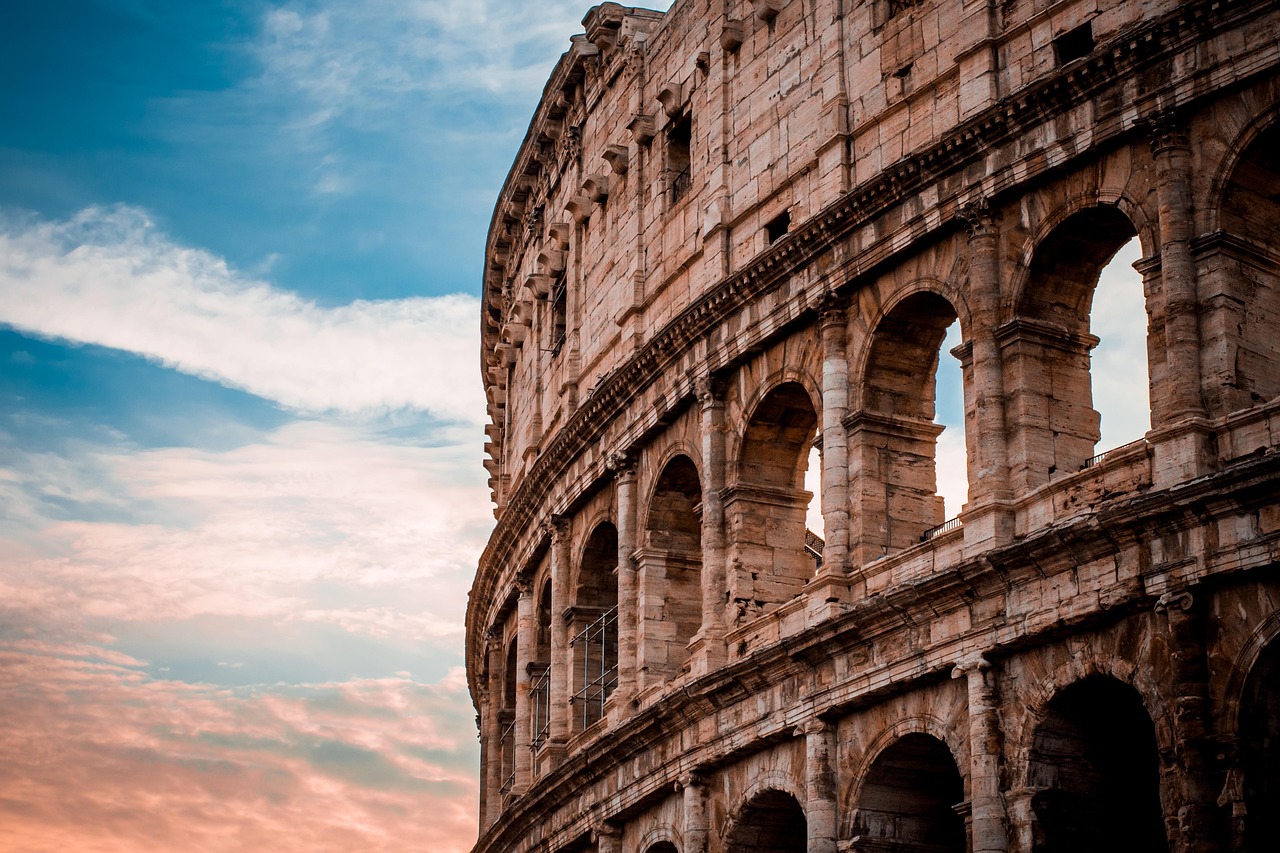
Colosseum dawn walk linking the forum ruins and hilltop viewpoints
Colosseum at dawn in Rome: gladiator stories and a monument that takes you back in time
An adventurer once told me about standing inside the Colosseum at dawn, when the air still felt silver-cool, and the arches held the day’s first hush. With no crowds pressing in, they could imagine a gladiator entrance—sand underfoot, the roar of the Roman Empire, and the weight of spectacle in a place built for it. It’s the kind of moment that takes you back in time, and it’s exactly why early entry is worth the planning.
Book with confidence: choose timed-entry tickets online, and consider a guided option if you want the stories without the stress of decoding every stone. In Rome, expert guidance can turn “ruins” into a living narrative while keeping your pace seamless.
Roman Forum route: Palatine Hill to Capitoline Hill and Piazza del Campidoglio
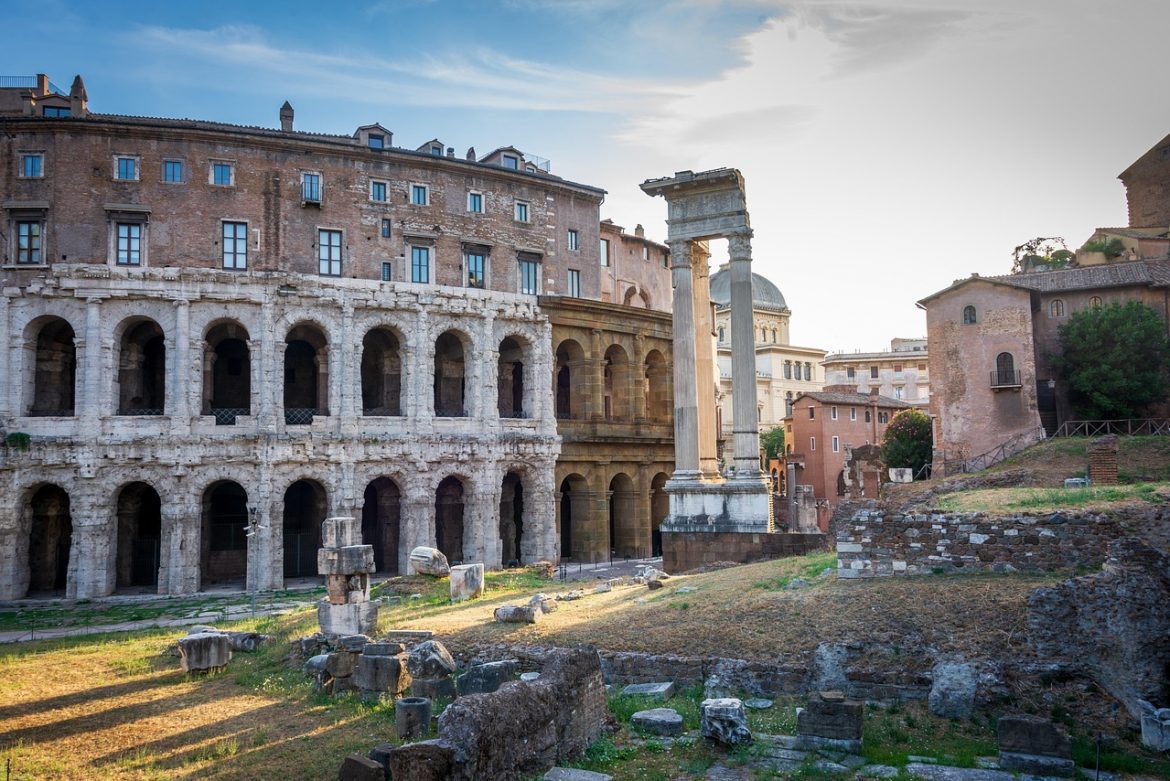
From the Colosseum, continue to palatine hill, then drift down into the roman forum—ancient Rome’s political heart, where power once gathered in open air. On a guided walk, you’ll hear cues like Romulus and Remus and learn how myth and politics braided together in the capital of Italy long before it became today’s Italian capital.
A simple, satisfying route is: Colosseum → Palatine Hill → Roman Forum → the hilltop museums area → piazza del Campidoglio. The final climb delivers panoramic views and makes the city’s layers click into place—temples, arches, and fragments that still feel startlingly present.
- Best preserved fragments: look for surviving columns, carved inscriptions, and street lines that still guide your feet.
- Comfort tactic: pause in shade whenever you see it—Rome rewards the traveller who knows when to slow down.
- Photography note: early or late light brings out the stone’s texture and keeps your experience calmer.
Vatican Museums, Sistine Chapel & basilica visits in Rome: plan a smooth cultural day
For cultural enthusiasts, the Vatican Museums, Sistine Chapel, and St. Peter’s Basilica in Rome, Italy, are not just a “must-do”—they’re a journey through important art collections that can feel genuinely transformative. The Vatican can be intense, so the secret is to arrive with a clear, crafted plan that protects your energy and attention. In Rome, this is how you turn a famous museum day into something personal and quietly moving.
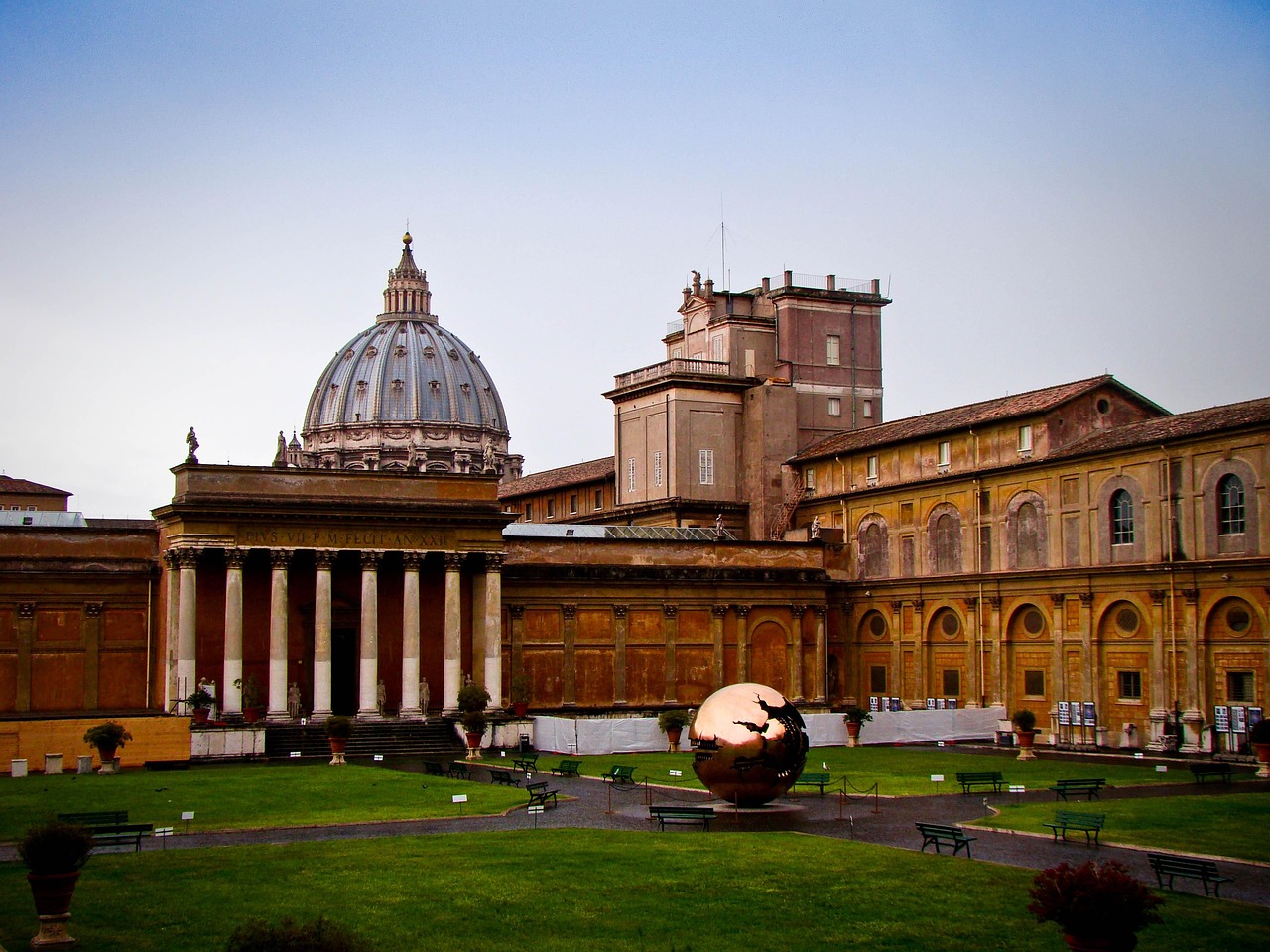
A focused Vatican day: museums, the chapel, and sacred spaces in Rome
Vatican Museums timing in Rome: a calm route through a world-class museum
Book Vatican Museums tickets online in advance and choose the earliest entry you can manage. Early hours help you experience the galleries with more space, which matters when you’re moving through art collections in the world that could easily fill weeks. A useful mindset: you’re not trying to “see everything”; you’re choosing what to feel deeply.
If you’re travelling high-end, consider a small-group tour that keeps the route seamless—less waiting, more insight, and better support when crowds swell. The best museum strategy in Rome is the one that lets you stay present and protect your pace.
Sistine Chapel stillness and Michelangelo in Vatican City
A traveller once described their emotional moment in the Sistine Chapel: the sudden hush, the collective etiquette of looking up, and the realisation that everyone around them had slowed down together. The artistry can feel overwhelming in the best way—Michelangelo’s ceiling isn’t just something you “see”, it’s something you absorb.
Afterwards, let yourself slow down in the Raphael Rooms—Raphael’s colour and composition can feel like a deep exhale after the chapel’s intensity. Then finish in St. Peter’s Square and step into the great church; many travellers simply call it St. Peter’s Basilica. Remember church dress codes (covered shoulders and knees), and keep your voice gentle; respect here isn’t performative, it’s care.
Trastevere in Rome, Italy: local restaurants, night atmosphere, and easy evening plans
If your search is leading you to Trastevere, Rome, Italy, local restaurants, and nightlife, trust that instinct. Trastevere is Rome’s warm-hearted evening playground: narrow lanes, cobblestone rhythm, and trattorias where the welcome feels local rather than staged. For adventure seekers, the magic is in leaning into the night—without rushing—so you can discover how the city changes after dark.
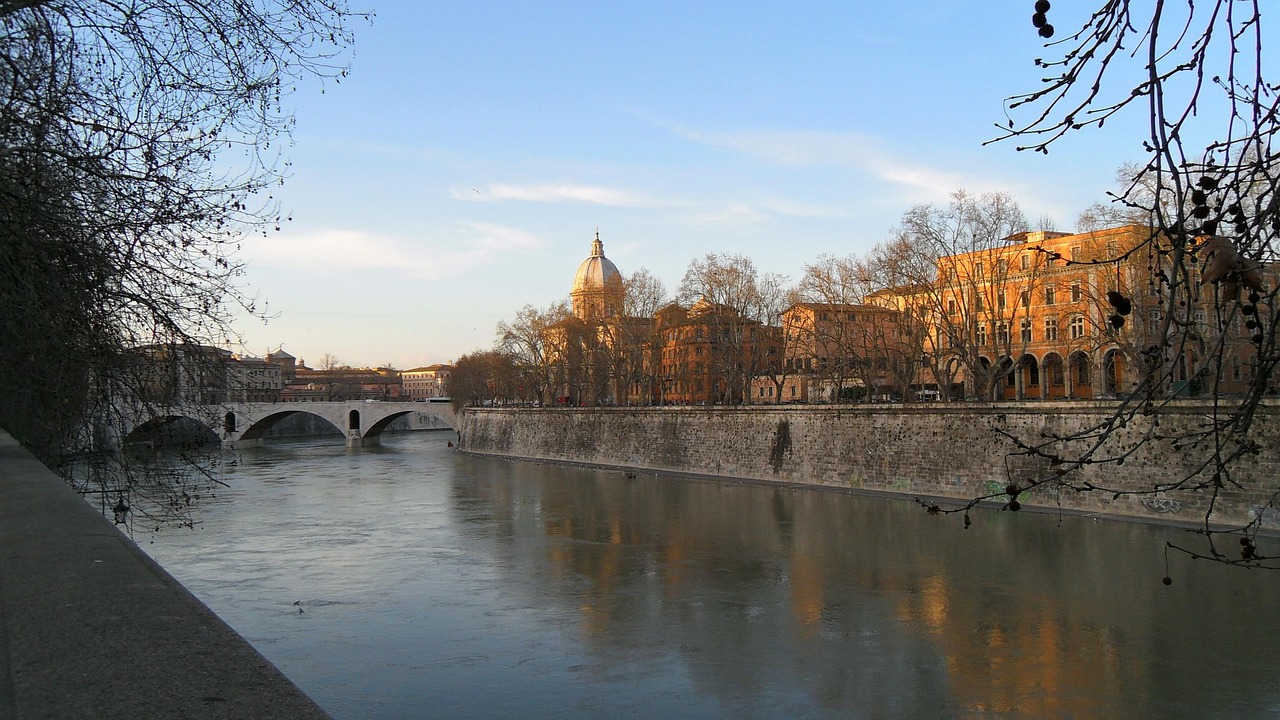
Trastevere evenings with lantern-lit lanes and riverside strolls
Trastevere evenings in Rome: the local trust moment and slow dining
One traveller shared how a spontaneous evening in Trastevere turned into a tiny, life-giving story: a few friendly questions, a smile, and locals who led them to family-run eateries tucked behind unassuming doorways. That’s Rome at its best—connection built slowly, together, and sealed by simple kindness. The city doesn’t demand fluency; it responds to warmth and respect.
Try a couple of easy greetings—buonasera, per favore, grazie. It’s a small gesture, but it changes the tone of a meal and often invites more generous service.
Basilica and piazza life near the Basilica of Santa Maria in Trastevere
Begin with a gentle cultural stop at the basilica of Santa Maria in Trastevere, then step back into the piazza where street life becomes the soundtrack. After that, choose dinner with calm confidence. A good trattoria in Rome often has a short menu, a steady pace, and staff who treat you like a guest rather than a transaction.
- What to order once: try carbonara, then let the table share a second dish like cacio e pepe for variety.
- How to choose well: avoid hard-sell hosts; look for relaxed locals, not laminated “tour menus”.
- Reset walk: stroll along the Tiber after dinner to cool down and let the night settle near the Tiber River.
Pantheon to Trevi Fountain: Spanish Steps walk to Piazza Navona in Rome
When you want the greatest icons in one beautifully walkable circuit, plan for Pantheon, Trevi Fountain, Spanish Steps, Piazza Navona, Rome, Italy. This is the historic centre at its most cinematic—baroque corners, sunlit lanes, and a sense that every turn was designed for awe. In Rome, it’s worth starting early and moving softly; you’ll experience the same landmarks with more space and far more atmosphere.
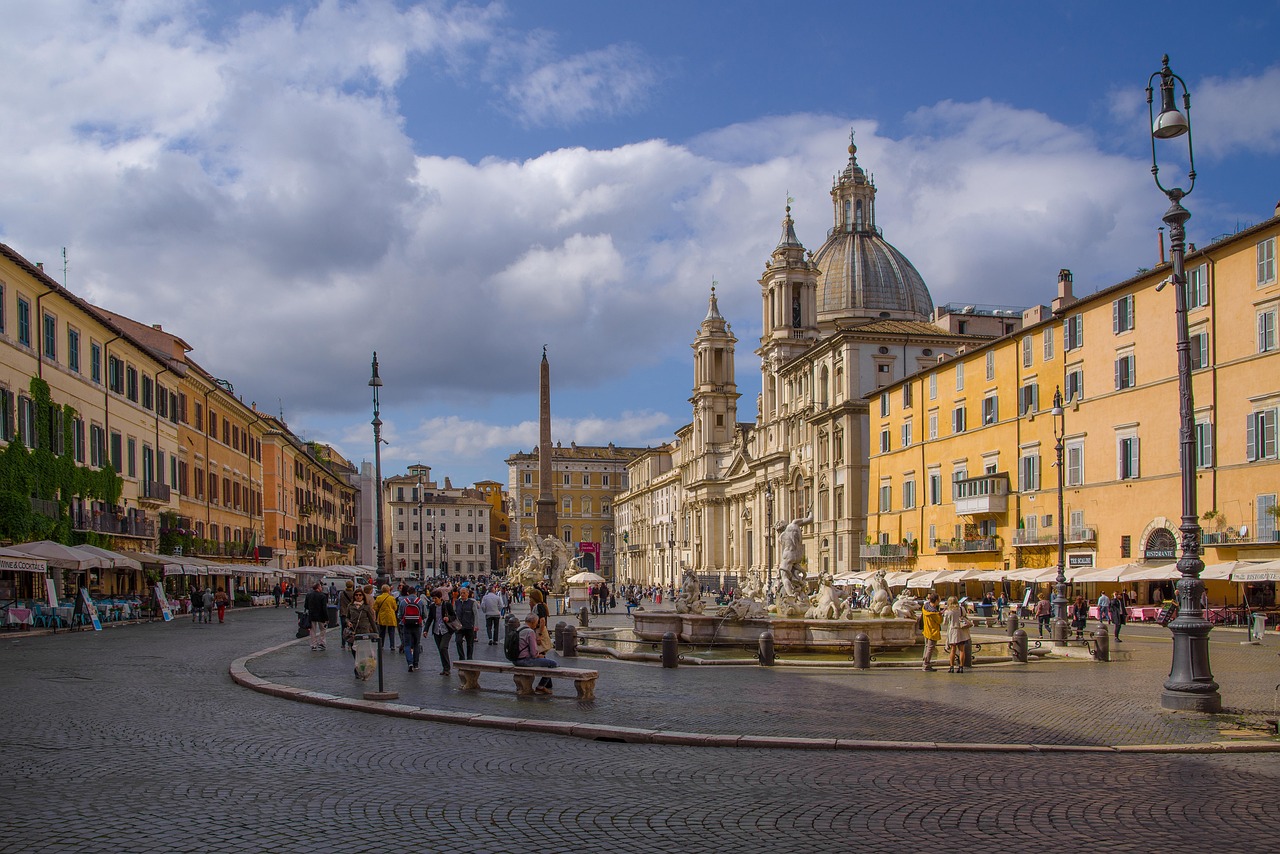
Historic centre icons: Pantheon, Trevi, and classic squares in Rome
Pantheon in Rome to Trevi Fountain: baroque lanes and a classic ritual
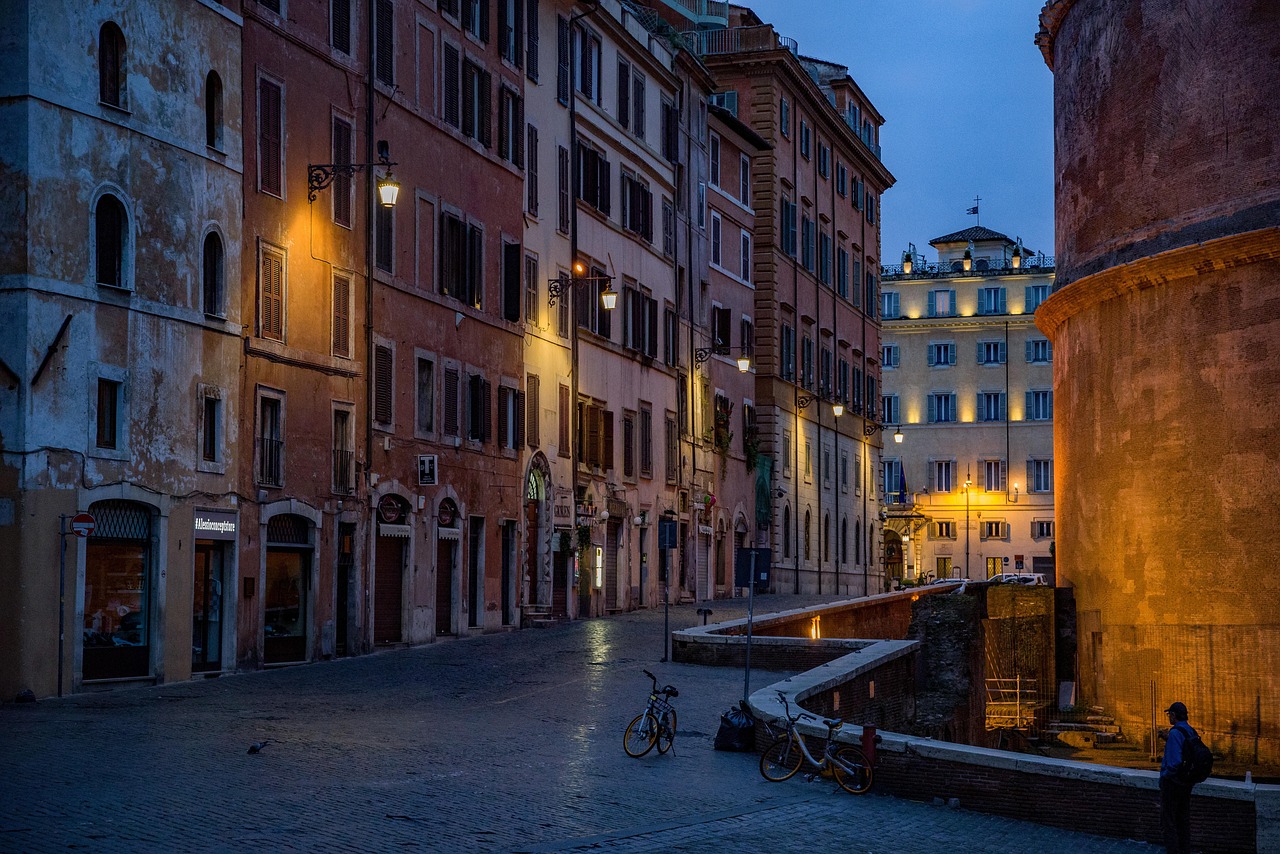
Start at the Pantheon, a temple that remains one of the best-preserved Roman sites you can enter in modern Rome. Pause inside and notice how the light moves—this monument doesn’t ask for speed, it rewards attention, and it’s easy to feel the city’s ancient engineering genius. From there, weave through streets that feel like an open-air gallery of carved stone and hidden courtyards.
At the trevi fountain—one of the most iconic stops for first-time visitors—arrive early or later in the evening to avoid feeling rushed. Stand back, take in the scale, and if you’d like the tradition, throw a coin with a small, private wish. It’s simple, but in Rome it can feel surprisingly grounding.
Spanish Steps pause: panoramic views of the city from a secret Roman viewpoint
Continue to the Spanish Steps for people-watching; it’s a natural pause point where Rome’s everyday theatre plays out. Later, drift toward Navona’s fountains in late afternoon, when the light flatters the stone and the street energy feels effortless.
For a creative detour that adventure seekers adore, make time for the Aventine Keyhole. It’s playful and oddly moving: you queue quietly, lean in, and discover panoramic views of the city framed like a secret postcard. Roma is full of these small doors into wonder.
things to do in Rome: Borghese Gallery, villa-park calm, and a quieter day plan
If you’re collecting things to do in Rome, Villa Borghese, Borghese Gallery, Via Appia, Italy, think of this day as your elegant “breathe-out”. Rome can be intense, so the smartest luxury is space—time to wander, to sit, to let the city come to you. This is where you create a rhythm that feels both adventurous and restorative, especially if you’ve been moving fast between major museum stops.
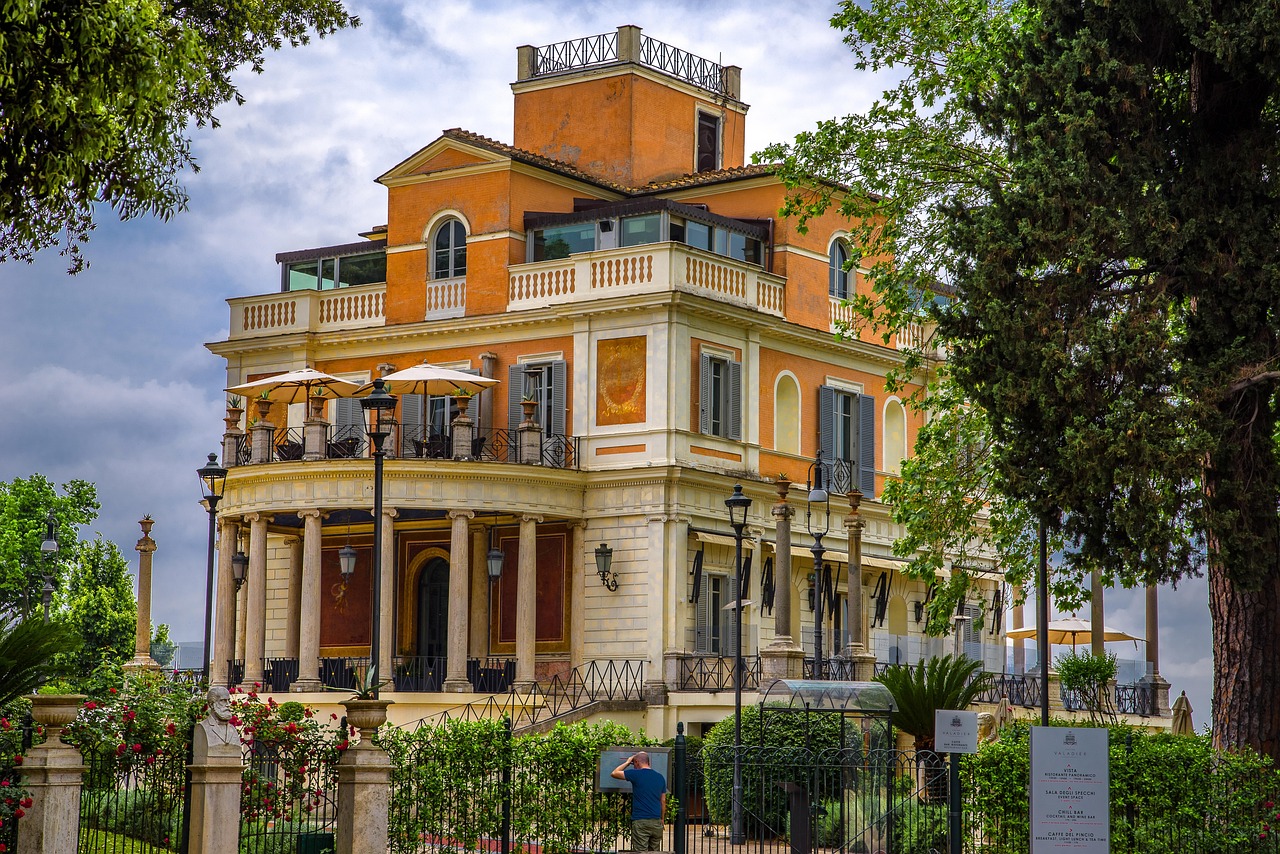
A slower Rome day: park time, a top gallery, and ancient-road atmosphere
Park in Rome morning: Villa Borghese-style, calm and gentle paths
Start with a slow morning in Villa Borghese, one of the loveliest green escapes in the city. Rent bikes, plan a sunrise stroll, or simply choose a bench with a view and let Rome soften around you. In this North African-country-of-the-mindset sense (busy capitals need parks), this kind of pause isn’t “doing less”—it’s travelling with intention, and it supports everything else you want to experience.
If you’d like a touch of romance and panoramic calm, seek out viewpoints within the villa grounds and let the light guide your route. This is one of the most beautiful ways to enjoy Rome without crowds pressing in.
Borghese Gallery museum strategy and Via Appia Antica for a back in time walk
The borghese gallery is a museum that rewards planning: timed entry is strict, and that’s a gift because it keeps the experience refined. Go in with a short list, then let yourself be surprised—think “quality over quantity”: a collection of paintings, luminous rooms, and sculpture that feels almost alive, an intimate window into italian art.
Later, shift to Via Appia Antica for an “around Rome” feeling without leaving the city. Walking this ancient route is a back in time thrill: quieter edges, stone underfoot, and a glimpse of ancient rome beyond the polished postcard. When you return to the centre, you’ll feel the contrast more clearly—and appreciate it more.
- Seamless return: Use a taxi or bus back to central Rome to keep the day calm.
- Comfort cue: carry water and a light layer; shade can vanish quickly on open roads.
- Keep it simple: one museum plus one outdoor stretch is often the perfect balance.
Rome travel tips: transport, safety, and the best time to plan Roma Italy
These Rome travel tips, transport safety, and the best time to visit Rome, Italy, are designed to give you confidence—so you can explore with ease, not second-guessing. If you’re planning to visit Rome for the first time, think “tickets early, walking shoes, and realistic pacing”. Rome, the Italian capital, welcomes spontaneity, but it also rewards smart planning, especially for big-ticket days and transport connections.
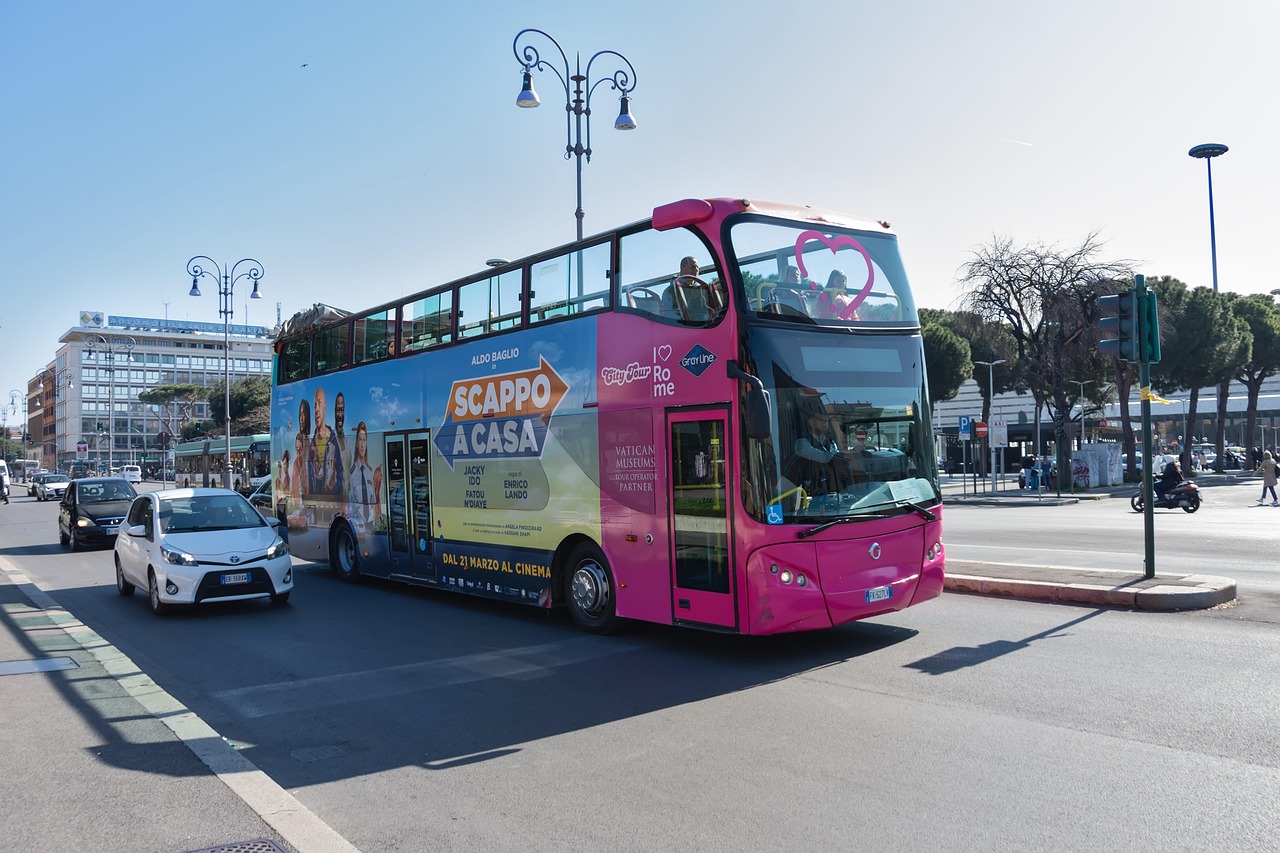
Practical travel tips for Rome: timing, tickets, and calm logistics
Best time to visit Rome: seasons, light, and breathing room
The best time to visit Rome is spring (April–June) and autumn (September–October), when the weather is pleasant and the city feels more breathable. For comfort and photography, aim for early morning or late afternoon—cooler temperatures, better lighting, and fewer queues at popular sites in the world.
If Rome is on your wish list because it’s one of the world’s great wonders, let your schedule reflect that: leave buffer time. A crafted itinerary with breathing room is what keeps a high-end trip truly seamless.
Transport, safety, and etiquette in Rome: stress-free city movement
Arriving by air, you’ll likely land at Fiumicino Airport or Ciampino Airport. Both connect to Rome by train, shuttle, taxi, or rideshare; choose based on your hotel location and the time of day. Within the city of Rome, metro lines are limited but useful, buses fill the gaps, and walking remains the best way to explore central districts.
Rome is generally safe, but watch for pickpockets in crowded areas—especially around major attractions and packed transport. Keep valuables zipped and close, and you’ll feel relaxed rather than wary. For etiquette, simple Italian greetings go a long way, and church dress codes matter at sacred places like St. Peter’s Basilica; covered shoulders and knees are a respectful baseline.
- Tickets: book Colosseum and Vatican entries online to avoid long queues.
- Tourist card: Only buy one if it matches your exact attraction mix.
- Budget notes: sit-down meals cost more than standing at the bar for coffee—both are part of the Rome experience.
F.A.Qs: Rome
Why is Rome called Roma?
“Roma” is simply the Italian name for Rome, used by locals and across Italy. You’ll see it on train boards, road signs, and museum tickets in Rome, and it’s a lovely reminder that you’re in the language of the place. Some legends connect the name to the city’s ancient origins, but for travellers, it’s most useful as an everyday term to recognise while navigating Rome, Italy.
Is it okay to wear jeans in Rome?
Yes—jeans are completely normal in Rome, especially for long walking days. For churches and religious sites, dress codes matter more than the fabric: cover shoulders and knees, and avoid very distressed or overly short styles. Comfortable footwear matters most, because Rome’s cobbles are part of the adventure and you’ll likely explore on foot for hours.
Why is Roma famous?
Roma is famous for its layers of history and living culture: ancient Rome, Renaissance art, baroque streets, and neighbourhoods that still feel intensely local. It’s also renowned for world-class sights such as the Colosseum, the Vatican Museums, and iconic fountains and squares. What makes Rome special, though, is how these highlights sit beside ordinary moments—coffee bars, markets, and evening walks.
What is a must-try food in Italy?
If you want one must-try, choose a classic Roman pasta in Rome—many travellers start with carbonara for its rich simplicity. Pair it with a local wine and let the meal unfold slowly, as Italians do. Italy’s food is deeply regional, so each city has its signature dishes; in Rome, pasta traditions are a delicious way to connect with local culture.
Return to Rome: personal reflections on an Italian journey
When I think about a return, it’s rarely a single monument that comes back first. It’s the texture of Rome—stone warmed by sun, the sudden cool of a church interior, the way conversation bounces off narrow streets and then dissolves into stillness. Rome holds contradictions gently: noise and quiet, grandeur and everyday life, a sense of theatre beside a sense of home.
What stayed with me most was how the city gives you permission to be human in it. A shared glance in a museum when a painting catches you off guard. The soft discipline of a crowd becoming silent together. A small local kindness that restores confidence when you’re far from your own routines. Somewhere between the Colosseum’s shadow and a late walk past a lantern-lit square, you realise the city’s story has room for yours too—just as it is.
And perhaps that’s why people say they fall in love with Rome: not because every moment is perfect, but because the city asks you to trust your pace. If you carry anything home from Roma, let it be that quiet courage—an openness to wonder, and a gentler attention to the life in front of you. Even after you leave, Rome’s story stays with you like an open door you don’t need to rush back through.