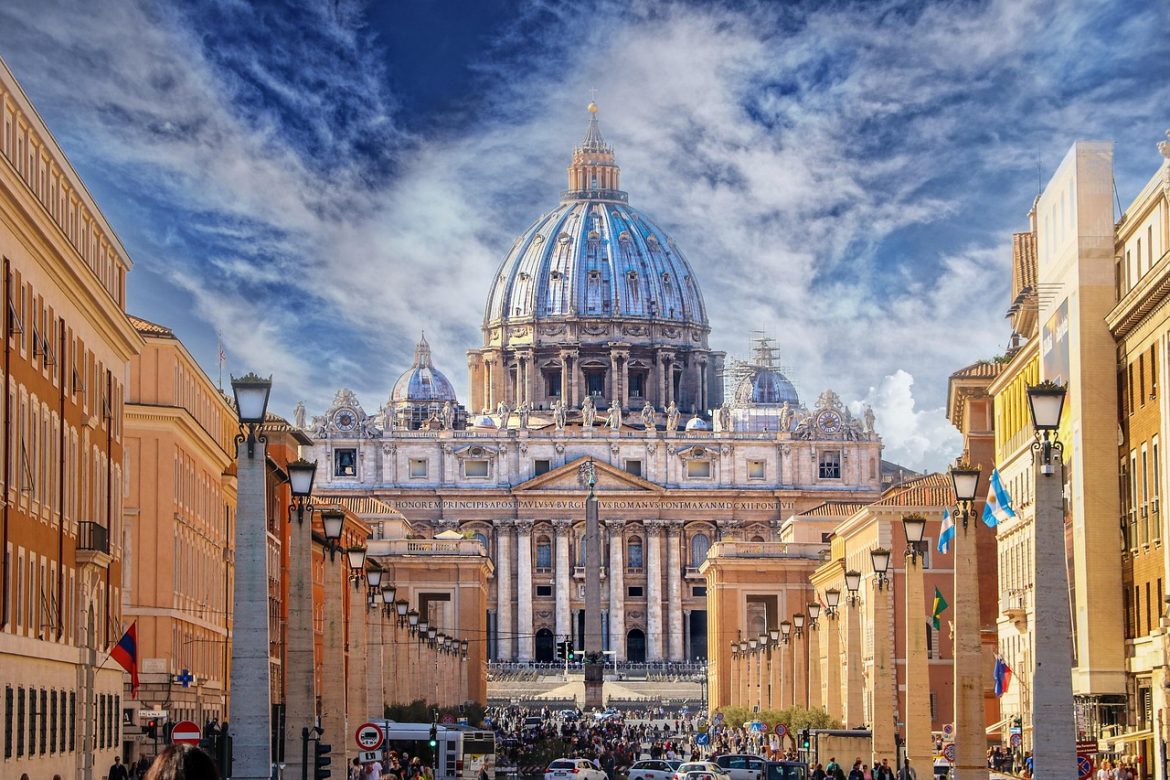
First steps in Vatican City: from Rome to Piazza San Pietro to visit Vatican City, Rome, Italy, via Ottaviano San Pietro metro, for your first Vatican attraction.
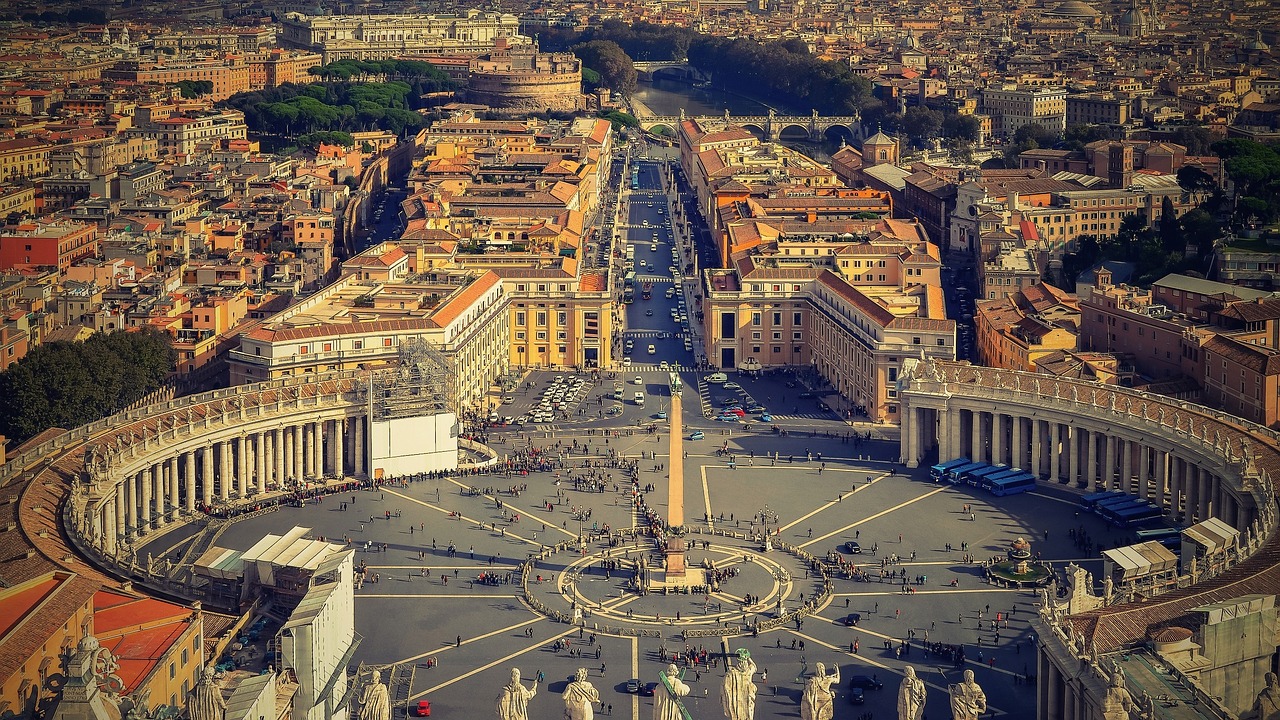
First Steps in Vatican City State From Rome to Piazza San Pietro in Vatican City Rome Italy
For many travellers, visiting Vatican City, Rome, Italy, Metro Ottaviano San Pietro is the most seamless way to begin, and it immediately feels like you’ve stepped into a different tempo. Before you do anything else, it helps to know the distinction: the Vatican City State is the tiny city-state you can physically enter, while the Holy See is the governing and spiritual entity behind it.
That difference matters because it explains why the atmosphere shifts so quickly—why protocol, dress expectations, and a sense of care shape everything. You can still keep your adventurous spirit; you just channel it into curiosity, calm navigation, and respect for a place that holds meaning for millions.
Arriving via Metro Line A to Ottaviano–San Pietro
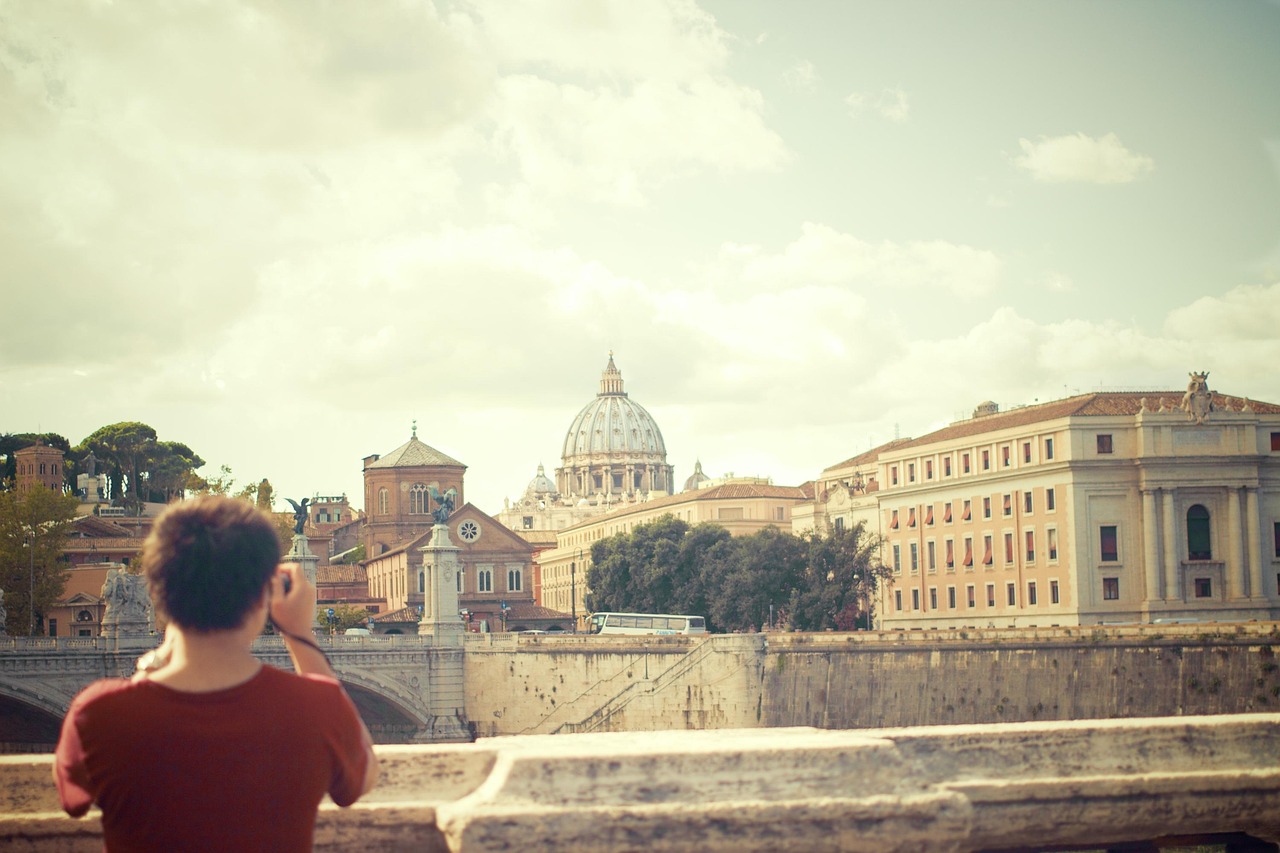
Take Rome’s Metro Line A to Ottaviano–San Pietro, then walk towards St Peter’s Square (also signed as piazza San Pietro). The first ‘wow’ isn’t a painting—it’s space: the approach opens, the air changes, and suddenly the colonnades feel like they’re holding you together, not hemming you in.
Imagine arriving early, when the light is kind, and the piazza still has breathing room. Even in a busy season, that first step into the square can feel oddly human: grand architecture designed to welcome, not intimidate.
Confidence basics for a full day within the Vatican
Security screening is real, queues can be long, and modest clothing is expected—shoulders and knees covered is the simplest rule of thumb. Bring water, move slowly, and treat pacing as part of the design. A calm rhythm lets you uncover details you’d otherwise miss, from inscriptions to the way sound behaves near the steps.
- Dress: light layers that cover shoulders and knees, especially for the basilica.
- Carry: water, a small snack, and a power bank—keep bags minimal for security.
- Plan: build in quiet pauses, not just sights; confidence grows when you trust your own pace.
Designer note: your route is the difference between enduring the Vatican and enjoying it. Depending on crowds, an expert plan often starts with the Basilica (earlier, calmer) or the Vatican Museums (timed entry), then finds softer pockets within the city for recovery—small benches, shaded edges, and a slower stride.




Vatican Museums Guided Tour Strategy and Ticket Purchase Guide on the Official Website in Rome, Italy.
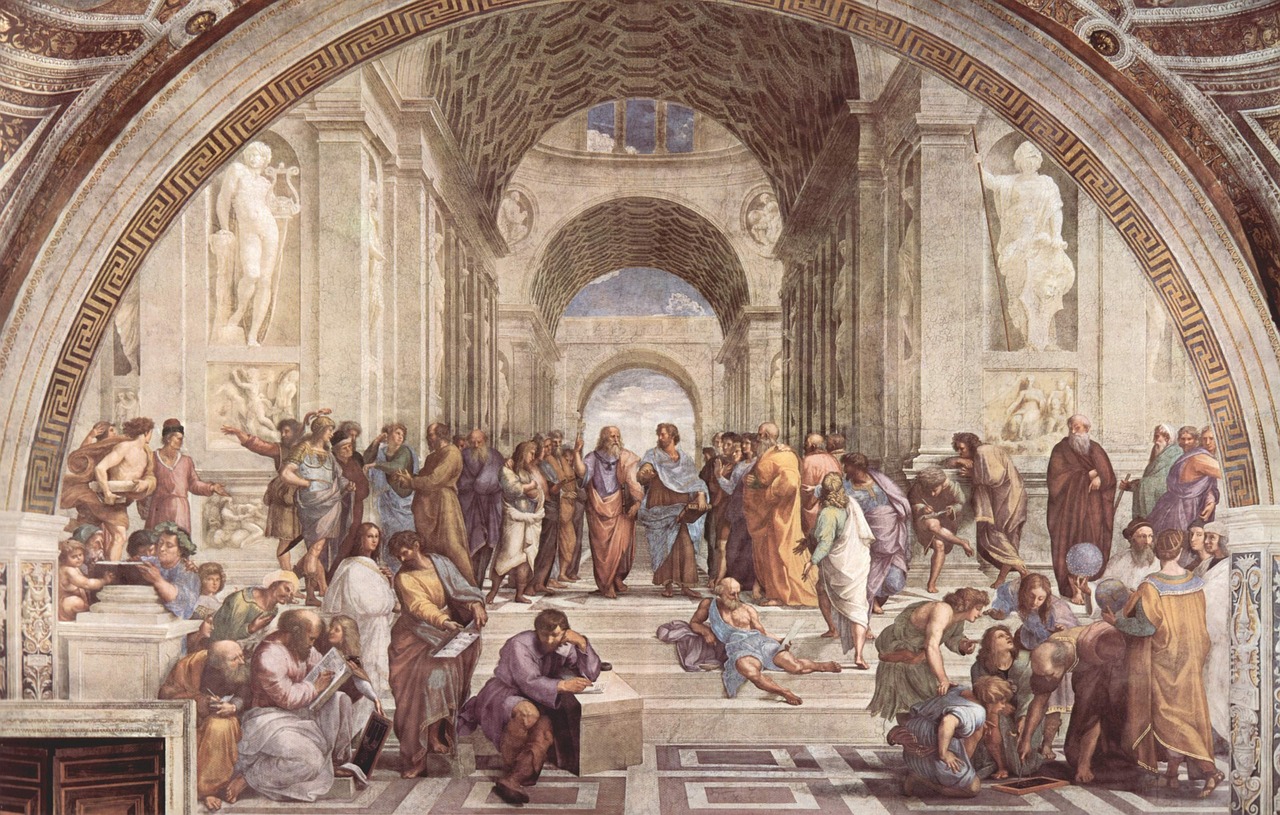
Vatican Museums Guided Tour Strategy and How to Buy Tickets in Vatican City Rome Italy
If your plan includes a Vatican Museums guided tour, buy tickets on the official website of Rome, Italy, timing. You’ve already made the day easier. The Vatican Museums operate with timed slots, and tickets to enter can sell out—particularly on peak mornings—so booking in advance is less ‘organised’ and more genuinely kind to your future self.
To buy tickets, use the official website once you’ve chosen a time that matches your energy: early morning for clearer galleries, or late afternoon if you’re comfortable with a slightly brisker pace. For many high-end travellers, a guided tour is the sweet spot: it turns crowds into background noise and replaces stress with insight.
Crafted a museum game plan for adventure seekers
The Vatican Museums reward momentum, but not sprinting. Think of it as moving through centuries with purpose: ancient sculpture, Renaissance confidence, and the build towards the Sistine Chapel. Prioritise the Raphael Rooms (Raphael’s sense of balance can feel like a deep exhale), then choose a few classical galleries that match your curiosity rather than trying to “do it all”.
If you enjoy quieter corners, ask your guide about spaces with frescoes by Pinturicchio and the story-rich apartments that many visitors pass too quickly. This is where you create a more personal relationship with the collection—less checklist, more conversation with the past.
Less crowded navigation within the city
Inside the museums, the local skill is staying calm when galleries tighten. Watch signage, follow staff directions, and pause strategically at water points to avoid losing focus. A guided tour can also use smoother routing to avoid bottlenecks, especially on days when the basilica and the Vatican Museums are both drawing long lines.
- Timing: early entry for serenity; late afternoon for a shorter, more energetic push.
- Hydration: refill whenever you spot water—small care prevents big fatigue.
- Mindset: treat the day as crafted, not crammed; the Vatican is one place where calm is a luxury.
As you move closer to the final rooms, keep a gentle promise to yourself: the Sistine Chapel isn’t just another attraction. For many, it’s a threshold moment—quietly life-changing.
Experience the silence and power of Michelangelo’s frescoes in the Sistine Chapel, Vatican City, Rome, Italy, during a mindful visit to pause and appreciate the art.
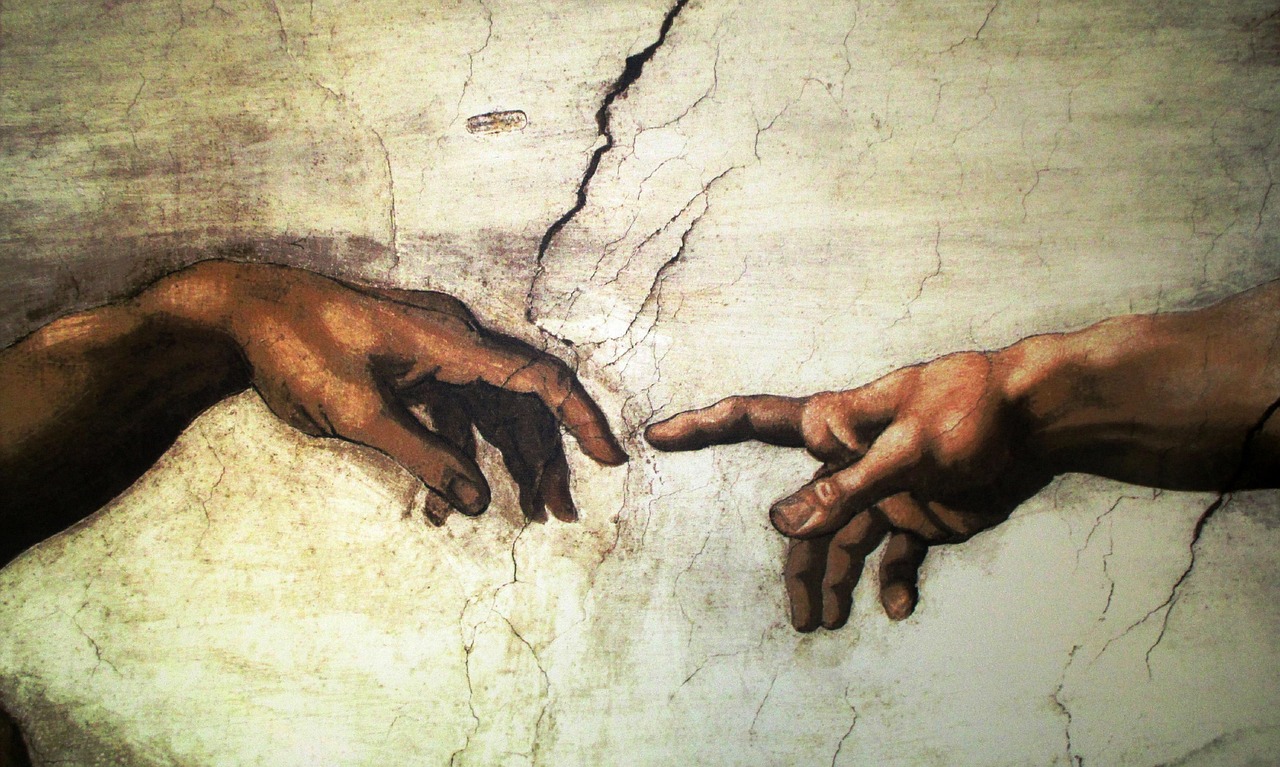
Sistine Chapel Silence and the Power of Michelangelo Up Close in Vatican City Rome Italy
For many travellers, the Sistine Chapel Michelangelo frescoes in Vatican City, Rome, Italy, is the line they’ve imagined for years—yet the reality is more sensory than cinematic. Expect crowds, a steady flow of movement, and staff who repeatedly ask for silence; it can feel strict at first, but the hush is part of the gift.
Photography is prohibited, and it’s worth meeting that rule with care rather than frustration. You’ll remember more when you stop trying to capture and start learning how to look.
How to create memory without a camera in the Sistine Chapel
Try a simple ritual: choose one section, stay with it, then switch. Notice the frescoes by Michelangelo across the ceiling, then let your eyes travel to the altar wall. After you leave, jot a few lines in a notebook—colour, scale, emotion—so the experience becomes yours, not just another image you scroll past.
One visitor told me that stepping into the Sistine Chapel and seeing Michelangelo’s work up close reset their sense of scale and beauty. It wasn’t loud or dramatic; it was a quiet recalibration, like realising how vast human creativity can be.
A mindful viewing framework that supports calm
Look up, breathe slowly, and allow the room’s silence to change your breathing. When you feel yourself being pushed along, soften your shoulders and let the crowd pass—your pace can still be your own, even here.
Then comes a subtle transition: you step back into sunlight, and the story continues on foot. Art becomes pilgrimage as you walk towards Saint Peter’s, carrying that hush with you.
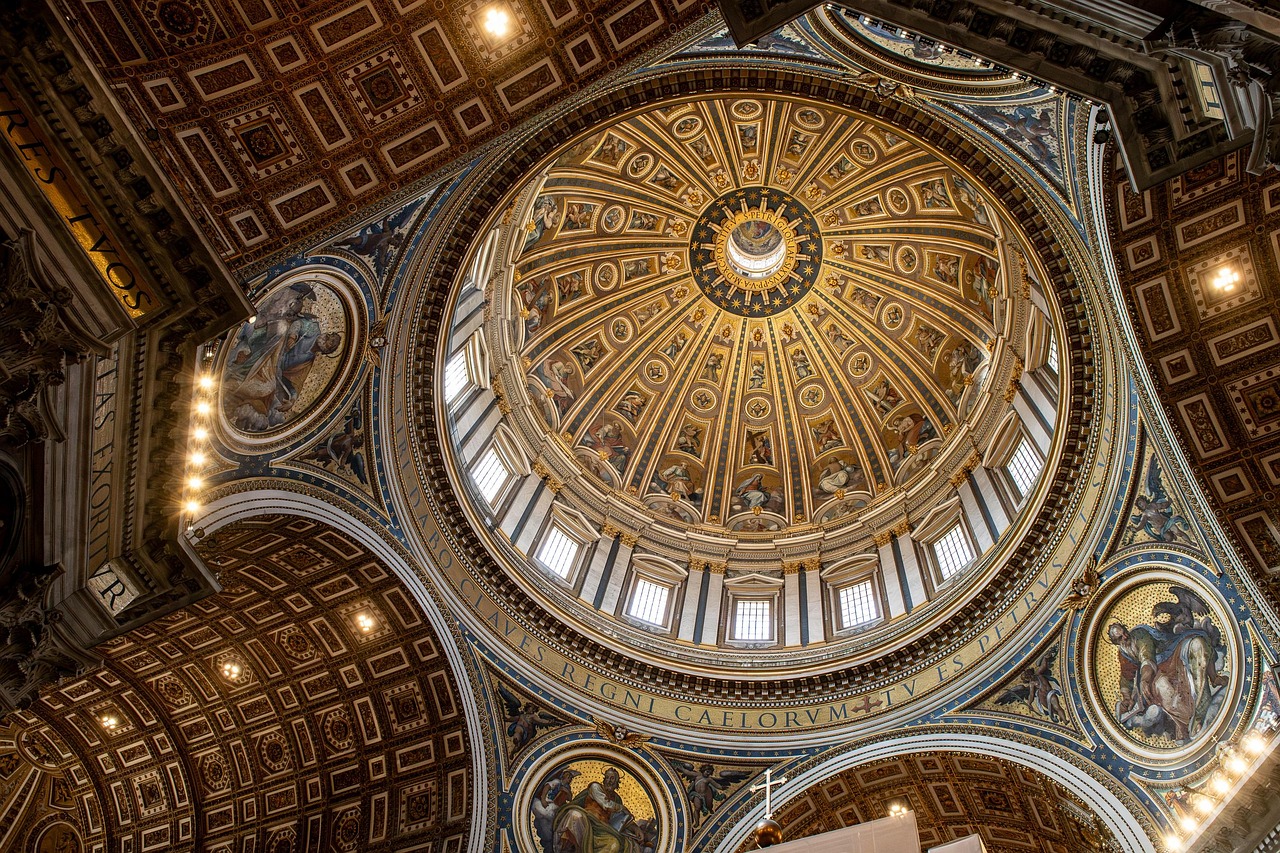
Inside St Peter’s Basilica, the Basilica of Saint Peter, showcasing papal art in Rome, Italy, and Saint Peter’s confidence.
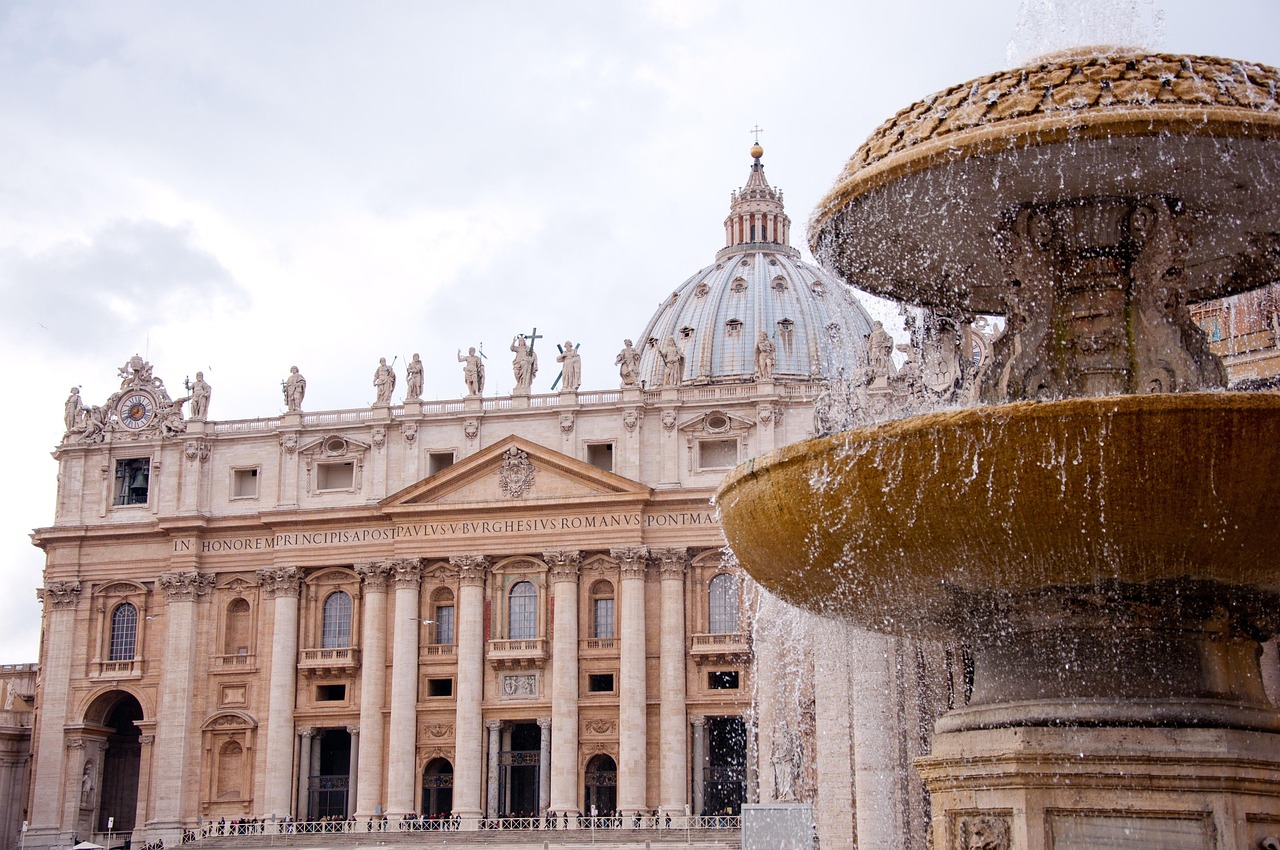
Basilica of Saint Peter and Papal Grandeur Inside St Peter’s Basilica in Vatican City Rome Italy
If you’re wondering about access, the papal art at the Basilica of Saint Peter’s in Rome, Italy, offers a reassuring truth: entrance to St Peter’s Basilica is free, even though some areas, like the dome, charge a small fee. You’ll still pass through security, so arrive with patience and a little time buffer—your calm matters as much as your schedule.
Inside, the scale is immediate. This is often described as the largest religious building many travellers will ever enter, yet it doesn’t feel cold; it feels purposeful, like the architecture is designed to lift your gaze and steady your thoughts.
Masterpieces and the central nave of Saint Peter’s
Give yourself time with Bernini’s Baldachin, a baroque triumph that anchors the space with theatrical grace. Then take a slow walk down the central nave of Saint Peter’s Basilica and notice how light pools on stone, how footsteps soften, how the basilica seems to guide you.
History sits beneath the beauty without demanding your attention: the church is traditionally linked to being erected over the tomb, associated with Saint Peter. The site’s roots reach back to Constantine and the 4th century, and later, the rebuilding we see today begins in 1506—dates that quietly explain why the atmosphere feels layered, not staged.
Reading signs like a local using Pietro and San Pietro
You’ll see Pietro and San Pietro everywhere—on signs, maps, and directions from staff—so it’s helpful to let those words become your anchors. They guide you between entrances, the basilica interior, and the routes towards the dome ticket area.
- Free entry: the basilica itself costs nothing, but allow time for checks.
- Dress: modest clothing matters here, as it does across the Catholic Church and the Roman Catholic Church.
- Atmosphere: even on ordinary days, papal rituals linger in the air—an awareness of the pope’s presence, near or far.
To stand here is to sense how the pope to exercise spiritual and ceremonial authority is not an abstract idea—it’s felt in the choreography of space, sound, and respect.
Climbing St Peter’s Dome at sunrise for Rome views and Vatican Gardens, enjoying the adventure and scenic sights of Rome, Italy.
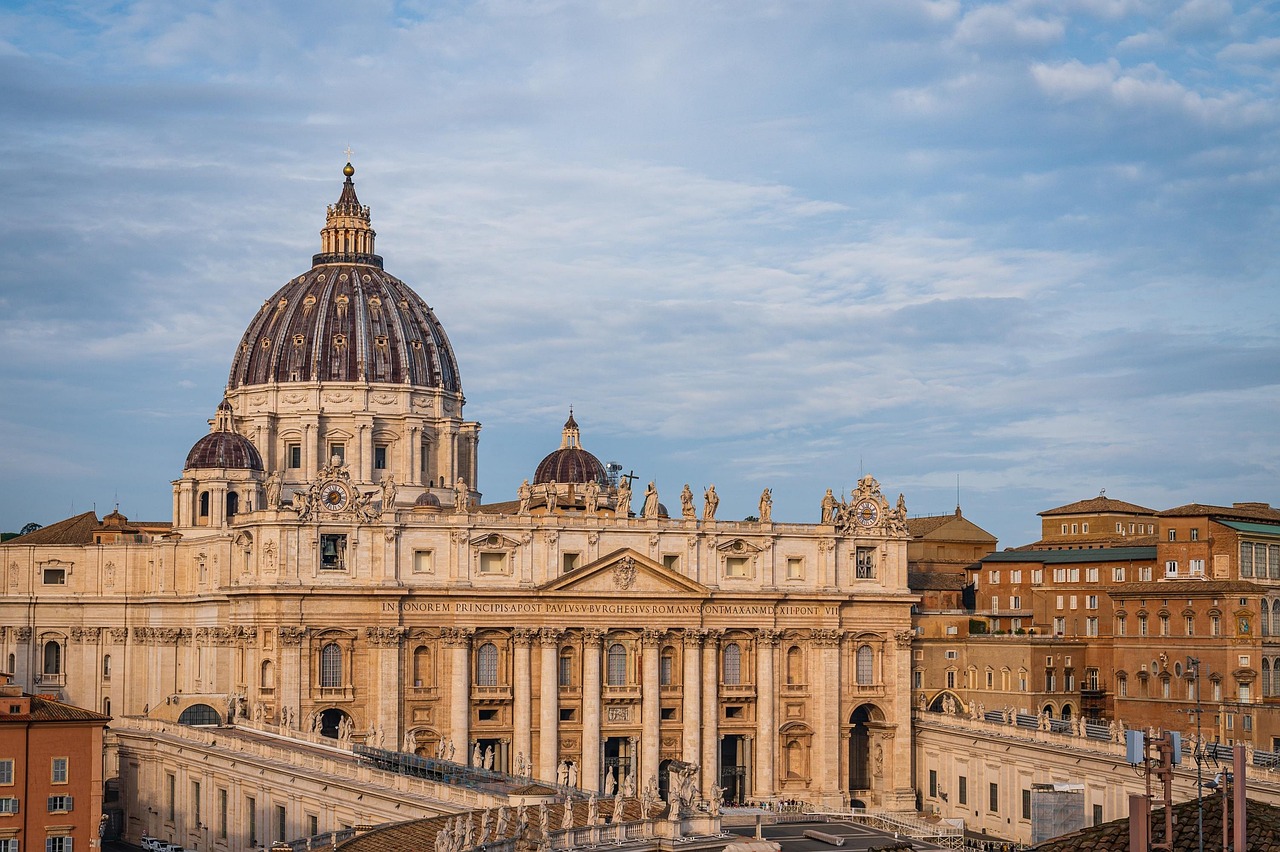
Climbing St Peter’s Dome at Sunrise for Rome Views and Vatican Gardens in Vatican City Rome Italy
For those who want a physical high point, climb St Peter’s Dome, sunrise, Vatican Gardens, views of Rome, Italy, is the adventure that changes how you understand the heart of Rome. You’ll choose between lift plus steps or all-steps; either way, it’s less about athleticism and more about pacing, breath, and steady confidence.
The stairways narrow in places, so give yourself permission to pause. This is a climb designed for humans, not heroes—small steps, regular stops, and a calm hand on the rail.
Lift plus steps versus all-steps and what the effort feels like
The lift reduces the early climb, but there are still stairs and slanted corridors near the top. All-steps is more immersive, and it can feel empowering if you enjoy earning the view. If you’re unsure, choose the lift; you’ll still have the thrill without the strain.
- Best time: early morning for cooler air and softer light.
- Carry: water, a minimal bag, and a light layer—wind can surprise you.
- Support: if you feel uneasy in narrow sections, pause and let others pass; you’re not slowing anyone down, you’re travelling with care.
Sunrise over Rome and glimpses of the Vatican Gardens
A traveller once shared that witnessing the sunrise from the dome of St Peter’s Basilica felt spiritual and breathtaking, setting the tone for their entire Rome adventure. From above, the noise becomes distant, and the city turns into geometry—rooftops, avenues, and the curve of history.
Look for the green hush of Vatican Gardens, then trace the shape of the square below. From this height, you can uncover the design of St Peter’s Square like a map drawn in stone, framed by the city walls that make the Vatican feel both protected and open.
Vatican Necropolis and Pilgrim Thread Under Saint Peter’s for the Vatican Scavi tour, exploring Saint Peter’s tomb and necropolis in Rome, Italy.
Vatican Necropolis and the Pilgrim Thread Beneath Saint Peter’s in Vatican City Rome Italy
Vatican necropolis, Scavi tour, Saint Peter’s tomb, pilgrim Rome, Italy: a different kind of encounter—more intimate than a museum, more emotional than many expect. It can feel like becoming a pilgrim for an hour, even if you’re travelling for culture rather than faith, because the space asks for presence instead of performance.
This is not always open to the public in the casual way galleries are, and access is limited. That’s part of its dignity: small groups, respectful timing, and an atmosphere where silence is natural rather than enforced.
How to approach the Scavi-style visit with calm confidence
Expect limited numbers, clear rules, and a supportive pace. If you’re nervous about being underground, it helps to tell yourself in advance: you can pause, breathe, and simply follow. This isn’t a test of bravery; it’s an invitation to listen to history.
Below, story threads tighten: traditions of Saint Peter’s tomb, references to the tomb of St Peter, and the 1st-century AD context tied to Peter the apostle and the early apostolic community. Whether or not you share the belief, the continuity is moving—stone, names, and memory held together.
Let history land rather than rushing through it
Trust your pace. Notice how your attention changes in a confined space, how time feels slower, and how the weight of the basilica above becomes newly meaningful. When you return to daylight, the grandeur overhead reads differently—less like spectacle, more like accumulation.
Swiss Guard Ceremony and Human Moments with Vatican Protectors
Swiss Guard Ceremony and Human Moments with the Vatican’s Protectors in Vatican City Rome Italy
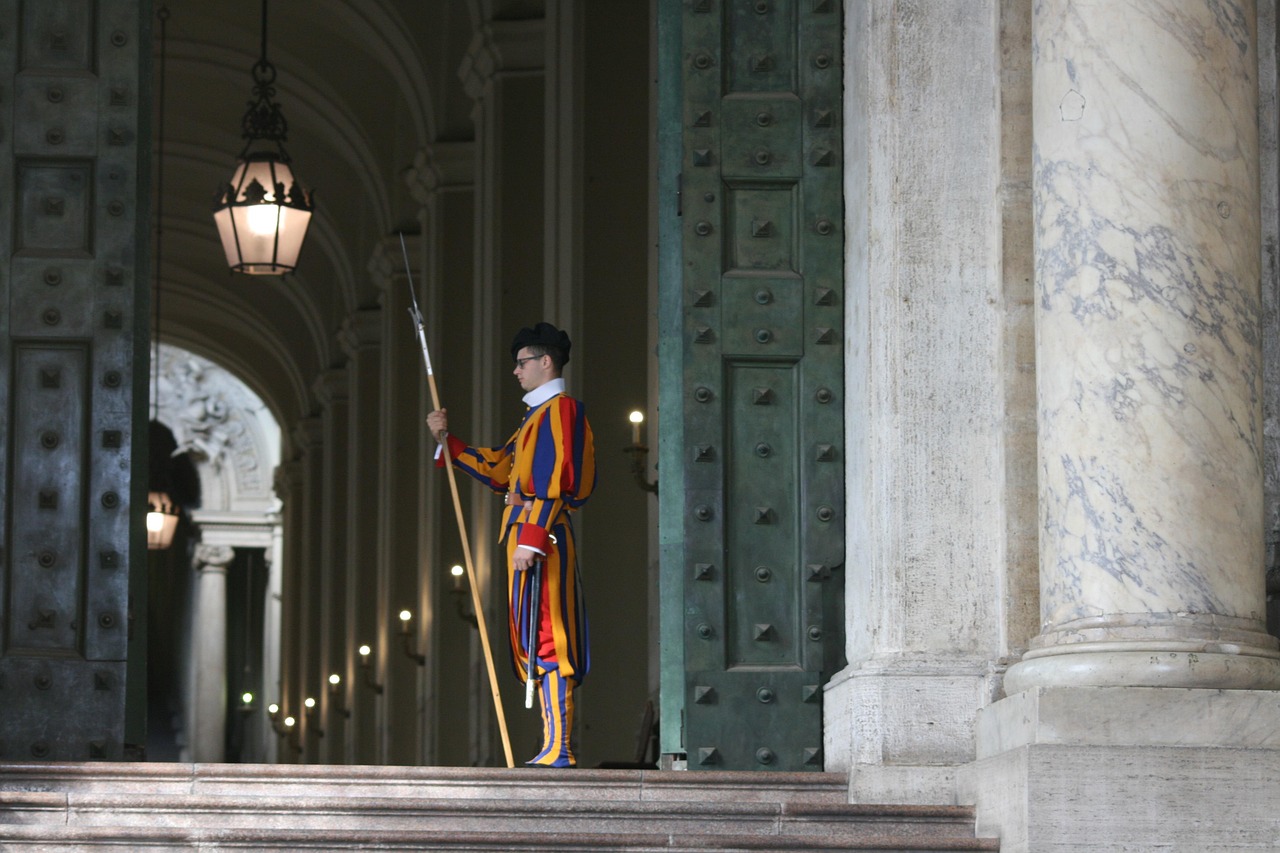
The Changing of the Swiss Guard ceremony in Vatican City, Rome, Italy, is one of those precise, colourful moments that reward good timing. Arrive early, stand where you can see the formation clearly, and treat it as a theatre with rules—watchful, dignified, and never something to interrupt.
For adventure seekers, the thrill is in the positioning: you design your approach, choose your viewing spot, then let the ceremony unfold with quiet focus. It’s a reminder that ritual can be both disciplined and deeply human.
Where to stand and what to watch for during the Swiss Guard change
Look for clean sightlines near entrances where the guard movement is clearest, and keep your phone low. The point is not content; it’s attention. Watch the rhythm of steps and the way the space is held for a moment of tradition.
Human conversations after the ceremony and what you might learn
Several travellers have mentioned striking up respectful conversations with Swiss Guard members afterwards and gaining insight into roles, training, and daily life. If the moment feels appropriate, a polite question and a warm thank you can create a surprisingly personal exchange—proof that monumental places are still made of people.
It also gently reveals how governance works in practice: the pope as pontiff and bishop of Rome sits at the centre of Vatican life, and protocol shapes what you can see and when. In those small formalities, you glimpse how a tiny state sustains centuries of ceremony, together.
History of Vatican in Rome: from city walls to apostolic power, encompassing the Holy See, popes, and its development within Rome, Italy.
History of Vatican in Rome From City Walls to Apostolic Power in Vatican City Rome Italy
If you’re craving context, the history of Vatican City, Rome, Italy, and the apostolic popes, city walls help everything click into place. Start with early Christianity, then Constantine’s endorsement that reshaped Rome’s spiritual geography; later, fortification and governance followed, giving meaning to the Vatican City walls you sense even when you don’t consciously see them.
A crisp timeline is enough: early Christian veneration, medieval consolidation, and the Renaissance and 16th-century rebuilding that produced the iconic skyline. The Lateran agreements (often referred to as the Lateran Pacts) sit in the background as a modern reminder that this is also a functioning state, not merely a symbolic one.
Key figures who shaped the Vatican City State and its walls
Names appear like signposts across centuries: Nicholas III and his ambitions for a stronger papal presence; Leo IV and the defensive response to instability; and Pope Leo IV, remembered for strengthening the city walls in an era when safety shaped architecture. These aren’t details to memorise—just anchors that help you place what you’re seeing.
Holy See and apostolic authority in plain language
Holy See is the name used for the central governing body of the Roman Catholic Church; see is the name given to a bishop’s seat of authority, and here it carries global weight. The Holy See’s diplomacy and administration are often associated with roles such as the cardinal secretary of state, who serves as a chief coordinator in the Vatican’s daily governance.
For culture lovers, two optional extensions deepen the story. The Vatican Library stands as a symbol of knowledge and preservation, while Castel Gandolfo offers a quieter, out-of-Rome glimpse of papal life and summer tradition.
This cultural stewardship is why Vatican City is widely recognised as a UNESCO World Heritage Site: not as a tick-box, but as a reminder that what you’re seeing has been protected—sometimes imperfectly, often thoughtfully—across generations. Even the small things, like the sale of stamps at the Vatican post office, hint at the practical rhythm of everyday life in Vatican City.
F.A.Qs: Vatican City, Rome, Italy
Why is Vatican City famous?
Vatican City is famous for being the centre of the Roman Catholic Church, led by the pope, and for its extraordinary cultural treasures. Travellers visit the Vatican for the Vatican Museums, the Sistine Chapel, and St Peter’s Basilica, as well as the rituals and ceremonies that make the world’s smallest state feel globally significant.
What are 5 facts about Vatican City?
Vatican City is an independent city-state within Rome; it is governed by the Holy See; it contains major sites like the Vatican Museums and Saint Peter’s Basilica; it has its own security force, the Swiss Guard; and it is recognised as a UNESCO World Heritage Site for its cultural and artistic importance.
Is it free to enter Vatican City?
You can enter St Peter’s Square freely, and entrance to Saint Peter’s Basilica is free, though security checks apply. However, the Vatican Museums require paid admission, and special areas such as the dome climb and select experiences have fees. Booking ahead can save significant time in queues.
Can I wear jeans to the Vatican?
Yes, you can wear jeans when visiting the Vatican, as long as your outfit is modest. Aim to keep shoulders covered and avoid very short skirts or shorts, especially when entering churches such as St Peter’s Basilica. Comfortable, respectful clothing helps you feel at ease during security and throughout your day.
Reflections on Vatican City and Rome, Italy: what stayed with us after visiting, leaving us with a quiet, pilgrim-like feeling.
A reflection after visiting Vatican City, Rome, Italy, rarely arrives as a neat conclusion. It’s more like a handful of sensations you notice later—silence returning in a loud street, a shaft of light on stone, the memory of height when you step onto a hotel balcony and instinctively look out across rooftops.
What stayed with me most was the way scale and intimacy coexist. In the Sistine Chapel, the hush felt like a shared agreement between strangers; in Saint Peter’s, the sheer height carried a strange comfort, as if the building was built to hold human worry without judgment. And outside, the Swiss Guard were not just uniforms and protocol, but people doing a job with calm attention—another reminder that history is maintained through daily care.
Even if you came primarily to explore, it’s natural to feel something quieter underneath the spectacle: a sense of being held by time, by craft, by the patience of stone. In those moments, art and faith can sit side by side without needing you to decide what you believe.
Travel confidence grows like that—softly. You learn that you can move through crowds without losing yourself, that you can notice beauty without needing to own it, and that the most meaningful parts of a journey are often the ones you didn’t think to plan.
And when you next find yourself wandering Rome—past cafés, fountains, and the ordinary joy of a Roman afternoon—perhaps you’ll carry one small insight from the Vatican tour with you, and quietly wonder what you’ll create next in Italy.