Post Contents
- El Duomo, Italy: why the Duomo matters in Florence’s historic heart
- Inside the Cathedral of Santa Maria del Fiore: atmosphere, mass, and dress code
- Brunelleschi’s Dome climb: the Duomo’s cupola, steps, and famous frescoes
- Giotto’s Campanile bell tower: Duomo di Firenze views and top attractions in Florence
- Santa Reparata crypt tickets: what’s beneath the cathedral and how to plan your visit
- F.A.Qs: Duomo Florence Cathedral planning and practical questions
- What stays with you after you visit the Duomo
El Duomo, Italy: why the Duomo matters in Florence’s historic heart
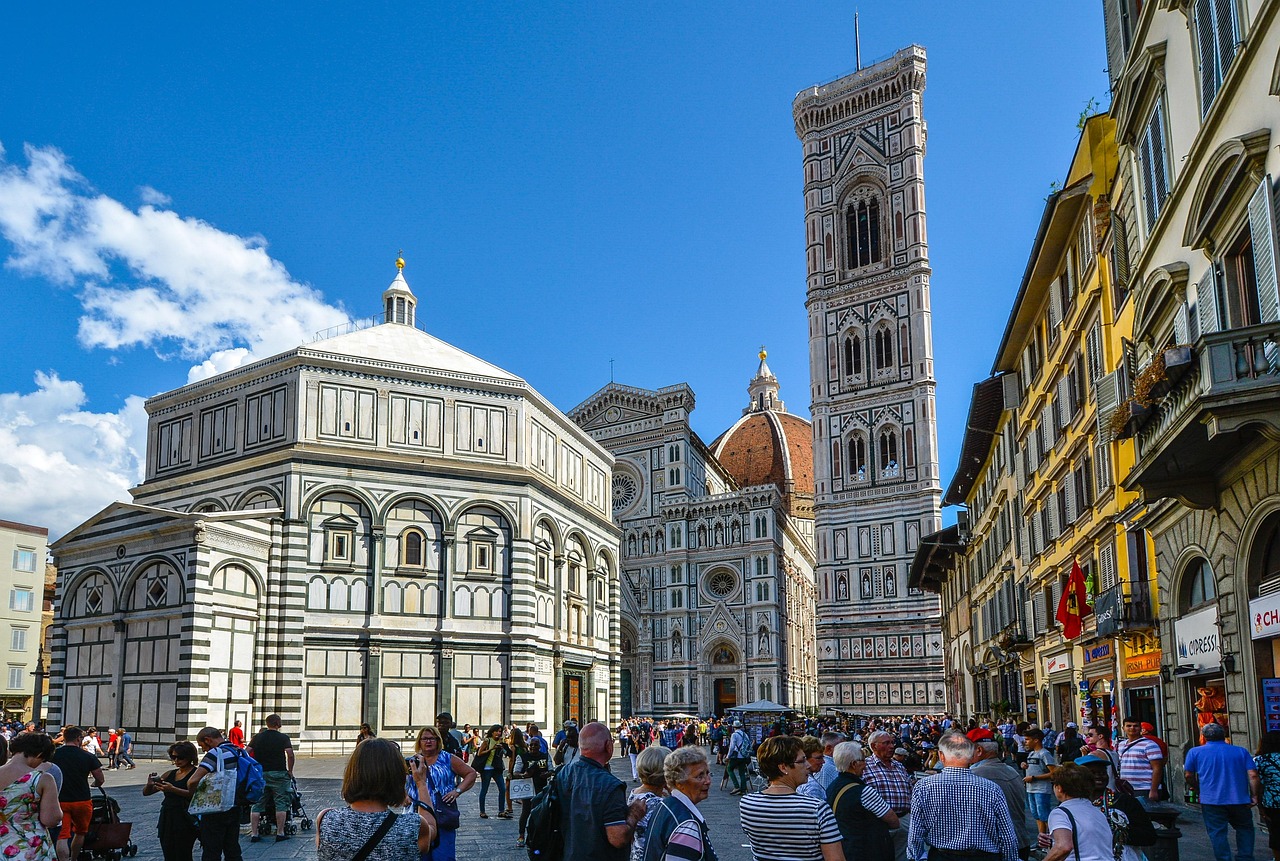
The cathedral complex and surrounding streets at first light
If you’re planning to visit the Duomo in Italy as a highlight of your trip, the first hush often happens as you step into Piazza del Duomo—then the sound returns in layers: footsteps on stone, café cups, and a guide’s low voice as the symbol of Florence comes into view. The joy here is how compact it all is: the cathedral, the Baptistery, and the bell tower sit close enough that you can set your own pace without feeling rushed.
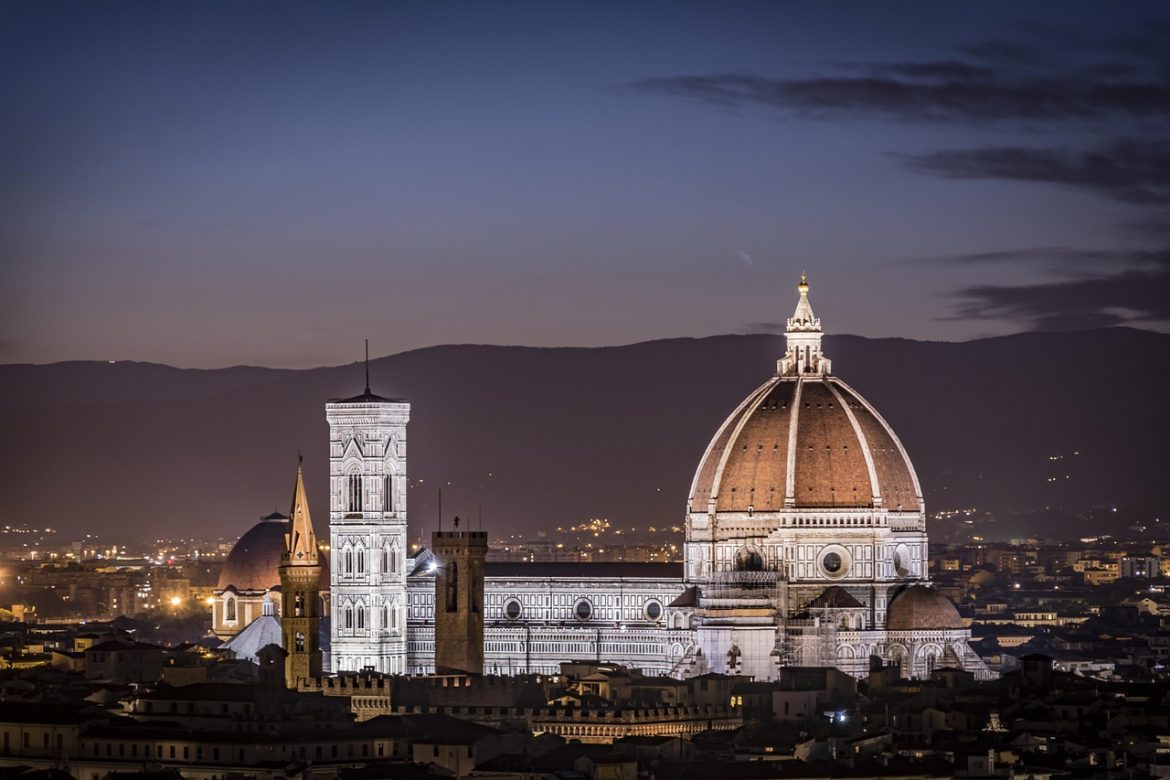
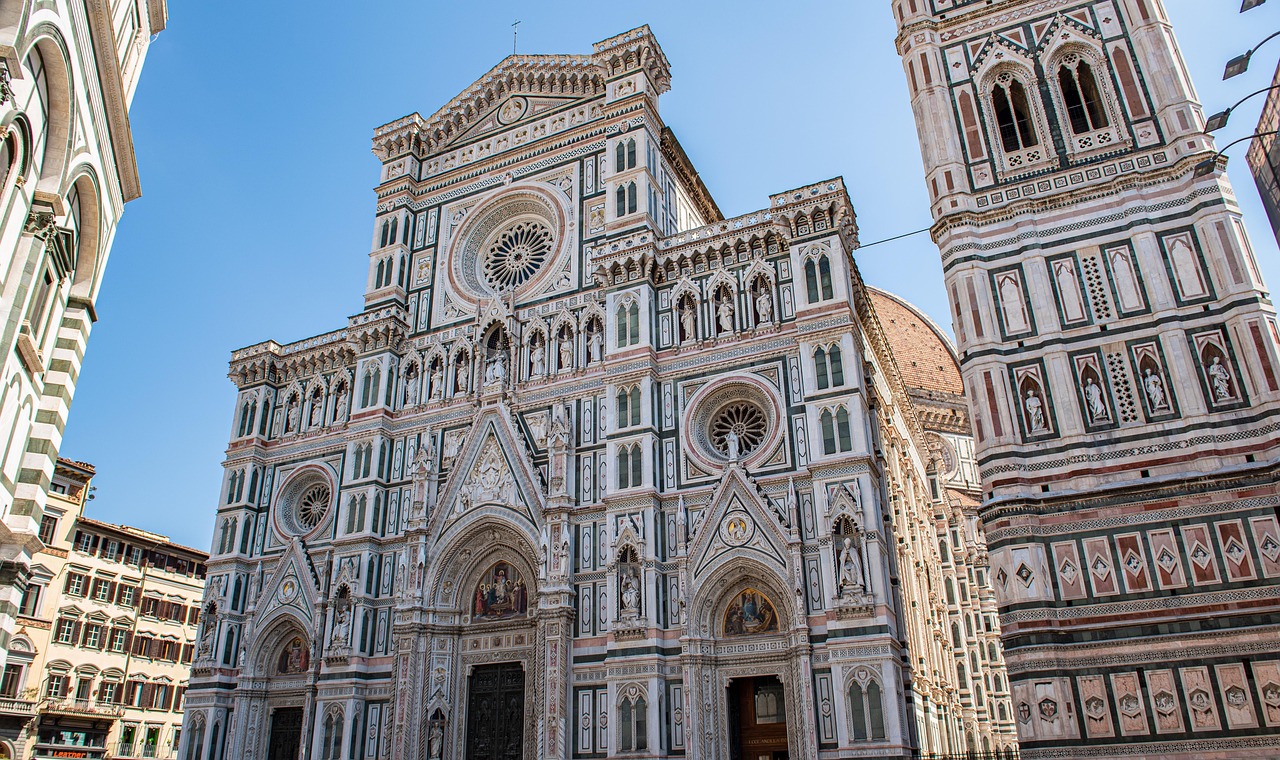
Step back once—really back—so the full façade reads as one. The exterior’s white and green marble is intricate rather than flashy, with green marble accents that sharpen in afternoon light. It’s one of the largest churches, and within the historic centre (a UNESCO World Heritage Site) the scale feels both civic and personal—an open invitation to slow down and look up.
Finding your bearings: the piazza as a doorway to the city of Florence
In the city of Florence, you’ll often arrive via narrow lanes that suddenly open into a bright stage set of stone and sky. Use the edges as reset points: step to the side of the cathedral for a quieter angle, then drift back when you’re ready to re-engage. If you hear locals say piazza duomo, they mean this same centre point—where maps become optional and curiosity does the rest.
From Gothic ambition to a finished landmark: the cathedral story that began in 1296
The new cathedral began in 1296, and that date helps you read the building as a long, determined project rather than a single moment. The first plan was designed by Arnolfo di Cambio, an architect who set the tone with daring proportions—think Gothic confidence at the end of the 13th century. In other words, it was Arnolfo di Cambio in 1296 who sparked the vision that would stretch across the 14th century and beyond.
The façade you see today is later: Emilio de Fabris (often shortened to de Fabris) delivered the richly patterned finish in the 19th century. That layered timeline is part of the point—few monuments show the rhythm of a city so clearly, from medieval ambition through the Italian Renaissance and into modern restoration.
To keep your day feeling seamless, plan your route around energy and queues rather than trying to do everything at once:
- Early morning is usually the calmest time for the cathedral interior; late afternoon often brings softer light for façade photos and street-level details.
- Take short pauses along the quieter edges for water and a breath—small resets build confidence before any climbs.
- If you’re travelling together, pick one clear meeting point (a specific corner of the square) so no one feels hurried or left behind.
From here, you’re perfectly placed to step inside and let the scale change your tempo.




Inside the Cathedral of Santa Maria del Fiore: atmosphere, mass, and dress code
A quieter moment inside the vast nave
Cross the threshold and the space shifts—cooler air, softer sound, and a surprising sense of openness. This is the moment the word cathedral stops being an idea and becomes a physical experience of echo and proportion. In Santa Maria del Fiore, the eye rises naturally, while the body slows down; the cathedral’s calm can feel grounding after the bustle outside. Seen as a whole, the Florence Cathedral is less about ornate clutter and more about a confident, spacious interior designed for awe.
Mass at Santa Maria del Fiore: a calm local rhythm and simple etiquette
If you want a more personal experience, consider a morning mass. One visitor described sitting in stillness and feeling connected to centuries of worshippers—less like sightseeing, more like shared time. It’s also the easiest way to sense the local rhythm: whispered prayers, the soft shuffle of chairs, and a vast cathedral holding everyone with quiet care.
Keep the dress code straightforward: no shorts or sleeveless tops, and shoulders covered. During services, stay respectful—mute your phone, keep voices low, and give people space. Let the atmosphere lead; it’s often the simplest way to understand why this place still matters.
Art highlights made simple: stained glass, memorials, and Florentine names to know
Start with the stained-glass windows: they tell stories gently, especially when sunlight hits them at an angle. Then look for details about Paolo Uccello (often how you’ll hear it), Andrea del Castagno, and the memorial to Niccolò da Tolentino. Seek out Domenico di Michelino for a distinctly Florentine blend of narrative and precision—no art degree required, just patient noticing.
Photography is allowed, but flash photography is prohibited. For a steadier shot, rest your phone lightly against a pillar edge (without blocking anyone) and capture texture: stone, shadow, and the way the nave seems to breathe.
If you’re travelling with a companion—or you’ve booked one of the smaller guided tours—use that shared presence as support. A good guide can turn “what am I looking at?” into calm understanding, which makes the climbs later feel far more achievable.
Brunelleschi’s Dome climb: the Duomo’s cupola, steps, and famous frescoes
Climbing inside the dome for rooftop views
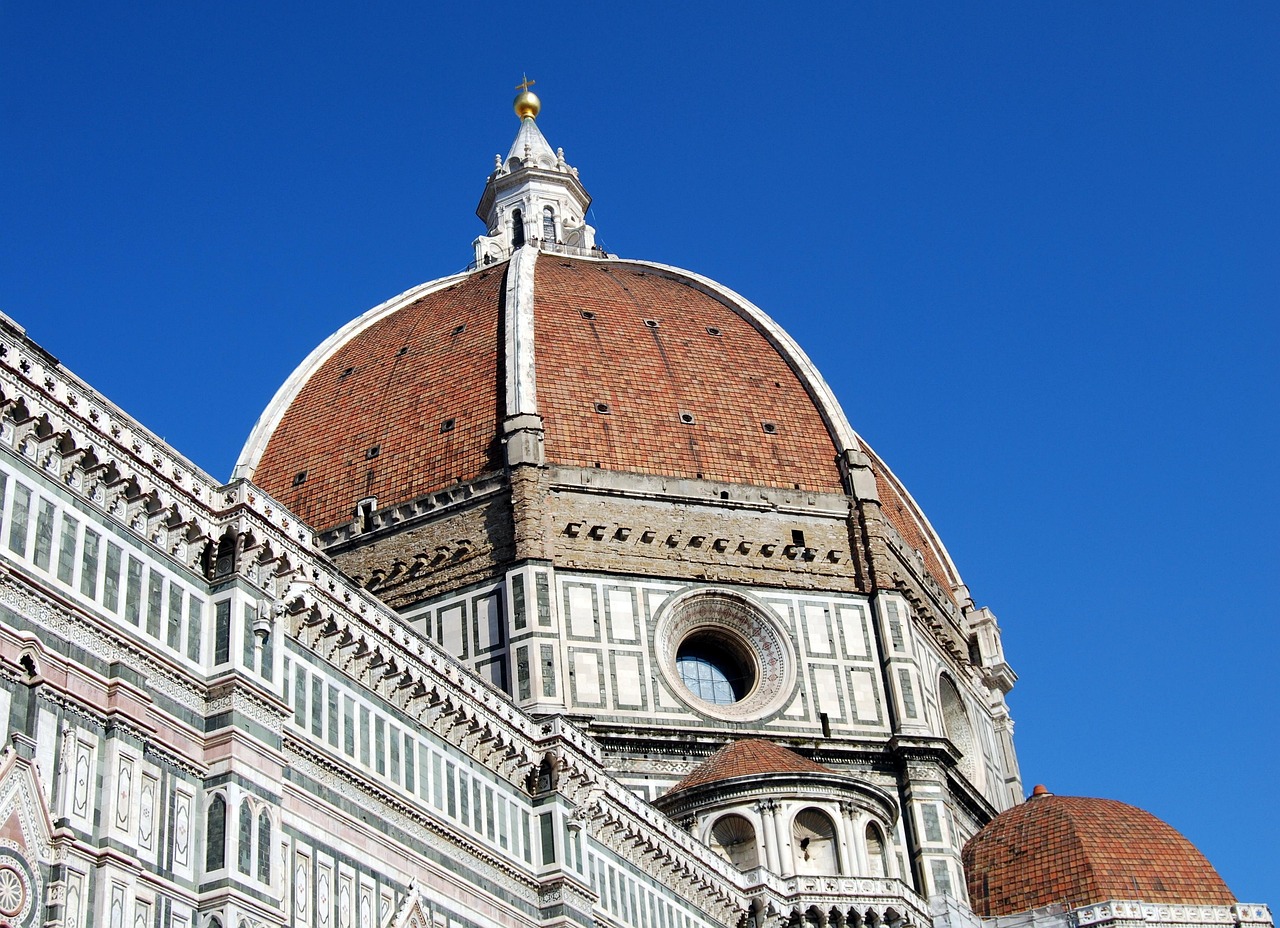
This is the moment many travellers come for: Brunelleschi’s dome, the cupola that changed engineering and the skyline in one move. Online, you’ll see it labelled Duomo Florence, but the lived experience is more tactile: an octagonal structure, the largest masonry dome of its era, designed by Filippo Brunelleschi. The church was consecrated in 1436, and for its time, it stood among the largest in the world—built to consecrate faith and civic pride in the same breath.
Brunelleschi’s dome climb tips: pacing, comfort, and crowd strategy
The climb is over 400 steps, with narrow passages and the kind of close quarters that can feel intense at peak hours. Comfortable shoes matter, and so does a steady rhythm: breathe slowly, sip water often, and take micro-pauses whenever you find a small open pocket of space.
- If you’re prone to dizziness, stop, face the wall, and focus on slow breathing for 20–30 seconds.
- Carry a small bottle, and top up before entry; dehydration makes the stairwell feel harder than it is.
- Timed tickets are a quiet luxury—less waiting, more control, and a smoother pace through the tight sections.
If you’re climbing together, agree on a no-pressure rule: anyone can pause without apology. That one decision adds a surprising amount of confidence.
Last Judgment up close: the Vasari and Zuccari fresco cycle inside the dome
Midway up, you reach a viewpoint most visitors don’t expect: the Last Judgment fresco cycle attributed to Vasari and Zuccari. Seeing Vasari and Zuccari at close range is startling—faces, gestures, and colour fields that were never meant to be examined like a gallery piece. As you spiral upward, perspective shifts: what looked orderly from below becomes vivid and almost cinematic when you’re within arm’s length.
Then the top: rooftops, river lines, and the Tuscan hills beyond. Many travellers time this for late light; watching the city soften into gold can be profoundly moving. If you can, hold the view for one full minute in silence—no photos, just presence—then take your shot.
For comfort and safety, try to avoid peak midday crowds and keep your pace modest. It’s an adventure, but it’s also a place to move with care.
Giotto’s Campanile bell tower: Duomo di Firenze views and top attractions in Florence
Giotto’s bell tower beside the cathedral
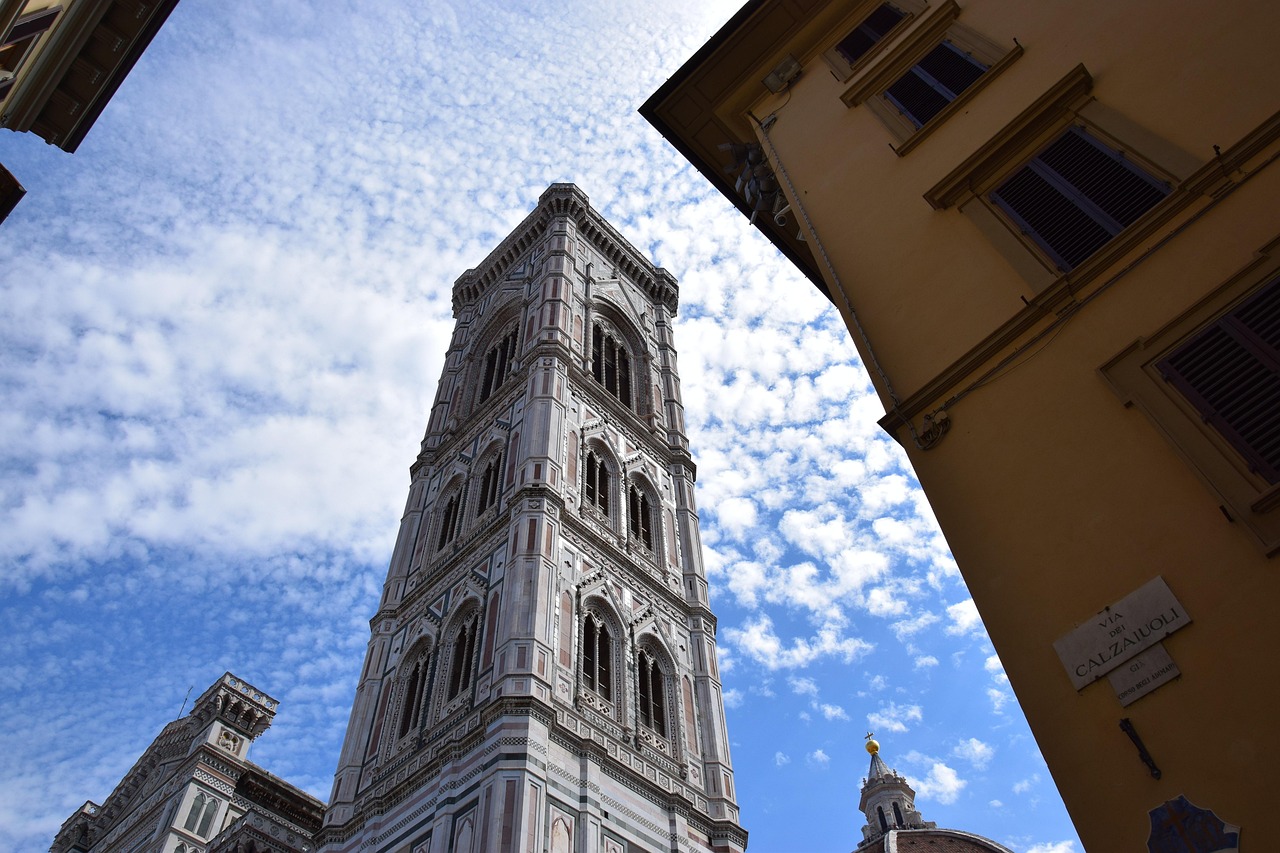
If the dome felt like an inward spiral, Giotto’s campanile offers a different kind of ascent—more open stairways, more air, and new angles on the duomo. Search for it as a bell tower climb and you’ll see the numbers, but the lived experience is simpler: it’s athletic without being claustrophobic, with windows that let you reset your breathing.
Giotto and Talenti: how the bell tower’s design took shape
The story begins with Giotto, then continues under talenti, and together they shaped a bell tower that belongs to the cathedral complex like a signature. From above, you’ll see rooflines, geometric patterns, and the dome’s curve revealed as pure engineering—a reminder that every great cathedral is also a construction story.
A compact Duomo loop: Piazza San Giovanni, the Baptistery, and quick wins nearby
To keep the day focused on the cathedral complex, walk a tight loop to piazza San Giovanni and circle the baptistery of San Giovanni, a sacred building that predates the cathedral’s grand scale. It’s one of the easiest high-reward walks in the centre—no transport needed, just comfortable pacing and an eye for detail.
If you want two add-ons without scope creep, keep them within a few minutes’ stroll: a short café stop for espresso and water, and a browse of artisan shops tucked into the adjacent lanes. They help you regroup without draining your energy for the next deeper layer.
Local insight for photographers: the least-crowded angles are often in the lanes just off the main flow, and lower sun reveals surface patterns best. If you’re travelling with an expert guide, ask for a clean-frame viewpoint—small decisions that make the day feel intentionally crafted.
Santa Reparata crypt tickets: what’s beneath the cathedral and how to plan your visit
Going below the cathedral to see earlier layers of the site
After heights, go beneath your feet. Visiting the crypt is less about logistics and more about meaning: the present cathedral was built on the site where the church of Santa Reparata once stood on the site. Stepping into Santa Reparata brings you face to face with earlier foundations, quiet stones, and the sense that history is physical rather than abstract.
Santa Reparata in the crypt: a cooler, calmer layer of the cathedral complex
The crypt feels cooler and slower than the square above. It’s a place to process what you’ve seen—the dome’s scale, the cathedral’s echo, and the way centuries overlap. If you value insight as much as views, this is where the story becomes intimate and surprisingly human.
The Duomo Museum: models, terracotta, and understanding the construction of the cathedral
The Duomo Museum, officially the Museo dell’opera del duomo, adds context that even confident travellers can miss on a first visit. You’ll see original artworks, delicate terracotta pieces, and models that make the construction of the cathedral suddenly clear for non-specialists. Look for works associated with Luca della Robbia, and linger with the architectural models—they translate big ideas into tangible craft.
For planning, buy a combined pass in advance (some ticketing pages label it the Opera Duomo pass), then confirm details on the official website before you travel. Entry rules and prices can change by season, and checking ahead is the simplest way to avoid surprises.
- Book timed entry for the dome first, then build the rest of your day around it.
- Arrive 10–15 minutes early so security checks don’t add stress.
- If you want guided tours, choose small groups for better hearing and more time for questions.
Many visitors mention how friendly local guides turn facts into a story—connecting engineering, faith, and Florentine ambition. For a seamless start, some meeting points are near Porta dei Canonici, and ticket staff can explain where to enter for each experience, including the del Duomo complex. If you’d like to explore more crafted Italy itineraries beyond Florence, you can browse our Trip gallery for inspiration.
With the museum’s context in your mind, the cathedral becomes less a single monument and more a living archive.
F.A.Qs: Duomo Florence Cathedral planning and practical questions
Common questions for first-time visitors
Why is the Duomo in Florence so famous?
The Duomo is famous for its scale, artistry, and engineering—especially Brunelleschi’s dome, which was a breakthrough of the 15th century. It’s also central to Florence’s identity, with architecture and artworks that connect faith, civic pride, and the Italian Renaissance in one place.
Who is buried in the Duomo complex in Florence?
Within the cathedral complex, notable figures are associated with the site, but burials and monuments vary across areas such as the cathedral interior and the crypt. If this matters to your visit, check current signage and consider a guided tour so you can understand exactly who is commemorated and where.
What does the word Duomo mean in Italy?
In Italy, duomo generally refers to a city’s principal church, often the cathedral. The word is linked to the idea of a house of God, and in Florence it commonly points to Santa Maria del Fiore and the surrounding monumental complex.
How expensive is visiting the Duomo?
Entering the cathedral is typically free, but key experiences such as the dome climb, bell tower, crypt areas, and museum are usually accessed via paid tickets or a combined pass. Prices change, so booking ahead and checking the official website helps you plan with confidence and avoid surprises.
What stays with you after you visit the Duomo
Long after you leave the centre, it isn’t only the height that returns—it’s the feeling of standing under a vast cathedral roof and realising how small a single day is beside a thousand years. You might remember sound more than sight: footsteps in Santa Maria del Fiore, a murmured prayer during mass, and the way voices softened as if the building asked everyone to speak gently.
And then there’s the effort: that steady climb inside the dome, the brief heat, the pause you allowed yourself, and the moment you looked out and the city seemed to hold still. The Duomo in Florence gives perspective without insisting on it—inviting wonder, then letting you decide what it means.
Perhaps that’s the gift you carry onward: the sense that beauty can be engineered, painted, prayed over, and restored, and still feel alive. It remains on lists of the largest churches in the world, a reminder of what churches can achieve when craft and belief align. Move at your own pace, travel with care, and let curiosity guide you towards whatever Italy wants to show you next.