Post Contents
- Pantheon in Rome: First Steps in the Historic Centre of Italy and the Pantheon
- Pantheon dome oculus unreinforced concrete, Rome, Italy, and the Pantheon
- Pantheon in Rome, Agrippa, Hadrian, inscriptions, ancient Rome, Italy, and the temple.
- Santa Maria ad Martyres basilica of Santa Maria ad Pantheon, Rome, Italy, and Santa Maria
- Piazza della Rotonda near the Pantheon, Rome, Italy: cafés, gelato, and the Pantheon
- Visit the Pantheon with an entrance ticket, audio guide, and tour in Rome, Italy.
- F.A.Qs: Pantheon Italy
- Pantheon Rome reflection Italy monument oculus and the Pantheon
Pantheon in Rome: First Steps in the Historic Centre of Italy and the Pantheon
Pantheon in Rome First Steps in the Historic Centre, arriving through Rome’s lanes
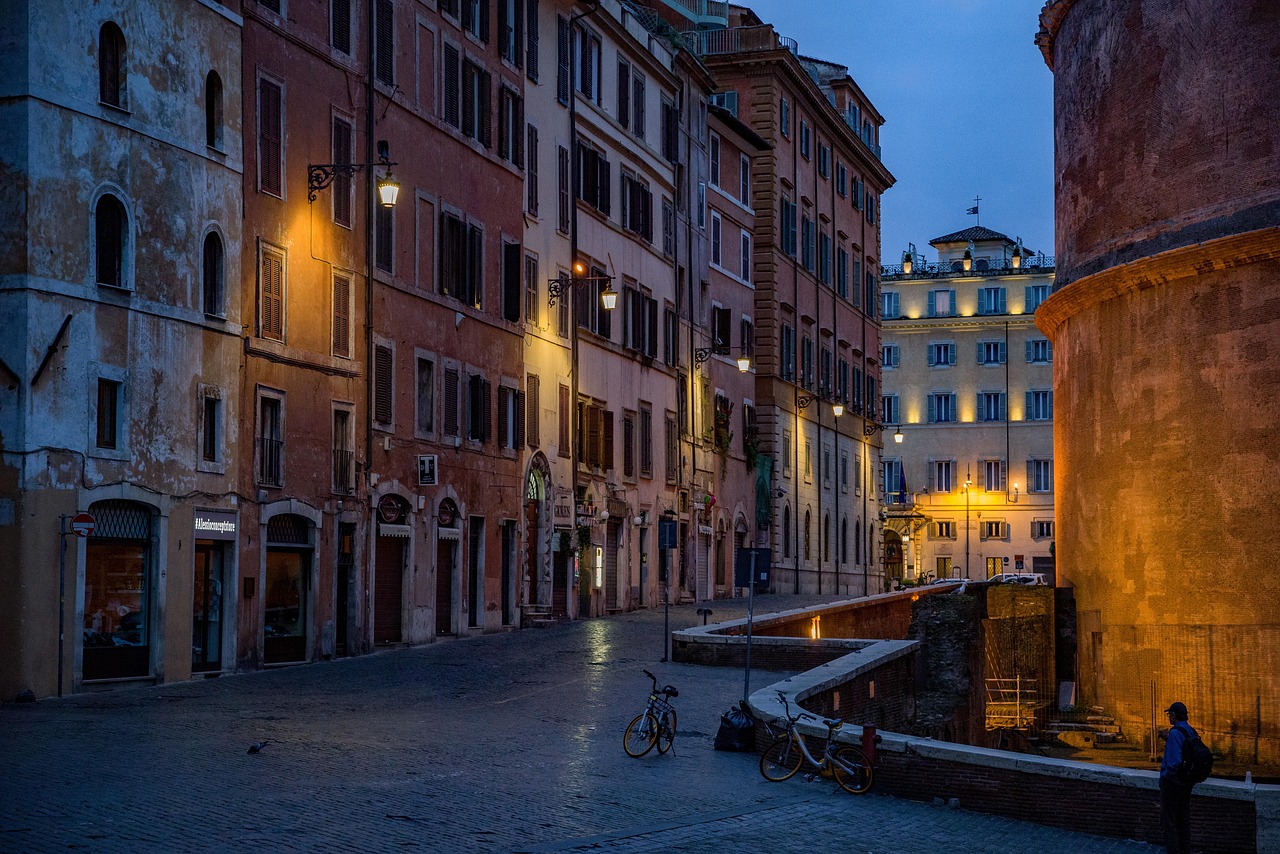
For a first-time traveller, a walk through the Pantheon in Rome, Italy, feels like slipping through a stitched seam of time. You’re in modern Rome one moment, then the lanes narrow, the air cools, and the Pantheon appears as if it has always been waiting. It’s a personal kind of arrival—quietly thrilling—especially if you enjoy the adventure of navigating by instinct rather than screens.
Pantheon in Rome arrival and how to explore on foot
The historic centre is made for walking, but those cobblestone streets ask a small price: comfort. Wear shoes you trust, because the pleasure here is in slow discovery—pausing for a glimpse down a side lane, listening to footsteps on stone, and letting the city’s scale guide you. That gentle effort creates a crafted sense of momentum, and it’s the easiest way to design your own route without needing a tour at every turn.
Piazza approach and first details to uncover
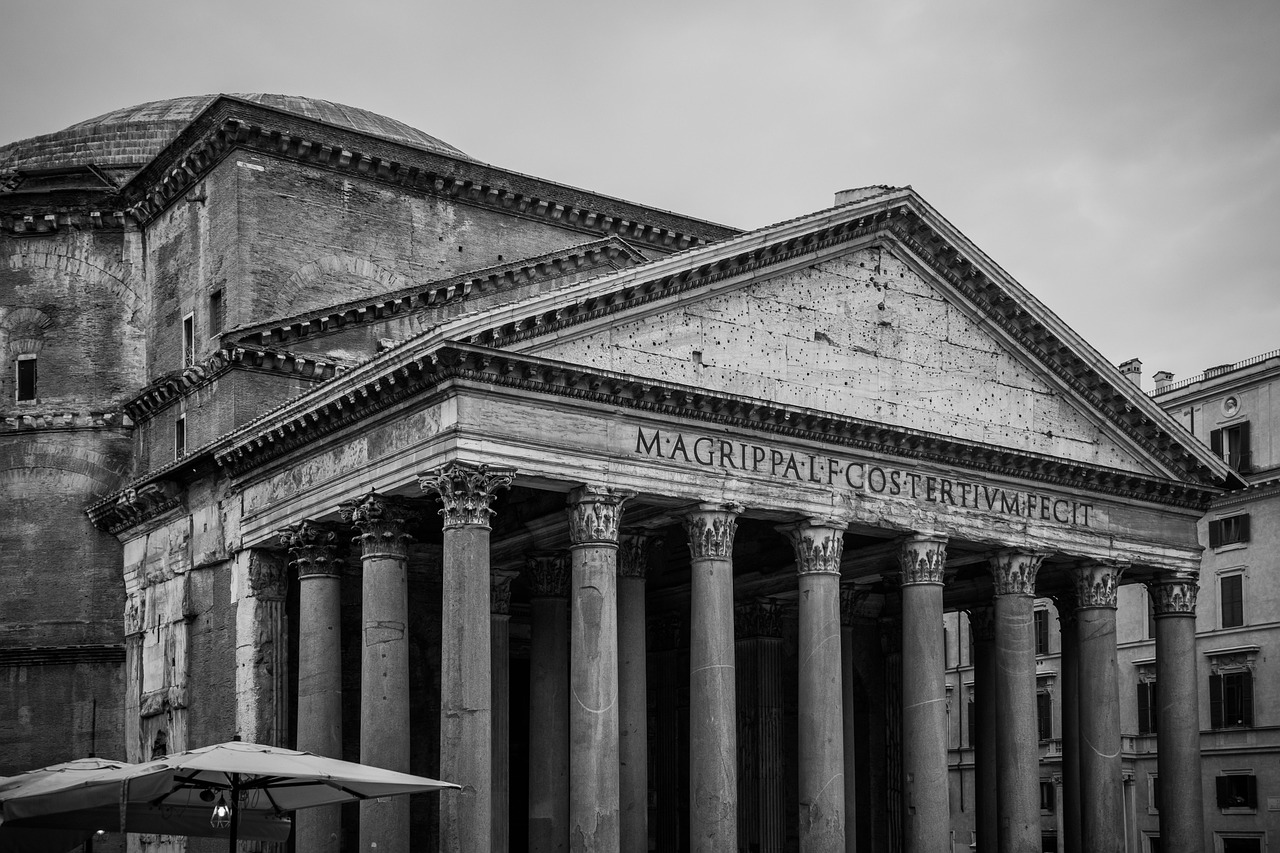
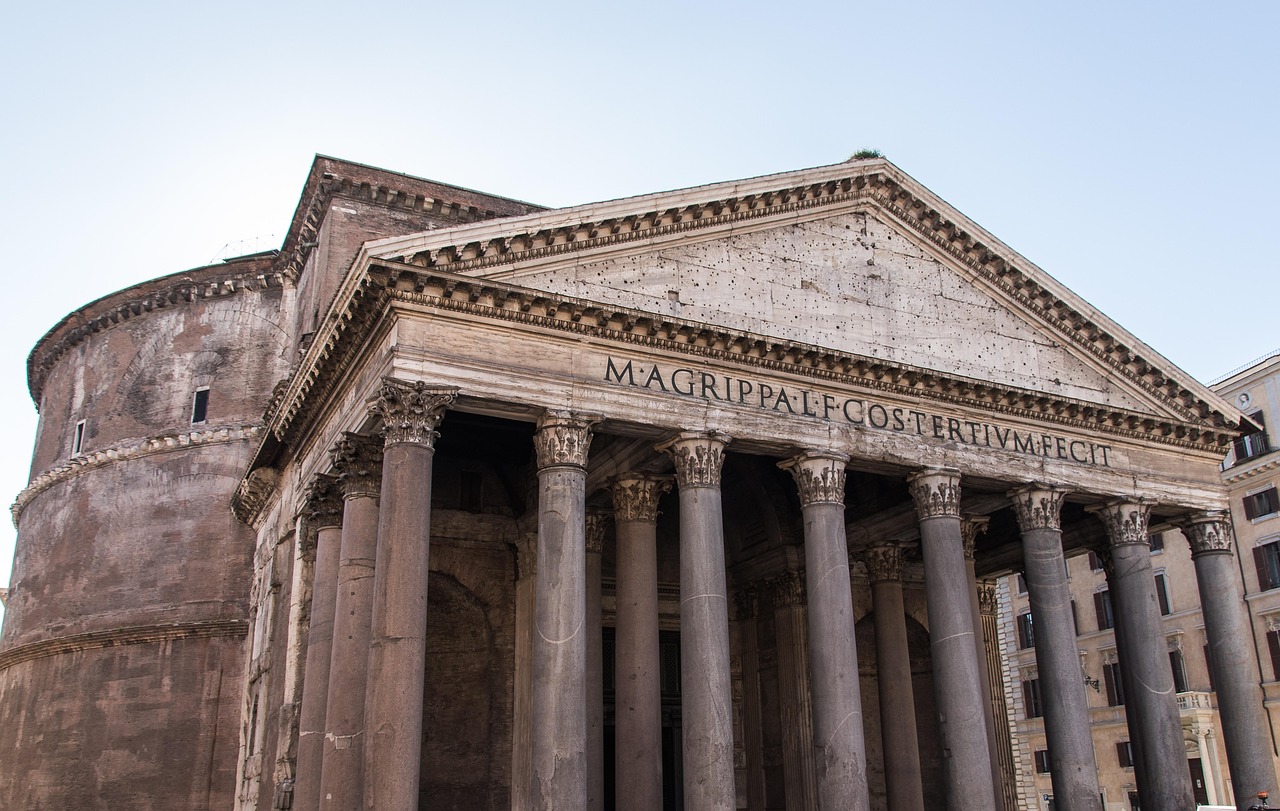
As you approach Piazza della Rotonda, you’ll notice the portico first—massive Corinthian columns, a deep shadow line, and the famous inscription above. The square itself is bustling, and that contrast matters: a monumental façade held together by everyday Roman life. Take a breath, step back far enough to see the full front, and let your eyes adjust to the scale before you go in.
- Timing tip: early morning brings calmer air and fewer tourist clusters.
- Ground feel: expect uneven stones; keep your pace steady and relaxed.
- Mindset: arrive curious, not rushed—your best insight comes when you slow down.
A honeymoon couple once told me their favourite part wasn’t the photographs—it was the hush of being there early, almost privately, with enough space to trust their own pace. That’s a reassuring way to start: you’ll feel more confident before the day builds.




Pantheon dome oculus unreinforced concrete, Rome, Italy, and the Pantheon
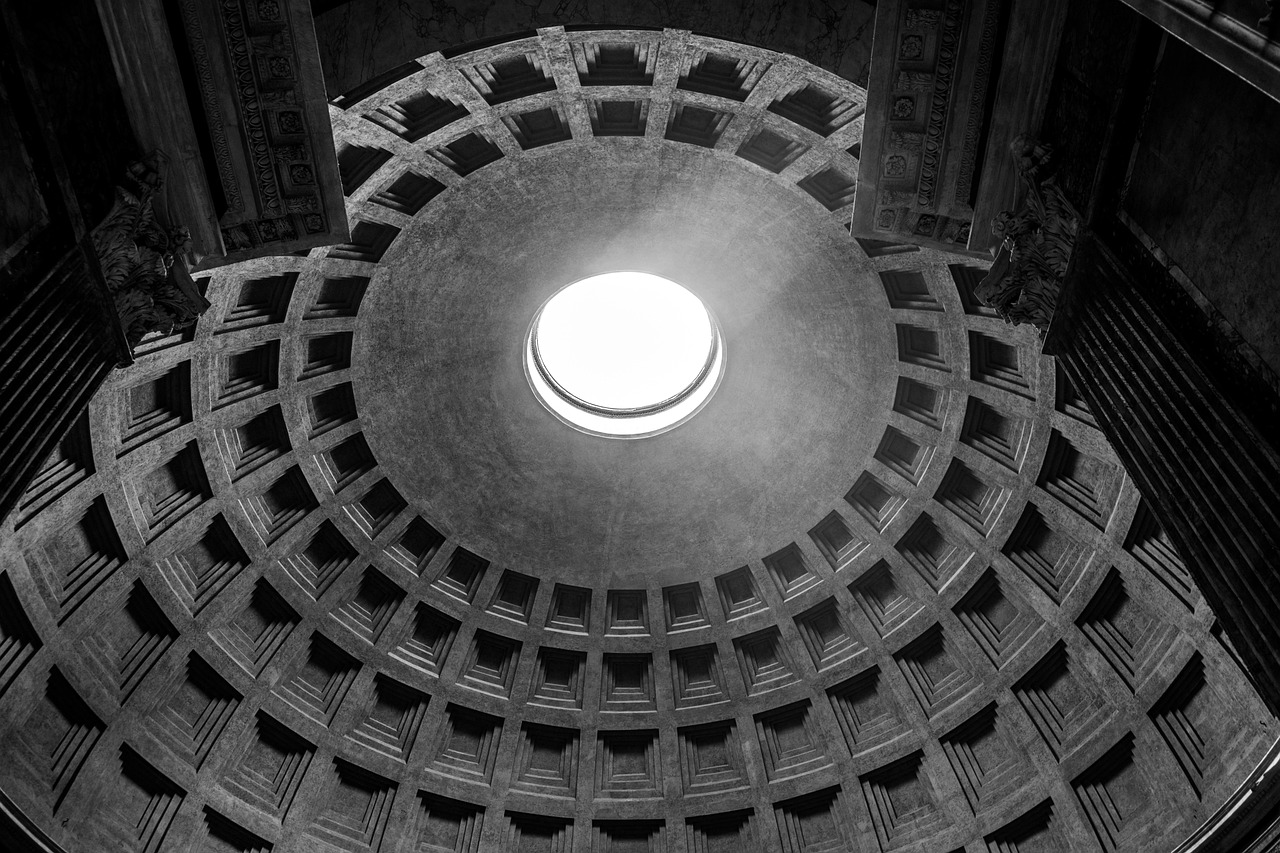
The Pantheon Dome and Oculus, a masterclass in Rome’s Roman architecture
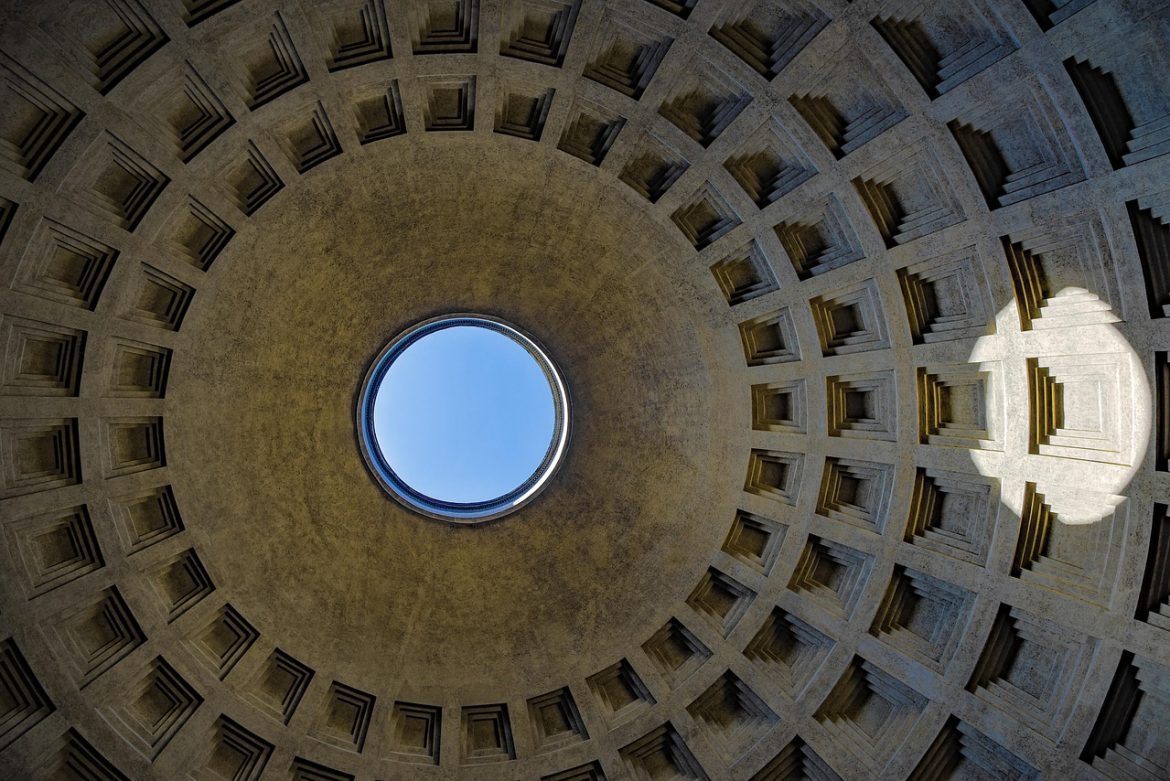
Inside, the Pantheon dome oculus unreinforced concrete Rome Italy story becomes physical—you feel it in your chest as sound lifts and settles. The concrete dome is famed as the world’s largest unreinforced concrete span, and standing beneath it is a lesson in Roman architecture without a single placard. If you came for beauty and bold engineering together, this is your moment.
The concrete dome, 43 meters, is a feature that reflects the classic
The interior is a near-perfect sphere: 43 meters in diameter and roughly the same in height, a hemispherical vision that still feels radical. The coffered ceiling lightens the weight overhead, and that rhythm reflects the classic order—quiet geometry with dramatic effect. Some travellers call it the dome ever built that best balances strength and grace, and it’s easy to see why.
Oculus light, drainage system, and the building that seems luminous
At the centre is the oculus, open to the sky, where the shifting beam of light can make the stone feel almost luminous. One traveller described the Pantheon as “breathing” as midday approached, because the sunlight moved like a slow spotlight across the floor and walls. When rain falls, a subtle drainage system carries water away through tiny slopes and hidden outlets—practical design, elegantly concealed.
For the most immersive view, stand near the centre and rotate slowly. You’ll uncover how the architecture frames movement and stillness together, how whispers travel, and how the space encourages a quiet kind of awe.
Pantheon in Rome, Agrippa, Hadrian, inscriptions, ancient Rome, Italy, and the temple.
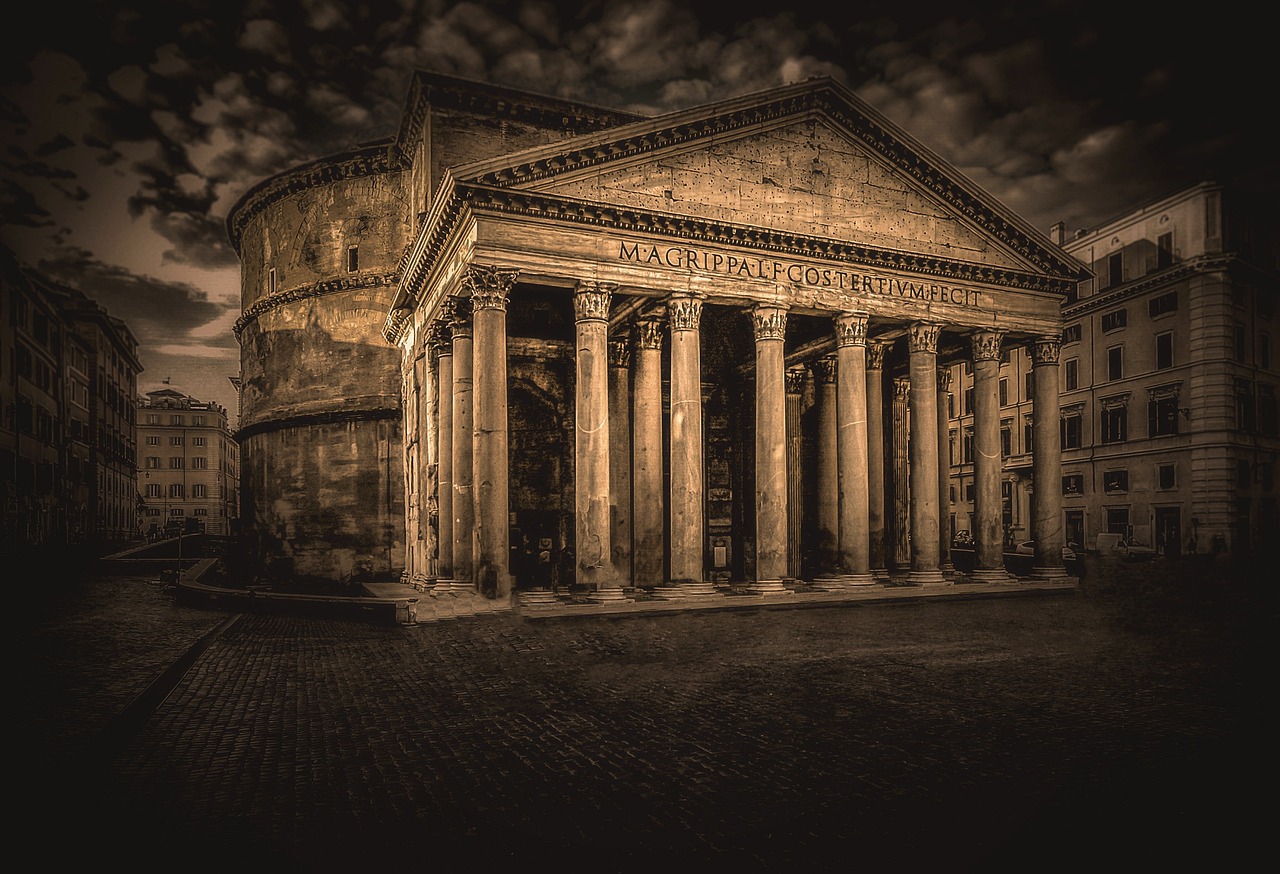
From Agrippa to Emperor Hadrian, the Pantheon’s inscription and rebuilding story
The Pantheon, Rome, Agrippa, Hadrian, inscription, ancient Rome, Italy, narrative is one of continuity and careful change. The inscription honours Marcus Vipsanius Agrippa, linked to the original temple of 27 BC during the age of Augustus, even though the present building is generally dated to around 125 A.D under Emperor Hadrian. That single line of lettering is a masterstroke of memory, shaping how we read the site.
A rebuild that reshaped the front of the new temple
History here includes a rebuild and debate, with accounts suggesting that Hadrian’s project involved reversing its orientation and opening a large façade—effectively creating a large approach to the front of the new temple. The result is what you see today: a powerful porch leading into a vast cylinder and dome. Think of it as a designer’s solution on a civic scale—how to create a threshold worthy of the gods and the city.
Why it is best preserved and what to look for outside
The Pantheon is often described as the best-preserved structure of ancient Rome, partly because later use helped preserve it. Look for the cylindrical structure supporting the dome, the monumental proportions, and traces of bronze history—most famously linked to Urban VIII and the Barberini family, when bronze elements were removed and repurposed elsewhere in the city. Even the later addition of two bell towers (since removed) tells you how the Romans and their successors kept adapting the skyline around this monument.
- Outside focus: count the Corinthian columns and notice how the portico shadows the entrance.
- Inside focus: follow the circle of chapels and watch how the light changes the stone.
- Perspective: step back into the square afterwards to feel the scale settle in your mind.
Santa Maria ad Martyres basilica of Santa Maria ad Pantheon, Rome, Italy, and Santa Maria
Santa Maria ad Martyres, the basilica within the Pantheon in Rome
The Santa Maria ad Martyres Basilica of Santa Maria ad Pantheon, Rome, Italy, is where faith and form meet. In 609, the Pantheon was turned into a church—traditionally by Pope Boniface IV—and consecration rites redefined the space while preserving its structure. Today, Santa Maria ad Martyres welcomes people not as a museum, but as a living basilica with a rhythm of worship and quiet observation.
Basilica etiquette with confidence and care
Because this is a religious site, it helps to enter with warm respect: keep your voice low, avoid intrusive photographs during services, and dress modestly. You can be an adventure seeker and still be a thoughtful pilgrim in spirit—curious, attentive, and considerate. If you wish, you may donate discreetly; those small gestures support the basilica’s numerous activities without drawing attention to yourself.
Chapels, canon life, and artists, including Raphael
Within the basilica, you’ll find chapels, altars, and devotional details that reflect the classic canons of sacred space, even within a Roman shell. A history enthusiast once told me they felt captivated by how centuries of worship seem layered into the walls—Christian martyrs, civic pride, and artistry held together. Look too for notable burials: artists including Raphael, and the kings of Italy—Vittorio Emanuele II, Umberto, and Margherita of Savoy—each tomb adding another strand to the story.
At certain times of year, traditions add gentle theatre: on the day of Pentecost, rose petals may fall through the oculus like soft rain; on Corpus Christi, there can be processional moments. The chapter of Santa Maria ad and the resident canon community keep these customs alive with quiet dignity, and visitors can witness without interrupting.
Piazza della Rotonda near the Pantheon, Rome, Italy: cafés, gelato, and the Pantheon
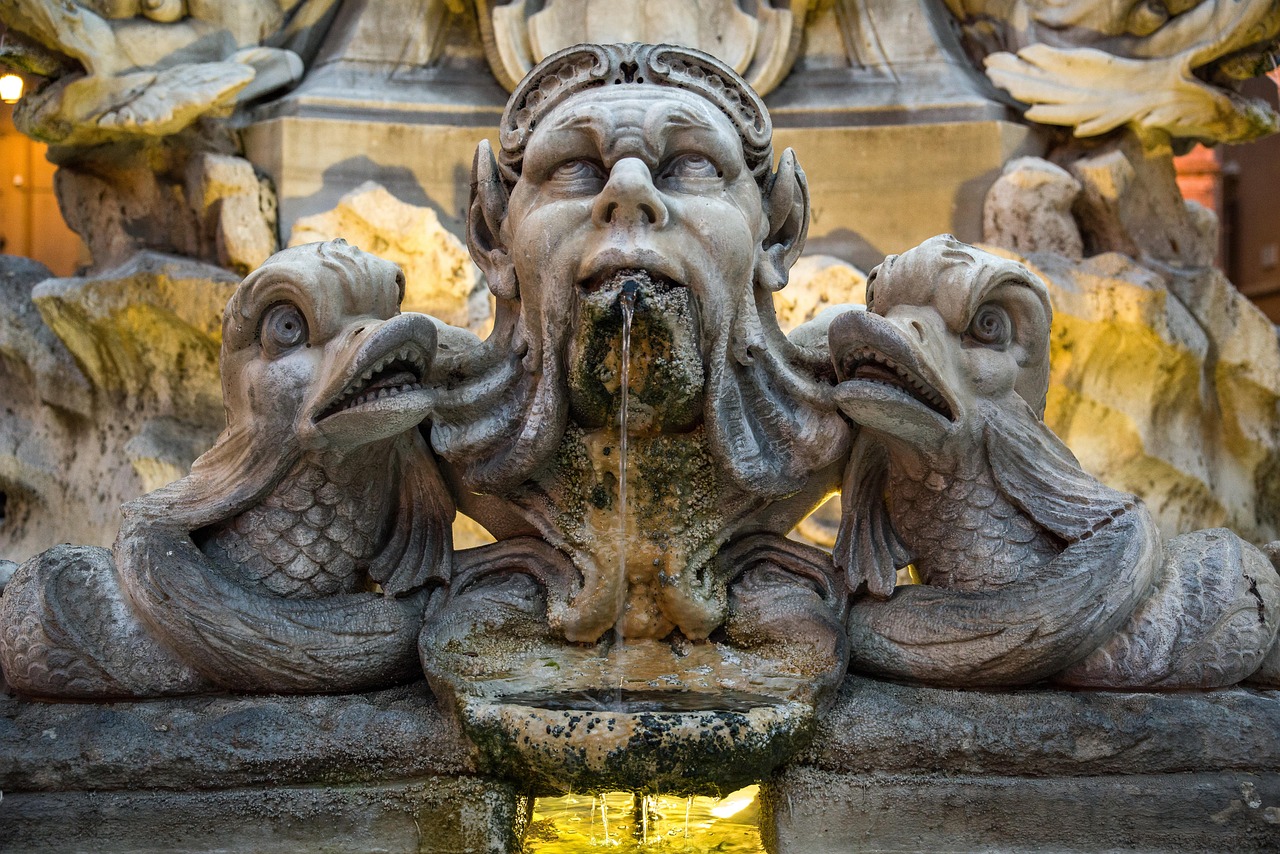
Piazza della Rotonda near the Pantheon, local cafés and gelato stops
Step outside, and the Piazza della Rotonda near the Pantheon, Rome, Italy, cafés, and gelato scene reset your senses. Street artists tune instruments, performers gather small circles of applause, and café tables catch the sun as if the square were a living stage. After the cool interior, the warmth of this local energy feels like the city’s exhale.
A designer pauses with espresso, gelato, and a view
This is where you create your own small luxury: an espresso or authentic Italian gelato enjoyed slowly, with the Pantheon in view. Pick a seat that lets you watch the façade, not just photograph it; the details reveal themselves over time. High-end travel isn’t always about spending more—it’s about designing space for attention.
A gentle adventure loop towards Sant’Angelo
If your feet still want a little exploration, weave into the surrounding lanes and let them pull you towards Sant’Angelo before looping back. The route is short but layered, with boutiques, stone courtyards, and sudden glimpses of domes beyond. You’ll feel how Roma stacks everyday life on top of the ancient, without needing to force the experience.
- Listen: street music often becomes the soundtrack that makes the moment feel real.
- Look: watch how light moves across the portico as the afternoon shifts.
- Stay: linger long enough to notice the square’s mood change between groups.
One evening, a spontaneous performance turned the square into a tiny concert hall; strangers smiled at one another as if they had been introduced. That human moment—crafted by coincidence—can become the memory you take home alongside the architecture.
Visit the Pantheon with an entrance ticket, audio guide, and tour in Rome, Italy.
Visit the Pantheon booking and entrance planning for a seamless Rome day
For many travellers, planning the audio guide for the Pantheon booking entrance ticket in Rome, Italy, is what turns a good stop into a seamless experience. In peak season, queues swell quickly, and the ticket office can be busy at the same time tour groups arrive. A little foresight in booking protects your energy for what matters: being present inside the Pantheon.
Booking options, entrance ticket notes, and last entry awareness
Where available, online booking is the easiest way to skip uncertainty; if you prefer spontaneity, arrive early or later in the afternoon when lines often soften. The entrance ticket is generally affordable, with common discount patterns for EU citizens under 25 and free entry on the first Sunday of each month—always verify details close to your date, as rules can change. Also, check the posted last entry time, especially if you’re pairing the visit with dinner reservations.
Getting there and using an audio guide like an expert
The best approach is on foot through the historic centre, but buses can help if you’re coming from further out (Barberini is a useful reference point for wider connections). To deepen your insight without locking into a full tour, consider an audio guide; it’s a calm, expert companion that lets you explore at your own pace. If you’d like more design-led ideas for the rest of Italy, you can browse our Trip gallery for inspiration.
- Plan for cobbles: add extra time so you’re not hurrying over uneven stones.
- Carry lightly: a smaller bag keeps the entrance process smoother.
- Travel mindset: trust your timing, and let the day feel spacious rather than scheduled.
When logistics are handled with care, the Pantheon becomes less of a “must-see” and more of a personal encounter—calm, unforced, and genuinely memorable.
F.A.Qs: Pantheon Italy
Why is the Pantheon so famous?
The Pantheon is famous for its extraordinary Roman engineering—especially the vast unreinforced concrete dome and the open oculus that lights the interior. It’s also celebrated because it has been continuously used for centuries, later becoming the church of Santa Maria ad Martyres, which helped protect and maintain the building as a living landmark.
What are 5 facts about the Pantheon?
Five standout facts: it has the world’s largest unreinforced concrete dome; the interior measures about 43 meters in both height and diameter; the oculus is open to the sky and shapes the building’s light; rain is handled by a discreet drainage system in the floor; and it became a church in 609, contributing to its remarkable preservation.
Is the Pantheon in Italy free?
Entry policies can vary, but the Pantheon often offers affordable tickets, with discounts and occasional free-entry periods, such as the first Sunday of each month. Because rules and categories may change, it’s wise to confirm current details close to your visit, particularly during busy tourist seasons.
Who is buried in the Pantheon in Rome?
Notable burials include the artist Raphael and members of Italy’s royal history, including Vittorio Emanuele II, Umberto, and Margherita of Savoy. Their tombs sit within the church setting of Santa Maria ad Martyres, adding another layer of cultural meaning to the experience beyond architecture alone.
Pantheon Rome reflection Italy monument oculus and the Pantheon
The Pantheon in Rome, a reflection of Italy, the oculus moment doesn’t always arrive while you’re standing inside; sometimes it meets you afterwards, halfway down a lane, when the noise of the square fades. What stayed with me was the feeling of time held gently together—ancient stone, modern footsteps, prayer, curiosity—all sharing the same air. The Pantheon of Rome can make you feel small in the best way, as if the world is wider than your to-do list.
What the light teaches when you step back into Roma
I keep thinking of that beam of light through the oculus, how it moves without hurry and asks nothing of you. It’s a beautiful relic of ancient Rome, yet it never feels finished; it feels alive, because people still enter with intention. In a city that can overwhelm, this monument gives a quiet kind of confidence—proof that endurance can be graceful, and that wonder doesn’t need to be loud.
There’s also a softer thought that lingers: to preserve places like this is a shared promise between generations. When we enter with care—keeping voices low, giving space to worship, and remembering that this basilica is someone’s spiritual home—we become part of the story rather than just passing through it. And perhaps that’s the truest souvenir: not a photograph, but a steadier way of looking.
Sometimes I imagine returning at another hour, when the light writes a different pattern on the floor, and the Pantheon quietly tells a new story to anyone willing to pause and listen.