Post Contents
- Forbidden City, Beijing, Gateway to the Imperial Palace and entrance to the Forbidden City
- Ming and Qing Dynasties: The Story Behind the Palace and Imperial Palaces of the Ming
- Magnificent design featuring distinct colours and lucky numbers in traditional Chinese imperial architecture.
- Outer Court Majesty Hall of Supreme Harmony Moments and Gate of Supreme Harmony
- Inner Court Secrets: Imperial Garden and Dusk Quiet in the Forbidden City
- Palace Museum Treasures: A Seamless Visit Plan for Forbidden City, ticket price, and Beijing subway etiquette
- F.A.Qs:
- What Stayed With Me After the Forbidden City
Forbidden City, Beijing, Gateway to the Imperial Palace and entrance to the Forbidden City
Forbidden City, Beijing, Gateway to the Imperial Palace and entrance to the Forbidden City
At the heart of Beijing, the southern entrance to the Forbidden City, China, is framed by Tiananmen Square—an approach that feels both modern and deeply imperial. This is the entrance to the Forbidden City, where the first sightline along the meridian axis sets your pace, your perspective, and—if you let it—your imagination. You can almost feel the city’s volume shift as the palace walls rise and the noise softens.
The geometry is part of the welcome. The great north–south line was designed to guide bodies and beliefs: where you walk, what you see, and what you’re meant to notice first. For adventure seekers, it’s a thrilling threshold—less a museum doorway and more a portal into a living story.
Arriving by Beijing Subway Line 1 with confidence
Arrival is wonderfully simple: take Beijing Subway Line 1 to Tiananmen East or Tiananmen West, then follow the flow on foot towards the security checks and ticket scan. Staff and signage are clear, but it helps to arrive with a calm plan—especially on busy days when queues feel like part of the theatre.
- Timing: Visit early morning on a weekday in spring or autumn for cooler air and lighter crowds.
- What to expect: airport-style security, ID checks, and a steady walk before you reach the gates.
- Mindset: think “steady and curious”, not “fast and complete”.
How to explore the palace complex northbound
Once you’re inside, create a northbound route and let the palace complex unfold in chapters. The Forbidden City holds over 980 palace buildings, and that scale is the point—you’re meant to feel small, then slowly become attentive. Wear comfortable shoes, carry water, and pace your energy for several hours on foot; luxury here is having time.
My favourite micro-moment comes early: the first broad courtyard opening up, your footsteps suddenly crisp on stone. In that instant, the modern city falls away, and the imperial palace feels startlingly present—crafted, enormous, and quietly expectant.


Ming and Qing Dynasties: The Story Behind the Palace and Imperial Palaces of the Ming
Ming and Qing Dynasties: The Story Behind the Palace and Imperial Palaces of the Ming
The easiest way to understand the Forbidden City is through the lens of the “Ming and Qing dynasties”: not everything at once, but one era at a time. The palace began in 1406 under the Yongle Emperor (Zhu Di), and the vast project—what we now say when we note the Forbidden City was constructed—was completed in 1420. That timeline places it squarely in 15th-century ambition and urban planning, when power was expressed through symmetry, labour, and ritual.
Yongle didn’t simply build a residence; he moved the capital and made the shift of capital to Beijing central to imperial rule in north China. The site sits on layers of earlier city-making, too—if you’re tracking history in China, remember the Yuan dynasty and Yuan-era foundations that influenced Beijing’s long arc, even as the Ming rebuilt and refined.
Ming Dynasty Vision and the Turning Point of the Qing Dynasties in Beijing
The Ming dynasty’s vision created an ordered stage for the emperor and his court, but it didn’t remain exclusively Ming for long. The year 1644 marked a turning point: the Manchus entered Beijing; the palace became the beating heart of the Qing world, and the Qing dynasties in Beijing left their imprint on court habits, collections, and ceremony. When you hear “imperial palaces of the Ming” and then step into spaces shaped by later Qing preferences, you begin to see continuity and subtle change in the same corridors.
Later upheavals add another layer. The Republic of China era, the last emperor Puyi, and the tides of the Chinese revolution all reshaped what the palace meant to the public. Yet it endures as a protected world heritage site—a UNESCO World Heritage landmark and a living heritage site of memory as much as stone.
Dynasties in Beijing and Shenyang for travellers who want more
If you find yourself hungry for more, consider the theme of dynasties in Beijing and Shenyang. Shenyang’s imperial heritage offers a complementary chapter—another palace story with a different atmosphere and regional texture. Pairing Beijing and Shenyang helps cultural enthusiasts discover how an imperial identity travelled and transformed across distances, not just across centuries.
Practical insight: rather than chasing every hall, pick a “dynasty question” for the day—what feels emphatically Ming, and what feels unmistakably Qing? That single prompt will better guide your attention than a checklist.
Magnificent design featuring distinct colours and lucky numbers in traditional Chinese imperial architecture.
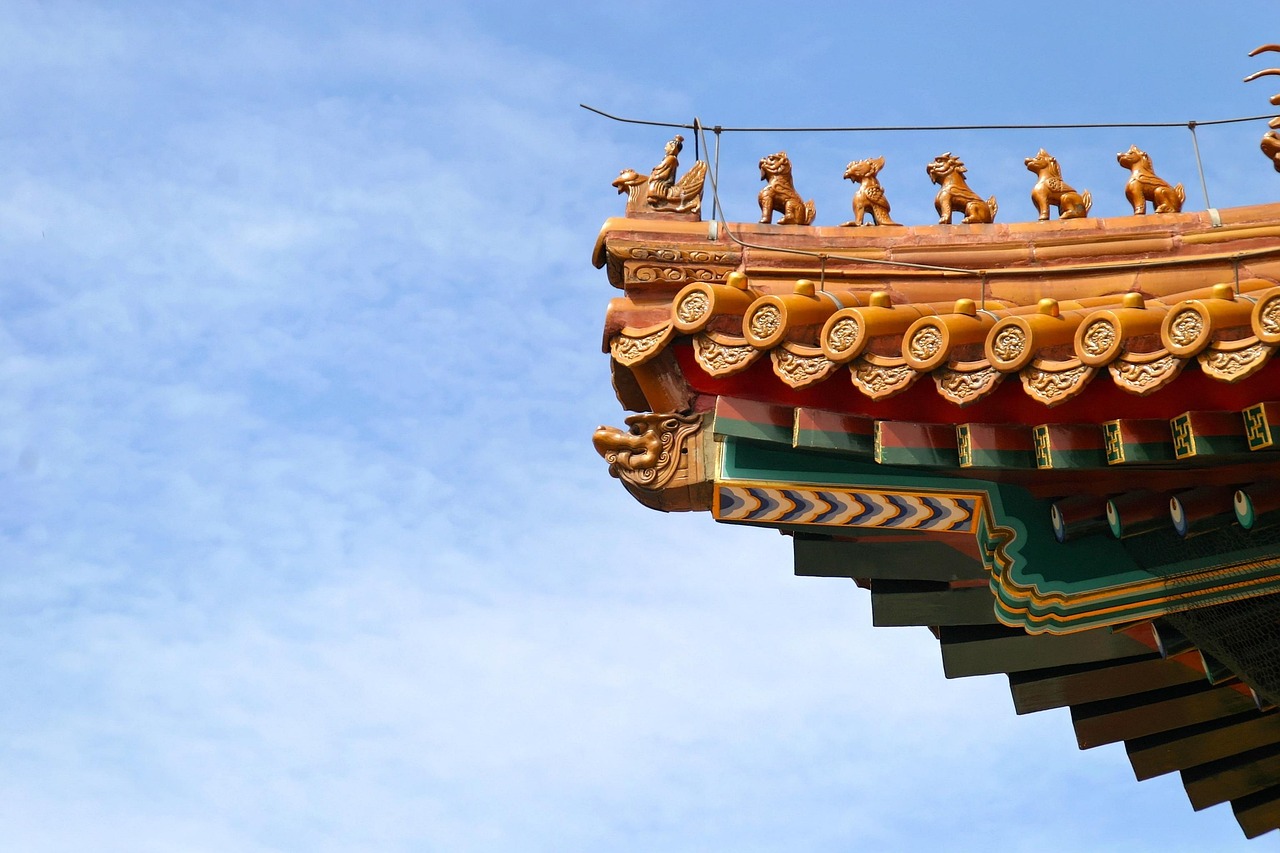
Magnificent Design, Distinct Colours, and Lucky Numbers in the Forbidden City palace architecture
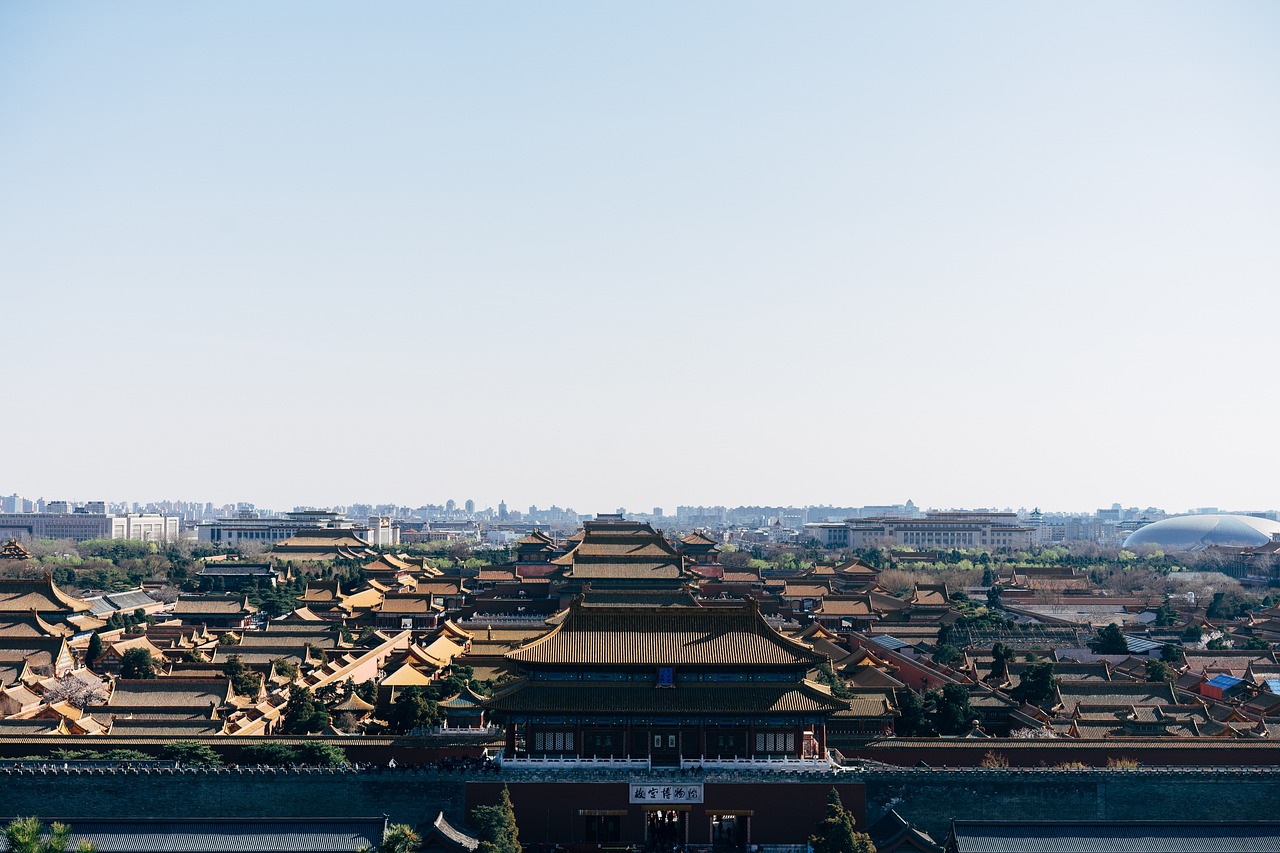
To really explore the Forbidden City, let your eyes decode its magnificent design rather than rushing to the “big halls”. The forbidden city palace architecture is deeply symmetrical: courtyards unfold like measured breaths, gates align on the meridian, and the palatial scale signals authority without a single announcement. This is Chinese imperial architecture at its most persuasive—space used as language.
The palette matters too. The distinct colours of red walls and golden roofs aren’t decorative accidents; they communicate hierarchy, permanence, and an imperial worldview. In ancient China, colour and material were rules, and rules were power.
Lucky numbers, roof ridge creatures, and the dragon you keep spotting
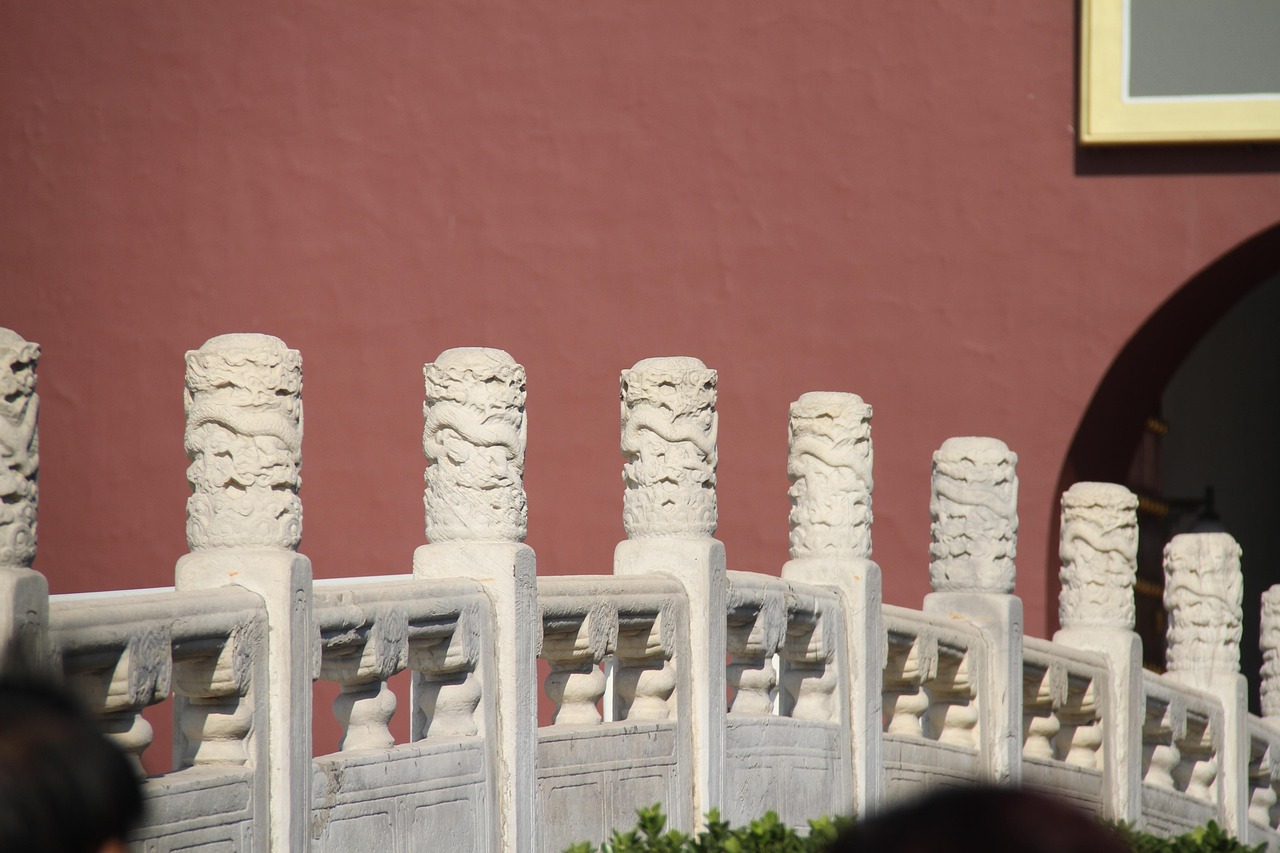
Look closer, and you’ll find lucky numbers shaping layouts and details—ancient Chinese beliefs made visible in stone, timber, and repetition. Along a roof ridge, you may see lines of small symbolic creatures, each one a tiny guardian of order. And then there’s the dragon: carved, painted, coiled into balustrades—an emblem of the emperor of China and the cosmic permission to rule.
You’ll also hear the word Wu when people refer to Wumen, often translated as the Meridian Gate. Say it softly, and it becomes part of your own internal map—one more way the place draws you into its logic.
A designer’s eye challenge within the Forbidden City
Here’s a simple, crafted challenge to create focus. Choose one detail—perhaps a dragon motif, a doorway threshold, or a carved marble balustrade—and track it through multiple spaces. You’ll uncover patterns that make the palace feel intentional rather than overwhelming, and you’ll start to recognise how craftsmanship keeps the entire complex cohesive.
- Pick one motif near a main gate and photograph it once (where allowed).
- Notice variations as you move—bolder in public halls, quieter near private quarters.
- End with reflection: what is the palace trying to make you feel?
Outer Court Majesty Hall of Supreme Harmony Moments and Gate of Supreme Harmony
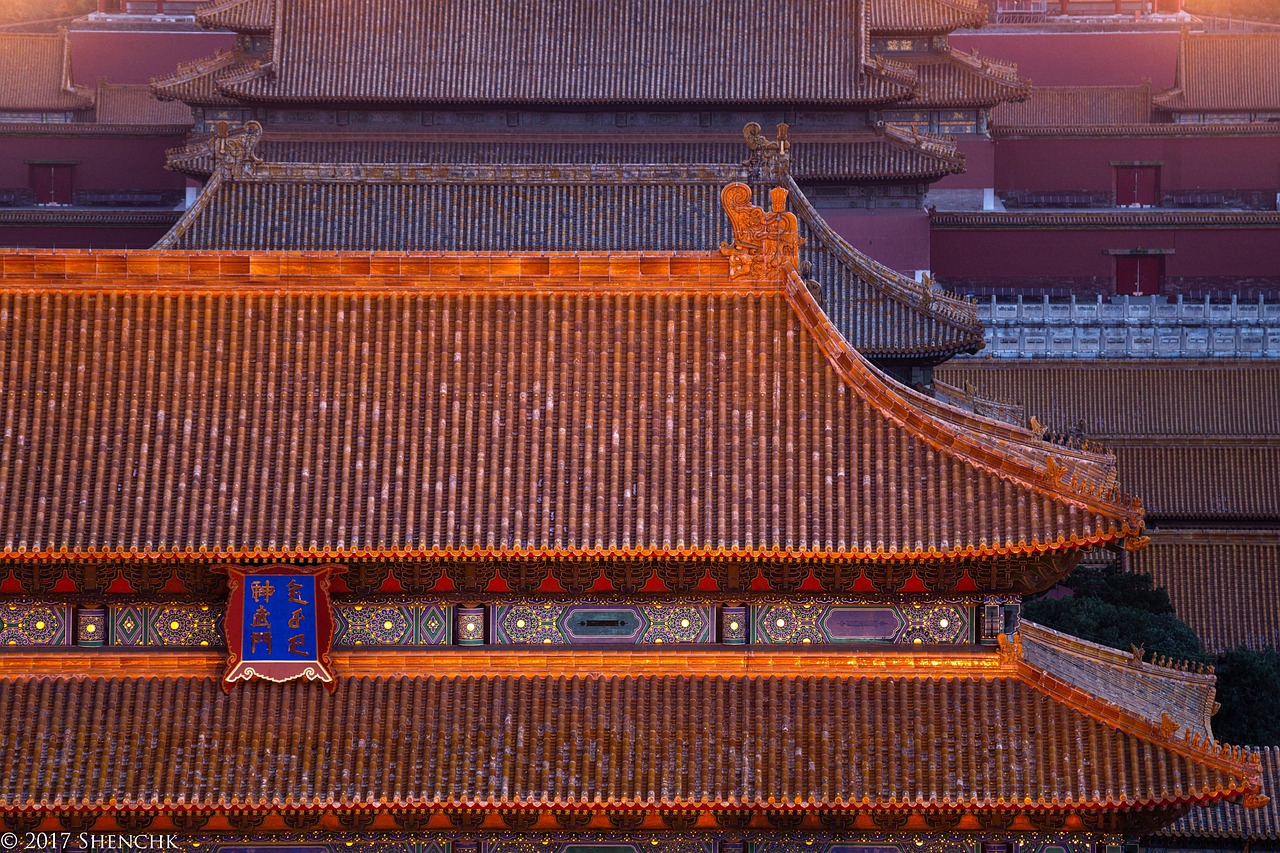
Outer Court, the Majesty Hall of Supreme Harmony, Moments in the Forbidden City palace
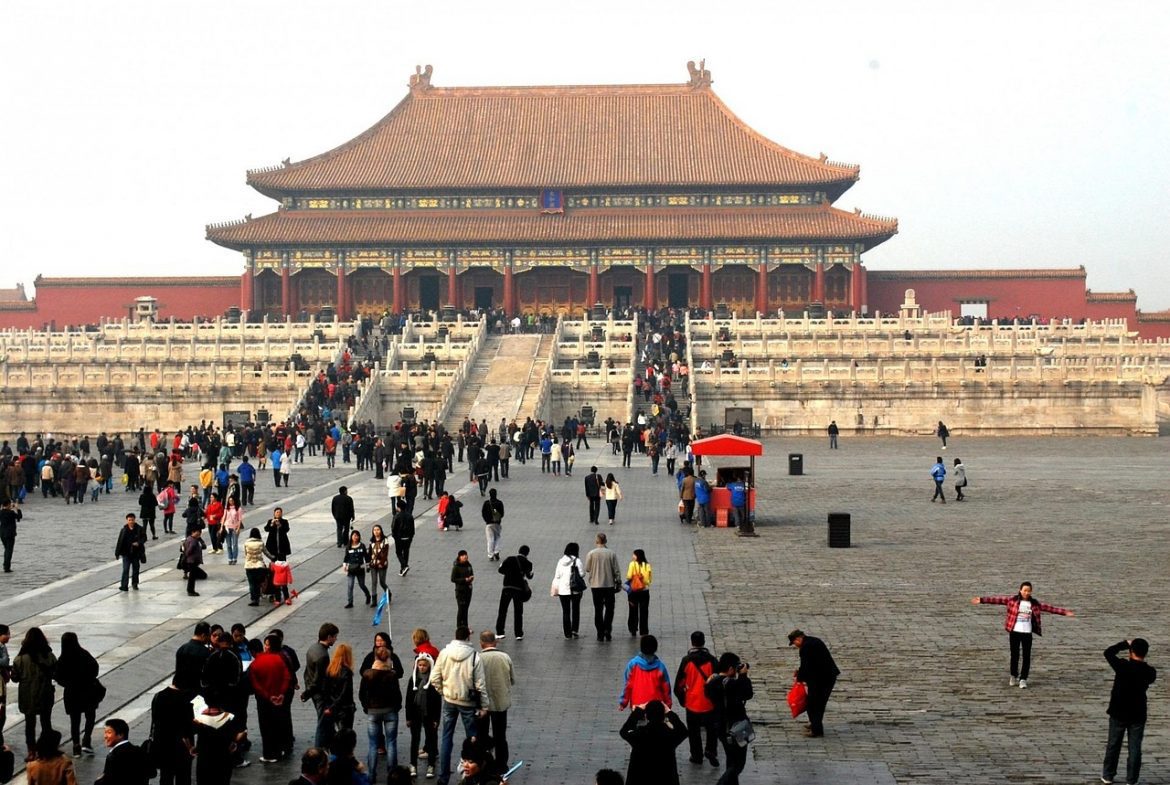
The outer court of the Forbidden City is where imperial power becomes public theatre—a ceremonial space designed so Chinese emperors could be seen, approached, and feared. If your mental image of a palace is “beautiful buildings”, this is where it becomes something more: choreography, distance, permission. The outer court forbidden city experience is also where the crowds tend to gather, so it helps to move with calm confidence.
Gate of Supreme Harmony to Taihedian on the three-tiered marble terrace
From the Gate of Supreme Harmony, the vista pulls you forward to the three-tiered marble terrace, a gleaming platform that lifts ritual above everyday life. At its centre sits Taihedian—the Hall of Supreme Harmony—a hall that has witnessed enthronements, proclamations, and the weight of dynastic time. Stand still for a moment before you step closer; the scale is the message.
A traveller once told me that standing here felt like a quiet electrical charge—an awe that wasn’t loud, but personal. They described feeling connected to 600 years of emperor-led history, as if the air itself held an imprint of processions and incense. It’s a rare travel moment: you’re not performing “sightseeing”; you’re simply present to something vast.
Hall of Preserving Harmony and the rhythm of imperial government
Nearby, the Hall of Preserving Harmony adds depth to the story—less about spectacle, more about systems. This was a place of exams, deliberation, and the kinds of banquets where alliances were confirmed with a glance. If you want a human-scale insight, imagine the tension of scholars waiting, or officials rehearsing the precise steps that kept the imperial government running.
Because this is one of the busiest courtyards, small gestures of care matter. Keep voices low, follow staff direction, and pause to the side if you stop for a photo—your respect helps everyone experience the palace with the calm it deserves.
Inner Court Secrets: Imperial Garden and Dusk Quiet in the Forbidden City
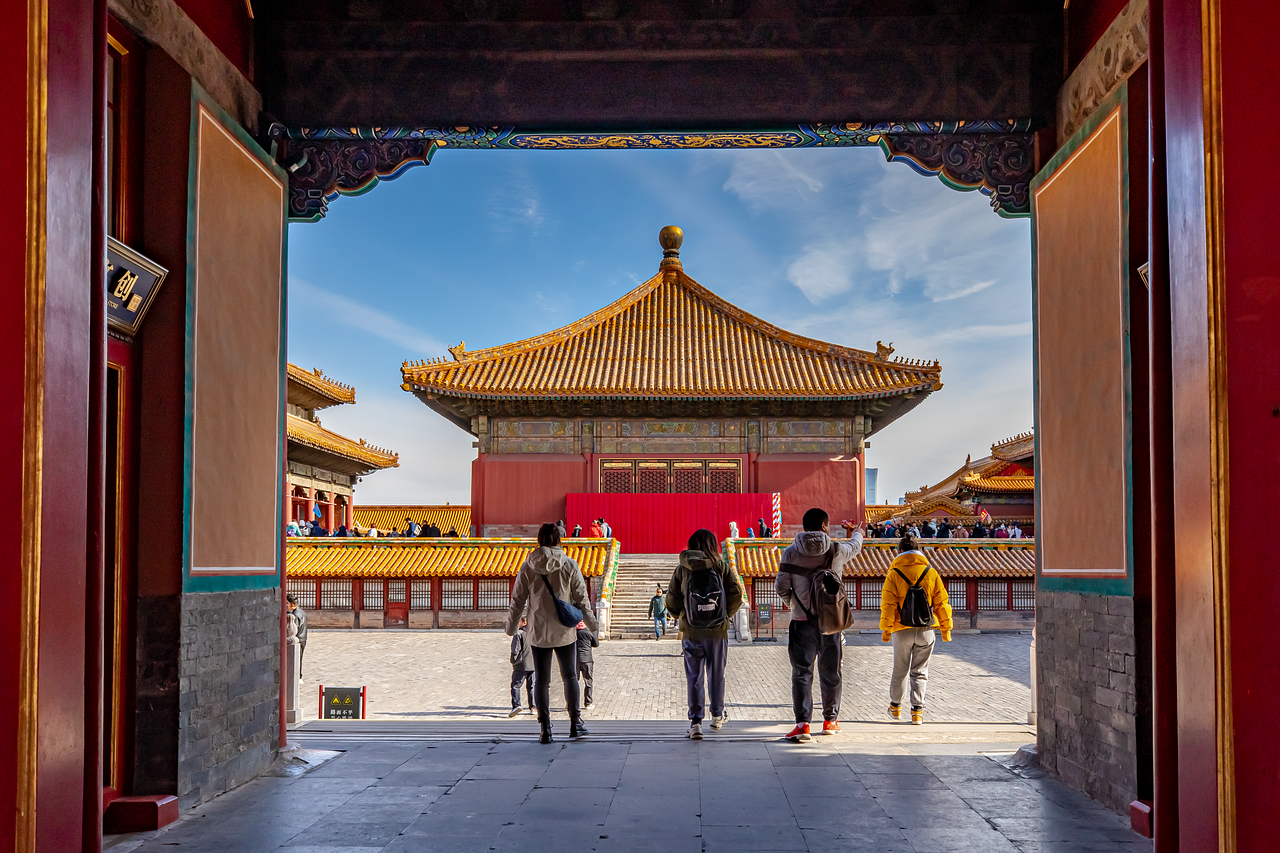
Inner Court Secrets, Imperial Garden, and Dusk Quiet within the Forbidden City
To explore what life was like within the Forbidden City, you have to move from the outer court’s ceremony into the inner court—a shift from state theatre to private routine. The inner court within the Forbidden City reveals the emperor not as a symbol, but as a person bound by protocol, family expectations, and the quiet rules of feudal China. Here, the palace feels less like a monument and more like a world that had to function every day.
Hall of Mental Cultivation and the Palace of Earthly Tranquillity
The Hall of Mental Cultivation is one of those spaces that changes how you read everything else. You begin to picture an emperor working through petitions, negotiating personalities, and carrying the strain of decisions that shaped ancient China. Nearby, the Palace of Earthly Tranquillity hints at the structured life of the imperial family—roles, ceremonies, and relationships that could be tender or sharply political.
This is also where local stories brighten the stone. A cultural enthusiast I travelled with struck up conversations with local guides who gently unfolded lesser-known tales—of concubines navigating court intrigues, of rival factions, and even Buddhist influences that filtered into personal rituals. The architecture stays the same, but the atmosphere becomes human.
Imperial Garden Yuhuayuan and the mystical hush at dusk
The Imperial Garden, Yuhuayuan, is a crafted retreat: ancient pines, rockeries arranged like poetry, and koi ponds that soften the palace’s formality. After long stone courtyards, the garden feels like exhaling. If you can, linger—this is where you discover that the palace wasn’t only about rule, but also about rest.
One adventurer described an unexpected joy: wandering a quieter courtyard at dusk as the crowds thinned, when red walls turned velvety in the late light. In that almost-mystical calm, even a simple doorway felt like a threshold between centuries.
Palace Museum Treasures: A Seamless Visit Plan for Forbidden City, ticket price, and Beijing subway etiquette
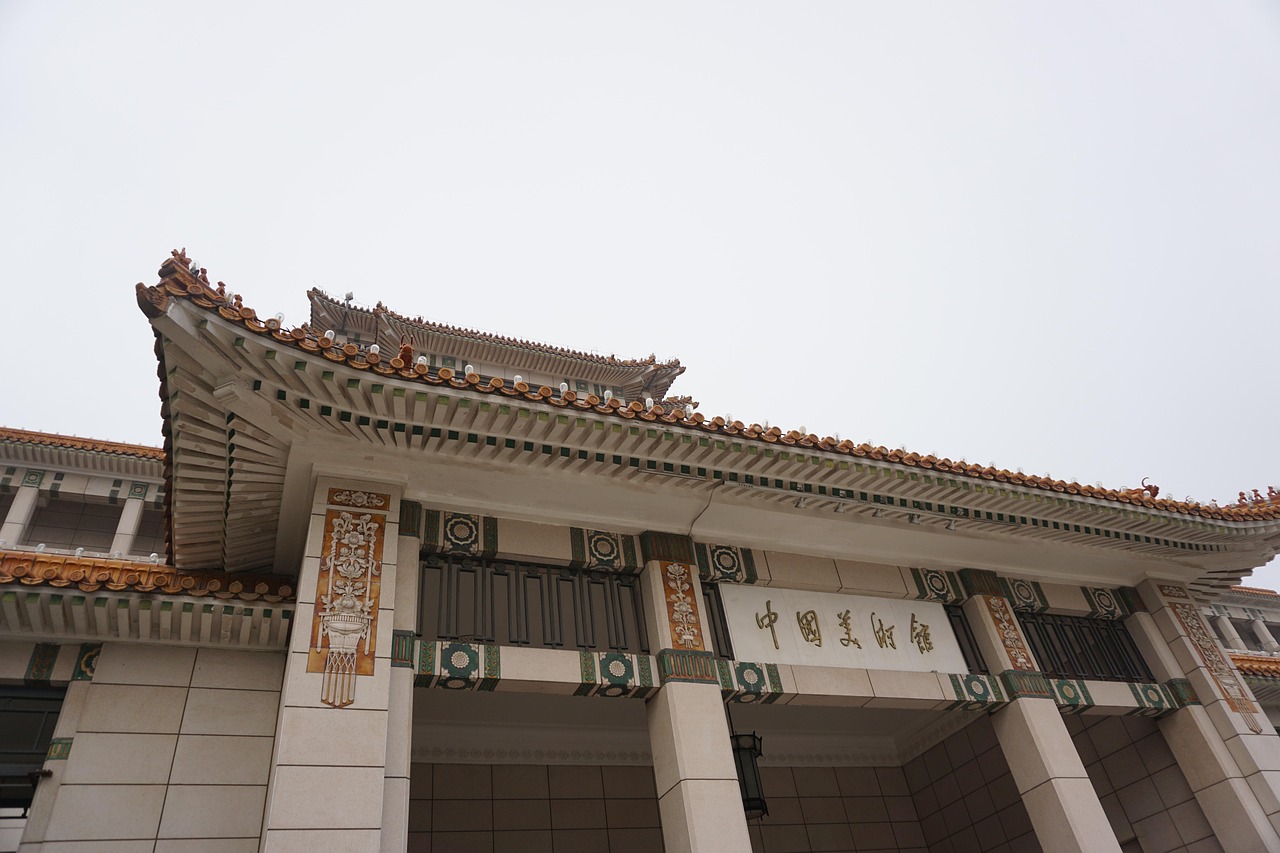
Palace Museum Treasures and a seamless visit plan for Forbidden City tickets and etiquette
When you’re ready to slow down and go from sweeping courtyards to close-up detail, the Palace Museum delivers. This is where the palace museum treasure gallery experience becomes tangible: jade that seems lit from within, ceramics that carry court taste, and imperial paintings that hold the brushwork of another world. The collecting preferences of the Ming and Qing courts still shape what you see today, making each gallery feel like a curated conversation across a dynasty.
Tickets, costs, and a truly seamless entry
For a seamless visit, book tickets in advance and check public holiday closures before you plan your day. Entry is typically around ¥60–80 RMB (roughly 60–80 yuan), with discounts for students and seniors, while special exhibitions may be priced separately. If you’re pairing this with other icons—like the Temple of Heaven—give yourself permission to spread Beijing’s big sites over more than one day.
- Access: Beijing subway plus a short walk is usually the easiest, least stressful route.
- Timing: plan half a day for highlights, or a full day if you want galleries with breathing room.
- Comfort: bring water and consider a light layer—weather can change quickly in open courtyards.
Respectful care in tight galleries and exhibition areas
Inside exhibition areas, photography rules can change from room to room, so follow signs and staff guidance with trust. Keep noise low, move with awareness in tighter spaces, and give artefacts and other travellers the same calm you’d want for yourself. It’s a small form of travel care that protects fragile beauty.
If you’d like to imagine what a broader, high-end journey across China could look like—crafted around art, design, and heritage—browse our Trip gallery for inspiration you can shape to your own pace.
F.A.Qs:
F.A.Qs: Forbidden City Beijing practical answers for high-end travellers
Why is it called the Forbidden City of Beijing?
It was “forbidden” because access was tightly controlled for centuries: the emperor, his household, and selected officials lived and worked inside, while ordinary people were kept out. The name reflects the palace’s role as a protected seat of imperial authority, where movement, ceremony, and information were carefully managed.
Which Chinese emperor had a male lover?
One well-known example is Emperor Ai of the Han dynasty, often referenced in stories about his relationship with Dong Xian. This is separate from the Ming and Qing rulers associated with the Forbidden City, but it’s part of the wider cultural and court history that travellers sometimes ask about.
What is inside the Forbidden City in China?
Inside are vast courtyards, ceremonial halls, private residential quarters, and museum galleries now managed as the Palace Museum. Highlights include major state buildings such as the Hall of Supreme Harmony, quieter inner-court residences, and collections of jade, ceramics, and imperial paintings, displayed in rotating exhibitions.
Can you visit the Forbidden City in China?
Yes. You can visit by purchasing a ticket (often best booked online in advance), passing security checks, and entering during official opening hours. Plan for several hours of walking, follow photography rules in exhibition spaces, and aim for a weekday morning if you want a calmer experience.
What Stayed With Me After the Forbidden City
What stayed with me wasn’t a list of halls, but a feeling: the way grandeur and intimacy can coexist in the same palace. Days later, back in modern Beijing—back among traffic and glass and streetlight—I still held the memory of late sun warming red walls, and the quiet weight of stone underfoot. The Forbidden City lingered like a melody you can’t quite hum, but can’t forget either.
I keep returning to one small image: a dragon detail half-glimpsed on a beam, not announcing itself, just watching. It reminded me that power always had a private side—emperors and officials, yes, but also artisans, guards, and everyday workers whose hands made the place real. In the hush of an emptier courtyard, you can almost sense those lives continuing, layer upon layer, beyond the reach of any single dynasty.
Perhaps that is the gentlest gift of the imperial palace: it changes how you notice history in ordinary life. You start to read thresholds, colours, and ceremonies with more patience, and you begin to wonder what other stories sit quietly behind the walls of the world. Long after you’ve stepped back into the city, the Forbidden City still feels like a doorway—one that opens inward as much as it opens onto China.