Post Contents
- Milan Cathedral and the Duomo story in the heart of Italy
- Rooftop terrace adventure on the Duomo of Milan for panoramic views Italy
- Inside the cathedral Milan Cathedral stained glass windows Italy
- Beneath the Duomo Milan Cathedral crypt archaeological area Borromeo Italy
- Duomo Museum Fabbrica del Duomo di Milano art artifacts Italy
- After the Duomo what stays with you in Italy
- F.A.Qs: Milan Cathedral Italy
Milan Cathedral and the Duomo story in the heart of Italy
Milan Cathedral and the Duomo story in the heart of Italy
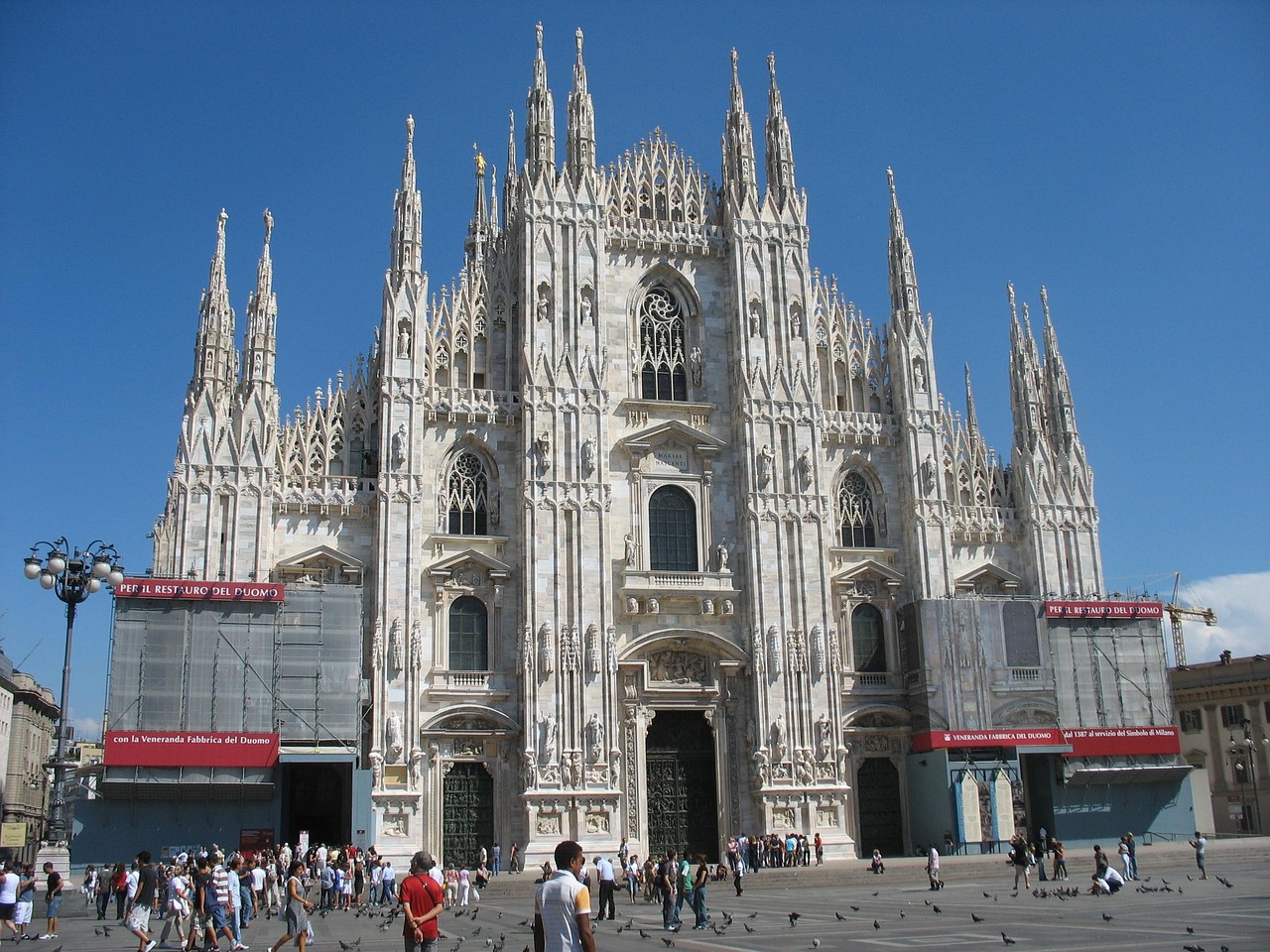
For travellers chasing meaning as much as momentum, the milan cathedral duomo di milano history Italy story begins the moment you step into Piazza del Duomo. The cathedral doesn’t just sit in the square—it seems to lift the city around it, a symbol of Milan that invites you to slow down and look up. Even if you’ve explored other great basilica spaces, there’s a particular Lombard intensity here: marble brightness against metropolitan bustle, and a sense that time has been carefully crafted into stone.
Construction of Milan Cathedral began under the Visconti; specifically, it began in 1386, and the cathedral took on a life measured in generations. It’s often said the project took six centuries to feel ‘complete’ in the public imagination, and that’s exactly what you sense as you walk around: a living monument shaped by changing tastes, politics, and devotion. Discover the history and you begin to understand why the Duomo is not just a building, but a collective act of trust.
International Gothic style and Candoglia marble
The Duomo di Milano is a masterwork of international Gothic style, built largely in pale Candoglia marble—an aesthetic decision that makes the whole cathedral appear to glow when the light turns gentle. It’s also one of the largest church complexes in an Italian city, and among the largest church sites in Europe, often compared in conversation with Peter’s Basilica in Vatican City (in the state of Vatican City) when people talk about scale and spiritual theatre.
Keep your curiosity practical: this is a historical complex, not a single-room stop. The story continues upwards on the terrace, inward inside the cathedral, and downward to the crypt and archaeological layers, then outward again in the Duomo Museum. If you’re designing a day that feels seamless, think of it as a vertical adventure—stone, sky, silence, and the human city in between.




Rooftop terrace adventure on the Duomo of Milan for panoramic views Italy
Rooftop terrace adventure on the Duomo of Milan for panoramic views Italy
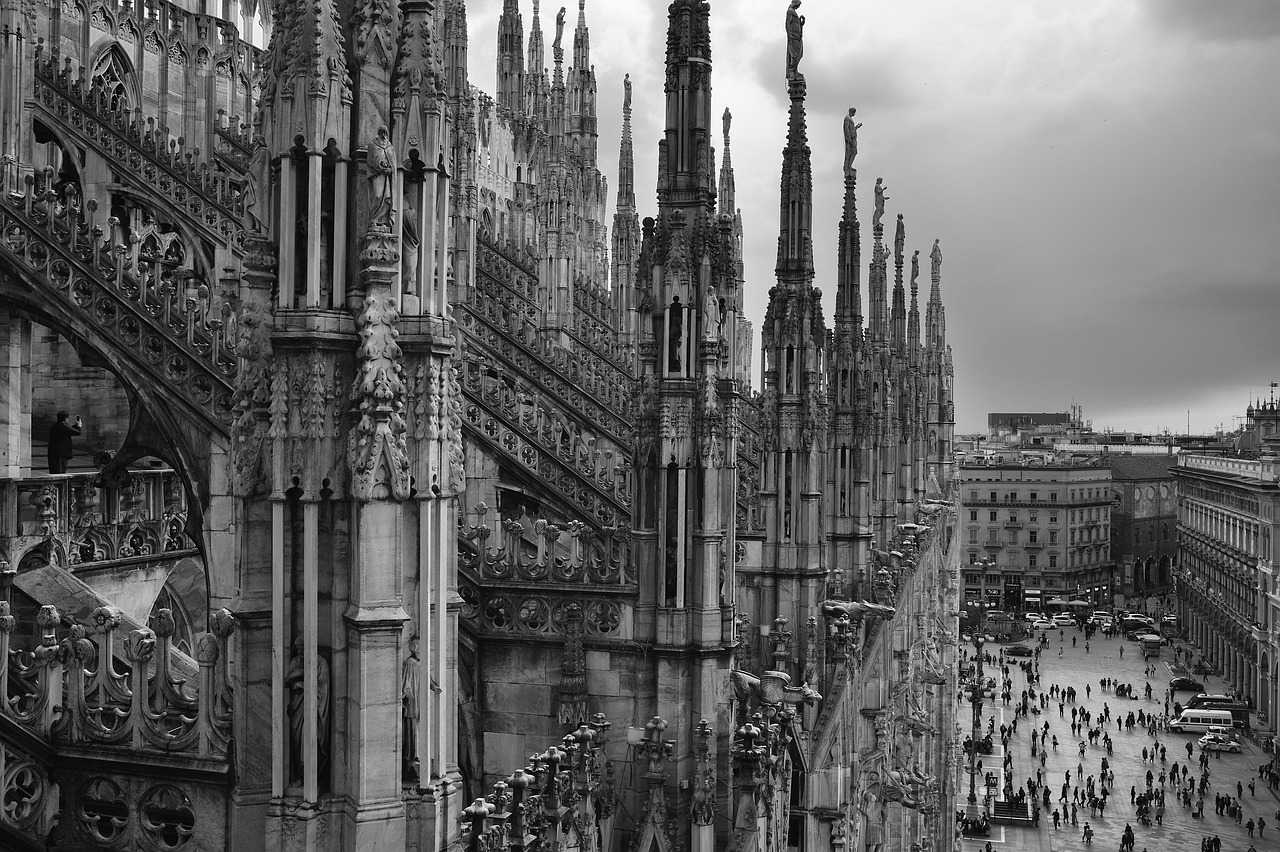
When you picture Duomo rooftop terrace Milan Cathedral panoramic views Italy, imagine it as a choose-your-own ascent: stairs for a more adventurous rhythm, or the lift for an elegant, energy-saving start. Either way, you’ll rise to roughly 45 meters above the square, where the air feels cooler and the city’s sound thins out. This is where confidence matters: take it step by step, and let your pace be part of the experience.
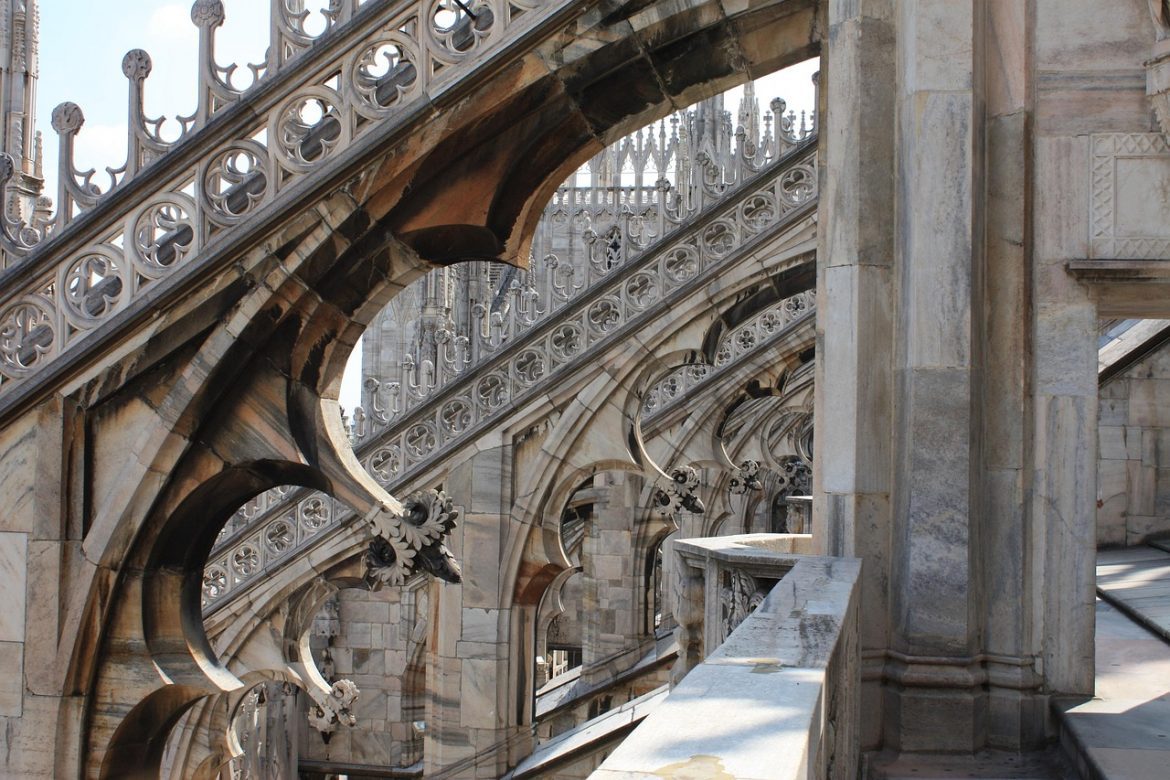
The terrace is special because it brings the cathedral’s sculpture into your personal space. Up here, every spire detail feels like a secret revealed—stone lacework, expressive faces, and a skyline that rewards slow looking. On clear days, views of Milan stretch towards Lombardy, and the city’s geometry suddenly makes sense from above.
Madonnina and the spire forest up close
Look for the Madonnina—Milan’s beloved guardian—perched high on the main spire. The gilded bronze figure was created by Giuseppe Perego and raised in 1774, and knowing that detail adds an emotional charge: this isn’t just decoration, it’s a civic heartbeat. Many locals still speak of her with a kind of familial care, as though the Duomo itself is watching over the city.
One traveller once told me their most vivid memory wasn’t the height—it was the timing. They climbed towards sunset, waited until the terrace stone cooled, and watched the city lights ignite as day turned to night. If you want to create that moment for yourself, design it gently: carry water, expect wind on the upper levels, and keep your footing steady on the worn stone steps.
- Stairs vs lift: choose stairs for a fuller adventure; choose lift if you’re saving energy for the museum and piazza.
- Best light: early morning or late afternoon gives softer shadows for photos and calmer crowd flow.
- Comfort: supportive shoes matter—this is a long, beautiful walk across uneven surfaces.
Inside the cathedral Milan Cathedral stained glass windows Italy
Inside the cathedral Milan Cathedral stained glass windows Italy
After rooftop brightness, stepping into inside the cathedral Milan Cathedral stained glass windows Italy feels like crossing a threshold in your own body. Outside, the Duomo square is lively; inside, the nave holds you in cool hush. More than one traveller has described this as unforgettable: a sense of serenity in the cathedral that sits alongside the city, not against it.
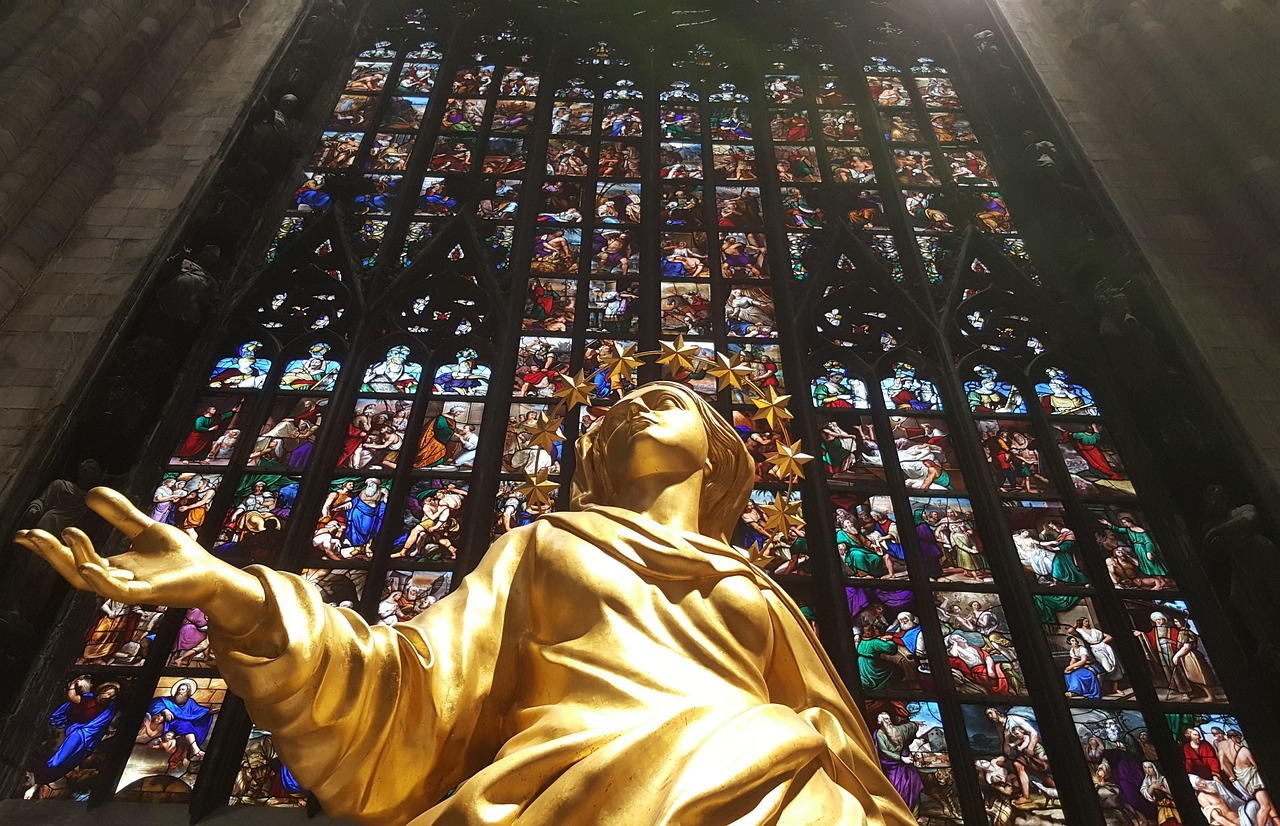
Let your eyes settle on the cathedral’s visual anchors. The stained glass windows are enormous and richly narrative—stained-glass windows depicting scenes from the Bible, layered in jewel tones that change with the hour. Photographers often prefer late afternoon when the light becomes warmer, but early morning can feel more contemplative, with fewer people moving through the transept.
Crucifixion of Christ and quiet, respectful viewing
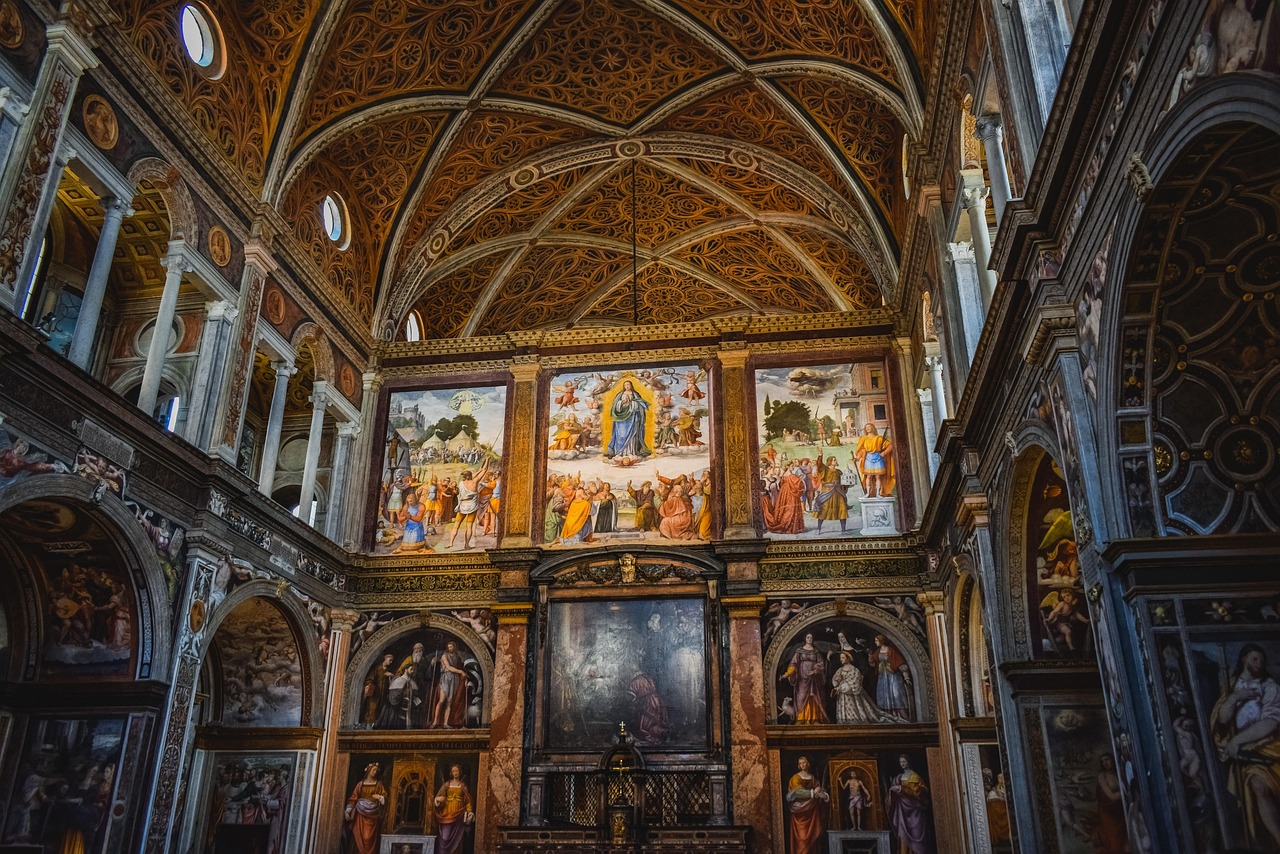
For cultural enthusiasts who enjoy one deep-focus detail, seek out art that returns to the Crucifixion of Christ theme. It’s a thread that connects devotion to craftsmanship, and it invites you to stay longer than you planned—without rushing from highlight to highlight. If you have time, also look for the haunting sculpture of Saint Bartholomew, an intense piece that reminds you the Duomo’s beauty is not only pretty, but profound.
Etiquette here is simple and reassuring. Dress respectfully—covered shoulders, and avoid shorts—and speak softly so the space can do its work. If you’re travelling as an adventure seeker, this is a different kind of adventure: trusting stillness, letting scale and silence re-centre you, and allowing your own pace to be enough.
Beneath the Duomo Milan Cathedral crypt archaeological area Borromeo Italy
Beneath the Duomo Milan Cathedral crypt archaeological area Borromeo Italy
If your itinerary includes Milan Cathedral crypt archaeological area Borromeo Italy, expect a quieter, more intimate chapter of the Duomo story. In the crypt, Saint Charles Borromeo is enshrined—an archbishop of Milan whose reforms and pastoral presence shaped local faith and civic identity. Even if you’re not religious, you can feel the city’s respect here: it’s solemn, carefully maintained, and surprisingly calming.
The archaeological area beneath the Duomo adds another layer, like pages beneath pages. This is worship in Italy made visible—foundations, fragments, and interpretive plaques that reward curiosity rather than perfectionism. You don’t need to understand every date to feel the weight of continuity.
Baptistery, Santa Tecla, and names you’ll recognise on plaques
As you explore, you may encounter references to the baptistery and Santa Tecla, connecting the present cathedral to earlier sacred sites. Some interpretations nod to early structures dating back to 1075, and you might also see mentions that echo through Milanese heritage: Tecla, older chapels, and the way a city keeps rebuilding around what it values. It’s not about memorising; it’s about insight—seeing how time stacks itself beneath your feet.
- When to go: early morning or late afternoon tends to be calmer, supporting a more reflective visit.
- How it feels: underground spaces can be close—pause, breathe, and let the crowd move ahead if needed.
- Stay aware: in busy moments above ground, keep an eye on belongings; pickpockets do target crowded areas.
Duomo Museum Fabbrica del Duomo di Milano art artifacts Italy
Duomo Museum Fabbrica del Duomo di Milano art artifacts Italy
To round out duomo museum Fabbrica del Duomo di Milano art artifacts Italy, step into the Duomo Museum and you’ll feel the whole experience deepen. This is the behind-the-scenes heartbeat, where the Veneranda Fabbrica del Duomo preserves, restores, and interprets what you’ve just seen on the cathedral itself. For high-end travellers who value craftsmanship, it’s the difference between admiring beauty and understanding how it’s maintained, piece by piece.
Try a mini curator’s trail: look for spire fragments, studies for stained-glass windows, and evidence of the hands behind the work. You’ll notice the sculptor’s decisions—how a face is softened, how a fold of stone cloth is sharpened—and you’ll realise the Duomo’s look today is the result of ongoing care, not a finished relic.
Guided tour insight and a seamless ticket plan
A guided tour can make names and dates feel alive and easy to hold together: began in 1386, Visconti patronage, and the ambitions of Gian Galeazzo Visconti. With expert storytelling, you’ll connect the rooftop details to the museum’s objects, and the whole cathedral treasure feels coherent rather than overwhelming.
For a seamless day, buy combined tickets online in advance; entry fees often range roughly 3–15 euros depending on which areas you choose. Use Milan’s metro Line 1 or 3 to reach Duomo station directly beneath the complex, and plan a short break between museum and piazza to reset your energy. If you’d like to design a broader Italy itinerary that pairs Milan’s duomo’s artistry with other icons—Teatro alla Scala, the Pinacoteca, or even a timed visit to Leonardo da Vinci’s Last Supper—browse our Trip gallery for inspiration.
- Dress code: covered shoulders, avoid shorts—this is still a sacred cathedral church.
- Hydration: especially in summer, carry water for rooftop and long museum galleries.
- Flow: visit the cathedral first for quiet, then rooftop for light, then museum for context.
After the Duomo what stays with you in Italy
Long after you leave Milan’s Duomo, what often lingers is not a checklist of sights, but a feeling: the scale of the cathedral, the way silence gathers in the nave, and the sense of centuries to complete that you can almost touch. The Metropolitan Cathedral-Basilica of the Nativity of Saint Mary—Santa Maria Nascente—holds more than architecture; it holds the patience of people who believed beauty was worth the wait. Even as one of the largest Catholic sacred buildings of its kind, it can feel strangely intimate, as though the stone is making space for your thoughts.
Then there’s Piazza del Duomo, a human counterpoint to the marble. You might share a smile with a local vendor offering a small Milanese snack, or exchange a few gentle words about directions and timing. Those moments are soft support in a busy city—proof that adventure doesn’t always roar. Sometimes it’s the quiet confidence of navigating well, of trusting your senses, and of letting wonder settle where it wants to.
And perhaps that’s the real gift of the Duomo of Milan: it teaches you that boldness can be calm. As dusk cools the stone and distant bells thread through the air, you may find yourself carrying home a more personal kind of insight—one that doesn’t demand you rush, only that you keep looking, and keep listening, whenever Italy calls you back.
F.A.Qs: Milan Cathedral Italy
Why is Milan Cathedral so famous?
Milan Cathedral is famous for its breathtaking Gothic design, pale marble exterior, and the sheer scale of the Duomo complex. It’s also renowned for its rooftop terrace walk among spires and statues, and for interiors filled with remarkable stained glass and centuries of sacred art. For many travellers, its power is emotional as well as visual: a rare mix of city energy outside and serenity inside.
Is there a dress code for Milan Cathedral?
Yes. As a working sacred site, the cathedral expects respectful clothing: keep shoulders covered and avoid shorts or overly revealing outfits. If you’re visiting on a hot day, bring a light layer so you can adapt without stress. Dress codes are usually checked at entry, and planning ahead helps your visit feel smooth and unhurried.
Are Milan Cathedral and Duomo the same?
In everyday use, yes. “Duomo” is the common Italian word for a city’s principal cathedral, and in Milan it refers to Milan Cathedral, also known as the Duomo di Milano. People may also use “Milan Duomo” or “Duomo of Milan” to mean the same landmark and its wider visiting areas, including the rooftop and museum.
Did Leonardo da Vinci design the Milan Cathedral?
No. Leonardo da Vinci did not design Milan Cathedral, although he lived and worked in Milan and contributed to the city’s creative legacy. The Duomo was shaped by many architects, engineers, and craftspeople over centuries, reflecting evolving ideas and techniques. Leonardo’s most famous Milan work is connected to The Last Supper, which is a separate site from the cathedral.