Post Contents
- Pantheon of Rome Arrival and First Awe Inside the Pantheon Rome Italy
- History of the Pantheon: Marcus Agrippa, Hadrian, 118-125 AD, Rome, Italy.
- Pantheon’s concrete dome in the world with the oculus in Rome, Italy.
- Santa Maria ad Martyres basilica, also known as Basilica of Santa Maria ad Pantheon in Rome.
- Pantheon entrance tickets, audio guides, guided tours, and ticket office in Rome, Italy.
- F.A.Qs: Pantheon, Rome, Italy essentials
- What stayed with me after leaving the Pantheon in Rome, Italy: quiet reflection after the visit.
Pantheon of Rome Arrival and First Awe Inside the Pantheon Rome Italy
Pantheon of Rome Arrival and First Awe Inside the Pantheon in Piazza della Rotonda, Rome Italy
Use this Pantheon of Rome arrival guide inside the Pantheon, Rome, Italy, as your calm entry into one of the city’s most stirring spaces. In Roma, the approach through Piazza della Rotonda feels like a small theatre of local life: café tables, street artists, and that sudden, cinematic reveal of the portico. Even if you’ve seen photographs for years, your first real sight has weight and presence.
Arriving on foot is part of the pleasure. You can drift in from Piazza Navona or the elegant lanes near Via del Corso, letting your senses settle before you cross the square. For Adventure Seekers, it’s a gentle kind of adrenaline—less about speed, more about attention.
Pantheon in Rome: first impressions at the portico
Stepping through the high bronze doors, I felt time compress: one moment sunlight and chatter, the next a cool hush where scale does the talking. The interior doesn’t demand you rush; it invites you to slow down with quiet confidence and explore with care. Look back once from just inside—those Corinthian columns and the geometry of the threshold feel intentionally designed, not accidental.
Give yourself a personal rule for the first five minutes: don’t take a photo. Let your eyes adjust, let the sound of footsteps settle, and let the pantheon introduce itself properly. This is a place where trust in your own pace pays off.
Create your own micro-adventure inside the Pantheon
To discover the pantheon rather than simply “do” it, choose one detail and follow it like a thread. You’ll be surprised how quickly the space starts giving you insight back.
- Light: track how the Oculus beam moves and where it lands, then imagine what it meant to ancient visitors.
- Stone: notice colour shifts in the marble, and how repaired sections become part of the story.
- Sound: stand still and listen; the building seems to hold conversations in its curves.




History of the Pantheon: Marcus Agrippa, Hadrian, 118-125 AD, Rome, Italy.
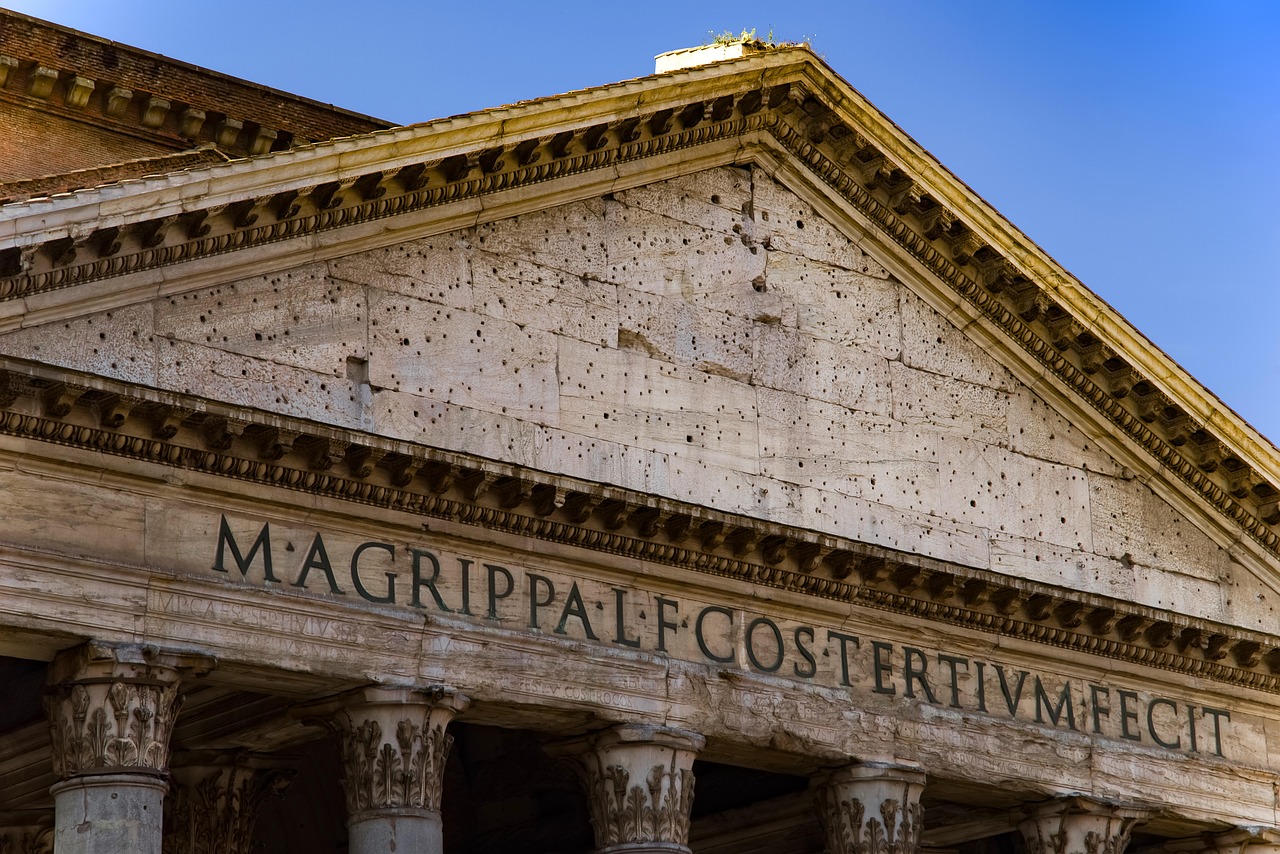
History of the Pantheon From Agrippa to Hadrian’s Reconstruction in Rome, Italy
To uncover the history of the Pantheon, Marcus Agrippa, Hadrian, between 118 and 125 AD, in Rome, Italy, keep the timeline in a few memorable beats. The inscription points to Agrippa, and many travellers anchor the origin story around 27 BC (also cited as 27 BCE), when Marcus Agrippa dedicated an earlier temple. What you stand in now, though, is the present building—shaped by the genius of Emperor Hadrian.
The Pantheon is one of those rare places where a single structure can represent multiple Romes at once: imperial ambition, civic pride, and later, shared heritage. It’s also why many guides quietly say the Pantheon is the best-preserved ancient Roman building in the city.
History of the Pantheon and the result of the radical reconstruction
The decisive moment is Hadrian’s: the result of the radical reconstruction is the building we recognise today. In plain terms, Hadrian’s radical reconstruction solved problems of fire and instability while pushing architectural possibilities further than anyone expected. You’ll often see it dated to reconstruction by Hadrian between 118 and 125 AD; you may also hear the shorthand “Hadrian ” between 118 and 125, which helps you place it in the early second century. (If you like precision, remember the phrase 118 and 125 ad—two numbers that changed architecture.)
Hadrian’s approach wasn’t just rebuilding; it was redesigning a Roman building to feel mathematically inevitable. Hadrian’s choices created a space that still feels modern—clean, balanced, and purposeful—yet undeniably rooted in ancient Rome.
Name Pantheon and Rome’s layered meaning
The name Pantheon is usually explained as “all gods”, a flexible label that suited a city comfortable with blending symbols. Over time, the building moved from imperial messaging to a wider cultural belonging—something locals and visitors hold together, even on the busiest days.
A local guide once shared the Barberini story as a cautionary footnote: the Barberinis (and the more pointed “Barberini” refrain) are tied to later removals of bronze, associated with Pope Urban VIII—also remembered simply as Urban VIII. The point isn’t scandal; it’s continuity. Each era reinterpreted the pantheon, and even reuse becomes part of Rome’s living craft.
As an aside, the French writer Stendhal famously wrote about becoming overwhelmed by art and space. Here, it’s easy to understand that emotional pull—especially when the building’s calm proportions make your own heartbeat feel audible.
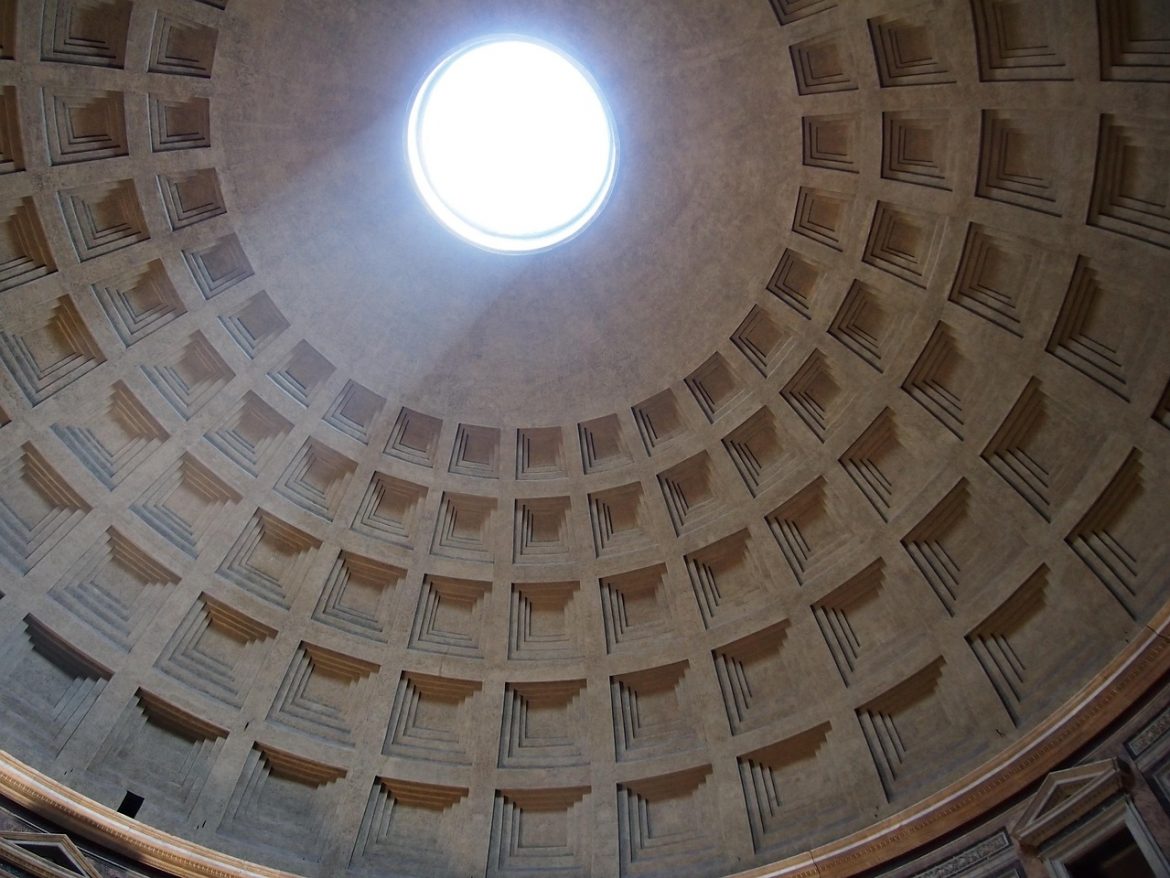
Pantheon’s concrete dome in the world with the oculus in Rome, Italy.
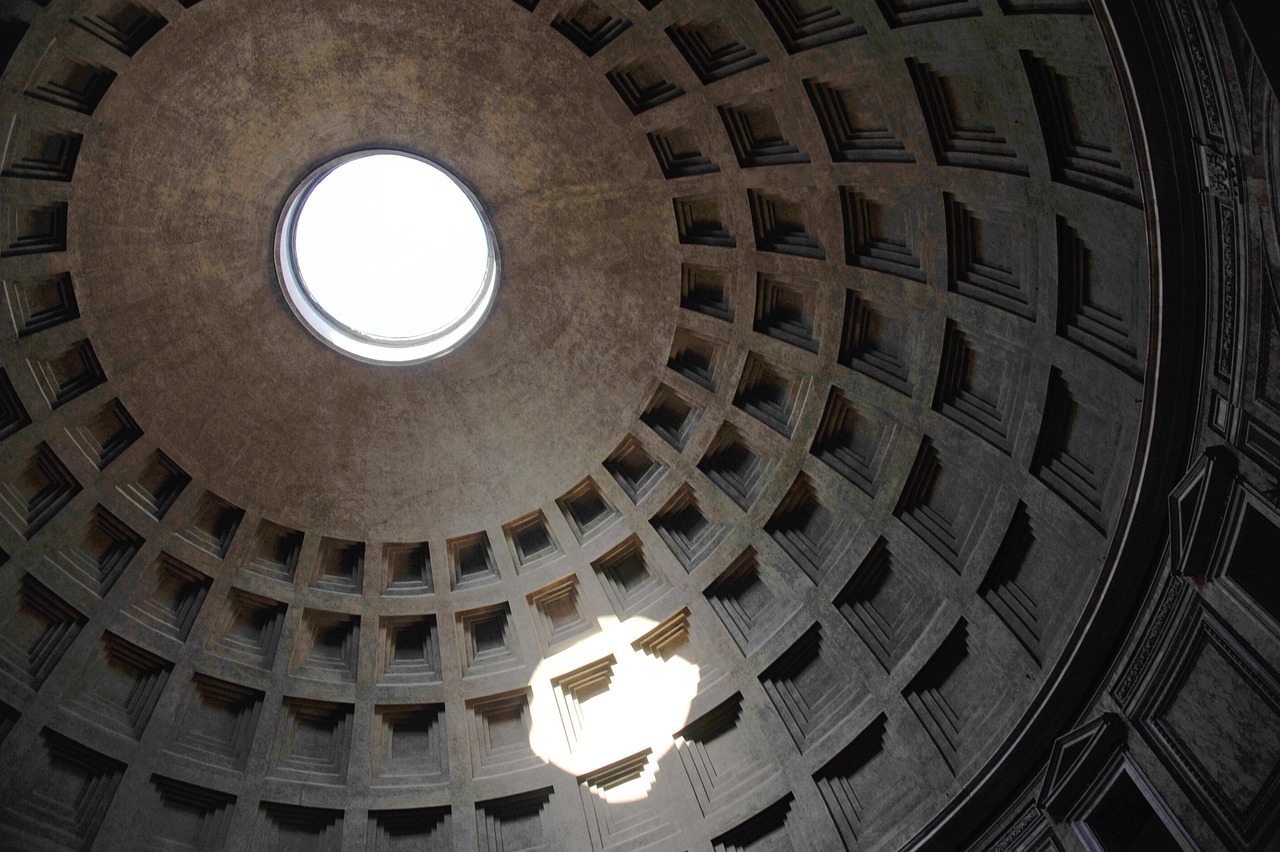
Oculus and Dome: The Ancient Roman Engineering You Can Feel at the Pantheon in Rome, Italy
This concrete oculus dome in the world, floor-to-oculus, in Rome, Italy, is where the building stops being “impressive” and becomes physical. The dome is famously the largest unreinforced concrete dome, often described as the largest concrete dome in the world, which still sets the standard. A detail you can feel in your body: the floor to the oculus height roughly matches the diameter, creating a near-perfect sphere of space.
That geometry is more than trivia—it’s why the Pantheon feels harmonious even when it’s busy. You’re standing inside a calculation made beautiful, a beautiful relic of ancient Rome that keeps teaching modern architects about restraint and confidence.
Oculus light and the moving atmosphere of the Pantheon
The Oculus doesn’t simply illuminate; it creates a mood. In early morning or late afternoon, the beam can look almost solid, like a column you could lean against. If you time it well, you’ll discover moments that feel private even in a crowd—light sliding across marble, faces turning upwards without being told to.
On Pentecost, rose petals are sometimes released through the oculus, and the effect is quietly unforgettable—an old ritual meeting a radical design in the gentlest way.
Dome details, coffers, drainage, and acoustics
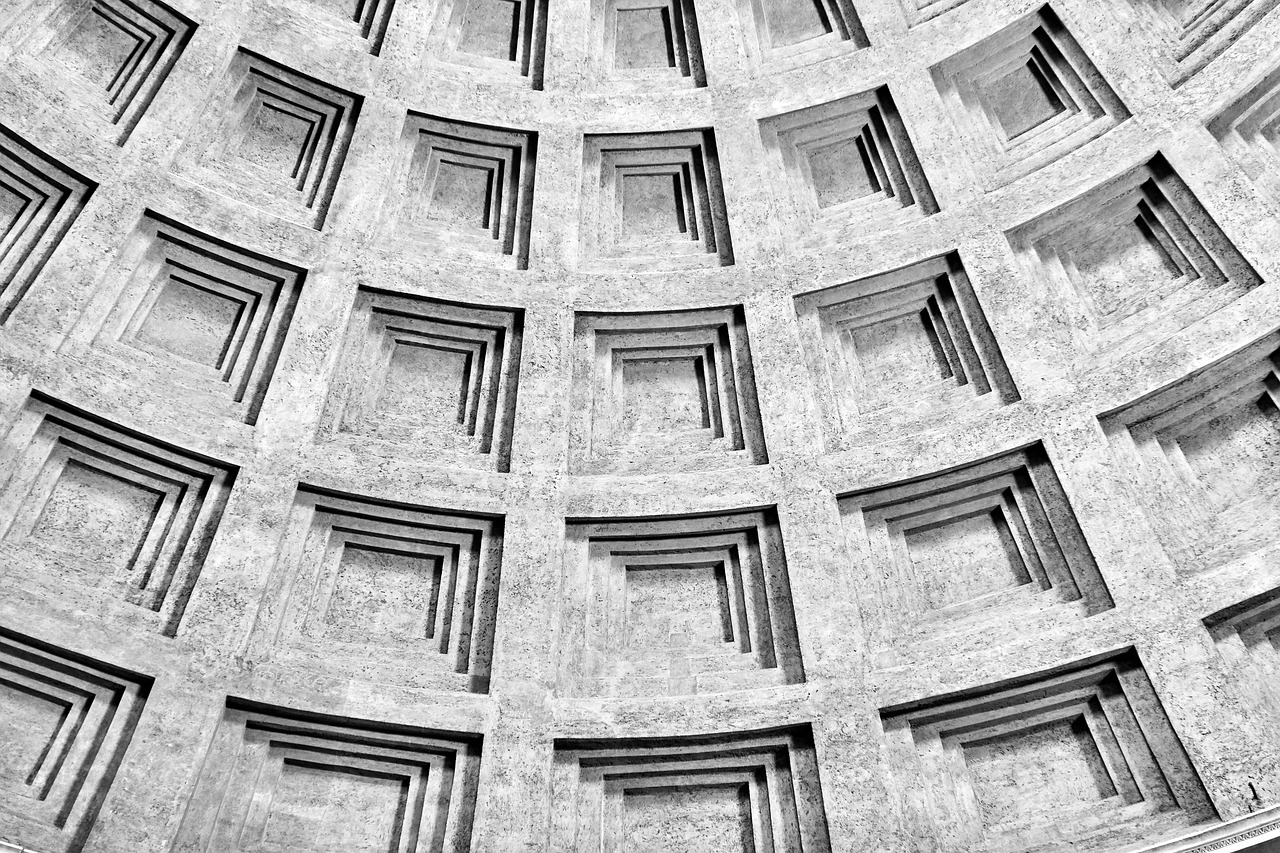
Look up for the coffer pattern: it’s not only decorative, but it also reduces weight without sacrificing strength. Then look down. When rain falls through the oculus, the floor manages it with 22 drainage holes—practical brilliance hiding in plain sight.
And then there’s sound. The pantheon’s acoustics can feel like an invitation to explore respectfully: a whisper travels, a sung note blooms, and even a soft shuffle seems amplified. If you’re lucky enough to hear music or a ceremony, you’ll understand why the Pantheon still feels alive rather than preserved.
Santa Maria ad Martyres basilica, also known as Basilica of Santa Maria ad Pantheon in Rome.
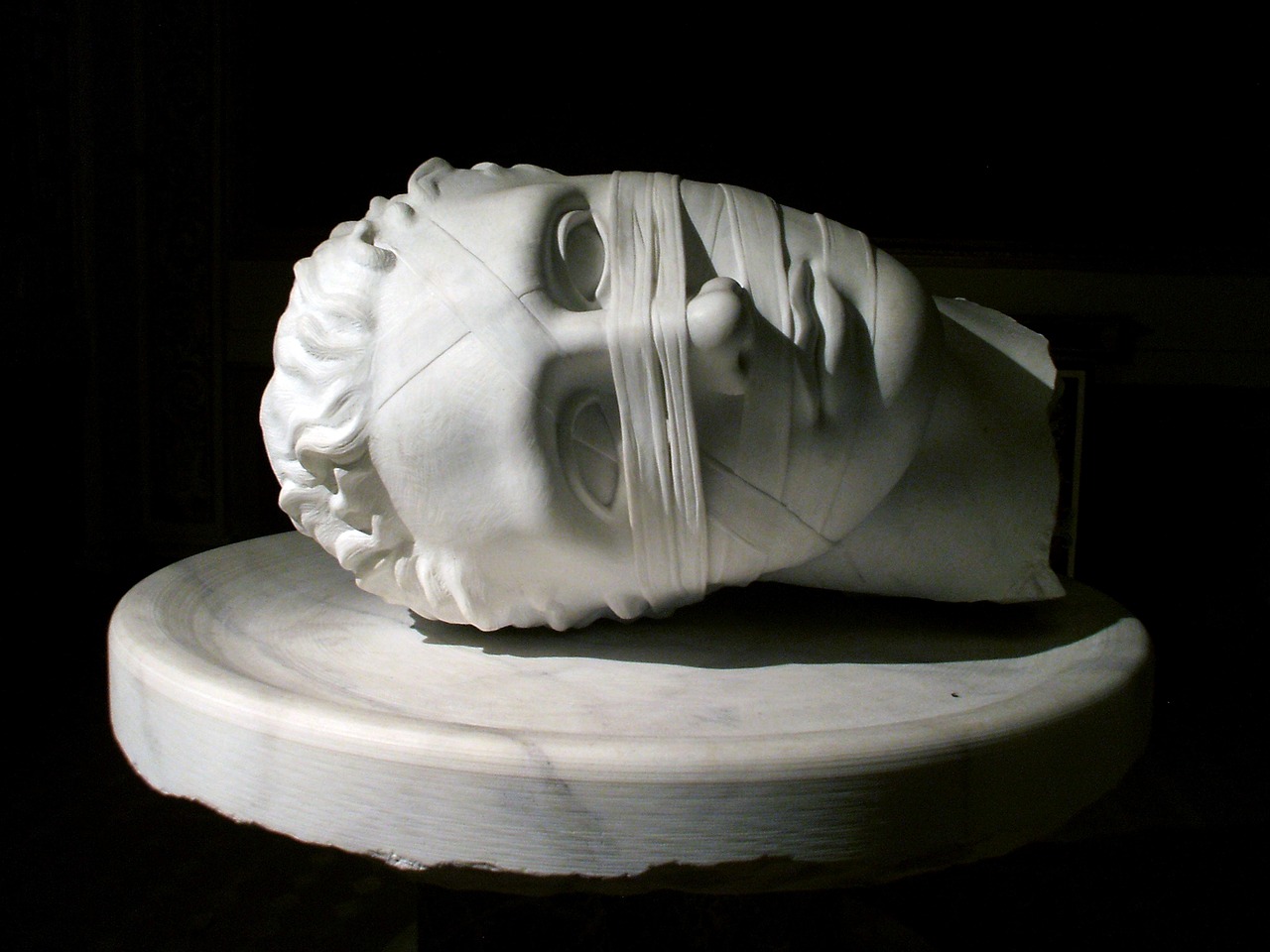
Santa Maria ad Martyres Basilica Etiquette Ritual and Living Faith at the Pantheon in Rome
This Santa Maria ad Martyres Basilica, Basilica of Santa Maria ad Pantheon in Rome, chapter reframes what you’re entering. The Pantheon in Rome is not only an ancient temple; it is also Santa Maria ad Martyres, a consecrated basilica and an active place of Christian worship. That living identity is why the atmosphere can shift instantly—from tourist hum to a hush that feels like shared agreement.
Many travellers tell me their most moving moment came not from a photograph, but from attending a service. Santa Maria ad Martyres welcomes visitors kindly, yet expects the same respect you’d offer anywhere faith is lived day by day.
Basilica of Santa Maria ad conversion story and dates
To ground your visit with simple facts: the building was given to the Church by the Byzantine emperor Phocas (often written as Emperor Phocas) in 608. Pope Boniface IV then dedicated it to Santa Maria ad Martyres, with 609 commonly cited as the dedication date. That moment didn’t erase the past; it reinterpreted it, allowing an ancient Roman building to keep serving the city.
In a practical sense, this is how the structure could support the numerous activities of worship and community over centuries—truly, numerous activities in the basilica that helped keep it cared for. (If you’re reading this as a cultural enthusiast, it’s a reminder that protection often comes through use.)
Basilica etiquette for a seamless visit to the Pantheon
Because this is a basilica, a few choices help the visit feel seamless for everyone. Dress with care (avoid shorts or sleeveless tops), speak softly, and refrain from photography during services. If you’re travelling in warm months, a light scarf in your day bag is a simple, crafted solution.
- Choose a side spot to stand if a ceremony is underway; it shows trust and gives others space.
- Let your phone stay in your pocket—being present is the most luxurious option here.
- If you decide to visit the Pantheon at Mass, follow the local rhythm: pause, watch, and join only what feels comfortable.
For contrast, you might later explore the basilica of St Peter’s Basilica, where Peter’s story is told at an entirely different scale. Both reward the same gentle attention, and both offer insight into how Rome holds devotion and artistry together.
Pantheon entrance tickets, audio guides, guided tours, and ticket office in Rome, Italy.
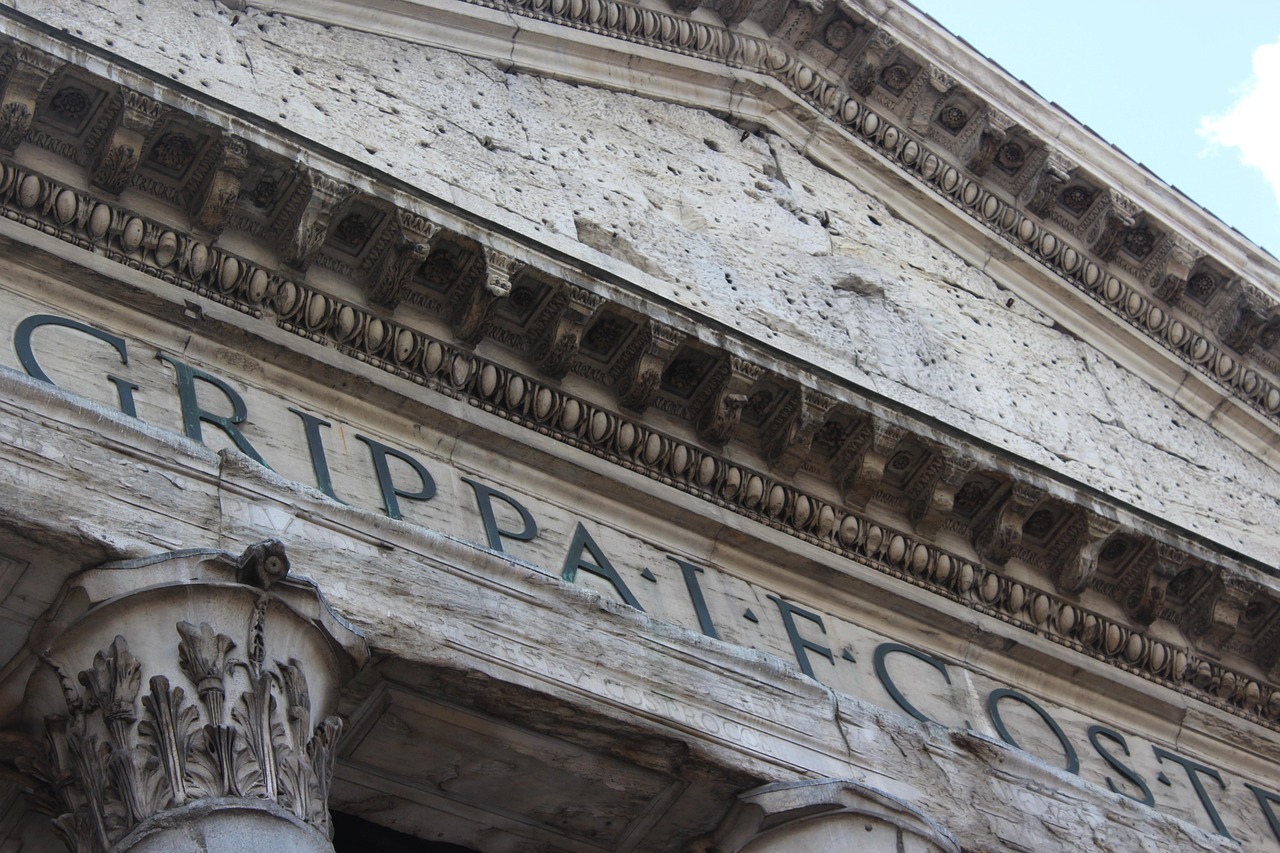
Pantheon Tickets Audio Guide Guided Tours and Getting There in Rome, Italy
For Pantheon tickets, entrance tickets, audio guides, guided tours, and the ticket office in Rome, Italy, the most reassuring advice is also the simplest: check the latest official rules close to your travel date. Entry has historically been free, but access policies can change; you may encounter an entrance ticket system or timed entry. If there is a ticket office in operation, staff and signage usually guide you clearly—arrive with patience, and you’ll feel supported rather than hurried.
High-end travel is often about removing friction, so your goal is a seamless experience: minimal queuing, clear timing, and enough context to bring the building to life.
Audio guide or guided tours for expert insight
An audio guide is ideal if you want to design your own pace, linger beneath the dome, and still gain expert context without being swept along. It’s also a quiet way to explore the Pantheon when you’re travelling as a couple or solo and prefer space for personal reflection.
If you want stories, symbols, and engineering explained in a more human way, consider guided tours—especially at peak times. A guided tour of the Pantheon can also reduce waiting when skip-the-line options are available, and good guides share local legends that make the building feel like you’re uncovering hidden rooms in Rome’s memory.
Getting there with confidence and staying aware
The Pantheon sits perfectly for a walking day: you can drift between elegant streets, small galleries, and coffee stops, then return to the square when the light changes. Metro stops like Barberini or Spagna are sensible starting points, and several buses pass nearby, but the final approach on foot is part of the charm.
- Best times: early morning or late afternoon for softer crowds and a more dramatic oculus beam.
- Safety: Be mindful of pickpockets in Piazza della Rotonda; keep valuables secure and keep your hands free.
- Flow: if the interior feels crowded, step to a side chapel and let the room breathe again.
If you’re planning a wider cultural route across Italy, our Trip gallery can help you imagine a crafted itinerary with the right balance of freedom and support.
F.A.Qs: Pantheon, Rome, Italy essentials
What is the Pantheon of Rome famous for?
The Pantheon is famous for its vast, perfectly proportioned dome and central oculus, a masterpiece of ancient engineering that still shapes how architects think about space. It’s also remarkable because it has been continuously used, now as Santa Maria ad Martyres, which helped preserve it. Many visitors remember the way natural light moves through the interior, creating a powerful, almost theatrical atmosphere.
Can you just walk into the Pantheon in Rome?
Often, yes, but entry rules can vary by season and current regulations. At times, you may need a timed entry or an entrance ticket, and queues can be significant in peak hours. Arriving early or later in the afternoon helps, and a guided visit or audio guide can make the experience feel more seamless. Remember, it is an active basilica, so behaviour and dress should be respectful.
What are 5 facts about the Pantheon?
Five memorable facts: it was linked to Marcus Agrippa’s dedication (often dated to 27 BC/27 BCE); the present building is associated with Hadrian’s reconstruction between 118 and 125 AD; the dome is the world’s largest unreinforced concrete dome; the oculus is the only direct source of natural light in the centre; and rainwater is managed by drainage holes set into the floor.
Who is buried in the Pantheon in Rome?
Among the most famous burials is Raphael, whose tomb draws many art lovers into a surprisingly personal moment of reflection. The Pantheon also contains tombs associated with Italian royalty, reinforcing its role as both a national symbol and a religious space. Because it functions as a basilica, visitors should approach these memorials quietly and with care, especially when services are in progress.
What stayed with me after leaving the Pantheon in Rome, Italy: quiet reflection after the visit.
After Pantheon, Rome, Italy, quiet reflection after the visit, I noticed the city sounded different. Not louder or softer—just more dimensional, as if the pantheon had tuned my attention. The memory that returned most often wasn’t a checklist item; it was light, moving steadily from stone to skin beneath the oculus, marking time without a clock.
I stood for a while near Raphael’s resting place, surprised by how intimate a tomb can feel inside such a grand space. It wasn’t sadness exactly—more a sense of being briefly connected to a long line of makers and believers, each leaving something behind without demanding to be remembered. In that moment, the pantheon is one: a shelter for engineering, art, and quiet human vulnerability.
Later, outside in the square, life resumed with its usual ease—cups clinking, conversations rising, a violinist testing the air. Yet the pantheon still travelled with me, like a secret measure of proportion I could carry into the rest of the day. Respectful curiosity had done its work: it turned a place I expected to “visit a monument” into a space that asked me to see more gently, and to trust what I felt as much as what I learned.
And if you find yourself thinking about it again—days or years later—perhaps that is the true gift of Rome: it leaves you with a quiet desire to explore the next doorway with the same care, and to wonder what else might be waiting, just beyond the noise.