Most first trips to Greece start at the Acropolis. The rest of the country is harder to sum up. Crete has Minoan palaces and a gorge that takes a full day to walk. Meteora has monasteries on top of sandstone towers. Zagori has stone villages in the Pindus Mountains. And no two Cycladic islands feel quite the same.vWe’ve grouped these 25 experiences by region, so you can see which ones fit into the same trip.
Post Contents
- Quick answer: 5 things not to miss in Greece
- Athens and the mainland classics
- 1. Climb the Acropolis and visit the Acropolis Museum
- 2. Walk through the Ancient Agora
- 3. Explore Epidaurus and Mycenae
- 4. See the changing of the guard at Syntagma Square
- 5. Stand at Delphi, the centre of the ancient world
- 6. Watch sunset among the Meteora monasteries
- 7. Stand on the starting line at Ancient Olympia
- 8. Stay in Nafplio and explore the Peloponnese from there
- The Greek islands
- Crete
- Northern Greece
- Food, wine and Greek culture
- When to do what: a month-by-month Greece guide
- How to build your Greece trip
- Greece travel FAQ
- Start planning your Greece trip
Quick answer: 5 things not to miss in Greece
If this is your first trip, start here:
- The Acropolis, Athens: Greece’s defining classical site, best seen together with the Acropolis Museum.
- Santorini: Walk the caldera edge and stay at least one night so you’re there for sunset.
- Meteora: Visit working monasteries built on top of sandstone pillars in central Greece.
- Knossos, Crete: Explore the remains of the island’s Minoan palace complex.
- Delphi: Walk through the sanctuary the ancient Greeks considered the centre of their world.
If you have more than a week, the rest of the list will help you decide what to add.


Athens and the mainland classics
If history is the main reason for your trip, spend most of it here. Athens is the natural base, and the Peloponnese, Delphi and Meteora are all within reach by road.
1. Climb the Acropolis and visit the Acropolis Museum
The Acropolis is the place to begin understanding Athens. Walk through the Propylaea and onto the limestone plateau, and the modern city drops away beneath you, leaving the Parthenon, Erechtheion and Temple of Athena Nike in front of you.

The Acropolis Museum, a masterpiece of modern Greece.
Go early if you can. There is little shade on the summit, and both the heat and the crowds build through the morning. Greece now uses timed entry at its busiest archaeological sites, so book your slot before you go.
Afterwards, cross to the Acropolis Museum. Its top-floor gallery displays the surviving Parthenon frieze in the same orientation as the temple above, which makes it much easier to see how the sculptures fitted the building.
Worth it if: you have even a passing interest in ancient Greece. Allow at least half a day for the site and museum together.
2. Walk through the Ancient Agora
The Ancient Agora is quieter than the Acropolis, and arguably better at explaining how ancient Athens actually worked.

The Ancient Agora of Athens at sunset.
This is where Athenians traded, argued politics and went about daily life. Follow the paths between foundations and olive trees to the Temple of Hephaestus, one of the best-preserved ancient temples in Greece, then visit the reconstructed Stoa of Attalos and its museum.
Come straight after the Acropolis. The hilltop shows Athens at its most monumental; the Agora shows you where ordinary citizens shopped, debated and ran their city.
Worth it if: you enjoy history and want a site you can explore slowly, with fewer people around.
3. Explore Epidaurus and Mycenae
Epidaurus and Mycenae make a natural pair on a Peloponnese road trip.
At Epidaurus, the fourth-century BCE theatre is the obvious focal point, but don’t skip the surrounding Sanctuary of Asklepios. The complex grew up around healing as well as performance, and together they form a UNESCO World Heritage Site.

The ruins of the ancient theatre in Epidaurus.
Mycenae takes you back into the Bronze Age. Enter through the Lion Gate and walk uphill through the remains of the fortified citadel. You only really grasp the size of its stone walls once you’re standing next to them.

The Lion Gate, with its iconic stone carvings.
Seeing both and driving back to Athens in the same day makes for a long day. If your itinerary allows it, stay in Nafplio and use it as your base.
Worth it if: you want to see Greek history from before the Classical period.
4. See the changing of the guard at Syntagma Square
Syntagma Square is where you see modern Athens between the ancient sites.

Syntagma Square is modern Greece’s political, cultural and social epicentre.
In front of the Hellenic Parliament, the Presidential Guard performs its formal change beside the Tomb of the Unknown Soldier. The slow, precisely choreographed movements and the distinctive uniforms of the Evzones make it unlike any other military ceremony you’re likely to see. The ceremony itself is short. Afterwards, walk into the National Garden or carry on through central Athens.
Worth it if: you’re already sightseeing in central Athens and want to see something of the modern city, not just its ruins.
5. Stand at Delphi, the centre of the ancient world
At Delphi, the setting matters as much as the ruins. The sanctuary climbs the lower slopes of Mount Parnassus, with mountains folding away beyond the Temple of Apollo.

Ruins of the Temple of Athena Pronaia in ancient Delphi.
The ancient Greeks called Delphi the omphalos, or centre of the world, and came here to consult the Oracle of Apollo. Today, a walking route takes you past the treasuries and the temple to the theatre and, higher still, the stadium.
Don’t skip the Archaeological Museum. Its collection explains fragments that are hard to make sense of on the hillside. The mountain town of Arachova is close by and works well for lunch, an overnight stay or a winter extension.

The town of Arachova on a sunny winter day.
Worth it if: you have one free day beyond Athens and ancient history matters more to you than beaches.
6. Watch sunset among the Meteora monasteries
Meteora deserves more than a passing stop. Sandstone columns rise abruptly from the Thessalian plain, with monasteries perched on summits that look impossible to reach. The landscape and monasteries together are a UNESCO World Heritage Site.
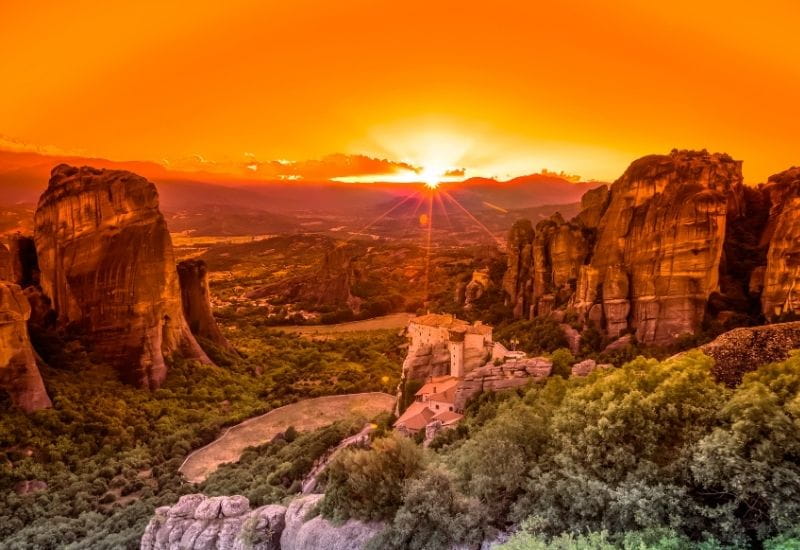
Sunset in Meteora Monasteries. bennymarty/Getty Images
Six monasteries are open to visitors, but there’s no need to see all of them. Two or three leaves you time to enjoy the landscape as well. Great Meteoron and Varlaam give the best sense of the complex’s scale, while Agios Stefanos is the easiest to reach if steep stairs are a concern. Two days is ideal.
The monasteries are still places of worship. Shoulders must be covered, and clothing should be modest. Each monastery has its own opening days and hours, so check schedules shortly before you travel. You can technically visit Meteora as a day trip from Athens, but you’ll spend most of the day on the road. Stay in Kalambaka or Kastraki instead.
Worth it if: you can give it at least one night and care about landscape as much as history.
7. Stand on the starting line at Ancient Olympia
Ancient Olympia and Mount Olympus are two different places. Olympia is the archaeological sanctuary in the western Peloponnese where the ancient Olympic Games were held. Mount Olympus is the mountain in northern Greece, home of the Olympian gods.
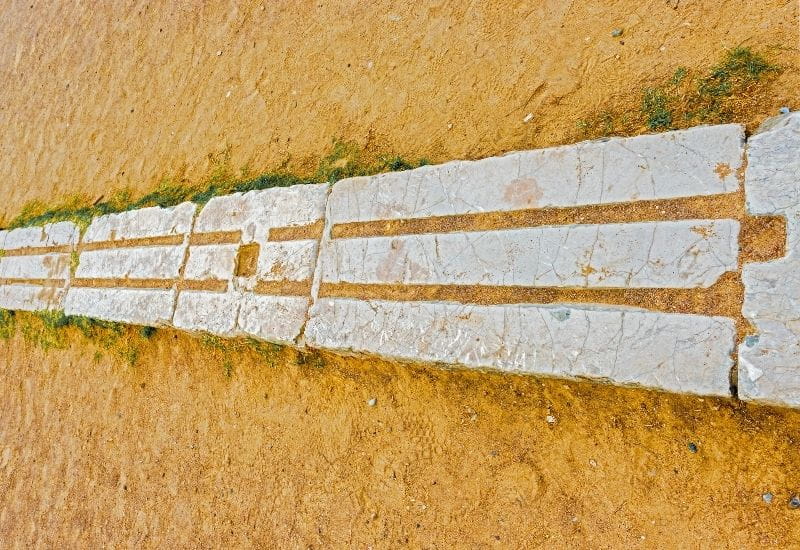
Ancient Olympia stadium, starting line. MarcPo/Getty Images
At Olympia, walk beneath the trees between the ruins of the Temple of Zeus, the Temple of Hera and the ancient stadium. Walking into the stadium through its stone tunnel and standing on the starting line is the moment the site makes sense.
Make time for the Archaeological Museum too. For the 2026 season, a combined €20 ticket covers the archaeological site and museums, with longer opening hours from April to October. Hours can change, so check before you go.
Worth it if: you’re driving through the Peloponnese. It’s too far for a comfortable day trip from Athens.
8. Stay in Nafplio and explore the Peloponnese from there
Nafplio solves a practical itinerary problem: it puts you within easy reach of several of the Peloponnese’s major archaeological sites.
The old town sits beneath the Palamidi fortress, with neoclassical buildings, narrow streets and a waterfront facing the little Bourtzi fortress in the harbour. Stay for the evening, when the day-trippers have gone. From here, Mycenae and Epidaurus are easy additions to a road trip, so you can see both without going back and forth to Athens.
Worth it if: your trip is ten days or longer. On a five- or six-day trip focused on the islands, Nafplio will stretch your itinerary too far.
The Greek islands
Every Greek island has its own character. Santorini is volcanic and steep-sided. Milos is all coves and strange rock formations. Rhodes has layers of medieval history, and Naxos has mountain villages and long beaches. Pick islands that sit close together on the ferry map, not just the famous names.
9. Watch the caldera sunset on Santorini
Santorini’s caldera is the reason to come. Villages sit high above the flooded volcanic basin, with white buildings lining the dark cliff edge.

Santorini, with its iconic blue-domed churches.
Oia is famous for sunset, and the fame brings crowds. You don’t need to squeeze in beside the castle ruins with hundreds of other people to watch the sky change over the caldera. Imerovigli and stretches of the Fira-to-Oia walking path give you more space, especially if you care more about the view than the classic postcard shot.
Stay at least one night. Day-trippers arrive during the island’s busiest hours and leave just as the evening gets calmer.
Worth it if: cliff-top views and cave-style hotels justify a higher island budget for you.
10. Walk Mykonos Old Town and the windmills
Mykonos is polished, busy and expensive in peak summer, and there’s no point pretending otherwise. The old town is still worth exploring. Wander the narrow lanes of Chora, past whitewashed churches and the waterfront houses of Little Venice, then climb to the Kato Mili windmills.
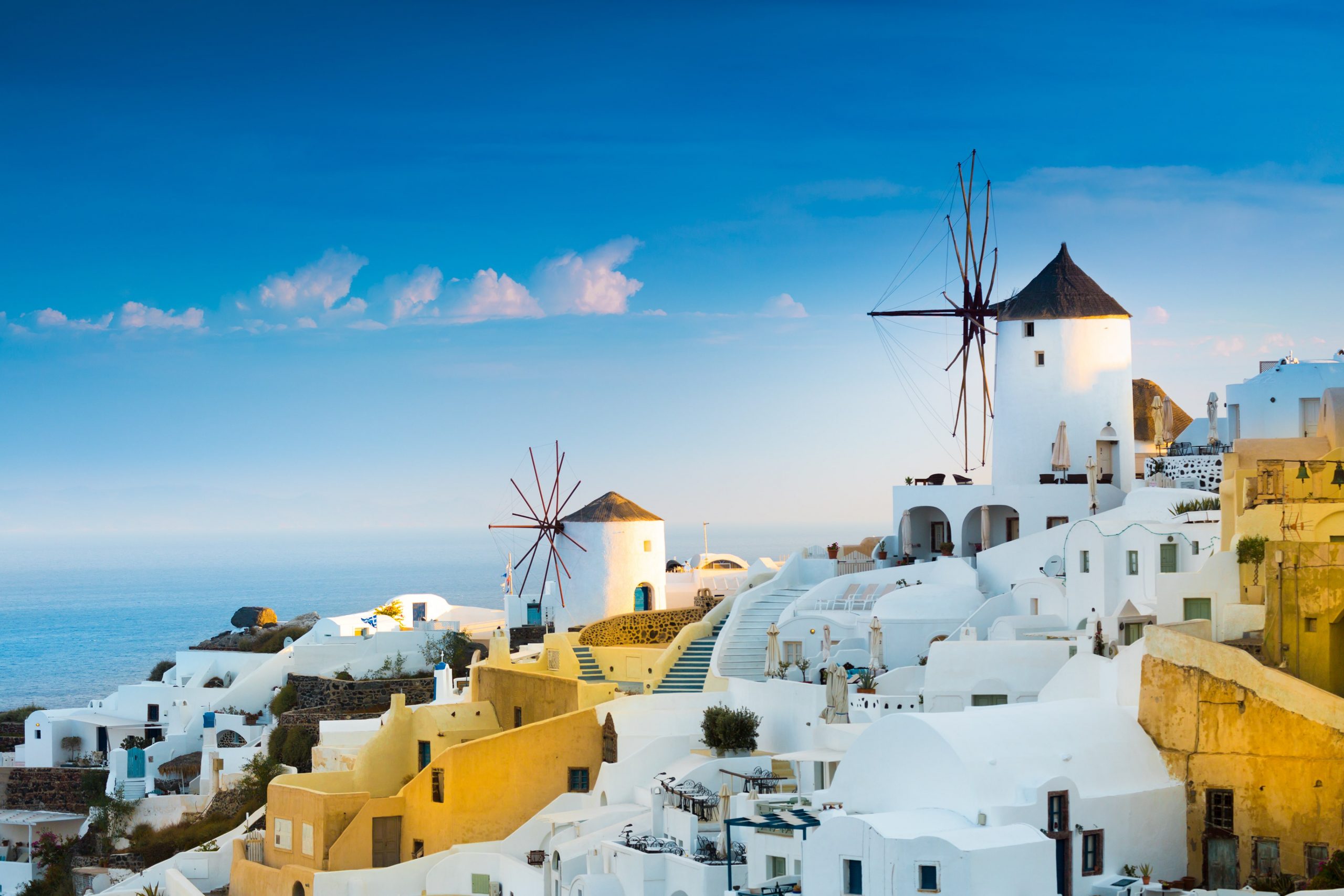
Mykonos Town, with its iconic windmills and charming whitewashed houses.
The island suits travellers who want restaurants, nightlife and beach clubs. If you’re after a quieter Cycladic island, look at Naxos or Paros instead. Mykonos is also the departure point for boats to Delos, which makes it a practical base if you want to see the archaeological island.
Worth it if: you want a lively island with good food and nightlife, or you’re planning to visit Delos.
11. Explore the archaeological island of Delos
Delos feels nothing like Mykonos, even though the two islands sit close together. The UNESCO-listed site was once a major religious and trading centre of the ancient Aegean. Its best-known remains include the Terrace of the Lions, the Sanctuary of Apollo and houses with mosaic floors.

Terrace of the Lions, one of Delos’ most iconic landmarks.
Though Delos is located in the Aegean Sea, travellers often pair their visit with explorations of other Greek islands, including the Ionian Islands on the west coast of Greece.
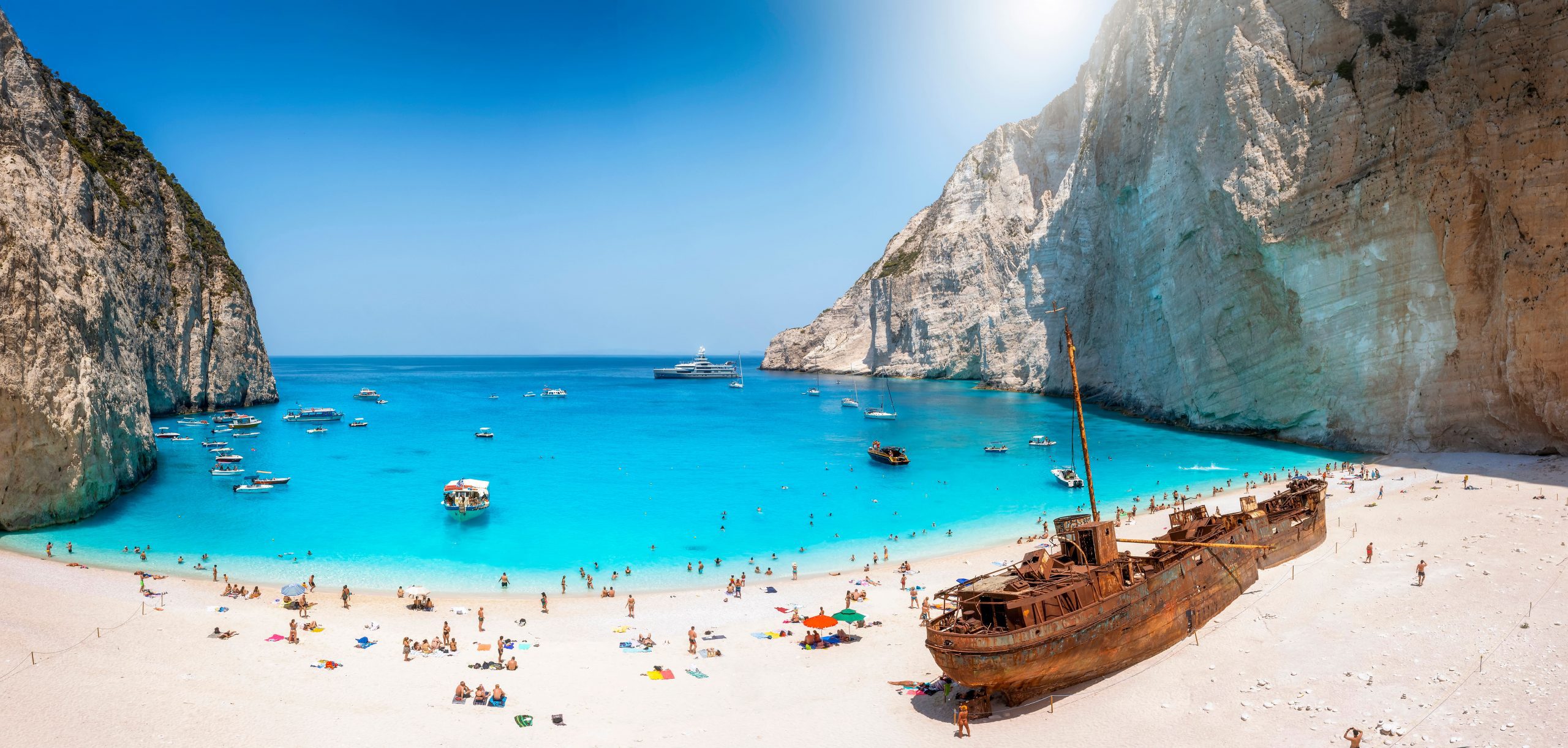
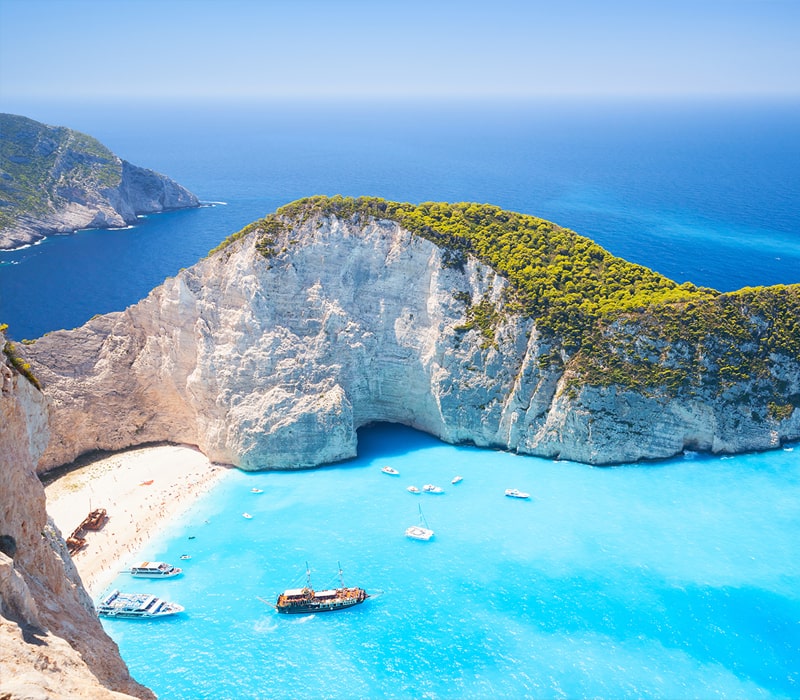
Shipwreck Beach is one of Greece’s most famous and photographed destinations.
There is little shade, so bring water, sun protection and shoes for uneven ground. Check the boat schedule and site opening times before you set off, including the time of the last boat back. Delos is easiest to visit from Mykonos and doesn’t fit neatly into a general island-hopping day.
Worth it if: you’re staying on Mykonos and want at least one day of archaeology.
12. Swim at Sarakiniko on Milos
Sarakiniko looks more like a moonscape than a beach. Smooth white volcanic rock rolls down to deep blue water, forming ledges, inlets and narrow channels instead of a wide stretch of sand.
Come to swim and explore the rocks, and expect bare stone, not sunbeds and umbrellas. Shade is scarce, and the pale rock reflects the sun strongly.
Milos is worth more than one night. Its coastline breaks into coves and mineral-coloured cliffs, and much of the pleasure lies in moving between them.
In July and August, strong Meltemi winds can affect both sea conditions and ferries across the Cyclades, so build some flexibility into a tight itinerary.
Worth it if: you’d rather swim off rocks and explore coves than lie on sand.
13. Walk through medieval Rhodes Old Town
Rhodes gives an island trip something the Cyclades can’t: a large medieval city inside its fortifications.
The UNESCO-listed old town grew up under the Knights of St John and still has the Street of the Knights, the Palace of the Grand Master, gateways, defensive walls and later Ottoman buildings.
Stay long enough to see the old town outside peak excursion hours. Once the day visitors leave, the lanes feel very different from the shop-lined routes you’ll find at midday.
Rhodes is a long way from the central Cyclades, so don’t tack it onto a Santorini-Mykonos trip. It works better as the centre of a Dodecanese itinerary, or as an island you fly into.
Worth it if: medieval history interests you as much as beaches.
14. Slow down on Naxos or Paros
Naxos and Paros are close enough to combine, but you don’t have to do both.
Choose Naxos for long beaches, mountain villages, inland drives and a greater sense of space. Choose Paros for attractive towns, easy ferry connections and a more compact island with a mix of beaches, restaurants and nightlife.
Both fit neatly between Athens and Santorini, and both suit travellers who find the best-known islands too crowded around a handful of sights.
If you only have seven days, pick one. It’s easy to underestimate how much time goes on checking out, getting to the port, waiting for the ferry and checking in again.
Worth it if: Santorini and Mykonos feel too busy or too expensive for the trip you want.
15. Island-hop through the Cyclades by ferry
Plan the route first, then the number of islands. For a first trip, stick to islands that are close together. Current 2026 schedules show Piraeus to Paros taking about 2 hours 40 minutes to five hours depending on the vessel, Paros to Naxos from about 25 minutes, and Naxos to Santorini usually one to three hours. Schedules vary by season and operator.
| Trip length | A realistic route | Typical ferry legs |
|---|---|---|
| 7 days | Athens → Paros → Naxos → Athens | Piraeus-Paros: 2h40-5h; Paros-Naxos: 25m-1h50 |
| 10 days | Athens → Paros → Naxos → Santorini | Add Naxos-Santorini: about 1-3h |
| 14 days | Athens → Mykonos → Paros/Naxos → Santorini → Crete | Allow buffer time between longer or seasonal connections |
Santorini-Mykonos ferries, for example, only run in season and usually take two to three and a half hours, so check summer routes against your actual travel dates.
See our 7-day Greece itinerary if you have a week, or our 13-day Greek island-hopping trip if you have longer.
Worth it if: you have a week or more and don’t mind some time at ports.
Crete
Crete is big enough for a trip on its own, and distances across the island are longer than they look on a map. The Samaria Gorge and Elafonissi are in the west; Knossos is near Heraklion in the centre.
16. Hike the Samaria Gorge
The Samaria Gorge cuts through Crete’s White Mountains down to the Libyan Sea. The full walk is long and exposed and needs a whole day. The trail ends near Agia Roumeli, which has no road link to the main highway network, so you’ll leave by boat.

The Samaria Gorge is a hiker’s paradise in Greece.
Don’t assume the gorge is open just because it’s spring. The opening date depends on weather, trail conditions and safety work. In 2026, the full gorge didn’t open until 19 May. Check the official park status a few days before you plan to hike.
Worth it if: you’re comfortable spending a full day on foot and have proper footwear. If not, Crete has plenty of easier mountain and coastal walks.
17. Swim at Elafonissi Beach
Elafonissi is known for shallow turquoise water, pale sand and patches tinted pink by crushed shells. It’s also very popular. Summer crowds change the experience a lot, especially near the easiest access points, and an early arrival will do more for your visit than another paragraph about the colour of the water.

Elafonissi Beach captivates visitors with its pink sands and crystal-clear waters.
The lagoon-like shallows make parts of Elafonissi good for families. It’s a protected coastal area, so don’t take sand or shells, and keep to any marked access restrictions. Plan it as part of a stay in western Crete. From the east of the island, it’s a very long day.
Worth it if: you’re travelling with children or want calm, shallow water.
18. Explore the Palace of Knossos
Knossos takes you into a different chapter of Greek history. Just outside Heraklion, the palace complex is linked with Minoan civilisation and with the later myths of King Minos and the Minotaur. Courtyards, storerooms, stairways and reconstructed sections show how complex the settlement was, although the heavy early twentieth-century reconstruction is part of the site’s story too.

The Knossos Palace symbolises the grandeur of Minoan civilisation, Europe’s first advanced society.
For context, visit the Heraklion Archaeological Museum afterwards. Seeing the original Minoan objects makes the palace far easier to interpret.
Worth it if: archaeology is central to your trip. If you’re in Crete mainly for beaches and food, don’t feel you have to race across the island for it.
Northern Greece
Northern Greece sees fewer international visitors than the islands, and the pace is slower. Thessaloniki is the main city, with Zagori to the west and Mount Olympus to the south.
19. Eat and explore your way through Thessaloniki
Thessaloniki is a city for wandering and eating, with the monuments fitted in between.
Walk the waterfront past the White Tower, then head inland through neighbourhoods where Roman, Byzantine and Ottoman buildings sit side by side. Several of the city’s Paleochristian and Byzantine monuments are part of a UNESCO World Heritage listing.

The White Tower, Thessaloniki’s iconic symbol.
Thessaloniki is also a haven for Greek food lovers. Bougatsa is the classic breakfast, and lunch is worth planning around the markets and small tavernas. Thessaloniki is also a good starting point for road trips to Zagori or Mount Olympus.

Thessaloniki is also a haven for Greek food lovers.
Worth it if: food matters as much to you as sightseeing.
20. Walk through Zagorochoria and hike towards the Dragon Lakes
Zagori is one of the best reasons to look beyond Athens and the islands. Stone villages, arched bridges and the Pindus Mountains look nothing like the Greece of island postcards. UNESCO added the Zagori Cultural Landscape to its World Heritage List in 2023.

The Zagorochoria villages are a hidden gem, captivating with their untouched natural beauty.
Vikos Gorge offers serious hiking, and the route to Drakolimni, or Dragon Lake, climbs into high alpine terrain. Both are proper hikes: the weather changes quickly at altitude, and the longer routes need the right gear and a good level of fitness.

The Dragon Lakes offer breathtaking alpine scenery and a mystical ambience.
If serious hiking isn’t for you, stay in one of the villages and take shorter walks to the bridges, viewpoints and forested valleys.
Worth it if: you’d rather hike and sleep in a mountain village than spend the week on a beach.
21. Hike Mount Olympus, the mountain of the gods
Mount Olympus is Greece’s highest mountain. (Ancient Olympia, in the Peloponnese, is a different place; see #7.) Litochoro is the usual starting point. From here, trails climb through forest before reaching more exposed mountain terrain.

Mount Olympus, the highest peak in Greece and one of the most iconic mountains in the world.
You can walk the lower sections in a day, but the higher summits are another matter. Mytikas, Greece’s highest point, is a serious climb with exposed sections. Choose a route that matches your experience and the conditions. The wider Mount Olympus area joined UNESCO’s World Heritage List in July 2026 as a mixed cultural and natural site.
Worth it if: you’re an experienced hiker, or happy to stick to the lower forest trails.
Food, wine and Greek culture
Greek food changes a lot from region to region. Tasting those differences at a winery, a market, or a family kitchen tells you as much about a place as its monuments do.
22. Taste wine in Nemea or Santorini
Pick whichever wine region is already on your route. In the Peloponnese, Nemea is known for Agiorgitiko, a red grape grown across the region. On Santorini, the volcanic soils are closely linked with Assyrtiko.

In Greece, wine was considered a gift from Dionysus, the god of wine.
A good winery visit should do more than pour a few glasses. Look for one that explains the vineyards, growing conditions and production methods, and ask how the region shapes what you’re tasting.
Book ahead if you want a particular producer, especially during harvest or peak island season, and arrange a driver if everyone in your group plans to taste.
Worth it if: you’re already driving through the Peloponnese or staying on Santorini.
23. Walk through an Athens food market
An Athens food walk shows you what people are buying and eating today, which no archaeological site can.
Markets and nearby specialist shops introduce ingredients you’ll meet throughout Greek cooking, from olives and cheeses to herbs, fish and cured meats. The best part is comparing them. Feta from different regions tastes noticeably different, and so do olive oils.
Choose a guide who explains what you’re tasting, not one who simply piles up samples.
Worth it if: you’re on a short trip and want a cultural experience without leaving Athens.
24. Experience Orthodox Easter in Corfu Town
Corfu’s Easter traditions mix Orthodox religious observance with customs shaped by the island’s Venetian past. Holy Week brings processions and music through the UNESCO-listed old town, and on Holy Saturday comes the famous botides tradition, when people throw large clay pots from balconies.

Philharmonic musicians playing in Corfu Easter holiday celebrations.
Orthodox Easter often falls on a different date from Western Easter, so plan around the Orthodox calendar. In 2027, Orthodox Easter is on 2 May, making Holy Saturday 1 May. Accommodation fills up fast around the celebrations, so book early. And remember that the processions are acts of worship, not performances for visitors.
Worth it if: you can book months ahead and want to see Easter the way Corfiots celebrate it.
25. Cook with a local family
A good cooking class teaches you about the food of the region you’re in, not dishes you could learn anywhere. Depending on where you are, that might mean Cretan greens and cheeses, island seafood, Peloponnesian produce or the pies of northern Greece. Small classes, especially ones held in a home, give you room to ask why dishes are made a certain way and how ingredients change through the year.

The iconic Greek salad, Horiatiki.
Look for classes led directly by the host or cook. Ask how hands-on it is before booking, because some “cooking classes” are really a demonstration followed by lunch.
Worth it if: you’d like at least one meal on your trip that you helped make.
When to do what: a month-by-month Greece guide
There isn’t one best month for all 25 experiences. Hiking seasons, ferry frequency, heat, religious festivals and crowds affect each part of Greece differently.
| Experience | Best window | Why |
|---|---|---|
| Acropolis | Mar-May, Oct-Nov | Cooler walking weather |
| Ancient Agora | Mar-May, Oct-Nov | Comfortable for a slow walk |
| Epidaurus & Mycenae | Apr-Jun, Sep-Oct | Good road-trip weather |
| Syntagma Square | Year-round | Central Athens works in every season |
| Delphi | Apr-Jun, Sep-Oct | Mild weather on an exposed hillside |
| Meteora | Apr-Jun, Sep-Oct | Walking weather without the summer heat |
| Ancient Olympia | Apr-Jun, Sep-Oct | Easier outdoor sightseeing |
| Nafplio | Apr-Jun, Sep-Oct | Mild evenings and good driving conditions |
| Santorini | May-Jun, Sep-Oct | Good weather with fewer crowds |
| Mykonos | May-Jun, Sep | Beach season without the August crush |
| Delos | May-Jun, Sep | Less intense heat |
| Milos | Jun-Sep | Best for swimming and boat trips |
| Rhodes | Apr-Jun, Sep-Oct | Warm without midsummer extremes |
| Naxos/Paros | May-Jun, Sep | Good beaches and ferry connections |
| Cyclades ferries | May-Sep | Most frequent sailings |
| Samaria Gorge | Late spring-Oct | Depends on annual opening and weather |
| Elafonissi | May-Jun, Sep-Oct | Warm enough to swim, with fewer crowds |
| Knossos | Mar-May, Oct-Nov | Cooler site visits |
| Thessaloniki | Mar-Jun, Sep-Nov | Comfortable city temperatures |
| Zagori | May-Oct | Main hiking season |
| Mount Olympus | Jun-Sep | Safest high-mountain conditions |
| Greek wine regions | Sep-Oct | Harvest season in many areas |
| Athens food walk | Year-round | Markets run all year |
| Corfu Easter | Orthodox Holy Week | Dates change every year |
| Cooking class | Year-round | Seasonal ingredients change the menu |
For a closer look at a particular month, see our 12 monthly Greece guides:
- Greece in January
- Greece in February
- Greece in March
- Greece in April
- Greece in May
- Greece in June
- Greece in July
- Greece in August
- Greece in September
- Greece in October
- Greece in November
- Greece in December
How to build your Greece trip
Once you know what you want to see, the harder question is how much of it fits into the time you have.
Decide what kind of trip you want
For ancient history, focus on Athens, Delphi and the Peloponnese. For islands and swimming, spend less time on the mainland and link two or three Cycladic islands.
Hikers can plan a completely different trip around Crete, Zagori and Mount Olympus. Food lovers may prefer Athens, Thessaloniki, Crete and wine country. Try to cover all of these in one trip, and you’ll spend more time travelling than seeing.
Choose the right season
Spring and autumn are the best seasons for mainland archaeology, cities and hiking, because you avoid the worst of the summer heat.
July and August bring the most reliable beach weather and the full range of island services, but also the most pressure on hotels, ferries and famous sights.
Winter suits Athens, Thessaloniki and the mountains far better than island-hopping.
Be realistic about how much fits
| Time available | A sensible trip shape | How much of this list? |
|---|---|---|
| 7 days | Athens + 1-2 islands, or Athens + mainland circuit | About 5-7 experiences |
| 10 days | Athens + mainland stop + 2 islands | About 7-10 |
| 14 days | Mainland circuit + 2-3 islands, or Athens + Crete + Cyclades | About 10-14 |
For a week, see our 7-day Greece itinerary. With two weeks, a road trip through Delphi, Olympia and Nafplio lets you connect the mainland sights without doubling back.
Leave room for transport
Distances can be deceptive. A ferry crossing might take only an hour, but changing islands also means checking out, getting to the port, waiting to board and transferring to your next hotel.
The same goes for the mainland. Meteora and Olympia may look close to Athens on a map, but neither is a realistic day trip. Choose fewer bases and spend longer in each.
Greece travel FAQ
How many days do you need in Greece?
Seven days is enough for Athens and one or two nearby islands, while 10-14 days gives you far more flexibility. Two weeks lets you combine mainland sights with several islands without spending every other day in transit.
What is the cheapest month to visit Greece?
Late autumn and winter are usually cheaper than peak summer, but the best-value month depends on where you’re going. Island services drop sharply outside the main season, so lower prices can mean fewer ferries, restaurants and hotels.
Can you combine Athens and the islands in one week?
Yes, but stick to one or two islands. Athens plus Paros and Naxos is far more practical than trying to fit Mykonos, Santorini, Crete and several mainland sights into seven days.
Meteora or Delphi: which should you visit if you have time for only one?
Choose Delphi if ancient Greek archaeology is your priority and you want the easier trip from Athens. Choose Meteora if landscape, monasteries and an overnight stay on the mainland appeal more.
Is Greece expensive?
It depends heavily on where and when you go. Athens and the less-visited mainland regions cost far less than Santorini or Mykonos in high summer. Your accommodation and travel dates will affect your budget more than any countrywide average.
Start planning your Greece trip
A good Greece itinerary connects the places you care about without spending half the holiday in transit. Start with Athens, decide whether the mainland or the islands deserve more of your time, and build from there. Our local trip designers have put together customisable Greece itineraries that combine these places into realistic routes, so browse those for a starting point.