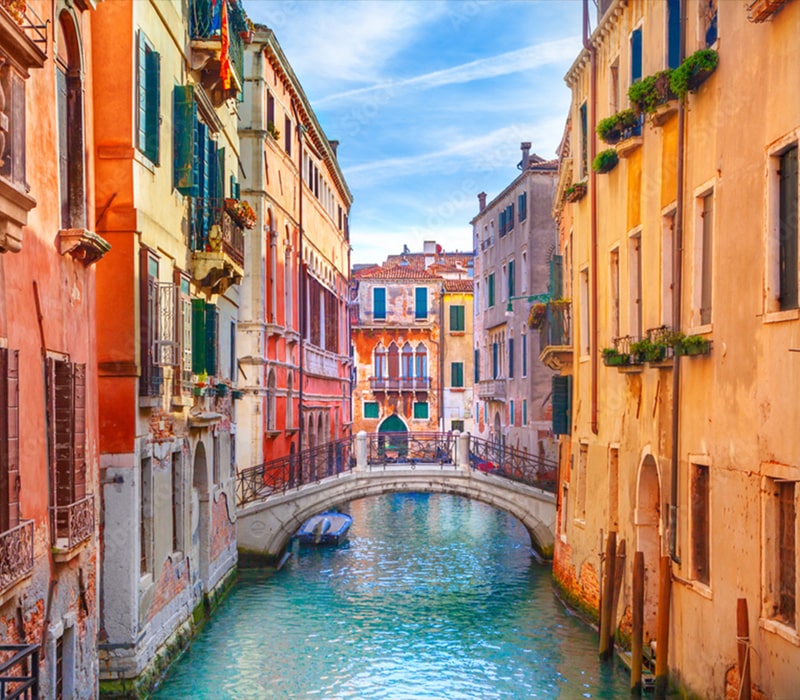
Tirano, Italy, is a small town in Lombardy’s Valtellina valley, close to the Swiss border and best known as the Italian starting point of the Bernina Express. But the train is only part of the reason to stop. Tirano has a Renaissance basilica, a compact old town, terraced Nebbiolo vineyards and the sturdy mountain food of Valtellina.
If you are changing trains, allow at least two hours to see one part of town properly. Half a day gives you time for the Basilica and historic centre, while an overnight stay works well if you want a relaxed dinner, a wine experience and an early start towards St. Moritz.
Post Contents
- Tirano at a glance
- Where Is Tirano? Italy or Switzerland?
- Is Tirano, Italy, Worth Visiting?
- Best Things to Do in Tirano
- Tirano Itineraries: 2 Hours, Half a Day or One Night
- Tirano Train Station: Getting to and from Tirano
- Riding the Bernina Express from Tirano
- Where to Eat in Tirano
- Where to Stay in Tirano
- Day Trips from Tirano
- Best Time to Visit Tirano
- Add Tirano to a Tailor-Made Northern Italy Trip
- F.A.Qs: Tirano, Italy
Tirano at a glance
| Region | Lombardy |
| Province | Sondrio |
| Altitude | About 429 m at the RhB station |
| Population | About 9,000 |
| Currency | Euro (€) |
| Language | Italian |
| Milan to Tirano by train | About 2 hours 30 minutes |
| Time to allow | 2 to 3 hours, half a day or one night |
Tirano sits only a few kilometres from Switzerland. The municipality describes the town centre at roughly 441 metres above sea level, while RhB lists Tirano station at 429 metres.




Where Is Tirano? Italy or Switzerland?
Tirano is in Italy, not Switzerland. It lies in the province of Sondrio in northern Lombardy, around 3 km from the Swiss border. The confusion is understandable because Tirano is the southern terminus of the Swiss Rhaetian Railway and the starting point for many Bernina Express journeys into Switzerland.
This border position is exactly what makes Tirano, Italy, useful on a Northern Italy itinerary. Lake Como lies to the west along the same railway corridor, while Poschiavo and St. Moritz are reached by continuing north on the Bernina Line.
Is Tirano, Italy, Worth Visiting?
Yes, if you give Tirano enough time.
For Bernina Express passengers, two or three hours are enough for either the Basilica della Madonna di Tirano or a walk through the historic centre. Rail enthusiasts may want longer to explore the town before continuing over the Bernina Line. Wine travellers have another reason to stay, since the steep slopes above Tirano form part of Valtellina’s Nebbiolo-growing landscape.

Arriving in Tirano Seamlessly: Train Station Connections and Private Transfers
An overnight stay makes most sense if you prefer not to combine a long journey from Milan with several more hours on the Bernina route in one day. Tirano is compact rather than packed with major attractions, so one night is usually enough.
Best Things to Do in Tirano
The most useful way to approach the things to do in Tirano is by time. Most sights are concentrated between the station area, the old town and the Basilica, so you can see something worthwhile even during a short rail connection.
Visit the Basilica della Madonna di Tirano
The Basilica is the town’s defining religious monument. It stands where, according to local tradition, the Virgin Mary appeared to Mario Omodei on 29 September 1504. The present sanctuary was subsequently built on the site in the early 16th century.

Sanctuary of Madonna di Tirano and Quiet Beauty in a Living Basilica
Inside, look for the monumental carved organ case. The municipality dates its construction to 1608–1617 and attributes the work to Giuseppe Bulgarini of Brescia. The church is an active place of worship, so keep voices low and avoid sightseeing during services.
Practical note: Allow 30 to 45 minutes. Entry is normally free. It is roughly a 15 to 20-minute walk from the station area. Opening hours can change, so check before you go.
Walk through Tirano’s old town gates
Tirano’s fortified centre once sat behind walls ordered by Ludovico il Moro in the late 15th century. Three gates survive: Porta Poschiavina, Porta Bormina and Porta Milanese. Porta Poschiavina is the best preserved, with traces of 16th-century fresco decoration.
Start at Porta Poschiavina, cross into the old town, then continue towards Piazza Cavour and the narrow streets around Via Ligari and Via Visconti Venosta. The official historic-centre route is about 2.3 km.

Old Town Tirano Piazza Life Palazzo Salis and Artisan Finds
Practical note: Allow 45 to 60 minutes. Free. About a 10-minute walk from Tirano train station.
See Piazza Cavour and Palazzo Salis
Piazza Cavour is a useful anchor for exploring central Tirano. Palazzo Marinoni, formerly an Augustinian convent and now the town hall, faces the square. A few streets away stands Palazzo Salis, one of Tirano’s most important historic residences.
Inside Palazzo Salis are frescoed rooms and spaces connected with the Salis family’s long presence in Valtellina. Its current published schedule lists opening from May to September, Monday to Saturday, 10:00 to 17:00. From October to April, access is generally by reservation. Check the palace directly before travelling, particularly outside summer.
Practical note: Allow about one hour for the palace, plus time to walk the surrounding streets. Admission applies. Around 10 to 15 minutes from the station.
Check the status of the MET ethnographic museum
The Museo Etnografico Tiranese, or MET, occupies the 18th-century Casa del Penitenziere beside Piazza Basilica. Its collections document traditional farming, craft and domestic life in Valtellina.
There is an important 2026 caveat: the museum is closed while redevelopment work is underway. Municipal planning documents have referred to reopening after the works, so older opening hours online should not be relied upon.
Practical note: Do not build your itinerary around the MET until its reopening is confirmed.
Walk beside the Adda
For a break from churches and palazzi, follow the river through town. Tirano sits where the Valtellina meets Valposchiavo and is crossed by the Adda, with the Poschiavino joining nearby.
The riverbanks are useful when you have an hour to fill before a train and do not want to commit to a museum visit. They also connect naturally with the historic centre around Porta Poschiavina.
Practical note: Allow 30 to 60 minutes. Free and easy to adjust around your train time.
Taste Valtellina wine among the terraced vineyards
The slopes around Tirano are part of Valtellina’s terraced wine landscape. The key grape is Nebbiolo, locally associated with wines including Valtellina Superiore and Sforzato di Valtellina DOCG, made using partially dried grapes.
Visit Tirano’s current listings include local producers Salis 1637 and Tenuta Vinea Scerscè. Under Designer Journeys’ editorial standard, these should not be presented as recommendations until a writer or travel designer has personally visited and assessed the experience.
See the Brusio Circular Viaduct
If you have more time, cross into Switzerland to see one of the Bernina Line’s most recognisable pieces of railway engineering. The train curls around the stone Brusio Circular Viaduct, using the loop to gain or lose height within a short distance. RhB describes the viaduct as one of the main landmarks of the route.
Brusio is only a short rail journey from Tirano, so it can work as a separate outing on a regional train if you are not riding all the way to St. Moritz.
Practical note: Allow at least two hours for a return outing. Carry valid identification for the Italian-Swiss border crossing.
Tirano Itineraries: 2 Hours, Half a Day or One Night
If you are trying to decide what to do in Tirano, Italy for a day, or simply how to fill a train connection, use your departure time as the fixed point and work backwards.
If you have 2 hours: choose one side of town rather than rushing between both.
- Leave your luggage if needed and confirm your onward platform first.
- Visit the Basilica or walk from Porta Poschiavina through Piazza Cavour and the historic centre.
- Return to the station with at least 20 to 30 minutes to spare.
If you have half a day:
- Start at the Basilica della Madonna di Tirano.
- Walk back towards the old town and enter through Porta Poschiavina.
- Explore Piazza Cavour and the lanes around Palazzo Salis.
- Stop for a Valtellina lunch before returning to the station.
If you stay overnight:
- Arrive in the afternoon and explore the old town.
- Arrange a firsthand-vetted wine tasting in the surrounding terraced vineyards.
- Have dinner in Tirano and stay close to the station if you have an early departure.
- Take the Bernina route the following morning. In the 2026 summer timetable, Bernina Express panorama services included morning departures from Tirano, but schedules change by season, so always check RhB for your exact date.
Tirano Train Station: Getting to and from Tirano
Two stations, one station square
One detail catches many first-time visitors out: Tirano has separate Italian and Swiss railway facilities.
Trenord services from Milan arrive at the Italian station. The Rhaetian Railway, or RhB, operates the metre-gauge Bernina Line into Switzerland from its neighbouring station at Piazza delle Stazioni. The railways run side by side at Tirano, so the physical transfer is short.
The walk is not the reason to build in extra time. Tickets, luggage, queues and finding the correct platform are. A 30-minute connection buffer is sensible, and more is preferable if you are travelling with children or substantial luggage.
RhB’s Tirano station has staffed luggage facilities but no lockers. Counter luggage storage is available during station opening hours, currently listed as 07:00 to 19:00 daily.
Milan to Tirano by train
Getting from Milan to Tirano is simpler than many itineraries suggest. Trenord currently runs direct trains from Milano Centrale in about 2 hours 30 minutes, with around 15 departures a day and service roughly hourly. Published second-class fares start at €12.50.
Check the Trenord app or website shortly before travelling. Engineering works and temporary service alterations do occur on the line.
Tirano and Lake Como by train
The same RE8 corridor serves Varenna-Esino, making it straightforward to combine Lake Como with Tirano without returning to Milan. Trenord lists Varenna as a stop on the Tirano-Sondrio-Lecco-Milan route.
That makes a Lake Como stay followed by one night in Tirano a practical way to approach the Bernina journey.
Riding the Bernina Express from Tirano
Route and journey times
From Tirano, the Bernina Line climbs from the Valtellina valley through Brusio and Poschiavo, past Alp Grüm and Ospizio Bernina, then descends towards the Engadin.
RhB gives the Bernina Express journey between Tirano and St. Moritz as about 2 hours 15 minutes. Through services towards Chur take longer, with exact times depending on the seasonal train.

Bernina Express from Tirano to St Moritz Panoramic Views by Train
The Albula and Bernina railway landscape has been on UNESCO’s World Heritage List since 2008. On the full Chur-Tirano route, RhB promotes the journey as crossing 196 bridges and 55 tunnels.
Bernina Express reservations and 2026 fees
You need both a valid ticket and a seat reservation to travel in a Bernina Express panoramic carriage.
| 2026 reservation | Fee |
|---|---|
| Tirano–St. Moritz short-route panorama service | CHF 32 |
| Long route, low season | CHF 40 |
| Long route, main season | CHF 44 |
These reservation fees are separate from the underlying rail ticket and can change. Swiss Travel Pass holders can use their pass as the ticket but still need the compulsory panorama-car reservation. Interrail and Eurail travellers should likewise check the reservation requirement for the service they select.
Which side should you sit on?
Do not build your trip around claims that one side is always better.
RhB does not publish a simple “best side” rule for Tirano to St. Moritz, and the railway repeatedly curves through changing terrain. Important views appear on both sides. If photography matters more than a reserved panoramic seat, the regional train is often the more flexible option.
Bernina Express or regional train?
Regional RhB trains run over the same Bernina Line without the compulsory Bernina Express panorama surcharge. Their regular carriages have conventional windows, and some can be opened for photographs. RhB also offers optional CHF 5 seat reservations on selected regional services between Tirano and St. Moritz.
In summer, selected trains may carry RhB’s open scenic carriages. In 2026, these operated daily between Tirano and St. Moritz from 22 June to 30 August.
Choose the Bernina Express for an assigned panoramic seat and a simple end-to-end journey. Choose regional trains if you want more flexibility to stop in places such as Poschiavo or Alp Grüm.
Bernina Express bus to Lugano
RhB also operates a seasonal Bernina Express Bus between Tirano and Lugano, useful for travellers creating a wider Switzerland and Northern Italy loop. The service does not run identically throughout the year, so check the current operating dates before building flights or hotel bookings around it.
Where to Eat in Tirano
Valtellina food suits a cool mountain evening. Pizzoccheri are buckwheat pasta ribbons usually served with potatoes, greens, cheese and butter. Sciatt are fried buckwheat-and-cheese fritters. Bresaola della Valtellina IGP is the valley’s cured beef, often served simply as an antipasto.

Local Flavours in Valtellina Wine Buckwheat and Intimate Ristorante Tables
Lunch matters if you are travelling onwards by train. Many traditional kitchens work around defined lunch and dinner sittings rather than continuous service, so check opening hours against your Bernina departure.
Where to Stay in Tirano
For an early Bernina departure, staying close to Piazza delle Stazioni keeps the morning simple. Travellers spending more time in town may prefer the historic centre, while accommodation around Piazza Basilica puts you nearer the sanctuary.

Where to Stay Boutique Hotel Addresses for a Crafted Overnight Stay
You do not have to sleep in Tirano to ride the line. Poschiavo works well if you want to be in Switzerland already, St. Moritz suits a longer Engadin stay, and Varenna is an option if Lake Como is the main focus and you are comfortable with a longer rail day.
Day Trips from Tirano
Poschiavo is one of the easiest choices. It lies directly on the Bernina Line in Switzerland, so you can travel there by regional train, spend time in the historic centre and return to Tirano without committing to the full journey to St. Moritz.
Aprica, around 17 km from Tirano, works better for mountain scenery and outdoor activities.
For Lake Como, take the rail line towards Varenna-Esino. If Lake Como is already part of your itinerary, however, it makes more sense to visit on the way to or from Tirano rather than as a return day trip.

Day Trips and Outdoor Elegance: Lake Como and Alpine Pass Scenery
Drivers can continue towards Bormio and, when seasonal roads allow, the Stelvio area. Check mountain-pass conditions before setting out.
Best Time to Visit Tirano
Spring and early summer bring greener valley slopes and long daylight hours. Summer provides the widest range of Bernina services but also brings the highest demand for panoramic seats.
September and October are particularly relevant to wine travellers as Valtellina moves into harvest season. The Marian apparition associated with the Basilica is dated to 29 September 1504, while Tirano’s San Michele fair is held around the final Sunday of September.
Winter changes the Bernina experience completely. Snow covers the higher sections of the route, while Tirano itself remains much lower in the valley. Pack layers because the train climbs from roughly 429 metres at Tirano to more than 2,200 metres at Ospizio Bernina.
Add Tirano to a Tailor-Made Northern Italy Trip
Tirano works naturally between Lake Como and Switzerland. Rather than treating it only as a station change, an overnight stop gives you time for the old town, Valtellina food and wine, then a calmer start on the Bernina Line the following morning.
Our 15-day Italian Lakes tour with the Bernina Express already connects the region with the Tirano to St. Moritz railway journey. A Local Designer can also build Tirano into a wider itinerary combining Italy tours and Switzerland tours.
F.A.Qs: Tirano, Italy
Is Tirano, Italy, worth visiting?
Tirano is worth visiting if you are riding the Bernina Line, enjoy small historic towns or want to explore Valtellina wine country. Two to four hours cover the main sights. Stay overnight if you want a slower dinner, wine tasting or an easier morning departure towards Switzerland.
What is Tirano, Italy, known for?
Tirano is best known as the Italian terminus of the Bernina railway, but it is also associated with the Basilica della Madonna di Tirano, Valtellina’s terraced Nebbiolo vineyards, historic palazzi and regional dishes such as pizzoccheri and bresaola.
How long do you need in Tirano?
Allow at least two hours if you are changing trains. With two hours, choose either the Basilica or the old town. Half a day is enough for both plus lunch. One night is useful if you want a wine experience or an early Bernina departure the next morning.
Do you need a reservation for the Bernina Express from Tirano?
Yes, if you travel in the official Bernina Express panoramic carriages. A seat reservation is compulsory in addition to your rail ticket or qualifying pass. Regional RhB trains use the same railway and do not carry the compulsory Bernina Express panorama reservation.
How do you get from Milan to Tirano?
Trenord operates direct trains between Milano Centrale and Tirano. The journey takes about 2 hours 30 minutes, with approximately hourly departures and around 15 trains per day in the current timetable. Second-class fares currently start at €12.50.