Post Contents
- Arriving at the Duomo in Milan and the Piazza Pulse how to visit the Duomo in Milan, Italy, from Duomo station M1 M3
- A Gothic Cathedral built over six centuries, Duomo di Milano’s history began in 1386, offering insight into Milan’s cathedral development.
- Inside Milan Cathedral: light, relics, and quiet power; stained glass windows feature the Sacred Nail of Bartholomew.
- Rooftop terraces of the Duomo and Madonnina at sunset in Milan, featuring the Duomo, sunset views, elevator, and stairs.
- Duomo Museum and the archaeological area beneath it in Milan’s historical complex, including excavation sites.
- F.A.Qs: Milan Duomo and Milan Cathedral essentials
- What Stayed With Us After the Duomo of Milan reflection travel memory Italy
Arriving at the Duomo in Milan and the Piazza Pulse how to visit the Duomo in Milan, Italy, from Duomo station M1 M3
Arriving at the Duomo in Milan and the Piazza Pulse
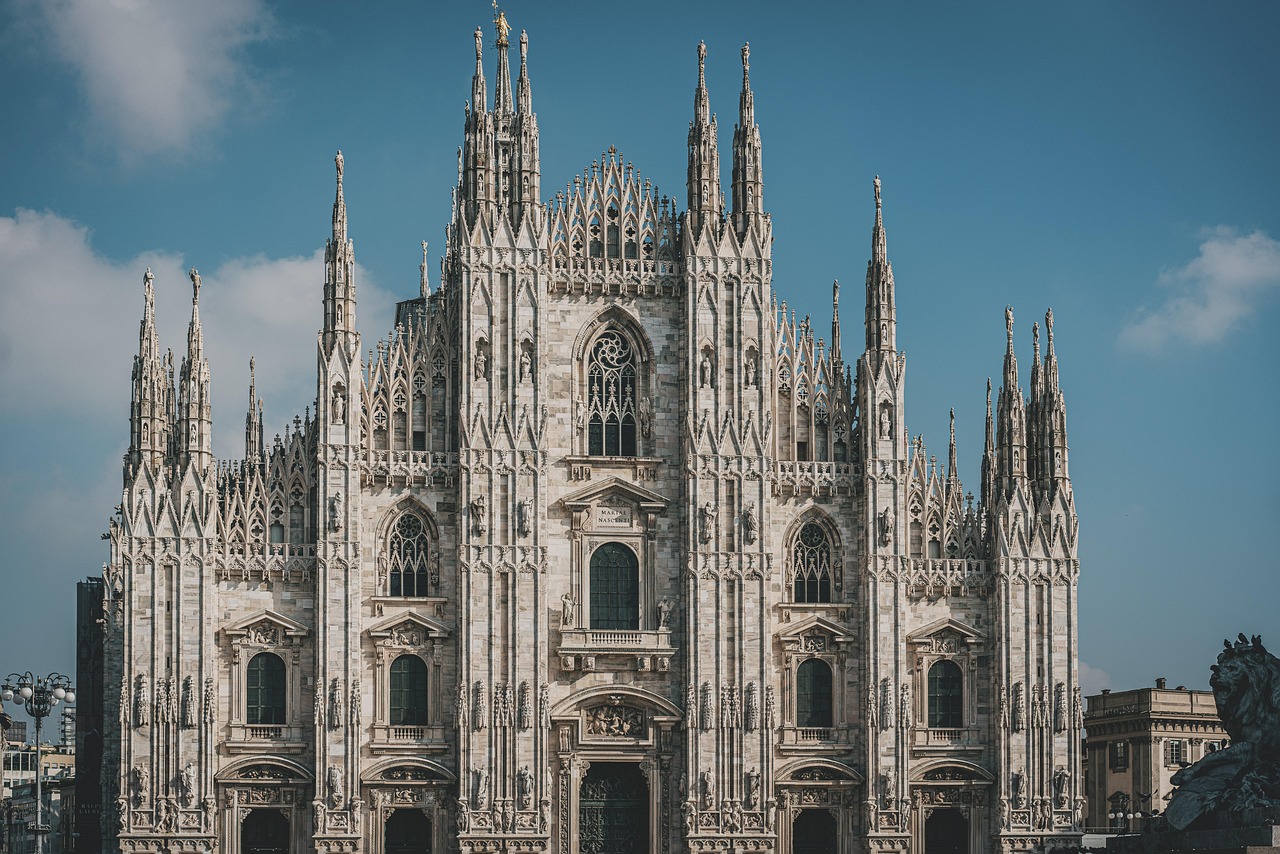
To understand how to visit the Duomo in Milan, Italy, start by letting the city deliver you right into its heart: Duomo station on M1 and M3 rises into the centre of Milan with almost cinematic timing. The duomo doesn’t announce itself gently; it’s there, immediate, a cathedral façade that seems to pull the whole square into focus. For first-timers and solo adventurers, that first step into Piazza del Duomo can feel like entering a living stage set—yet it’s also wonderfully easy to orient yourself.
Stand still for ten seconds and let your eyes travel: the main entrance ahead, the long lines naturally forming to one side, and the wider Milano energy flowing around you in polished arcs. If you’re meeting a guide, choose an obvious landmark (a specific doorway or a corner of the square) and stick to it—simple structure builds instant confidence. This is one of those places where “seamless” isn’t a luxury; it’s a form of care.
Getting here with confidence from Duomo station, M1, M3
Metro access is the calmest way in, especially at peak times. From Duomo station (M1 red line and M3 yellow line), you can surface within minutes of the cathedral, with tram and bus links close by for anyone arriving from other neighbourhoods. If you’ve booked a guided tour, keep your map app open, but don’t overthink it—this is a central hub designed for foot traffic, and signage is straightforward.
Arrival windows for light, mood, and calmer photos
If you’d like the Duomo to feel contemplative rather than crowded, arrive early in the morning or later in the afternoon. Morning offers cleaner lines for architecture shots; late afternoon softens the marble, making the whole square feel warmer. Your timing becomes part of the experience you create—less rush, more noticing.
Ticketing is simple at a high level: basic cathedral entry versus rooftop access. For a high-end, low-stress day, online booking is the most supportive move you can make—skip the longer queues and keep your plans flexible. Many travellers describe the moment they first step inside as awe-inspiring; consider giving yourself permission to pause, breathe, and trust that this place will meet you at your own pace.
- Quick practical promise: pre-book online to keep the day crafted and unhurried.
- Dress and manners: modest shoulders and knees, and a quieter tone indoors.
- Photography: early and late light is kinder to marble and faces.




A Gothic Cathedral built over six centuries, Duomo di Milano’s history began in 1386, offering insight into Milan’s cathedral development.
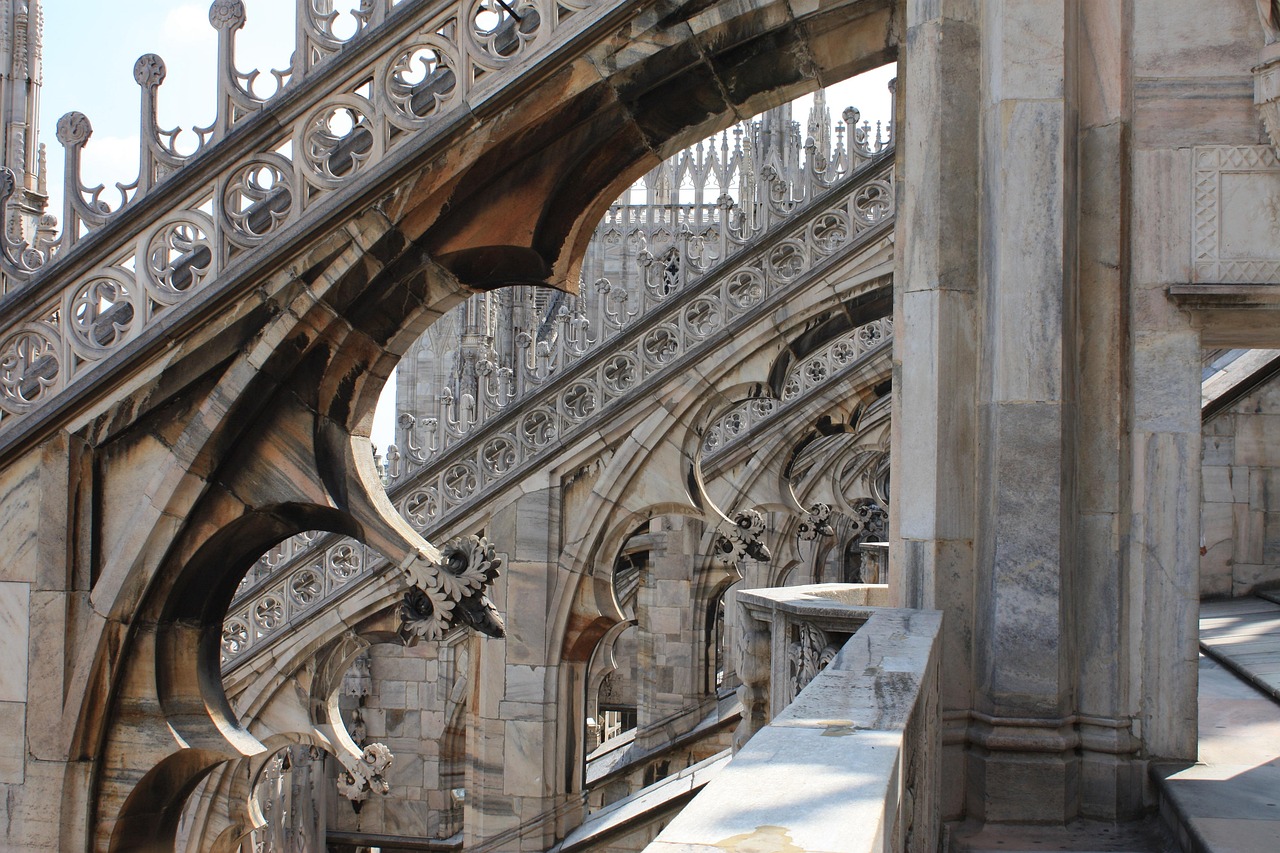
A Gothic Cathedral Built Across Six Centuries
The most empowering way to read the Duomo di Milano is to know that it is a living project: its history began in 1386 under the Visconti—Gian Galeazzo—then unfolded across six centuries. The construction of the Duomo wasn’t a single architectural statement; it was a long conversation between eras, patrons, and each architect brave enough to touch the skyline. For adventure seekers, there’s something thrilling in that timescale: the building is proof that ambition can be patient.
Today, that continuity is protected by the Veneranda Fabbrica del Duomo and the Fabbrica del Duomo di Milano, the steward of maintenance, restorations, and craft traditions. You may also see the name Fabbrica del Duomo di Milano and, in older references, veneranda fabbrica del duomo di—each pointing to the same devotion to detail. This is heritage not as nostalgia, but as expert-level upkeep.
White marble, Candoglia quarry craft, and a forest of spires
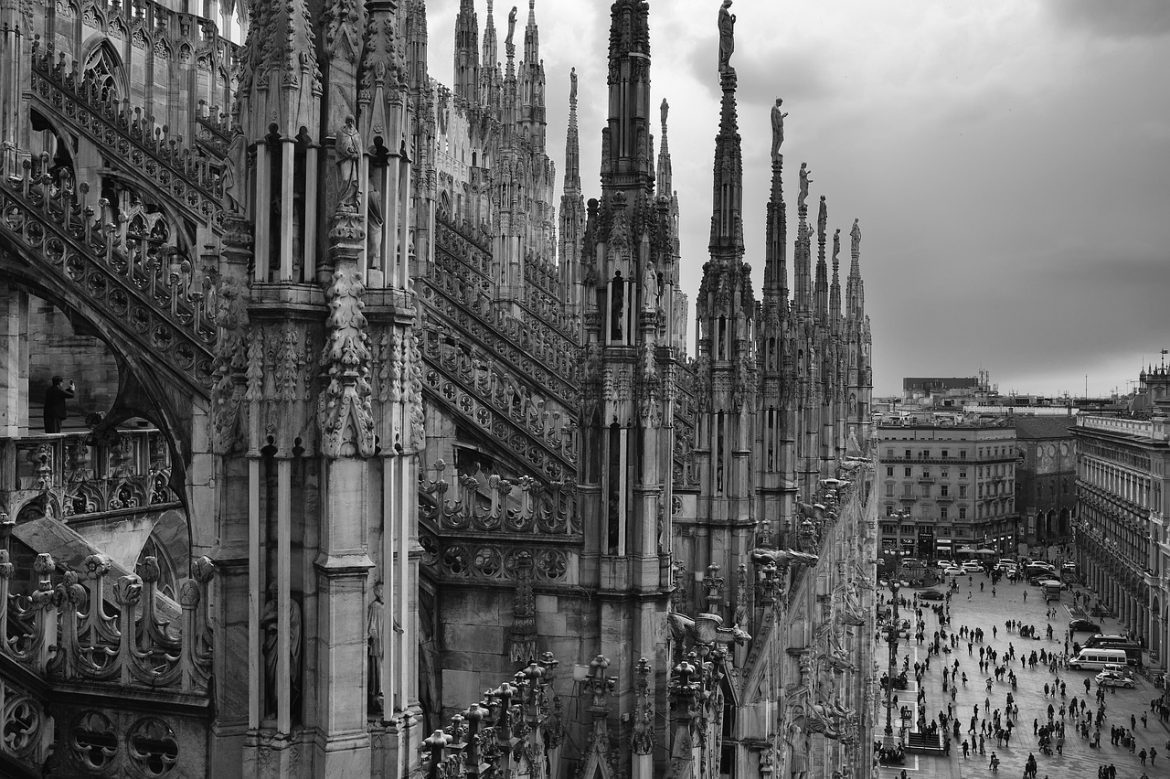
Look closely, and you’ll see why the Duomo reads as luminous: white marble sourced from the Candoglia quarry, shaped into marble blocks that still feel astonishingly precise. Gothic engineering choices—flying buttresses, weighty vault systems, and layered supports—turn stone into something that seems to float. Above, the forest of spires creates a skyline that feels both delicate and defiant.
Big numbers for a Milan Duomo sense of scale
For those who love scale, the figures land like a drumbeat: 108.5 meters in height, and 135 spires pricking the air. Standing beneath a single spire or pinnacle, you can feel your inner compass recalibrate—small, yes, but also supported by human ingenuity. In 1774, the Madonnina was even fitted with a lightning rod, a practical detail that quietly echoes the city’s blend of faith and pragmatism.
Bring a design eye: notice where traditional Lombard choices meet international Gothic ambition, and then create a small sketch-note of one detail you love. It might be a gargoyle curve, a carved leaf, or a statue’s posture—your personal way to discover the history without needing to memorise dates.
Inside Milan Cathedral: light, relics, and quiet power; stained glass windows feature the Sacred Nail of Bartholomew.
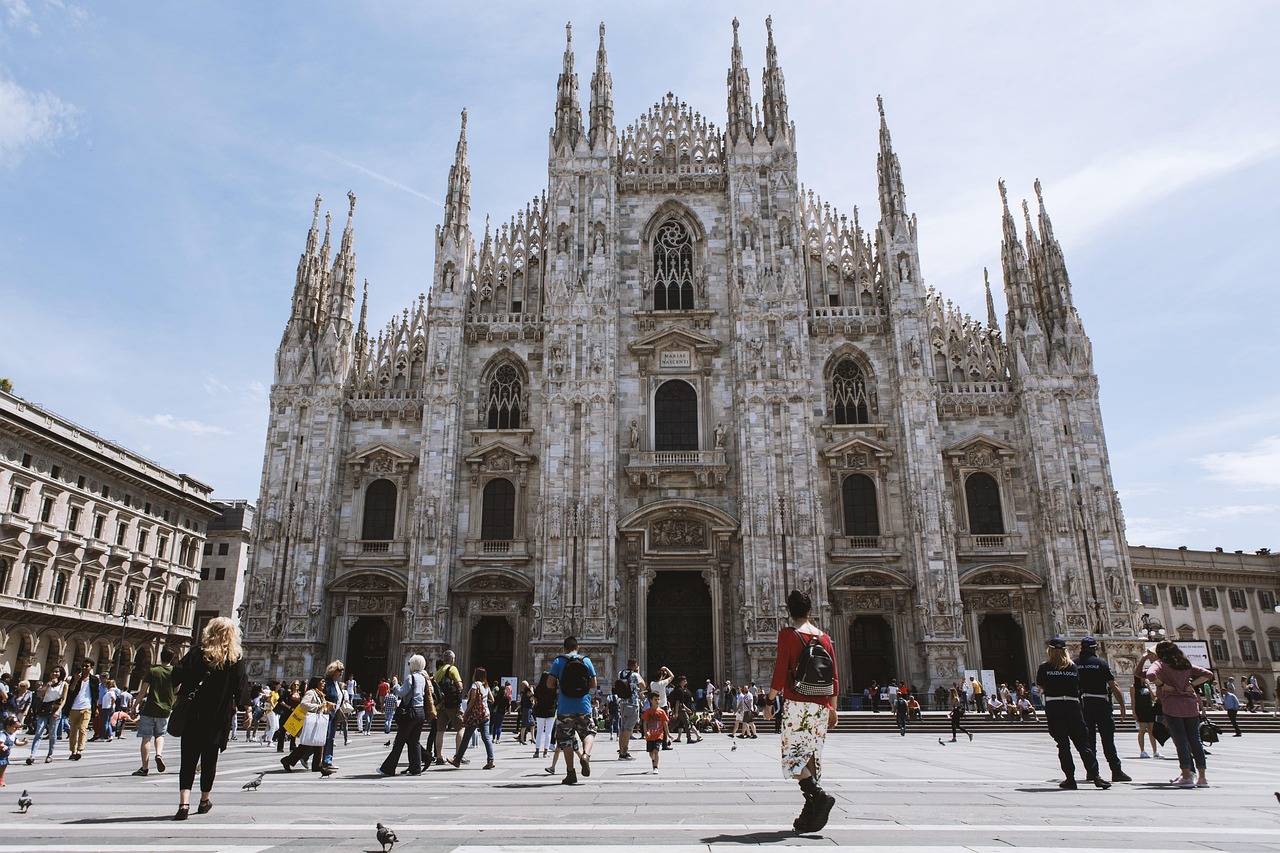
Inside Milan Cathedral Light Relics and Quiet Power
To enter the Milan Cathedral interior, the stained glass windows, and the Sacred Nail Bartholomew story is to let the space choreograph you. The central nave pulls you forward; the transept opens the cross-axis; the apse and altar draw your gaze to stillness. Even if you’re usually on the move, the Duomo has a way of asking—gently—for a slower stride.
Light is the cathedral’s quiet collaborator. The stained-glass windows depicting episodes from the Old and New Testaments colour the stone with shifting blues, reds, and golds, while stained-glass windows change character with the hour. Photographers often love late afternoon here, when beams stretch longer, and the atmosphere feels almost painted.
Relic stories and the crucifixion tradition are held respectfully
Inside, you’ll encounter powerful symbols and stories, including the statue of Saint Bartholomew and the sacred nail relic, traditionally linked to the crucifixion. There is also the ritual of retrieving the nail, a practice deeply meaningful to the church; visitors can observe it with quiet respect and care. If you’re new to sacred spaces, a simple rule helps: watch first, follow the local tone, and trust that reverence is always the right language.
Crypt layers, Santa Maria Nascente, and local etiquette
Look for the ecclesiastical layers beneath the grandeur: the crypt anchors the duomo to earlier Milano, and the dedication to Santa Maria Nascente reminds you this is a working church as much as a masterpiece. A nod to Ambrose—so central to the city’s spiritual identity—adds another layer of meaning. Dress modestly, keep voices low, and consider the lateral aisles as your calmer route if the central line feels busy.
If you can, attend a mass or evening concert to hear the cathedral’s acoustics bloom. One couple told us they arrived unsure of etiquette, then found the rhythm easy to follow—standing when others stood, remaining quiet, letting the music lead. Their insight was simple: you don’t need to be an expert to feel connected; you only need to show up with trust and respect.
- Comfort cue: keep a light layer—stone interiors can feel cool.
- Best behaviour: silence is a gift in a place like this.
- Photo note: let your eyes adjust; the most beautiful colour arrives slowly.
Rooftop terraces of the Duomo and Madonnina at sunset in Milan, featuring the Duomo, sunset views, elevator, and stairs.
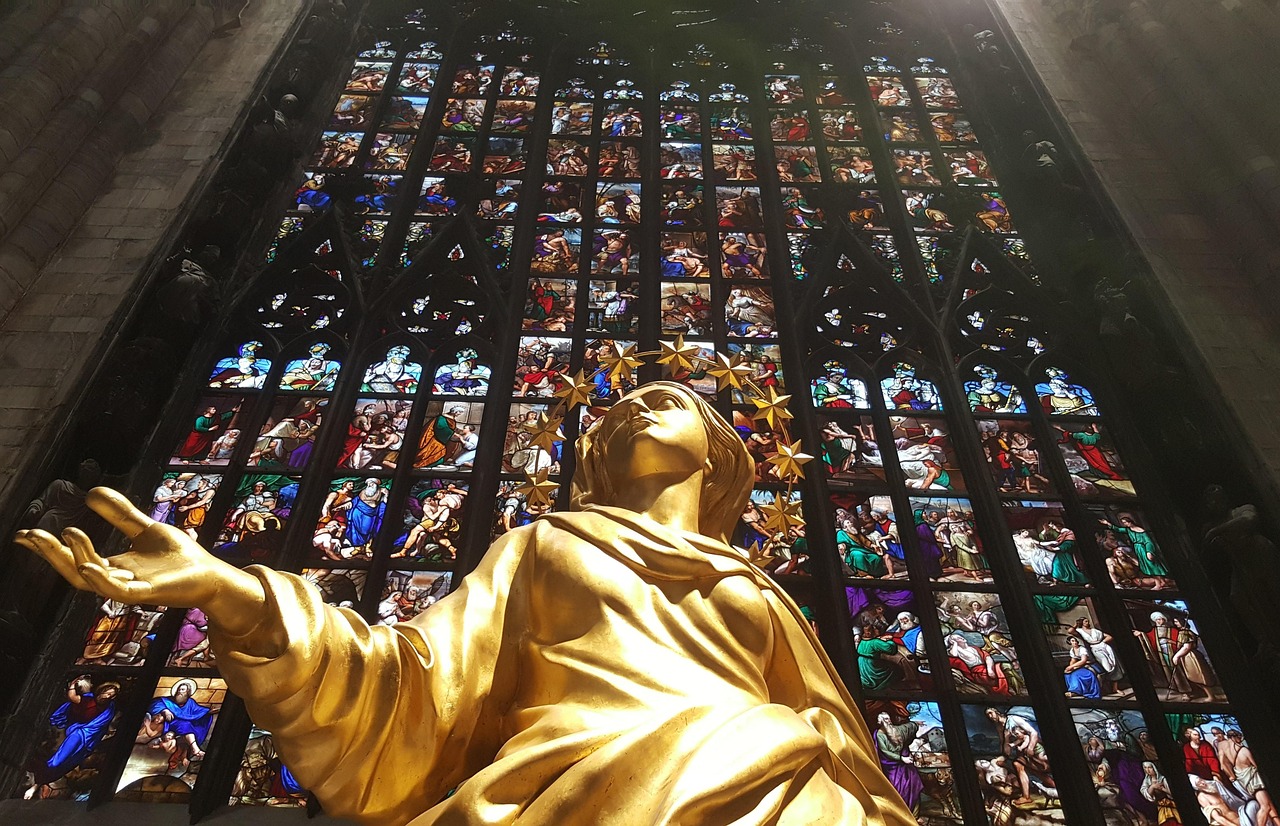
Rooftop Terraces of the Duomo and the Madonnina at Sunset
The terraces of the Duomo rooftop, Milan Duomo sunset elevator stairs question is really about how you want to feel on the way up. The elevator is smooth and time-efficient; the stairs are more visceral, a little demanding, and wonderfully satisfying if you enjoy earning your views. Either way, the Duomo rewards you with a perspective that turns the city into a living map.
A solo adventurer once described the stair climb as physically challenging, especially in warmer months—but utterly rewarding. With every step, the distance between you and the sculptures collapses, until stone faces and carved folds feel near, not distant. If you choose the stairs, pace yourself and treat it like any urban hike: steady breath, steady steps, and self-support all the way.
On the terrace among the spire and statue details
Up here, you’re not just looking at a cathedral—you’re walking through it. The rooftop terraces let you weave between spires, peer at statues from eye level, and trace lines of craftsmanship that are impossible to grasp from the ground. There’s a tactile joy in noticing how a sculpted edge catches light, or how one spire points like a compass needle to a new part of Milan.
Madonnina sunset plan for the highest point, safely
The Madonnina draws you onward, the emotional pull of the highest point. For comfort and safety, wear shoes with grip and keep your hands free; narrow passages can feel busy at peak hours. If you’re travelling together, agree on a meeting spot for ease—small planning, big calm.
For a golden-hour ritual, keep it simple and crafted. Aim to arrive on the terrace about 45 meters above street level with enough time to settle before the sun dips; choose one direction for city views and one for sculptural close-ups. Even when it’s lively, you can create a pocket of calm: take three deep breaths, take one photo, then notice one detail you didn’t expect. That’s how a view becomes a personal memory.
Duomo Museum and the archaeological area beneath it in Milan’s historical complex, including excavation sites.
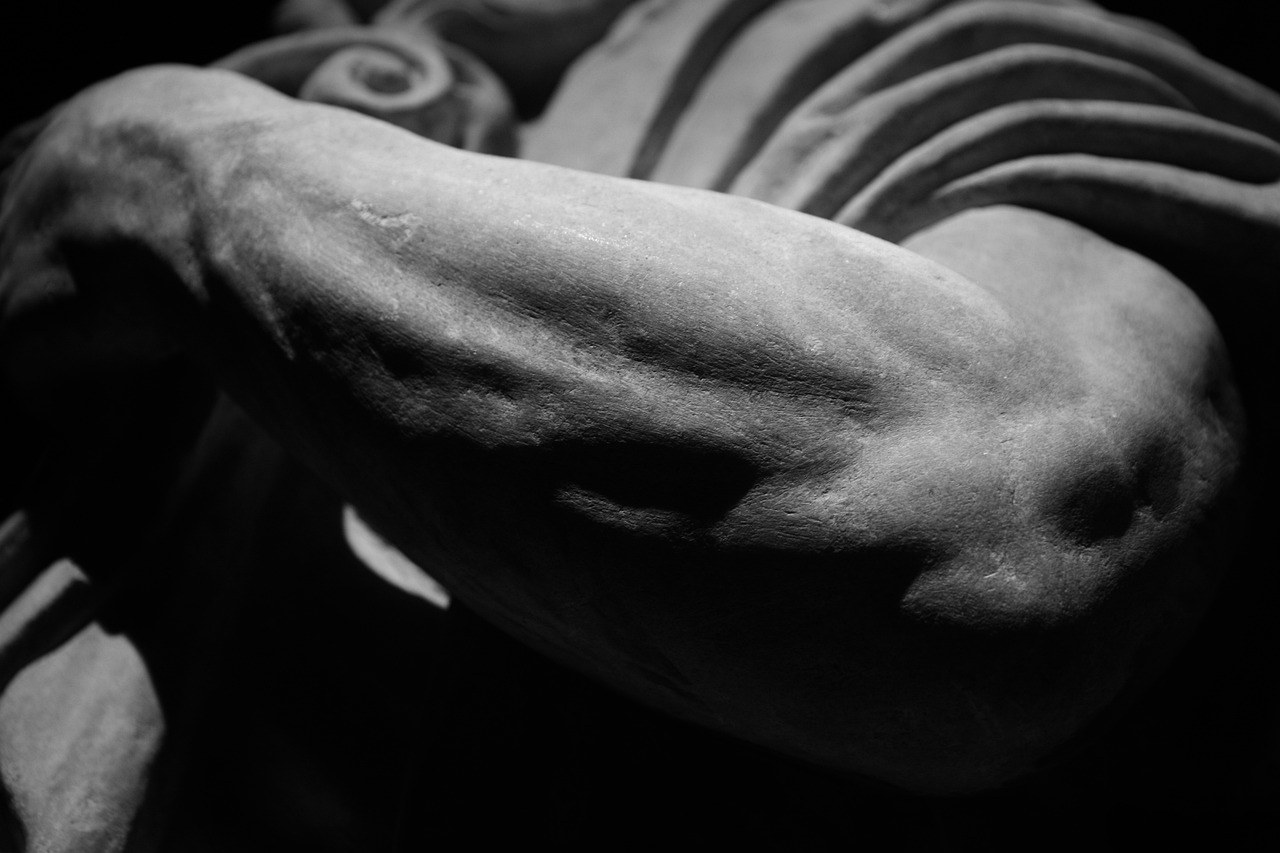
Duomo Museum and the Archaeological Area Beneath Milano
Duomo Museum, Milan, a historical complex, archaeological area, and excavation is the chapter many travellers don’t realise they need until they’re inside. The Duomo Museum turns awe into understanding, revealing the behind-the-scenes story of how a sculptor approached a face, how artisans learned to sculpt drapery, and how models became real stone. It’s where you can uncover process, not just admire results.
As part of the cathedral’s historical complex, the museum offers a design-forward way to slow down: study façade elements, inspect scale models, and notice how repairs are planned with long horizons. You’ll also feel how Lombardy’s capital shaped and was shaped by this building—how Milanese identity became something you can literally see in marble.
Archaeological area and excavation layers beneath the church
Below, the archaeological area adds depth in the most literal way. Through excavation, you glimpse earlier traces: a baptistery outline, and references to an older basilica that once anchored worship here, including Santa Tecla. There’s also the sense of Santa Maria continuity—today’s dedication, yesterday’s foundations—like pages beneath pages.
Local guidance, unique locations, and a crafted piazza loop
One backpacker told us their favourite moment wasn’t in a gallery at all, but outside—friendly locals pointing them towards unique photo locations, including quieter angles around the square. That warmth is part of Milano’s charm: if you ask politely, someone often helps you design a better day than you could have planned alone.
To keep your visit seamless, pair the museum and underground area with a short guided tour loop around nearby landmarks. This is also a lovely moment to glance beyond the Duomo: some travellers continue onwards to Santa Maria delle Grazie to admire Leonardo da Vinci’s legacy in the city’s wider art story. For a high-end rhythm, build in breaks, carry water, and choose one café stop as a reset—crafted yet flexible, with care for your energy.
If you’re dreaming beyond Milan, our Trip gallery can help you imagine how this cathedral day might stitch into a larger Italian journey.
- Accessibility and comfort: plan a seated pause between museum rooms and underground steps.
- Time-saving: visit the museum when the main cathedral lines are less crowded.
- Mindset: let yourself “read” the building like a story, not a checklist.
F.A.Qs: Milan Duomo and Milan Cathedral essentials
F.A.Qs: Milan Duomo and Milan cathedral essentials
Why is the Milan Duomo so famous?
The Milan Duomo is famous for its vast scale, intricate Gothic architecture, and the extraordinary detail of its spires and sculpture. It’s also a living symbol of the city’s identity, built over centuries and still carefully maintained today. The rooftop experience is another reason: walking among the stonework gives you an unusually close connection to the cathedral and wide views over Milan.
Who is buried in the Duomo in Milan?
The Duomo is primarily a place of worship rather than a royal tomb, but it does include significant ecclesiastical burials and sacred spaces connected to the church’s history. Areas such as the crypt reflect Milan’s deep religious layers over time. When visiting, it’s best to view these spaces with quiet respect, as they are part of an active spiritual site.
Is the Duomo the biggest church in Italy?
The Duomo is one of the largest churches in Italy and one of the most monumental cathedrals in Europe, but it is not always cited as the single biggest, depending on how “biggest” is measured. What’s consistent is its extraordinary presence: the interior volume, the elaborate façade, and the rooftop terraces combine to make it feel truly immense when you’re there in person.
What does Duomo mean in Italian?
In Italian, “duomo” refers to the principal church of a town or city, often the cathedral. The word is linked to the idea of a “house” of God and commonly refers to the most important religious building in that place. In Milan, “the Duomo” almost always means the Duomo di Milano, the city’s iconic cathedral in the historic centre.
What Stayed With Us After the Duomo of Milan reflection travel memory Italy
Duomo of Milan reflection travel memory Italy isn’t something you schedule—it’s what arrives later, quietly, as you walk back into the city streets. After the height and the hush, you may notice how the duomo’s presence changes your sense of scale: you feel small, yes, but also strangely supported, as if the cathedral’s confidence has lent you some of its steadiness.
For me, it’s never the grand façade that returns first. It’s a sensory detail: stone underfoot, a wash of coloured light, or a distant hymn that seemed to hang in the air long after it ended. These are the moments that teach you to travel with more trust—less proving, more receiving.
And when you step back into Milano, the pace doesn’t feel as sharp. You carry a gentler certainty, a personal insight that beauty can be both monumental and kind. Somewhere beyond the square, Italy keeps unfolding—patiently, like a story you’re allowed to enter one page at a time.