Post Contents
- Duomo Florence Cathedral First Impressions in Piazza Duomo and Piazza del Duomo, Italy
- Architecture of the Duomo, Florence Cathedral
- Brunelleschi’s Dome Climb Dome in Florence Duomo
- Baptistery of San Giovanni, Bell Tower, Terraces of the Duomo
- Opera del Duomo Museum
- F.A.Qs: Duomo Florence Italy
- Final Thought
Duomo Florence Cathedral First Impressions in Piazza Duomo and Piazza del Duomo, Italy
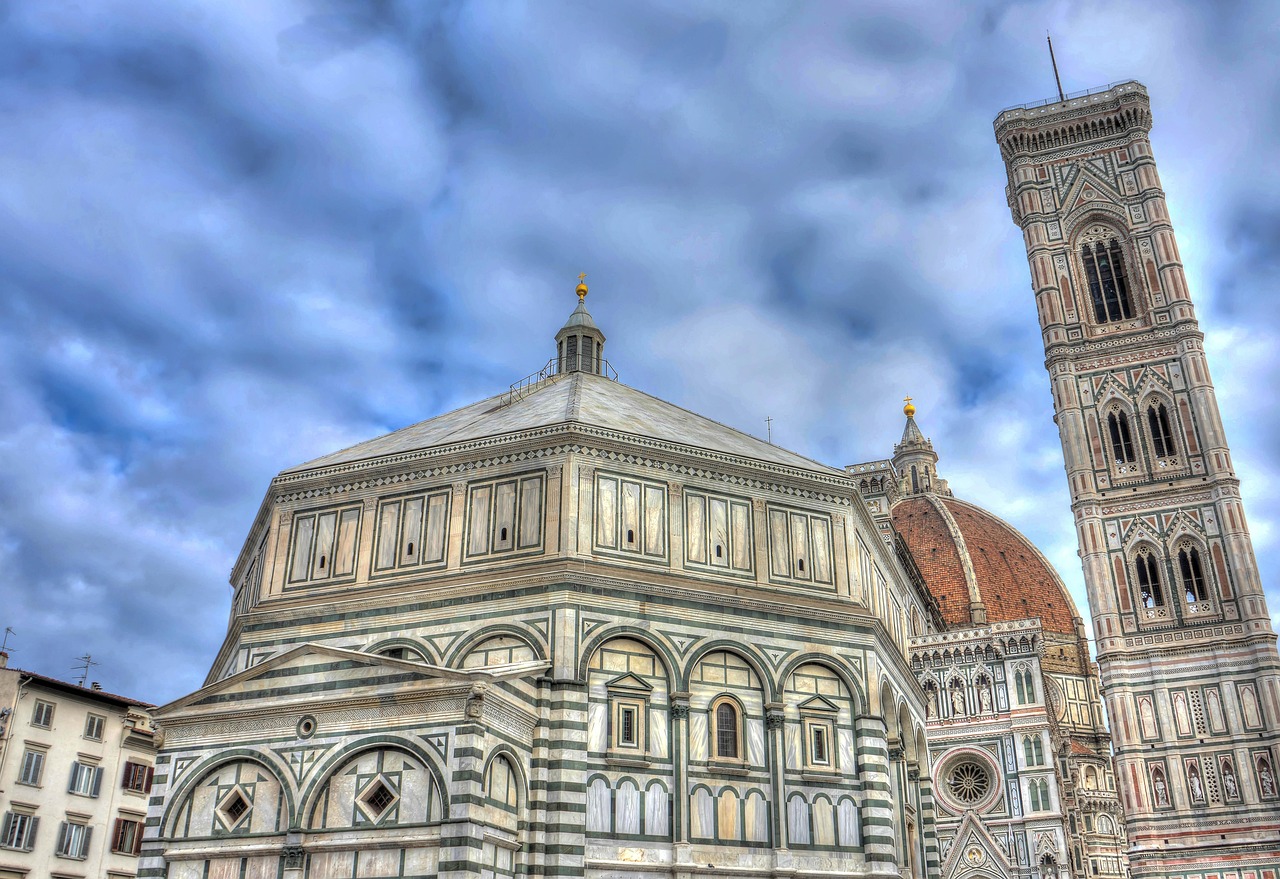
Duomo Florence Cathedral First Impressions in Piazza Duomo with the Cathedral of Florence exterior
Arriving for a Duomo Florence Cathedral overview in Piazza Duomo, Italy, is one of those travel moments that feels both cinematic and grounding. The first glimpse of the cathedral is less a “sight” and more a presence: the symbol of Florence, anchoring the city of Florence emotionally and visually, even if you’ve only just stepped off the train. Pause in the piazza and let your eyes travel upwards—from street-level energy to the calm geometry of the dome.
Piazza Duomo rewards an unhurried gaze. The marble surfaces catch shifting light, and the scale of the Florence cathedral gently resets your sense of proportion. It’s a place to create an intentional start: stand still for a minute, breathe, and allow the day to open rather than rush.
Piazza duomo perspective and the Duomo complex in Florence
The Duomo of Florence isn’t just one building. The Duomo complex in Florence includes the Cathedral of Santa Maria del Fiore, Brunelleschi’s Dome, Giotto’s bell tower, the Baptistery, the Opera del Duomo museum, and Santa Reparata below (often described as the crypt). With a little design, you can explore them in a sequence that feels crafted rather than chaotic.
A seamless order many travellers love is: begin with the exterior of the cathedral (and a quiet lap of the façade), then the Baptistery, then the museum for context, and finally the climbs—saving the dome for when you’re mentally ready to earn the view. If terraces of the Duomo are available on your ticket type, they fit beautifully between the museum and the dome, offering an architectural “near-rooftop” pause.
Logistics feel reassuringly simple. From Santa Maria Novella station, it’s an easy ten-minute walk; follow Via de’ Cerretani until the streets open and the dome appears like a compass point. Local navigation tip for first-timers: keep your eyes up, but check your map only at intersections—small lanes can tempt you off route when the crowds thicken.




Architecture of the Duomo, Florence Cathedral
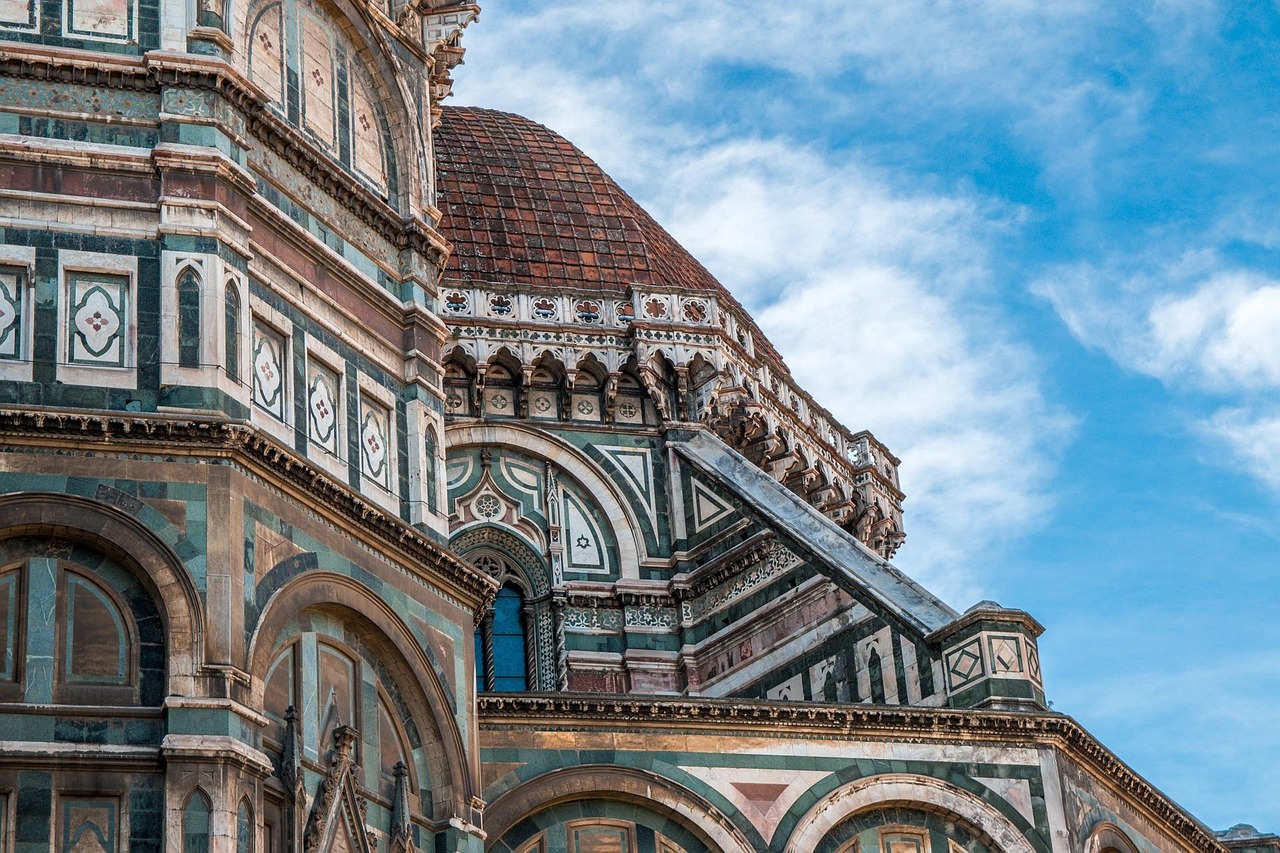
Architecture of the Duomo From 1296 to Renaissance Glory at Florence Cathedral
To appreciate the architecture of Florence Cathedral (Duomo di Firenze), Santa Maria del Fiore, Italy, it helps to understand the timeline behind what you’re seeing. Florence began in 1296 with an ambitious plan for a new cathedral, and its construction unfolded across generations. Arnolfo di Cambio—an architect and sculptor—shaped the earliest vision, setting a scale that was meant to match Florence’s confidence.
The cathedral’s Gothic roots are still readable in its structure and rhythm, even as later decisions gave it that unmistakable Florentine character. The façade you see today is tied to later work by de Fabris, and it’s a lesson in how a city can keep refining its masterpiece without losing its soul.
Marble, gothic details and white and green marble patterning
Step closer, and you’ll notice the white-and-green marble effect isn’t just random decoration. The white and green patterning, with green marble accents, is a crafted visual language—one that reads cleanly even in busy light. It photographs beautifully, but it’s even better when you notice how the marble lines guide your gaze upwards and around the building’s edges.
This isn’t simply an ornament. Its architecture is designed to move you—physically around the piazza and emotionally towards wonder. For adventure seekers, it’s a reminder that the day isn’t only about climbing; it’s also about learning to see.
Renaissance ambition inside the cathedral of Santa Maria del
Names can feel confusing here, so let’s make it simple with a bit of insight. The cathedral is properly Santa Maria del Fiore—also written di Santa Maria del Fiore—and you’ll sometimes see “Cathedral of Santa Maria del Fiore” in guides. The Opera di Santa Maria del (and its modern organisational wording, Opera del Duomo) is the institution that preserves, protects, and presents the site, keeping it ready for visitors while maintaining its sacred role.
Walk inside the cathedral and let the shift happen. The piazza’s bustle falls away; inside the cathedral, the space opens like a held breath. The scale can feel humbling—one of the largest churches in the world—yet the details bring you back to the human: stained glass windows, measured stonework, and a hush that invites a quieter kind of courage.
Brunelleschi’s Dome Climb Dome in Florence Duomo
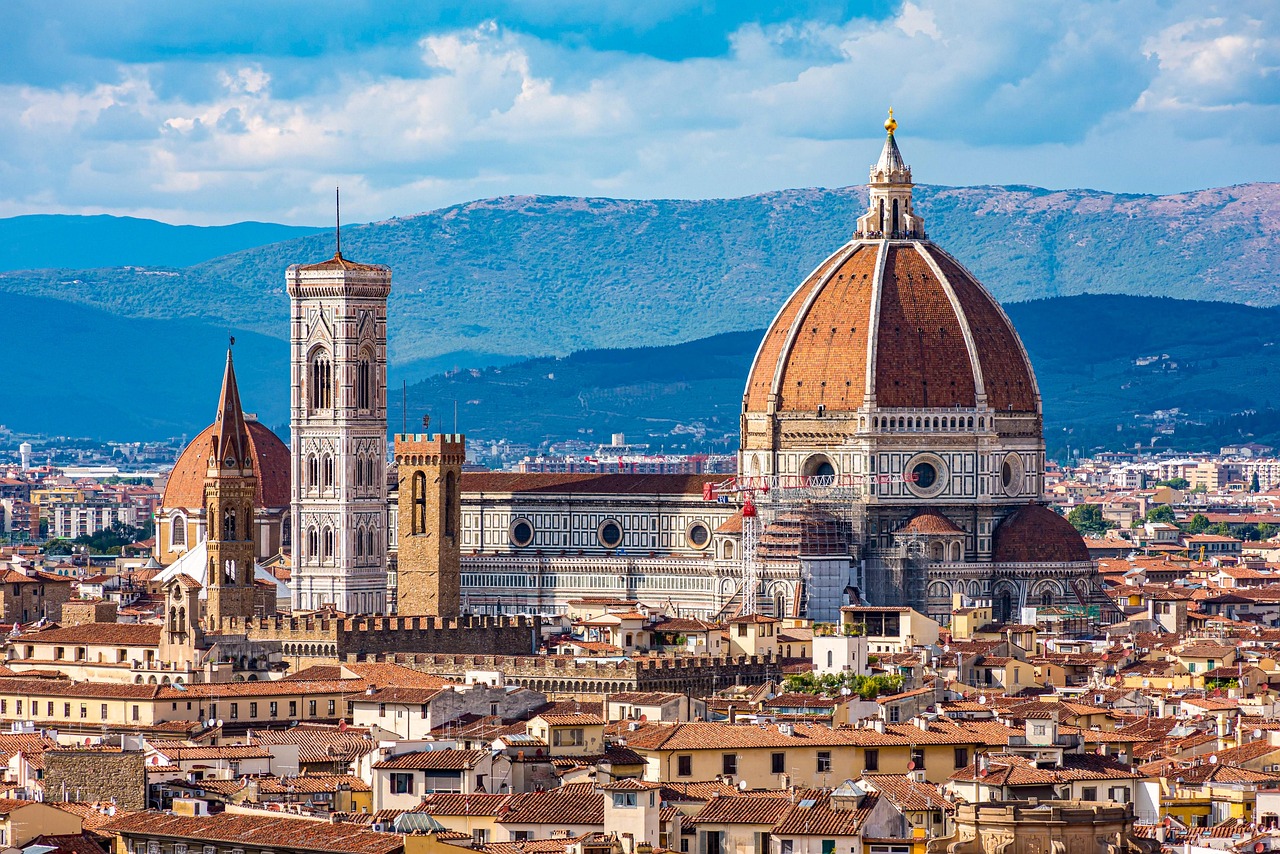
Brunelleschi’s Dome Climb to the Top with Confidence at Duomo Florence Italy
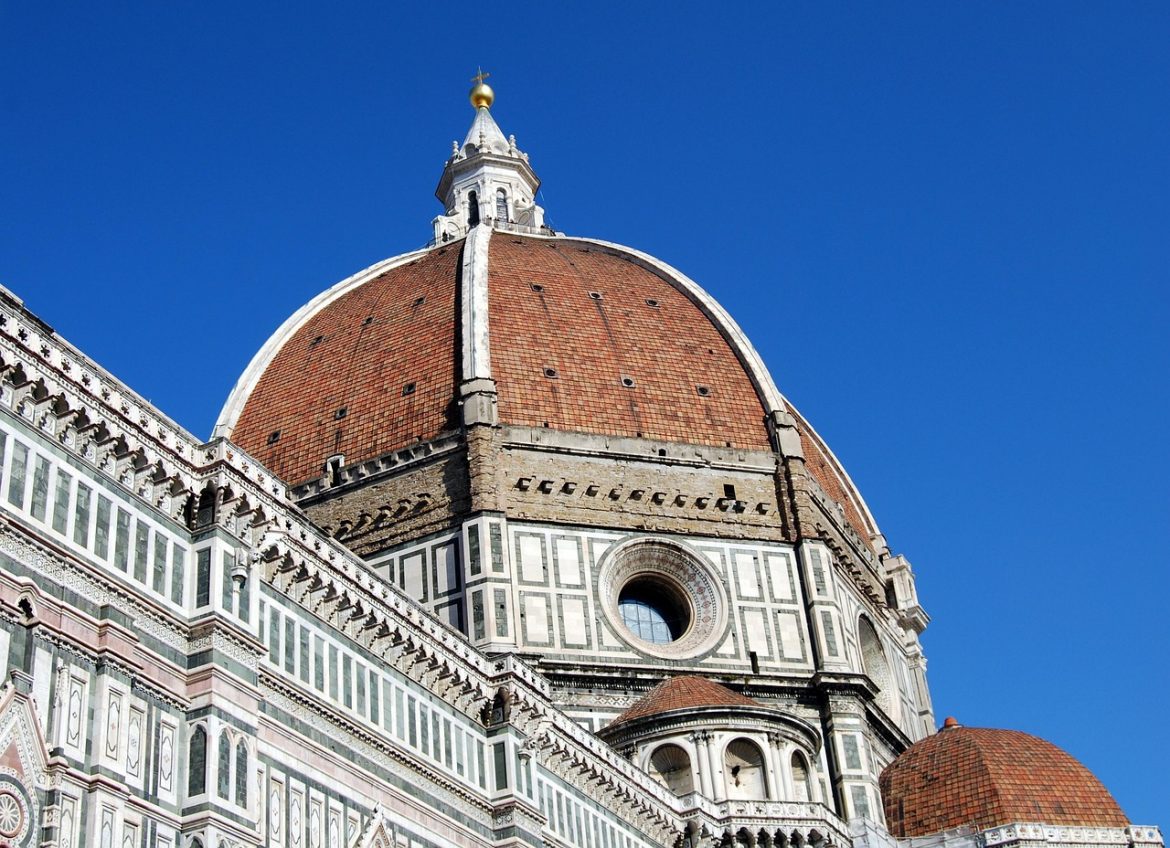
For many travellers, the headline adventure is the Brunelleschi’s Dome climb dome in Florence duomo Florence Italy—463 steps that turn curiosity into a personal triumph. It’s narrow, steep in places, and undeniably real; yet the reward is equally tangible. When you reach the top of the dome, the view of Florence feels earned, like your own private handshake with the city.
You’ll hear similar stories again and again: the moment the legs start questioning, the moment someone pauses to let others pass, the moment the light changes through a small window, and you think, “I’m doing it.” That’s the kind of confidence you can take home—quiet, steady, and yours.
Designed by Filippo Brunelleschi, the completion of the dome in 1436
Understanding the dome makes the climb richer, without turning it into a lecture. The dome designed by Filippo Brunelleschi—often simply said as “designed by Filippo Brunelleschi”—was a turning point in Renaissance engineering. Filippo Brunelleschi proposed a solution the city could trust, and the completion of the dome in 1436 proved it could be done: the largest masonry dome of its time, and still one of the largest.
Local guides often share passionate stories about designing the iconic dome, explaining how clever brick patterns and innovative methods made it possible without traditional wooden centring. Hearing that while you’re inside the structure adds a layer of awe: you’re not just climbing stairs, you’re moving through a bold idea made solid.
Climb to the top with practical care and confidence
Plan the climb like you would any adventure: timed tickets are essential, and late-afternoon slots can be the sweet spot. The stairways are narrow, and the air can feel warm, especially in summer—so pace your breathing and keep your shoulders relaxed. Sturdy footwear matters, not for style but for support on uneven steps and tight turns.
- Before you go: book a timed entry and arrive early for security checks.
- On the stairs: pause when needed, let others pass, and keep your hands free.
- At the top: take time for stillness before taking photos—your memory deserves a moment first.
As you climb, there are sensory rewards: the dome of the cathedral up close, the dome of the Duomo in Florence revealed from within, and glimpses that frame terracotta rooftops like paintings. Near the crown, Florence opens in every direction, and you’ll understand why travellers talk about the climb as both a challenge and a gift.
For a unique, high-end touch, aim for an evening visit when possible. At sunset, the dome in Florence catches warm light, and the city’s edges soften—less like a checklist, more like a feeling you can carry. A good guided tour can deepen that moment, adding expert context while keeping you calm and supported.
Baptistery of San Giovanni, Bell Tower, Terraces of the Duomo
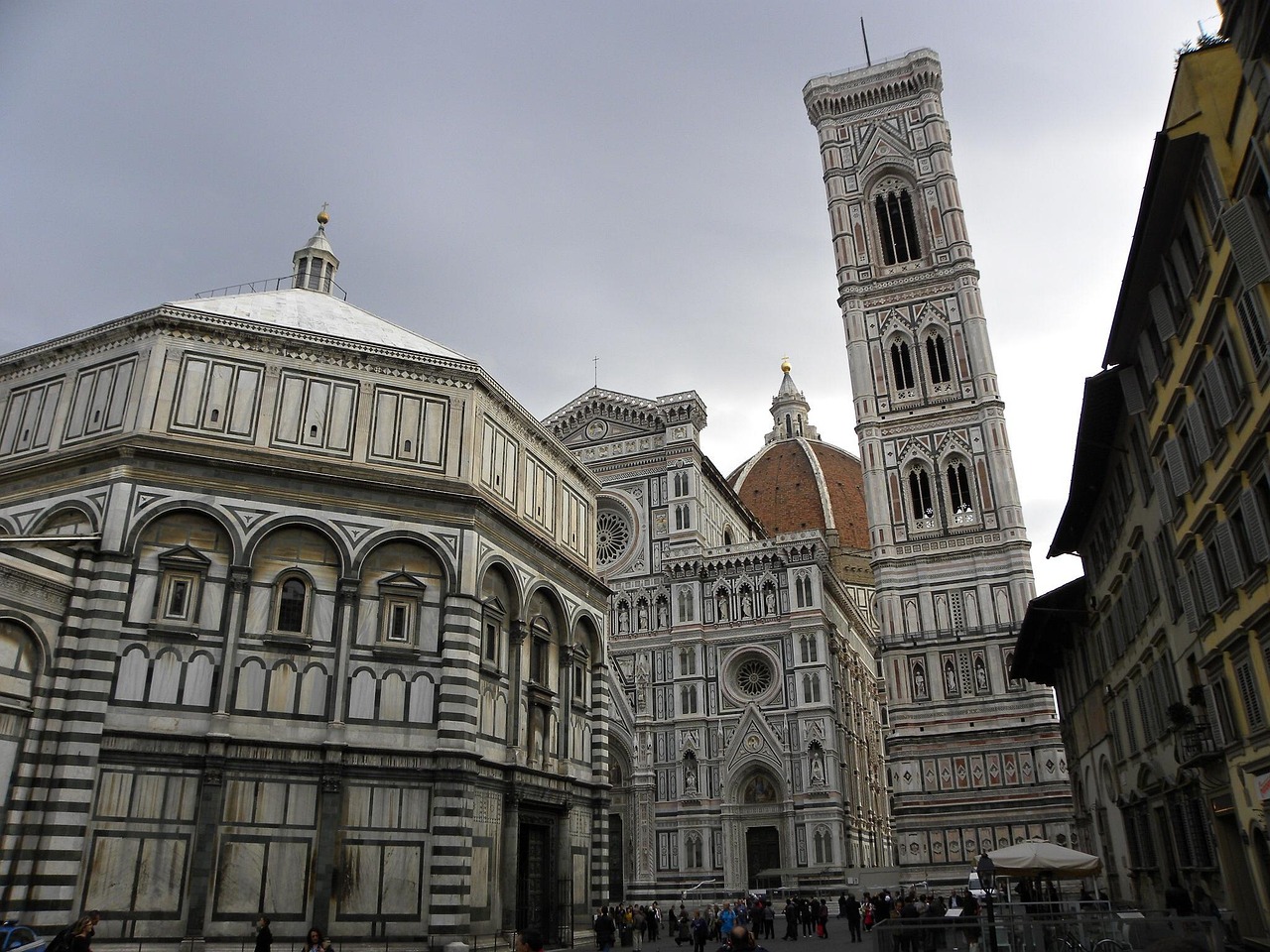
Baptistery Bell Tower and Terraces of the Duomo in Florence, Italy
When you explore the Baptistery of San Giovanni, Bell Tower, and Terraces of the Duomo in Florence, Italy, you’re stepping into the Duomo’s wider story—one that’s as much about time as it is about beauty. The Baptistery of San Giovanni sits like an ancient heartbeat in the piazza, and its famous bronze doors, the Gates of Paradise, are tied to Lorenzo Ghiberti (often shortened to Ghiberti in local conversation). They matter because they show how Florentine artistry could turn metal into narrative, with depth, movement, and emotion.
Inside, lift your gaze. The mosaics glow with a sacred intensity that feels continuous from the 13th to the 15th centuries, holding generations of belief and craft together. Even if you’re not religious, the atmosphere can be deeply moving—quiet, golden, and human.
The bell tower climb and how the dome and the bell tower differ
Adventure seekers often ask whether to climb the bell tower and the dome. The bell tower (Giotto’s Campanile) offers a different kind of thrill: more open views along the way and a striking perspective back towards the cathedral’s dome. Where the dome climb feels like moving through the building’s inner logic, the bell tower is a vertical promenade with frequent visual pay-offs.
Choose one if time or energy is limited; choose both if you want the full contrast. From the top, you’ll see Florence’s streets as a living pattern, and the Duomo’s geometry as something you can read from afar.
Terraces of the Duomo and a crafted piazza moment with local artisans
If your ticket option includes the terraces of the Duomo, consider them your slower, more spacious viewpoint. They let you get close to the architecture of the Duomo at a near-rooftop level—ideal for noticing marble details you missed on the ground, and for taking photos without the intensity of the climb.
Then come back down and give yourself permission to linger. Some visitors fondly recall unexpected encounters with local artisans selling handmade Florentine crafts near the cathedral’s piazza. Browse with care, ask questions, and support local makers—small purchases can feel like meaningful souvenirs when you buy them together with a story.
Opera del Duomo Museum
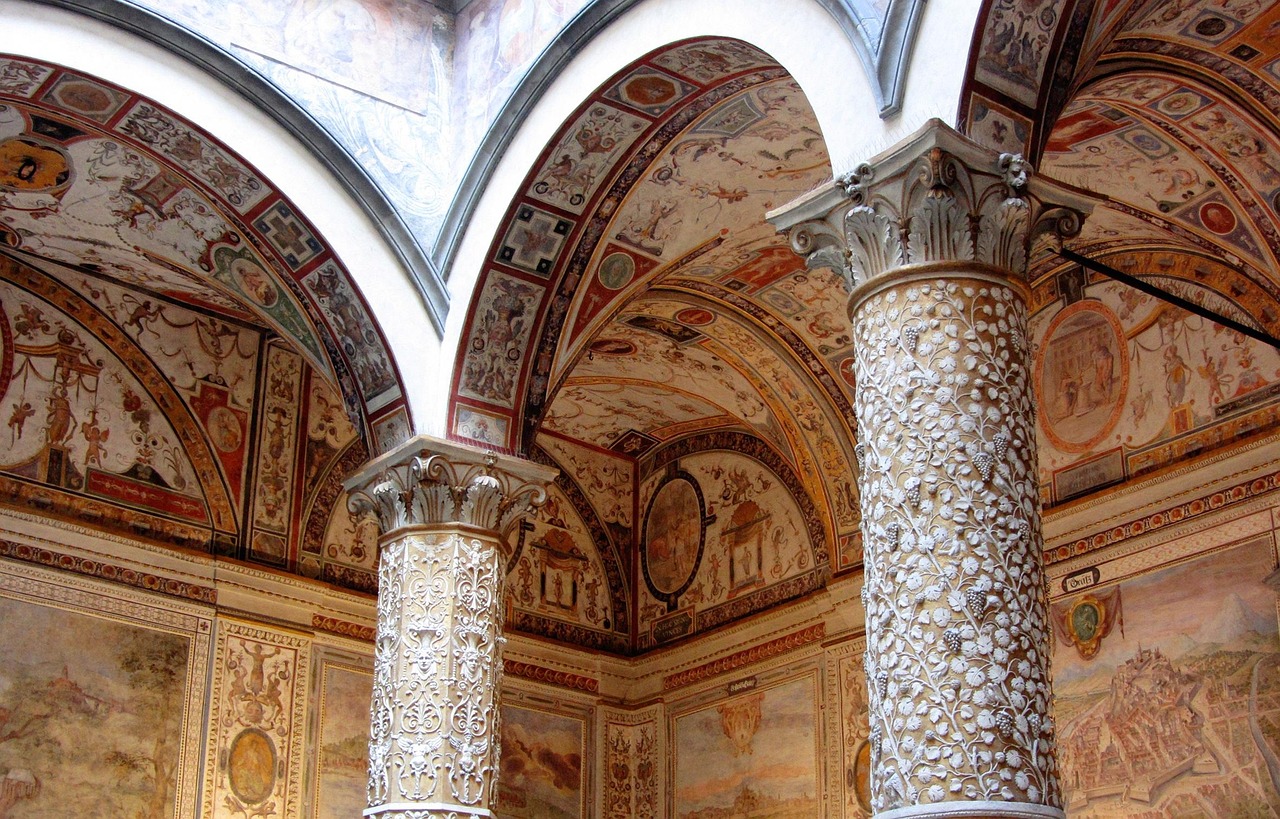
Opera del Duomo Museum Santa Reparata and Seamless Planning for Duomo Florence
To make sense of the whole site, the Opera del Duomo museum, Santa Reparata crypt, and Duomo in Florence, Italy, matter more than you might expect. The Opera del Duomo museum—also called the Museo dell’Opera del Duomo—adds context that makes stone and marble feel intimate. You’ll see original sculptures once placed outside, historical models, and displays that help you discover how the complex evolved and how it’s cared for today.
Rather than feeling overwhelmed, the collection is curated to help you explore with purpose. It’s where the Duomo becomes personal: you start recognising faces, motifs, and the human decisions behind “great architecture.”
Opera del Duomo museum highlights and artists to look for
For a refined visit, pick a few anchor points and let the rest be a gentle bonus. Keep an eye out for works connected to Della Robbia, Andrea del Castagno, Paolo Uccello, and Andrea del. Even if you’re not an art historian, seeing these names in context is an insight into just how many creative minds shaped Florence’s visual identity.
If you’d like support, an audio guide is an excellent middle path: it gives expert framing without rushing you. For deeper storytelling, a guided tour can connect the museum to what you’ll see outside—especially helpful if you enjoy craft, engineering, and the “why” behind decisions.
Santa Reparata and the crypt beneath the cathedral
Go beneath the surface, and you’ll find Santa Reparata, a quieter layer of Florence. Visiting the church of Santa Reparata and the cathedral crypt reveals what was built on the site before the cathedral you see today. It’s a powerful contrast: above, the ambition of a city; below, the older heartbeat of worship and continuity.
This part of the experience often feels unexpectedly moving—cooler air, softer light, and a sense of time stacked rather than lost. It’s an ideal counterbalance if you’ve just done a climb and want something slower, more reflective.
Planning can be seamless when you know what’s included. Entry to the cathedral is free, but the dome, museum, bell tower, and baptistery/crypt are ticketed in various combinations, with typical prices around €20 depending on what you choose. Book ahead on the official website or official site to secure timed entries, and look for “Opera Duomo” wording on passes so you know you’re buying from the right system. If you’d like inspiration for a larger Italian itinerary, browse our Trip gallery for crafted routes and cultural depth.
- Comfort levels: Choose an audio guide, a small-group guided tour, or a private tour for maximum flexibility.
- Practical care: Be alert for pickpockets in crowded areas around the Duomo, especially in peak season.
- Respect: Modest dress and quiet voices inside religious spaces create a better experience for everyone.
With the right plan, you’re free to focus on what matters: the feeling of moving through Florence with trust, curiosity, and a calm sense of being held by the city’s expertise.
F.A.Qs: Duomo Florence Italy
Why is the Duomo of Florence so famous?
The Duomo of Florence is famous for its scale, its marble façade, and Brunelleschi’s engineering achievement in creating the great dome. It’s also a symbol of Florence because the cathedral complex brings together art, faith, and Renaissance ambition in one piazza, with the Baptistery, bell tower, and museum adding depth to the story.
Can you go inside the Duomo in Florence for free?
Yes. Entry to the cathedral interior is generally free, although you still queue and pass security, and you must follow the dress code. Timed tickets are required for paid areas such as the dome climb, bell tower, museum, and, depending on the current ticket structure, the Baptistery and Santa Reparata/crypt.
Can you wear jeans to the Duomo?
Jeans are usually fine, provided your overall outfit is modest. Aim to keep shoulders covered and avoid very short shorts or skirts, and remember that the Duomo is an active religious site as well as a major attraction. Dressing respectfully helps you enter smoothly and supports a quieter atmosphere inside.
Who is buried in the Duomo in Florence?
One of the best-known burials associated with the Duomo complex is that of Filippo Brunelleschi, whose tomb is in the cathedral. Visiting the area with an audio guide or guide can help you understand where you are in the vast interior and why these figures are honoured within the cathedral’s history.
Final Thought
After a Duomo Florence Italy reflection, cathedral dome sunset, what stays isn’t only the photo from the top, but the atmosphere you carry in your body. Imagine the Duomo at dawn, when the cathedral is quiet and the light filters softly—one solo traveller once described it as a spiritual experience, less about religion and more about presence. The city feels paused; your thoughts feel softer, and you realise you don’t have to rush Florence for it to meet you.
At dusk, the marble warms, the skyline glows, and the dome becomes a steady silhouette against the evening colour. In that moment, you might feel small beneath it—yet also strangely strengthened, because you chose the climb anyway. That mix of humility and confidence is a rare souvenir.
There’s gratitude, too: for local storytellers who share their insight without ego, for the careful craft that has been preserved with such ongoing care, and for the way Florence invites you to explore its layers over time. It’s a city that understands continuity, and gently teaches it.
Later, whenever you find yourself looking up at a dome anywhere, you may remember this one—not as a landmark you “did”, but as a quiet reminder that beauty rewards patience, and that wonder is often waiting just above your usual line of sight.