Post Contents
- Roman Forum and Palatine Hill visit simplified with an entry plan, Rome, Italy.
- History of the Roman Forum from settlement to empire, covering its time in Rome, Italy, during republican, imperial, and reconstruction periods.
- Via Sacra walk from Temple of Saturn to Arch of Titus in Roman Forum, Rome, Italy.
- Basilica of Maxentius and its impressive architecture in the Roman Forum, Rome, Italy.
- Tickets include opening hours and forum access for Rome’s Colosseum and Roman Forum, as well as evening tours of the Colosseum and Palatine Hill in Rome, Italy.
- F.A.Qs: the Forum in Rome, Italy
- What the Forum leaves you after visiting the Roman Forum in Rome, Italy, is a personal reflection on travel.
Roman Forum and Palatine Hill visit simplified with an entry plan, Rome, Italy.
Roman Forum and Palatine Hill arrival made easy with a Roman Forum and Palatine Hill entry plan, Rome, Italy
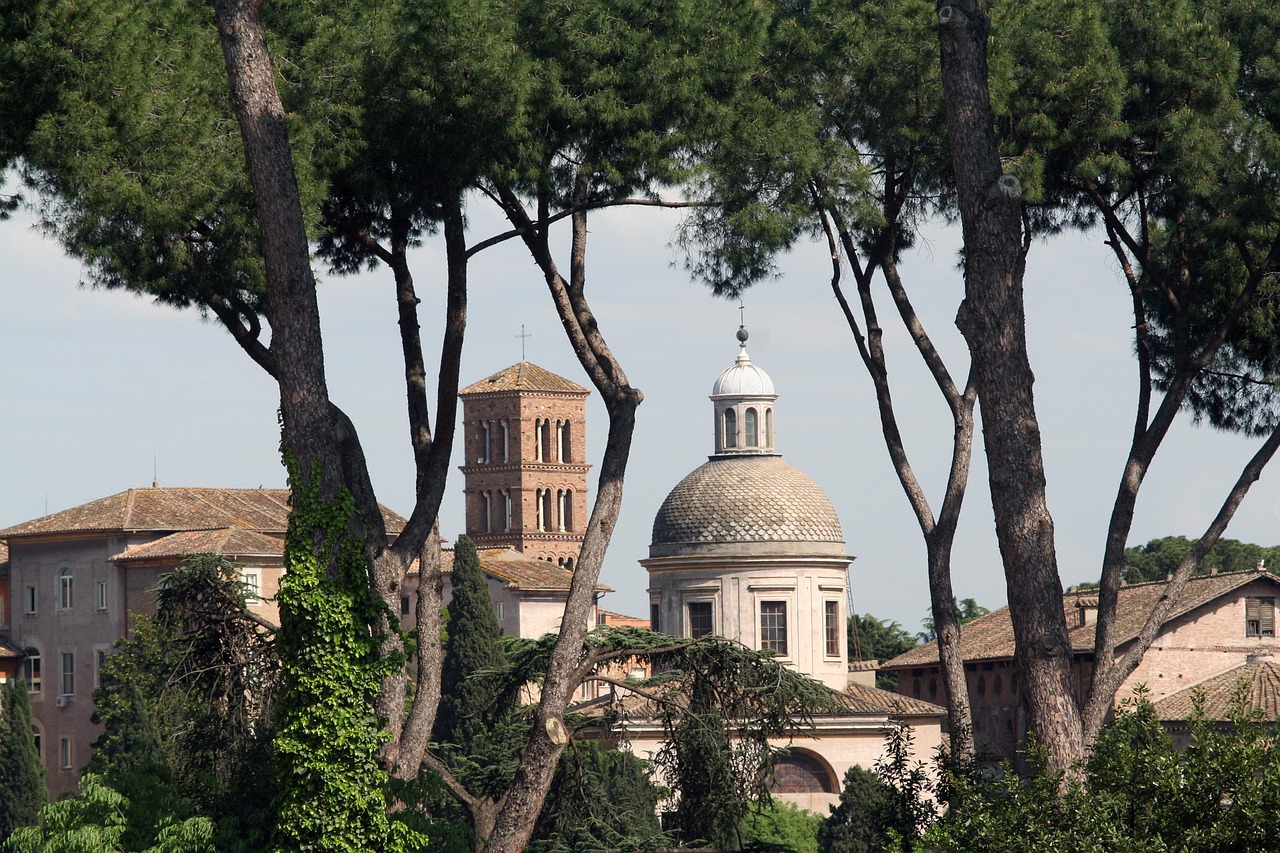
For a smooth start, use a Roman Forum and Palatine Hill entry plan in Rome, Italy, that begins at the Colosseum metro station. Step out into Rome’s bright bustle, then orient yourself: the Forum spreads out in the valley, while Palatine Hill rises beside it like a natural balcony, shaping your viewpoints and the way your route unfolds together.
Palatine Hill viewpoints and how the hill shapes your route
Think of Palatine as your quiet reset button. If you climb early, the hill gives you a more spacious view of the forum below—ruins laid out like a story you can explore and then revisit from ground level with new insight. It’s also where the imperial palace complex once sat, and even now, you feel the logic of power: up high, watching the centre of the city.
Underfoot confidence for adventure seekers
Expect uneven ancient stone, worn steps, and occasional slippery patches after rain—this is part of the Forum’s honesty. Comfortable shoes matter, especially if you like to wander at an adventure-seeker pace and step off the main flow to uncover quieter corners around the forum.
I still remember my first entrance into the Roman Forum: a sudden hush, then that profound sense of awe as centuries compress into a single glance. My best advice is to take a two-minute break. Imagine the crowd noise that used to live here, then create space for the details you’ll only notice when you stop rushing.
For your first 15 minutes, keep it simple: pass the gateway, take in the first open vista, then pop out briefly for a local espresso nearby if you need it—after that, commit to either a clockwise or anti-clockwise loop and trust your plan.
- Pack mindset: water, sun protection, and patience for photo pauses.
- Wear: supportive soles—this is not a polished museum floor.
- Move: slow steps over stones; quick strides only on flatter sections.
Accessibility note, with care: some areas have limited wheelchair access and uneven gradients. If mobility is a concern, consider focusing on the most navigable paths and viewpoints, or pairing your visit with an expert guide who can support a gentler route without losing the magic.




History of the Roman Forum from settlement to empire, covering its time in Rome, Italy, during republican, imperial, and reconstruction periods.
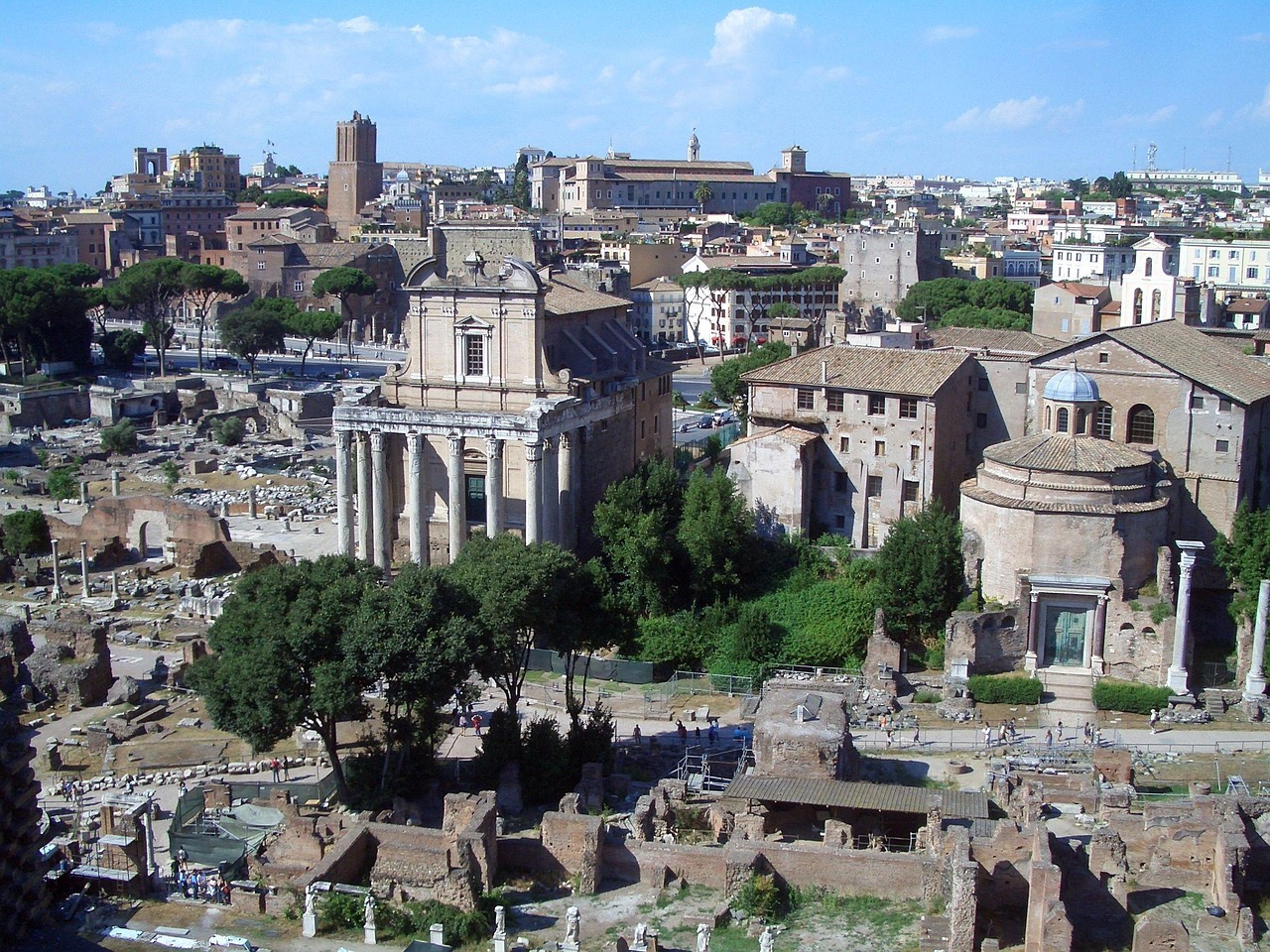
History of the Roman Forum from settlement to empire in Rome, Italy
If you want the stones to make sense, start with the history of the Roman Forum, Rome, Italy, and the republican-imperial reconstruction as a timeline you can carry in your pocket. The earliest settlement stories begin in the low, marshy valley; the great drain work of the Cloaca Maxima helped make public life possible here, long before the grand marble age.
History of the Roman Forum as a layered landscape in Rome
This is the history of the Roman Forum in quick, vivid strokes: early kings and myths (including Romulus), then republican Rome shaping civic space and law, then the Roman Empire adding ceremony, monuments, and propaganda. You’ll see changes continuing through the Middle Ages, and later archaeological work—especially from the 19th century—that revealed, interpreted, and sometimes restored what we walk through now.
Reconstruction, interpretation, and the word foro
Today’s Forum isn’t a single preserved moment; it’s a carefully read archaeological landscape. Signs and maps will often use the Italian word foro, so you’ll recognise it instantly on tickets and directions.
To imagine daily life, picture senators and lawyers moving between speeches and criminal trials, traders and pilgrims passing through, and Roman women navigating social activity with a practised eye. This wasn’t a quiet ruin then—it was the city’s heartbeat.
A quick who’s-who helps you stay inspired rather than overwhelmed: Caesar and reform; emperor Augustus and image-making; Severus and later imperial display. Even the dates feel tangible here—think bc origins, then centuries of additions and rewrites.
One more gentle frame to carry: the forum is one of those places where the past doesn’t feel finished. You’re not just looking at ruins; you’re watching Rome’s identity being continually redesigned in stone.
Via Sacra walk from Temple of Saturn to Arch of Titus in Roman Forum, Rome, Italy.
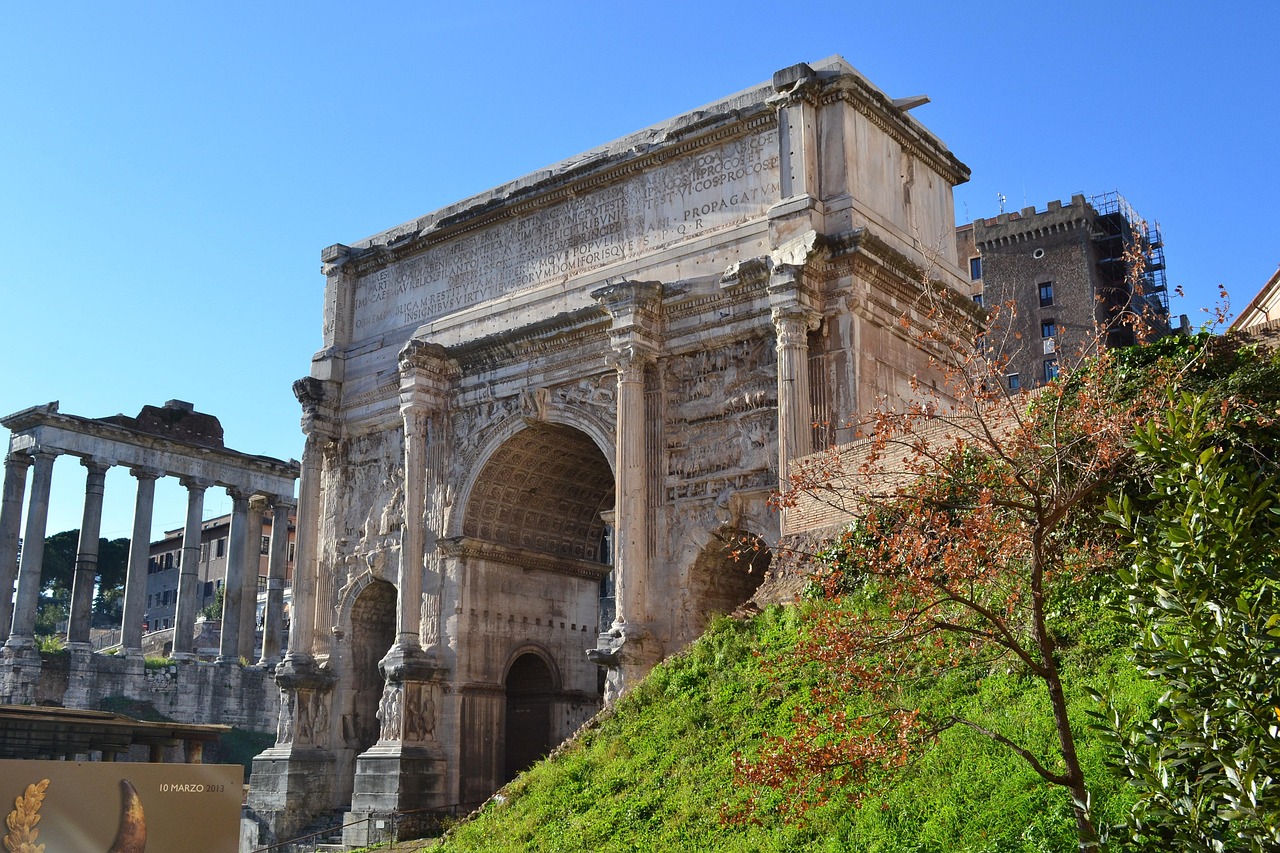
Via Sacra walk from the Temple of Saturn to the Arch of Titus in the Roman Forum, Rome, Italy
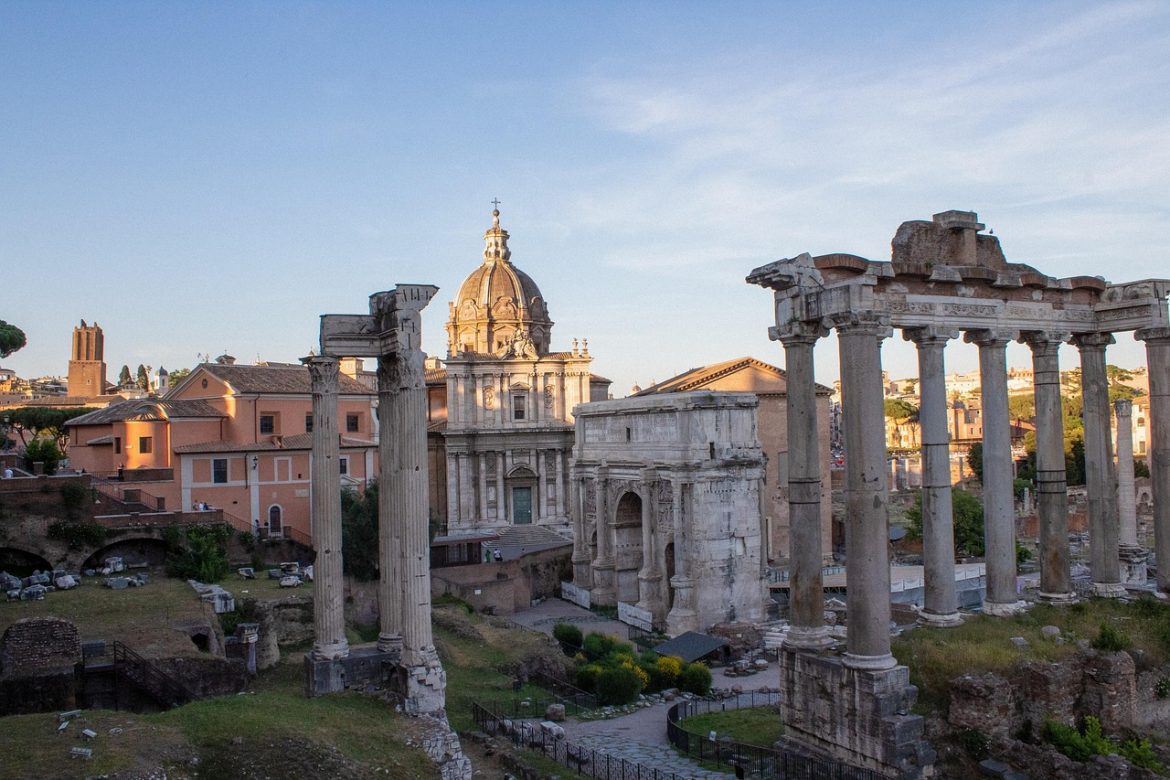
For a classic spine route, follow Via Sacra, the Roman Forum, the Temple of Saturn, and the Arch of Titus in Rome, Italy, and let the street guide your attention. This is the iconic line through the forum where you can explore slowly, uncover inscriptions, and notice how broken column drums still suggest the original building rhythm.
Temple of Saturn and temple light for cultural detail
The Temple of Saturn is one of the oldest temple sites here, and it carries Rome’s architectural heritage with quiet authority. If you love photography, come late afternoon: the low sun creates dramatic light and shadow on crumbling stone, perfect for a cultural enthusiast’s eye without needing a tripod.
Arch storytelling and the Arch of Titus
Further along, the Arch of Titus was built to commemorate victory, and its reliefs still feel immediate—faces, movement, and message carved into a triumphal arch meant to be read by the crowd. Keep your pace unhurried; the forum rewards travellers who give it time.
Add two meaningful pauses that show the Forum’s long life: the Arch of Septimius Severus (dated 203) and the Column of Phocas (dated 608, in the 7th century). They act like punctuation marks: the same ground, different ages, different ambitions.
One sunrise, a local guide told Julius Caesar stories so vividly that the Forum seemed to inhale—suddenly the space had voices again. If you want that kind of insight, book a guided tour; it’s the simplest way to connect names to places without turning your visit into a lecture.
- Slow down at arches and read the carvings like a story panel.
- Look low for worn ruts and patches of ancient paving.
- Listen for the shift in sound as crowds thin and the stones feel closer.
Basilica of Maxentius and its impressive architecture in the Roman Forum, Rome, Italy.
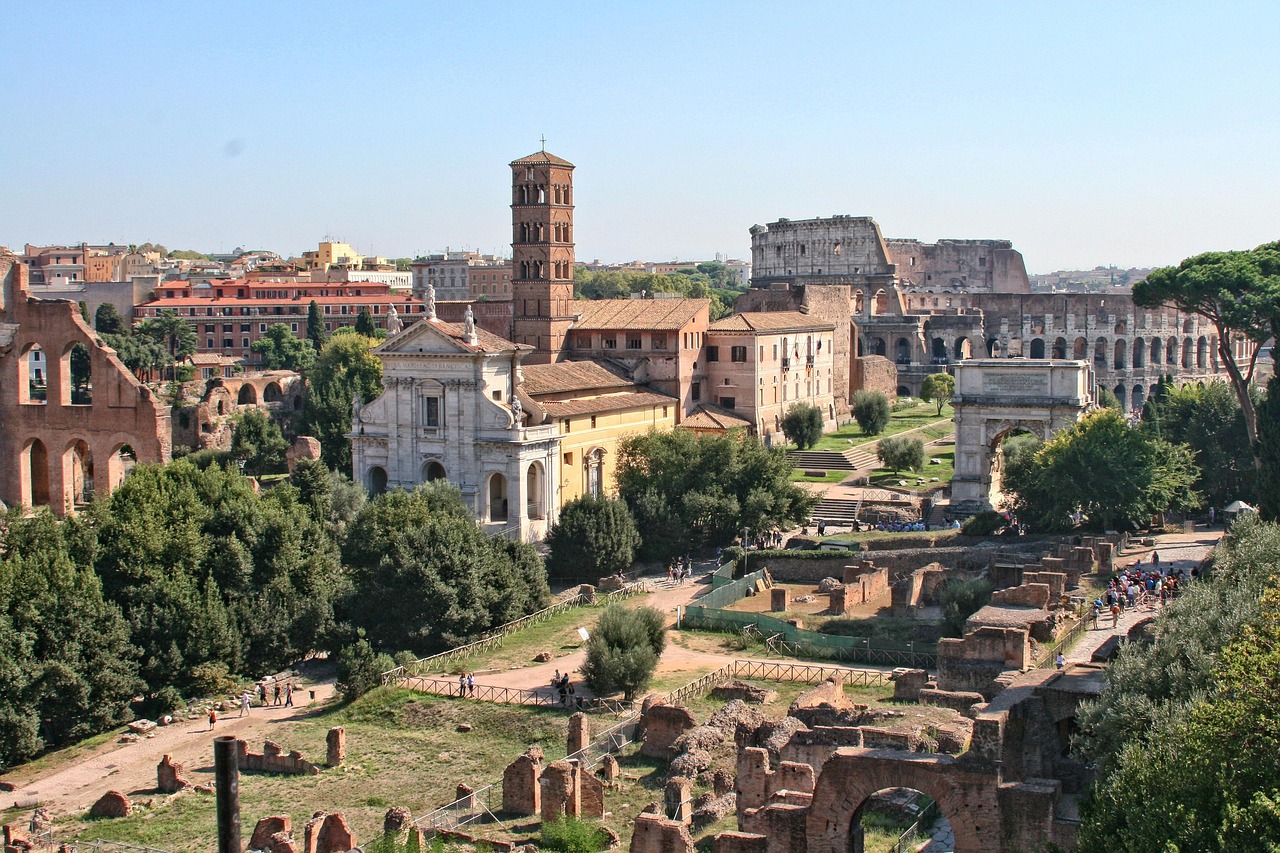
Basilica of Maxentius and the great building feats in the Roman Forum, Rome, Italy
Even seasoned travellers stop short at the Basilica of Maxentius, the Roman Forum, and the buildings and engineering of Rome, Italy. The remaining vaults read as pure confidence—an ancient building idea so bold it still feels modern, and genuinely magnificent even in partial ruin.
Building scale, Maxentius’s ambition, and Constantine’s power
The basilica of Maxentius was begun under Maxentius, then completed under Constantine, and you can almost see the power shift in the way the space asserts itself. It’s a reminder that the Forum was never static; it was a living record of an empire rewriting its image with each generation.
Orientation anchors from Curia to Capitoline Hill
Use nearby anchors to keep your bearings: the Curia (the senate house), the Temple of Vesta with its intimate scale, and the pull of Capitoline Hill above, towards the Capitoline and Campidoglio. In between, you’ll also pass the temple dedicated to Antoninus and Faustina, another layered clue to how Romans chose to deify leaders and loved ones.
If you’re the kind of adventure seeker who likes a little solitude, try a “quiet corners” micro-route: step behind the main viewing line, follow the edges, and pause where the stonework becomes more textural than theatrical. One afternoon, a small group I met had an unexpected moment spotting wild rabbits in the grass—nature threading itself through history with gentle ease.
Take a short pause here. Frame a few shots, then put the camera down. Let the archaeological textures create their own narrative, and trust what stays with you.
Tickets include opening hours and forum access for Rome’s Colosseum and Roman Forum, as well as evening tours of the Colosseum and Palatine Hill in Rome, Italy.
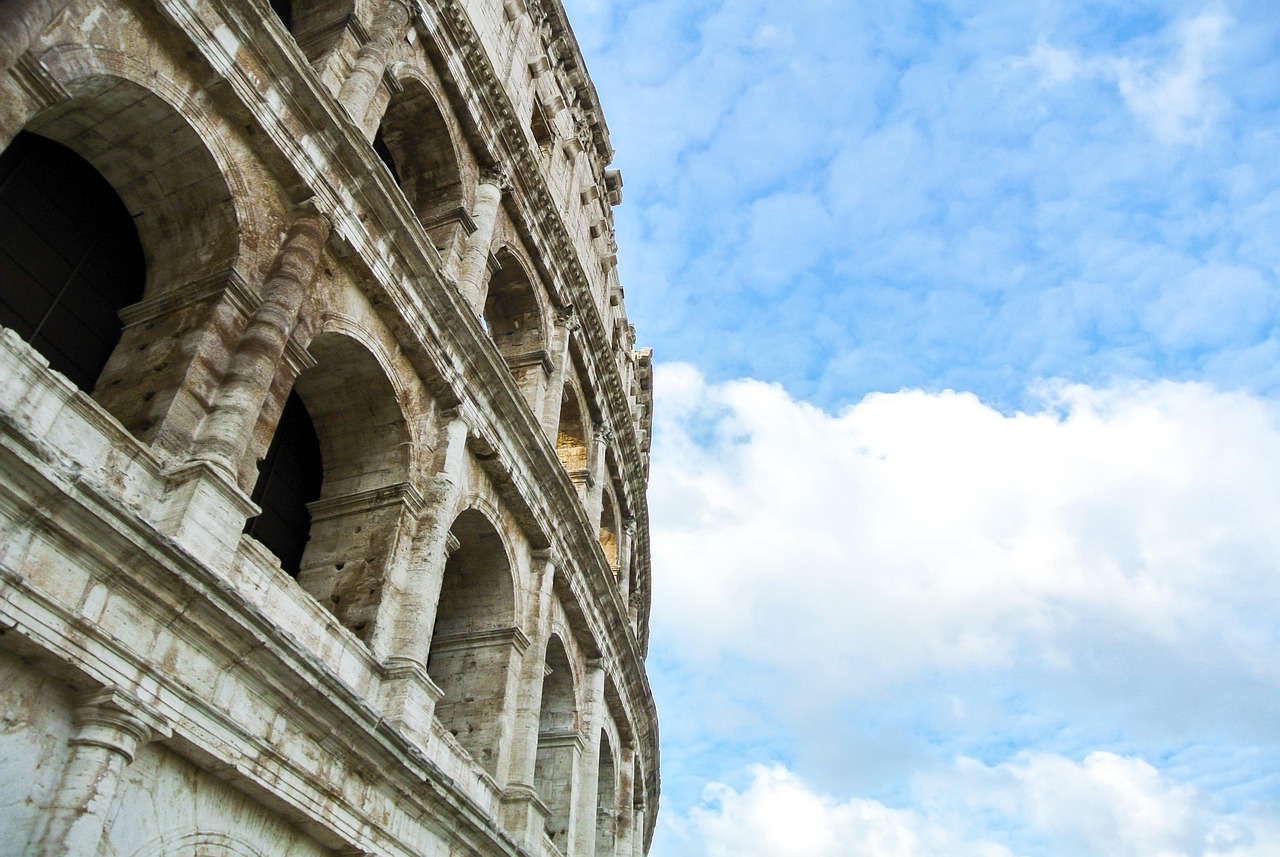
Tickets opening hours and a seamless forum plan with the Colosseum in Rome, Italy
For a calm, high-end day, use Roman Forum ticket opening hours, Colosseum, Palatine Hill, Rome, Italy, evening tour as your decision framework. Choose a combined ticket that covers the Colosseum and Palatine Hill, buy ahead where possible, and arrive with the kind of confidence that comes from knowing your entry is already designed.
Ticket strategy for Colosseum, Forum, and Palatine Hill
The simplest option is a combined pass for the Colosseum, the Forum, and Palatine Hill, ideally purchased in advance to avoid queue stress. If you’re building a broader itinerary, keep this day close to Piazza Venezia and the Colosseum corridor so transfers stay seamless. For inspiration on crafted routes across Italy, see our Trip gallery.
Opening hours, pacing, and a crafted 2 to 3-hour route
Opening hours vary by season, so check the official listings the night before. Aim for early morning or late afternoon for cooler air and fewer crowds, especially if you want space to explore at your own rhythm.
Here’s a crafted 2–3 hour plan you can adapt:
- Fast explorer: Forum highlights → Via Sacra spine → arches → quick Palatine viewpoint.
- Slow photographer: Temple zones → basilica vaults → shade breaks → sunset angles on columns.
- Comfort-first: flatter paths → frequent pauses → skip steep sections without guilt.
Local etiquette matters here. Speak softly, keep to boundaries, and never climb on ruins; this isn’t a restriction, it’s shared stewardship and travel trust. And if you’re ever unsure, ask a staff member—support is part of a respectful visit.
Finally, consider an evening tour led by an expert archaeologist. Seeing the Roman Forum illuminated feels intimate and new, and it’s reassuringly well-managed: steady pacing, clear meeting points, and a kind of quiet that lets the forum’s shape settle into you.
F.A.Qs: the Forum in Rome, Italy
What is the Roman Forum famous for?
The Roman Forum is famous for being the political, religious, and social centre of ancient Rome, filled with temple remains, arches, and civic buildings. Walking through the forum today, you can trace public life from republican days into the imperial era, with highlights like the Via Sacra, major monuments, and layers of history visible in the ruins.
Is the Roman Forum part of the Colosseum?
The Roman Forum is not physically part of the Colosseum, but they’re closely linked and often visited together. Many entry options combine the Colosseum, the forum, and Palatine Hill into one ticket, making it easy to plan a seamless route between the amphitheatre and the surrounding archaeological areas in one day.
Do you need tickets to walk around the Roman Forum?
Yes. To enter and walk through the Roman Forum archaeological area, you generally need a valid ticket. The most convenient approach is usually a combined ticket that also includes Palatine Hill (and often the Colosseum), so you can explore with less admin and more time for the experience.
Can you walk through the Roman Forum for free?
In most cases, you can’t walk through the Roman Forum for free because the main area is ticketed. There are, however, excellent viewpoints from surrounding streets and elevated spots where you can see into parts of the forum without entering. For full access to the ruins, plan to purchase a ticket.
What the Forum leaves you after visiting the Roman Forum in Rome, Italy, is a personal reflection on travel.
After the Roman Forum in Rome, Italy, personal reflection, travel becomes less about what you saw and more about what changed in you. Long after you’ve left Rome, you may remember the hush between stones, the way footsteps softened on ancient paving, and how time felt wider than your schedule ever allowed.
I think back to a sunrise when the light slid across broken columns, and everything looked briefly newly made. There was no grand realisation—just a quiet steadiness, as if the forum offered perspective without demanding anything in return.
Perhaps you’ll carry your own small moment: a rabbit in the grass near the basilica, a shadow line across a temple base, or the feeling of standing where the senate once argued, and realising you can be both curious and careful at once. Visiting the Roman site teaches a gentle confidence—one built on attention, not speed.
And when you later pass a fragment of marble in a museum, or hear the word foro on a map, you might feel Rome again in the background: not a checklist completed, but a relationship still unfolding—patient, vivid, and quietly calling you to imagine what you haven’t yet uncovered.