Post Contents
- First Steps to the Amalfi Cathedral in the Town of Amalfi at Piazza del Duomo
- Reading the Façade of the Cathedral of Saint Andrew with Arab-Norman Romanesque Mosaics
- Inside the Duomo Cathedral Nave and Baroque Marble Details
- The Cloister of Paradise at Amalfi Cathedral with Gothic Moorish Columns and Capitals
- The Crypt of Saint Andrew the Apostle and Relics at Amalfi Cathedral
- Climbing the Amalfi Cathedral Bell Tower for Amalfi Coast Views in Italy
- Feast of Saint Andrew at Amalfi Cathedral and the Corsa del Santo Procession
- What Stayed With Me After Amalfi’s Cathedral of Saint Andrew
- F.A.Qs: Amalfi Cathedral Italy
First Steps to the Amalfi Cathedral in the Town of Amalfi at Piazza del Duomo
First Steps to the Amalfi Cathedral in the Town of Amalfi
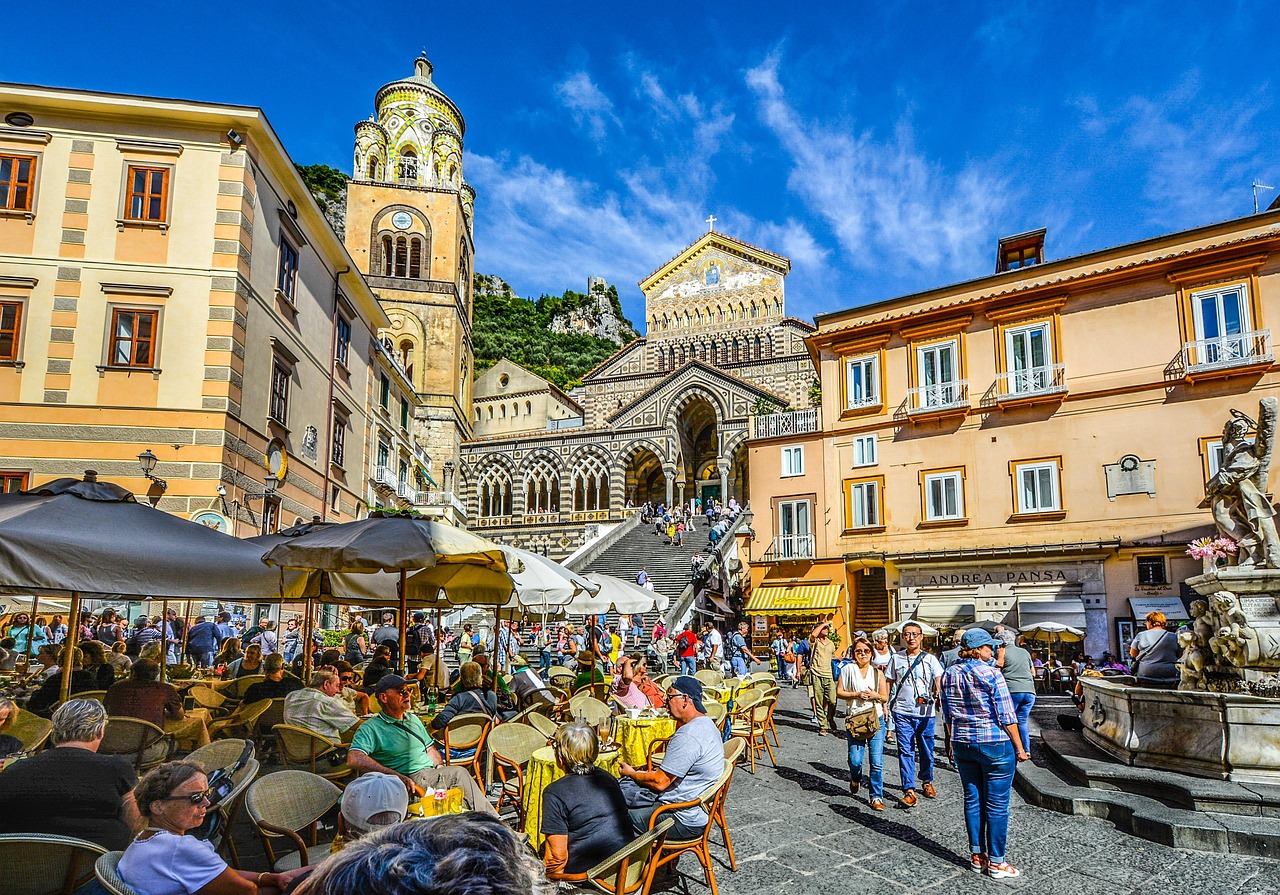
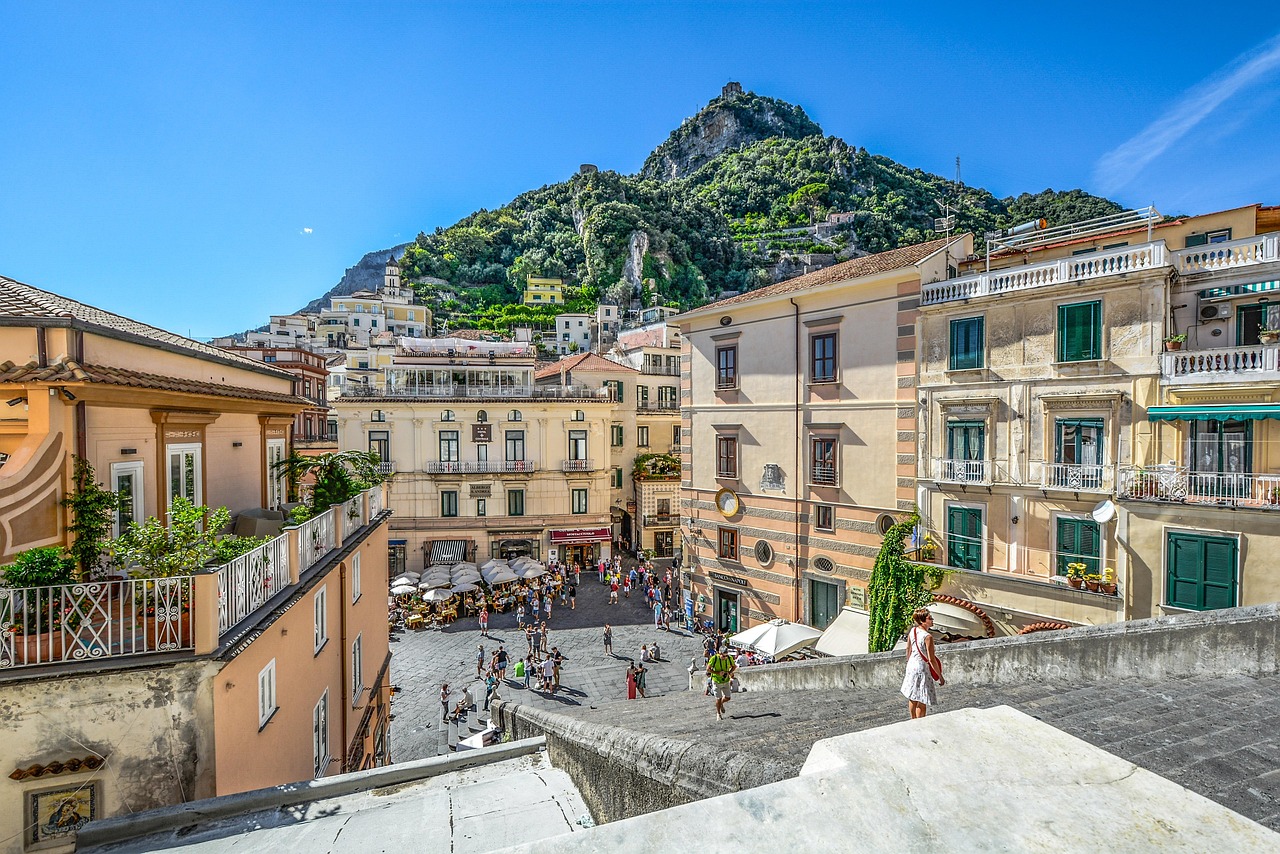
In the town of Amalfi, Italy, the Amalfi Cathedral town of Amalfi monument Piazza del Duomo Italy moment begins long before you touch the door. You arrive to the hum of cafés and ferry-day chatter, then the staircase rises—62 steps that feel like a gentle threshold between everyday coastline life and something older, quieter, and crafted for awe.
Adventure seekers often love that the approach is an experience in itself: the square opens, the cathedral reveals its height, and your pace naturally slows. It’s a simple design trick of place—anticipation built into stone—so even a short visit feels like a mini-expedition with a rewarding summit.
Designing a seamless first route through the monumental complex
Think of the cathedral as the gateway to a monumental complex rather than a single room to tick off. If you want an unhurried flow (and a premium feel), start outside with the façade, then pass through the atrium into the nave, and save the cloister and crypt for when you’re ready for stillness. If your legs are keen, the bell tower is your final “viewpoint” chapter—best when your mind is already full of context.
For travellers who like everything to feel seamless, it helps to know what’s where before you step inside: façade and doors facing the square, then the interior spaces, and then the quieter corners off to the side. That small bit of orientation builds confidence—and leaves more room for personal impressions.
The first awe moment most travellers remember
I’ve heard the same story again and again: a couple reaches the top step, looks up in silence, and there’s a brief, wordless agreement—we’re going in. That’s the moment to create your own “first awe” memory. Pause, breathe, and let the cathedral set the tone for the day rather than the other way round.
From here, you can easily connect cathedral time with wider exploring along the Amalfi Coast: a loop through the harbour, a wander of the narrow lanes, and a stop at a viewpoint before dinner. If you’re curating a longer itinerary, keep inspiration handy via our Trip gallery and design a journey that balances sea-level energy with sacred calm.




Reading the Façade of the Cathedral of Saint Andrew with Arab-Norman Romanesque Mosaics
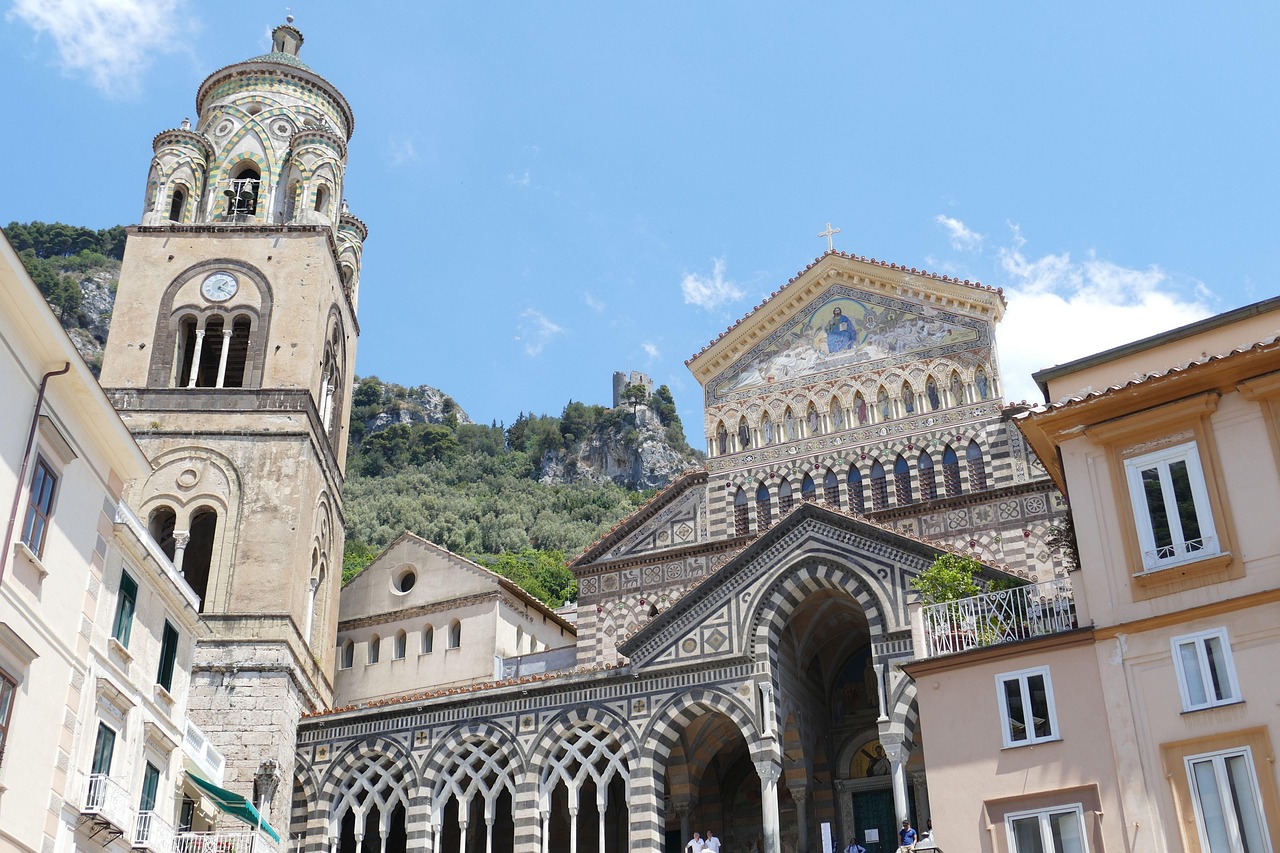
Reading the Façade of the Cathedral of Saint Andrew
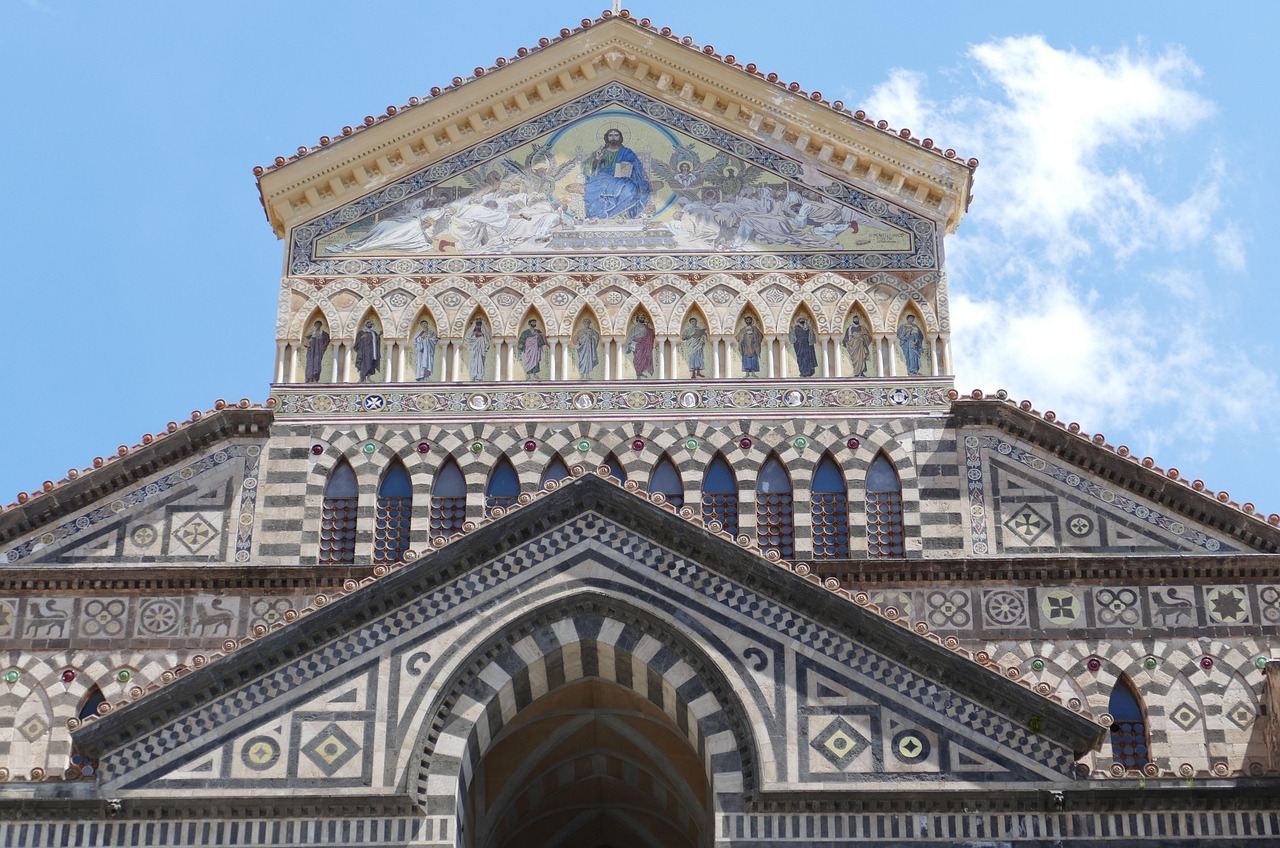
Stand back in the square and let the Cathedral of Saint Andrew façade Arab-Norman Romanesque mosaics bronze doors Italy story unfold in layers. This is where cultural curiosity becomes an expert pleasure: you don’t need to “know” everything—you simply need to notice, then uncover meaning a little at a time.
The façade is a lesson in Mediterranean crossroads. You’ll see a romanesque backbone, Arab-Norman echoes, and luminous mosaic work that catches morning light so cleanly it can feel newly set. If you’re travelling with someone, it’s a lovely “together” exercise to point out details and trade interpretations—your own private guided tour.
What to notice on the façade and the bronze doors
Start with a simple checklist that keeps your attention grounded:
- Mosaic shimmer: step left and right to watch the tesserae change tone.
- Arch rhythms: the repeating arch shapes often reveal where different eras meet.
- Bronze doors: look for the weight and patina—stories often link them to being cast in Constantinople.
Many sources connect the bronze doors to Pantaleone de Comite and the date 1066. Treat that as a prompt for deeper research rather than a certainty on the spot—high-end travel can be both inspiring and intellectually honest. You’ll hear “Byzantine” mentioned too, which fits Amalfi’s historic sea-facing networks.
Uncover the layers across hundreds of years
The cathedral was built, altered, expanded, and reimagined over hundreds of years, and those changes are part of what makes it compelling. If you enjoy time-stitching, you’ll find references that it dates back to an early Christian foundation—sometimes linked to the 6th century and even 596—then later phases in the 9th century and the 9th, plus milestones such as 987.
Later interventions shape what you see today. In the 19th century, parts were rebuilt after structural problems and even collapse concerns, and you may see the year 1861 associated with a rebuild under architect Errico Alvino. Rather than diminishing the site, that preservation story adds a modern layer of trust and care—people chose to protect what mattered.
It’s also worth remembering that Amalfi’s maritime power drew nobility and patrons; stories of the duke of Amalfi and civic pride still cling to the stone. When you photograph, try a wide shot from the centre of the piazza first, then a tighter frame that isolates the mosaic and the doors—morning light is your best ally.
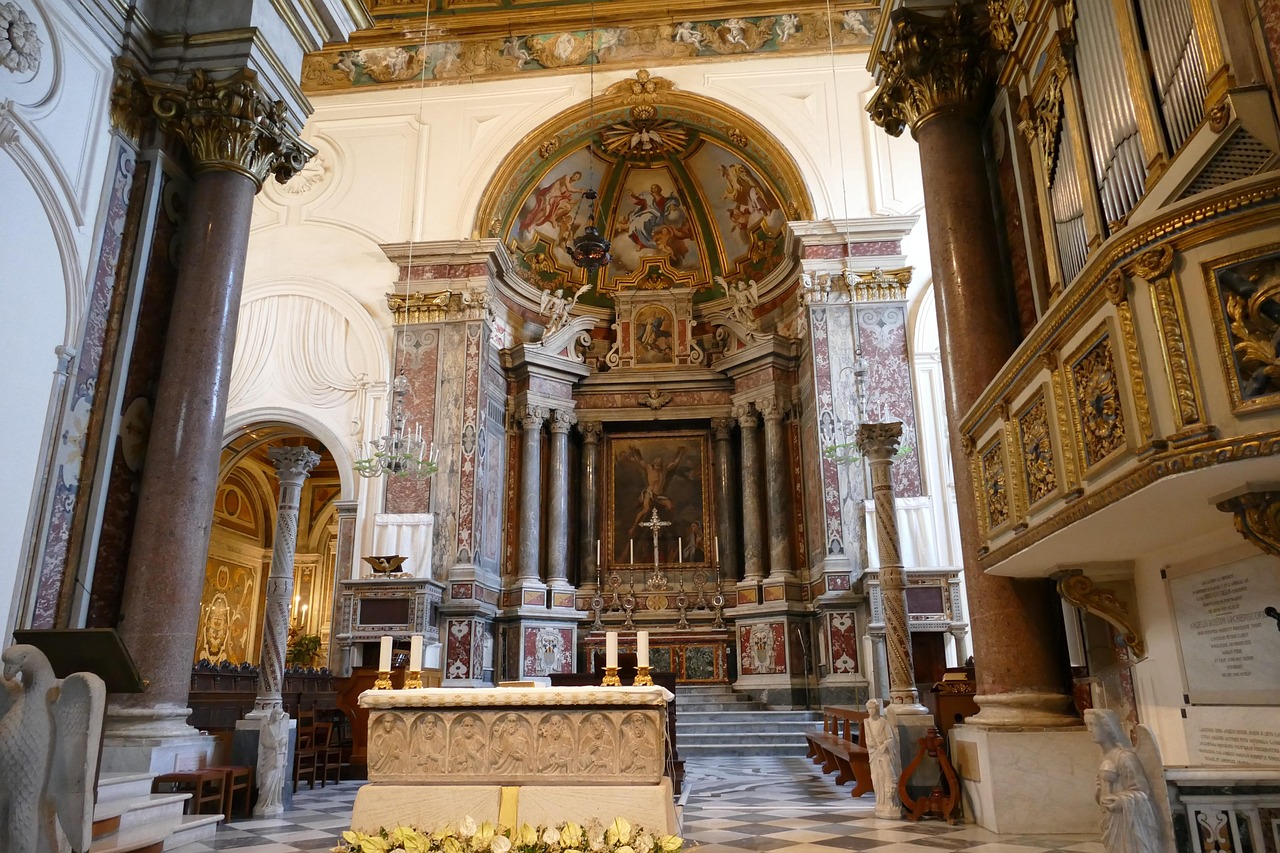
Inside the Duomo Cathedral Nave and Sacred Details
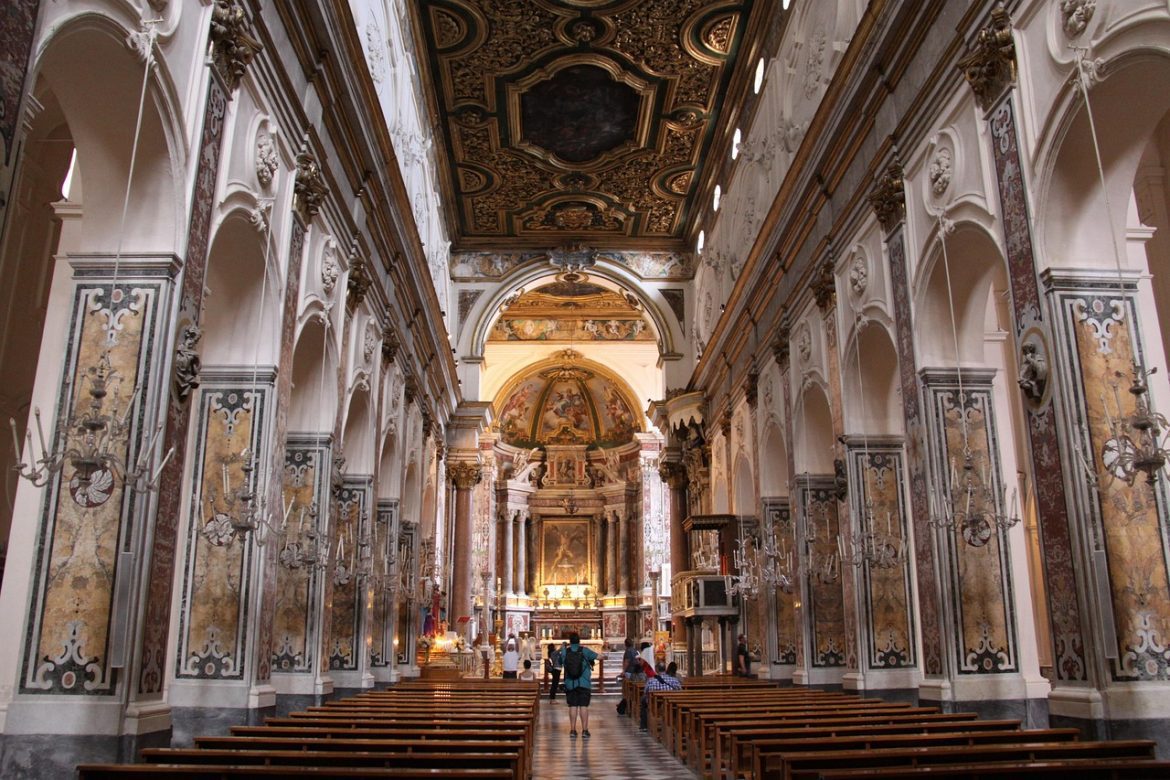
Once you cross the threshold, the Amalfi Cathedral duomo nave baroque marble basilica of the crucifix Italy atmosphere is immediate—cooler air, softened sound, and that unmistakable sense of scale. Travellers often recount the awe of stepping into the cathedral’s vast interior, where colour and marble pull your gaze forward without demanding you rush.
This is where reassurance matters: you can explore quietly, take your time, and still feel you’ve understood something real. Even if sacred art isn’t your usual interest, the space is generous—inviting your attention rather than competing for it.
The nave is the long central “path” of the cathedral—think of it as the main corridor of devotion and ceremony. The altar is the focal point, where key rituals take place, and it’s usually where you’ll see visitors naturally grow more respectful in posture and volume.
The atrium is a kind of transitional space, historically used to prepare the body and mind before entering the most sacred areas. When you understand those three terms, the interior feels less like a maze and more like a story you can follow with confidence.
Evening light and the Basilica of the Crucifix
One visitor once told me the stained-glass light near evening felt almost unreal—soft bands of colour sliding over stone and faces, turning an ordinary pause into a personal memory. If you can time your visit for later afternoon, imagine how the cathedral’s surfaces will respond; it’s a quieter kind of adventure, but no less vivid.
This site also holds layers beyond the main space. You’ll hear about an old church, even two churches, and the presence of a basilica within the wider structure—often referred to as the Basilica of the Crucifix. If you’re curious, ask locally which areas are open on the day; access can vary with services and restoration.
Remember: this is a roman catholic cathedral with an active diocese, and you may see references to the archbishop in local materials. Modest dress isn’t a “rule to endure”; it’s cultural care—an easy way to show respect while still feeling comfortable and well-presented.
The Cloister of Paradise at Amalfi Cathedral with Gothic Moorish Columns and Capitals
The Cloister of Paradise and a Quiet Gothic Pause
The Cloister of Paradise Amalfi Cathedral Gothic Moorish columns and capitals Italy is where the day exhales. Step inside and the town noise thins, replaced by garden hush, filtered light, and a sense of paradise that feels surprisingly intimate for such a prominent cathedral site.
If you’ve spent the morning hiking coastal paths or boarding boats, this cloister can be the perfect reset—cool shade, a slower tempo, and space to be together without speaking. Several travellers mention it as their favourite moment precisely because it doesn’t demand anything from them.
A simple path to see arch, light, and detail
You don’t need an art-history lecture to enjoy this space. Try a gentle “loop” with three observation stops:
- First loop: look for repeating arch patterns and how symmetry calms the eye.
- Second loop: focus on the columns and capitals—carving styles can shift subtly along the walk.
- Third loop: watch light and shadow move across stone; it changes the mood minute by minute.
That small ritual turns sightseeing into a crafted experience, and it’s especially satisfying for adventure seekers who like to feel present rather than hurried.
Timeline notes from the 13th century worth verifying
You may hear that the cloister dates back to the 13th century, with dates like 1266 and 1268 sometimes shared in guidebooks and local storytelling. Consider those details a research note—worth confirming with a guided visit or the on-site information—while you let the space do what it does best: offer quiet, steady support.
When you step back out, the piazza will feel brighter and louder, but you’ll carry a softer focus with you—a small, lasting insight from a garden hidden in plain sight.
The Crypt of Saint Andrew the Apostle and Relics at Amalfi Cathedral
The Crypt of Saint Andrew and the Weight of Relics
The Crypt of Saint Andrew the Apostle relics Amalfi Cathedral Cathedral of Saint Andrew Italy is a shift in atmosphere: cooler, quieter, and emotionally weightier. The cathedral is dedicated to the apostle, and that dedication isn’t abstract here—you feel it in the way people slow down as they enter, guided by trust and an instinctive care for the sacred.
For many, this is the most moving part of the visit: after the bright square and the ornate interior, the crypt feels like the heart’s basement—where belief, history, and human hope are kept gently out of the sun.
Relics, sarcophagus, and the tradition of manna
You may see references to the sarcophagus and to the relics of saint associated with Andrew the apostle. In local tradition, there’s also talk of manna—an aromatic liquid said to appear at times and treated with deep reverence. Because this is living faith, it’s best approached with humility: listen, observe, and avoid treating it as a spectacle.
If you’re wondering where relics are kept, staff or a local guide can explain what is visible and what is protected—many churches balance public devotion with preservation. In a space like this, the most respectful posture is curiosity paired with quiet.
History prompts from Constantinople to 1208
Accounts often say the remains of the apostle arrived via Constantinople after the Fourth Crusade, frequently linked to Pietro Capuano and the year 1208. It’s a dramatic arc—sea routes, shifting empires, and devotion anchored in place—and it helps explain why the saint became such a powerful patron saint for the town.
You might also hear about a silver bust used in ceremonies, and the way language shifts between Saint Andrew, Sant’Andrea, and andrea in everyday speech. The most important thing isn’t memorising dates; it’s feeling the human continuity of a site dedicated to the apostle saint, and letting the quiet teach you how to behave in sacred spaces.
In that hush, the phrase “st andrew the apostle” stops sounding like a label and starts feeling like a presence—apostle Andrew as a figure people have leaned on for centuries.
Climbing the Amalfi Cathedral Bell Tower for Amalfi Coast Views in Italy
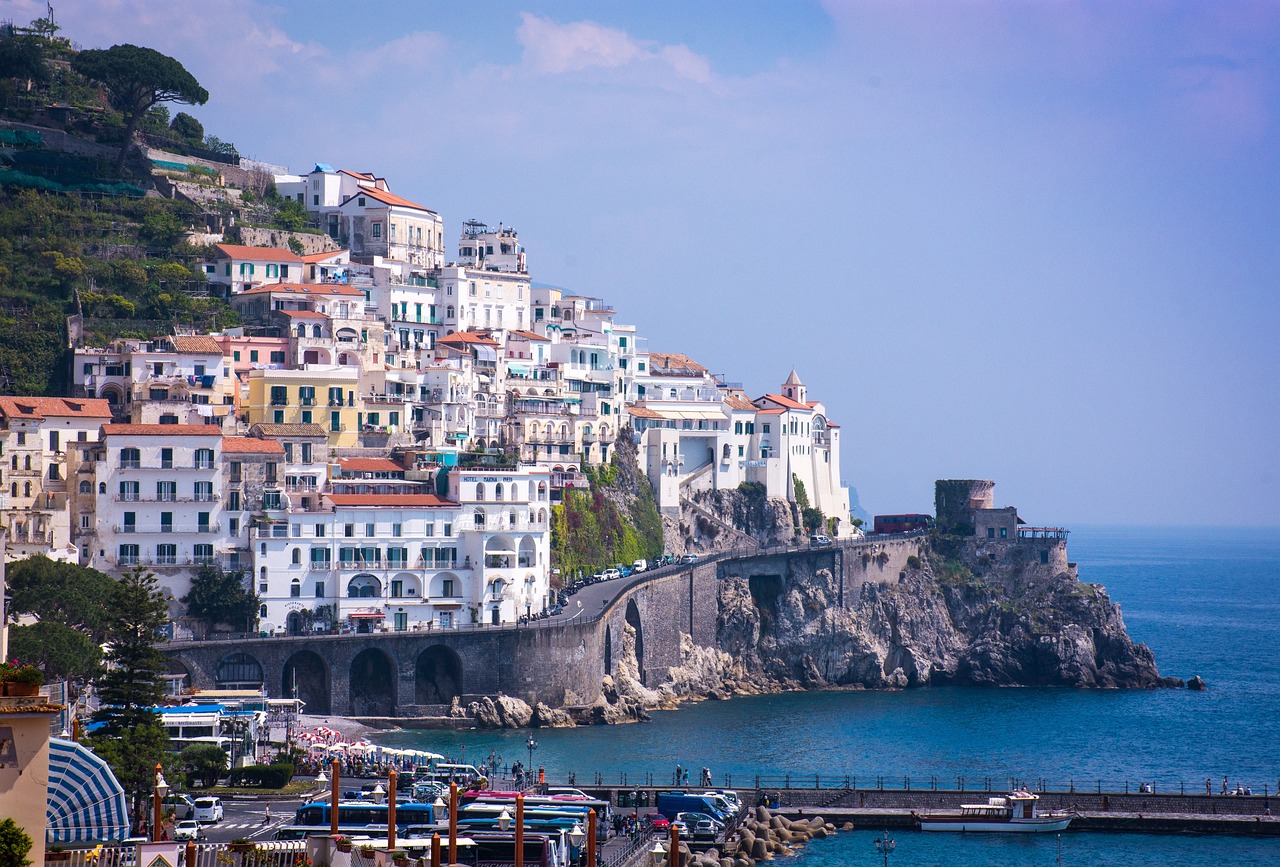
Climbing the Bell Tower for Amalfi Coast Perspective
The Amalfi Cathedral bell tower views Amalfi Coast Italy section is your mini-adventure, designed for those who like to earn their panoramas. Expect steep steps and occasional uneven surfaces; with comfortable shoes and an unhurried pace, the climb stays enjoyable rather than taxing.
This is also where you’ll notice practical craftsmanship—look for majolica tiles glinting above, and for how the cathedral’s shapes assemble into a coherent whole once you’re high enough. It’s a shift from intimate detail to big-picture perspective.
Support for the climb and the best light
A few simple choices keep things seamless:
- Timing: early morning offers clearer air and fewer crowds; late afternoon brings warmer light.
- Pacing: take short pauses so you arrive steady, not breathless.
- Safety: hold the rail, watch your footing, and keep belongings zipped in tighter sections.
That little structure gives confidence, especially if you’ve already had a full day on the water or trails.
Orienting day trips to Sorrento and Naples
From the top, rooftops tumble towards the sea and the Amalfi Coast line becomes easier to read. These views can genuinely help you design the next days: you can judge distances, understand road curves, and choose whether your next places to visit are best reached by sea or by bus.
It’s also a satisfying moment to orient yourself towards Sorrento and even Naples, spotting how the coastline’s shape influences movement. When you descend, the cathedral feels different—less imposing, more like a beloved landmark you’ve now “met” from every angle.
Feast of Saint Andrew at Amalfi Cathedral and the Corsa del Santo Procession

Saint Andrew Processions and the Corsa del Santo
The Feast of Saint Andrew Amalfi Cathedral corsa del santo local procession Italy turns the square into living culture. Even if you usually chase cliffs and coves, this is adventure of a different kind: communal energy, tradition carried by footsteps, and a cathedral at the centre of local identity.
One adventurer described the annual celebrations as “joyful and overwhelming in the best way”—processions threading through streets, people calling out greetings, and a shared pride that’s impossible to fake. It’s an immersive moment, and it can feel like you’ve been invited into something private.
What you may see during the corsa del santo
The corsa del santo is often spoken about with a mix of excitement and reverence. Depending on the year and schedule, you might witness processions, ceremonial movement in and out of the cathedral, and community celebrations that fill the nearby lanes. The key is to observe with care: keep voices low near the entrance, and follow local cues about where to stand.
Checking schedules, access, and staying comfortable in crowds
Because services and events can restrict access, check local schedules in advance—your hotel concierge or a local guide can offer the most current information. In busy moments, choose a meeting point with your group (a specific café sign, or the base of the steps) so the experience stays seamless.
For comfort, keep water handy, be mindful of pickpockets in dense crowds, and give families and elders priority space near barriers. This is where cultural enthusiasm becomes real-world trust: you’re not just watching, you’re sharing space respectfully in Andrew’s cathedral.
What Stayed With Me After Amalfi’s Cathedral of Saint Andrew
Long after the final step, it isn’t the “facts” that stay with me—it’s the feeling of moving through a cathedral in italy that has held so many lives, vows, and ordinary Tuesdays. I remember the stained-glass glow turning the interior into something tender, and the way the cloister cooled my thoughts as surely as it cooled my skin.
Down in the crypt, the air felt heavier, not with fear, but with meaning—an understanding that this place is dedicated to the apostle saint and still loved as a living home of faith. The apostle Saint Andrew whose story travelled across seas and centuries becomes less distant when you’ve stood quietly where people still whisper prayers.
What lingers, too, is the contrast: bright steps and busy lanes outside, then that sudden interior calm—like the town offers you both celebration and stillness, if you’re willing to hold them together. The cathedral of saint doesn’t demand certainty; it rewards presence. It reminds you that travelling with confidence isn’t about knowing the original one true narrative, but about arriving curious, behaving with care, and letting the place teach you how to look.
And sometimes, when I think of Amalfi’s light on stone, I find myself quietly imagining returning—not to repeat the same day, but to notice something new in the same enduring silence of saint’s and andrew’s Amalfi.
F.A.Qs: Amalfi Cathedral Italy
Who is buried in Amalfi Cathedral?
Amalfi’s cathedral is closely associated with Saint Andrew. Tradition holds that the remains of the apostle are kept in the cathedral’s crypt, making it a significant place of devotion as well as a cultural landmark for visitors.
What is the famous church in Amalfi?
The most famous church is the Cathedral of Saint Andrew, often referred to simply as the Amalfi Cathedral. It’s known for its striking façade and mosaics, its historic cloister, and the crypt linked to Saint Andrew’s relics.
How many steps are there to Amalfi Cathedral?
There are 62 steps leading up from the square to the cathedral entrance. Many travellers enjoy arriving early, taking the climb slowly, and pausing at the top for a clear view back across the piazza.
Which apostle is buried in Amalfi?
Saint Andrew is the apostle associated with Amalfi. Local tradition says his remains were brought to Amalfi centuries ago and are venerated in the cathedral’s crypt, which many visitors experience as the most atmospheric part of the complex.