Post Contents
- Why Capitoline Hill in Rome, Italy, is a cultural adventure and reflects the city’s inner pulse.
- Piazza del Campidoglio on Capitoline Hill, Rome, with Michelangelo’s design and the Cordonata approach.
- The Capitoline Museums on the Capitoline Hill in Rome showcase statues, bronzes, and legends.
- Palazzo Senatorio, Palazzo dei Conservatori on Capitoline Hill in Rome, serve as the civic stage of Roma.
- Capitoline Hill terrace offers top views of the Roman Forum and Palatine Hill.
- F.A.Qs: Capitoline Hill, Italy
- Capitoline Hill in Rome, Italy, left a lasting impression on me during my reflective travel experience.
Why Capitoline Hill in Rome, Italy, is a cultural adventure and reflects the city’s inner pulse.
Why Capitoline Hill in Rome Feels Like the City’s Heart
For a cultural adventure on Capitoline Hill, Rome, Italy, start by placing yourself among the seven hills of Rome, where myth and governance have always shared the same skyline. This is one of the seven hills, and also the smallest of the seven hills—yet it carries outsized weight in the history of Rome’s civic imagination. From the top of the hill, the city’s layers read clearly: emperors, artists, and everyday life, all compressed into a walkable stage.
In antiquity, the hill was both sacred and practical, a civic anchor shaped by Roman gods and the idea of a Capitoline temple. You don’t need to memorise dates to feel it; you only need to notice how the stone seems to hold its own quiet authority. That sense of trust—built over centuries—still guides the way you move here today.
Rome on foot, with space to create your own story
Adventure seekers often think speed equals discovery, but Rome rewards the opposite. Imagine letting your pace slow to match the echo of your steps, noticing shifts in light across walls, and allowing small details to become the main event. Capitoline Hill is perfect for this: compact enough to feel reassuring, rich enough to keep revealing itself.
As you explore, you’ll naturally uncover the key anchors: Piazza del Campidoglio, the Capitoline Museums, and terraces offering a clear view of the Roman Forum and Palatine Hill. If you’re planning a longer trip to Rome, you can preview more inspiration in our Trip gallery—but for now, let’s stay with this hill and its calm, crafted drama.




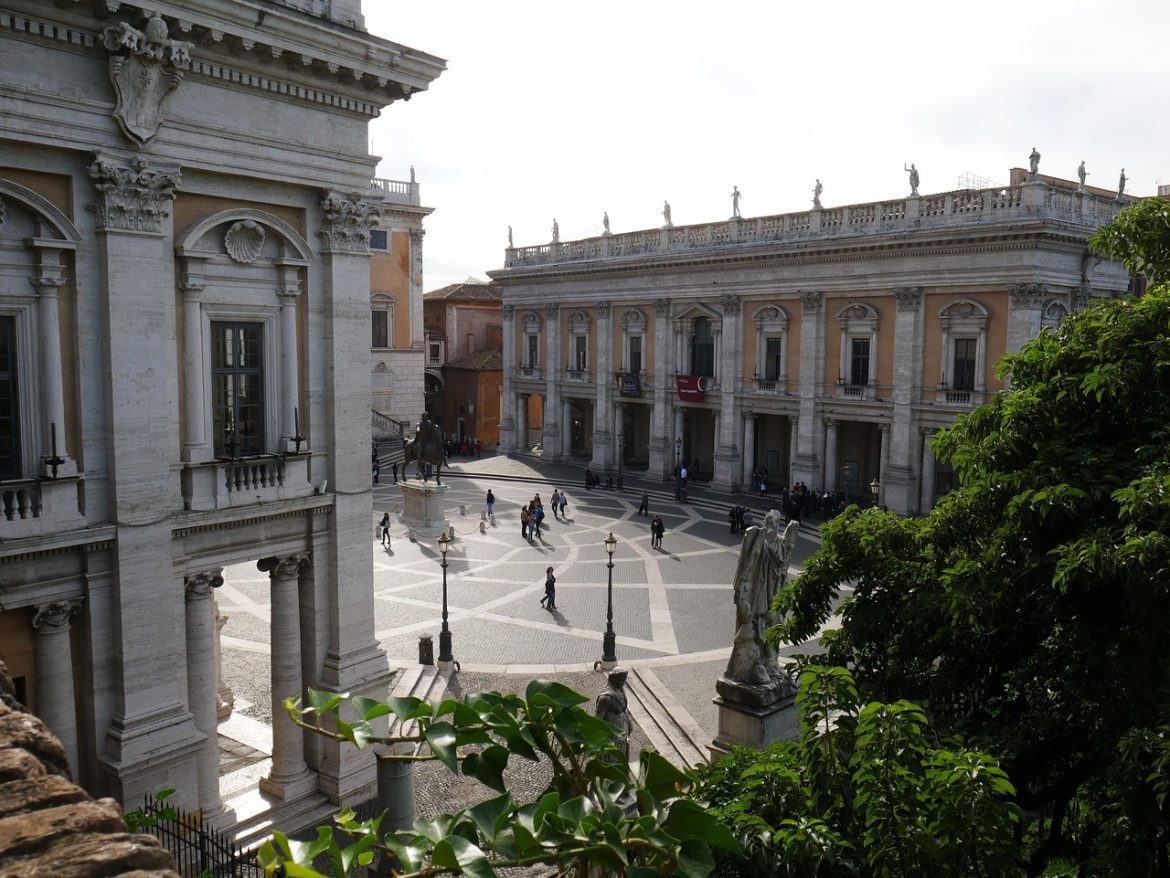
Piazza del Campidoglio on Capitoline Hill, Rome, with Michelangelo’s design and the Cordonata approach.
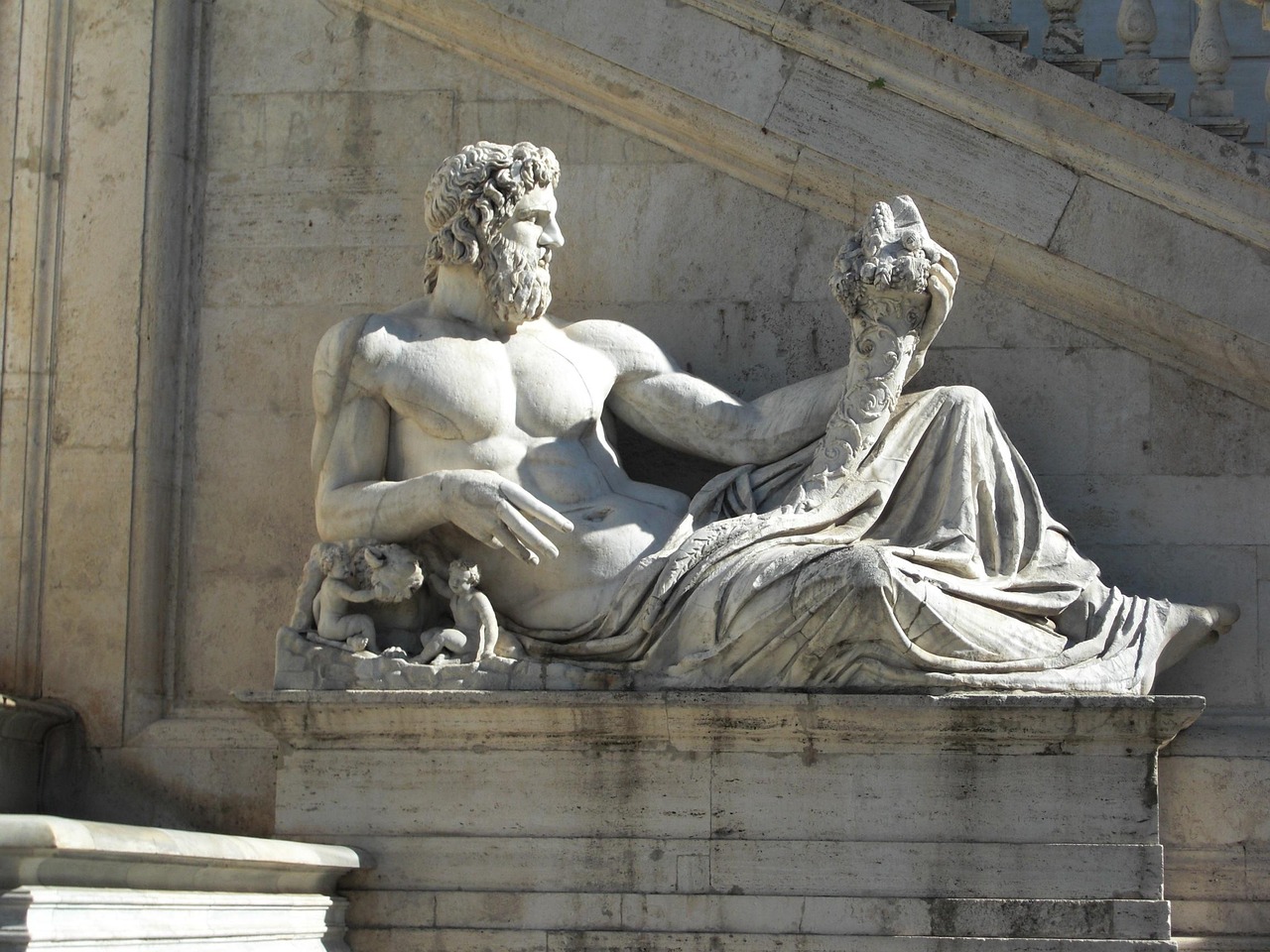
Piazza del Campidoglio and the Cordonata Staircase
For Piazza del Campidoglio, Capitoline Hill, Rome, Michelangelo moments, arrive with your eyes open to design, not just landmarks. The square designed by Michelangelo in the 16th century reframed the hill into a ceremonial space—geometry under your feet, perspective guiding your gaze, and an almost theatrical calm in the way the buildings hold you “together”. It’s a masterclass in how Rome can feel both grand and surprisingly intimate.
Piazza del Campidoglio is a space designed by Michelangelo
This is where you sense Michelangelo’s confidence most clearly: the trapezoidal layout that feels wider than it is, and the careful orientation that turns arrival into a reveal. It was Pope Paul III who commissioned Michelangelo, sometimes recorded as having commissioned Michelangelo to give Rome a civic showpiece worthy of hosting Emperor Charles V. Even if you’re not here for an architectural deep dive, you can still enjoy how crafted the piazza feels, like a room under open sky.
The Cordonata staircase and the theatre of effort
Approaching via the Cordonata turns movement into ceremony. The broad ramps soften the climb, while the stone lions and the statues of Castor and Pollux frame your ascent like guardians of an older Rome. One adventure seeker told me that climbing this staircase felt like walking beside Roman emperors and artists alike—an invitation to imagine your own arrival as part of the city’s ongoing story.
Timing and photography support can make the experience feel more personal:
- Visit early morning or late afternoon for fewer crowds and softer light across the piazza.
- Pause for coffee in Piazza del Campidoglio for a calm reset, then continue with renewed confidence.
- For context, note you’re near the Roman Forum, with Santa Maria in Aracoeli (often linked to the basilica of Santa Maria) close by for a quieter, local-feeling stop.
The Capitoline Museums on the Capitoline Hill in Rome showcase statues, bronzes, and legends.
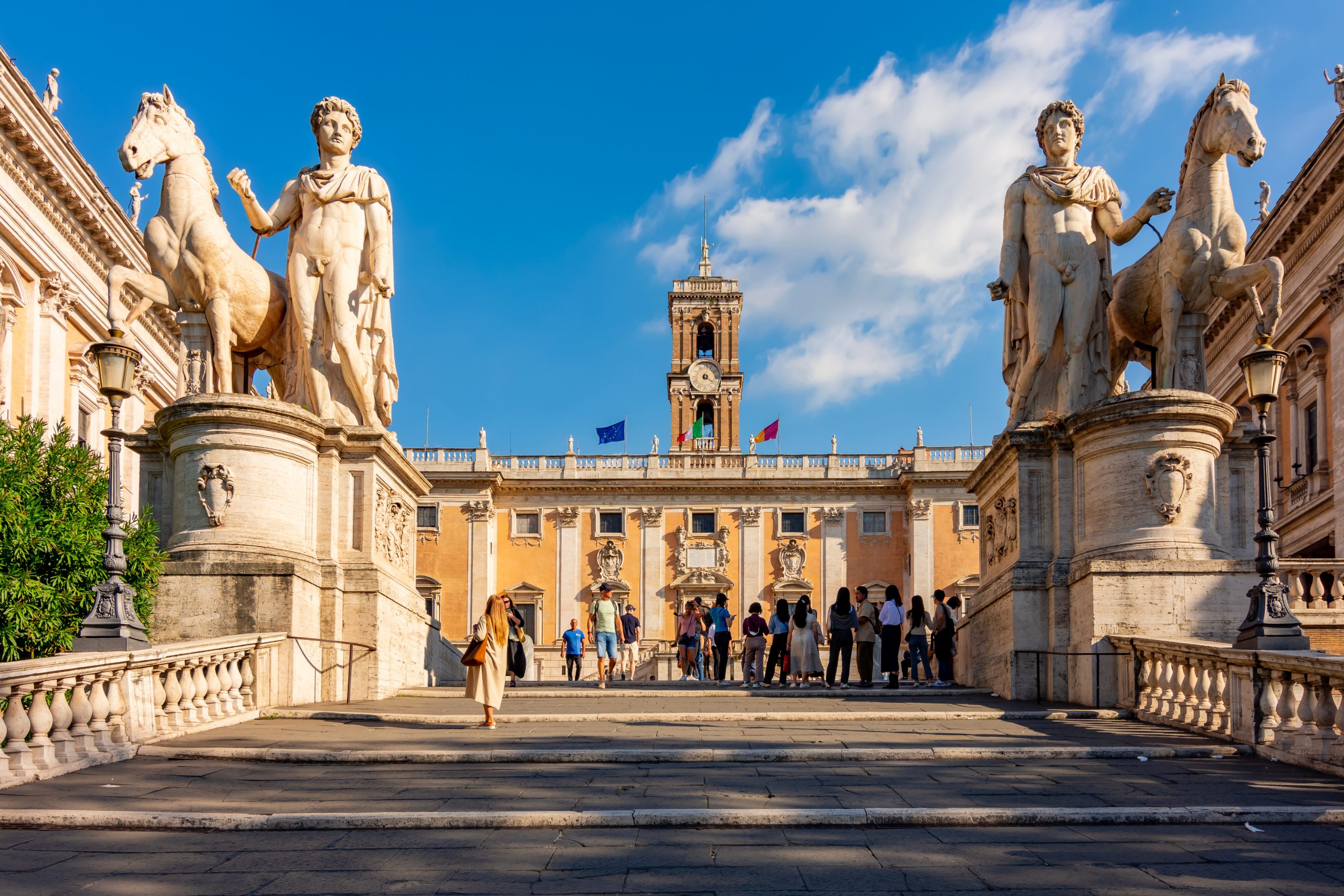
Capitoline Museums in Rome: Statues, Bronze, and Legends
For the Capitoline Museums in Rome, Capitoline Hill, Italy, highlights, think of the museum complex as reassurance made visible: rooms and corridors that guide you gently, letting art and history unfold without strain. There’s a reason it’s often described as a first public museum in spirit—some even call it the world’s first public museum—because it treats the visitor as a partner in understanding, not a spectator being rushed.
The museums showcase contrasts that feel almost like design prompts: marble surfaces that catch daylight differently from bronze, and galleries that shift between myth and recorded power. If you’re the sort of traveller who likes to discover meaning through detail, give yourself time to stand close, step back, and look again.
Capitoline Museums and the living myth of Romulus
Must-see works include the Capitoline Wolf, the enduring symbol of Rome that carries the legend of Romulus and Remus. A visitor once described the awe of seeing it up close—how the story of Romulus and Remus stopped being a textbook tale and became something personal, almost protective. Nearby, the Capitoline Venus offers a different kind of quiet: grace and human proportion, held with calm certainty.
Marcus Aurelius in bronze and the character of leadership
Make time for the equestrian statue of Marcus Aurelius, and notice how power is communicated without noise. The statue of Marcus Aurelius reads like a character study: philosopher-emperor restraint, steady gaze, and authority expressed through composure rather than force. If you’re travelling for inspiration, this is the kind of art that doesn’t just impress—it supports reflection.
Practical booking guidance for a seamless visit to the Capitoline Museums:
- Book tickets online to skip queues, especially at peak times in Rome.
- Ask about combined passes with the Roman Forum and Palatine Hill for value across a full cultural day.
- Plan a mid-visit pause; the pace here is gentler than many major museums, but it still rewards breaks.
Palazzo Senatorio, Palazzo dei Conservatori on Capitoline Hill in Rome, serve as the civic stage of Roma.

Palazzo Senatorio, Palazzo dei Conservatori and Civic Power
For Palazzo Senatorio, Palazzo dei Conservatori, Capitoline Hill, Rome orientation, picture the piazza as a civic theatre with three principal “actors”: Palazzo Senatorio, Palazzo dei Conservatori, and Palazzo Nuovo. Each building contributes to Rome’s sense of governance, made visible, and moving between them can feel seamless when you treat the square as your compass. Even standing still, you can feel the grandeur of Rome expressed through proportion and placement.
A local guide once shared an insight I’ve never forgotten: this hill has been a political and religious centre since ancient times, so every corner feels like a page from a living history book. That story changes how you look—suddenly, thresholds matter, and even the side of the hill seems to carry intention.
Tabularium, Constantine, and shifting power in the Roman Empire
In the background, the Tabularium sits, a quiet reminder of record-keeping and civic order. It’s also a good place to gently consider how power changed hands: from the old Republic’s systems to the later Roman Empire, with Constantine often used as a marker of transition. If you spot references to the statue of Constantine, remember that it points to the first Christian emperor and to a Rome continually remade.
Jupiter, temple echoes, and care for the site
Under today’s stone, the hill still murmurs with sacred memory: Jupiter, the Temple of Jupiter, and the Temple of Jupiter Optimus Maximus, alongside the Temple of Juno and Juno Moneta. Some traditions connect this to the temple of Juno Moneta, reminding you that belief and civic identity were once inseparable here. You don’t need to “agree” with the past to respect it—you simply need to notice how a temple idea can shape a city’s confidence.
Behaviour, safety, and comfort support to keep your experience easy and respectful:
- In museums and civic spaces, keep your voices low and don’t touch any statue or surface.
- Stay alert for pickpockets in busy areas; overall, this part of Rome is safe and family-friendly.
- Dispose of litter properly—small acts of care help preserve places that belong to everyone.
Capitoline Hill terrace offers top views of the Roman Forum and Palatine Hill.
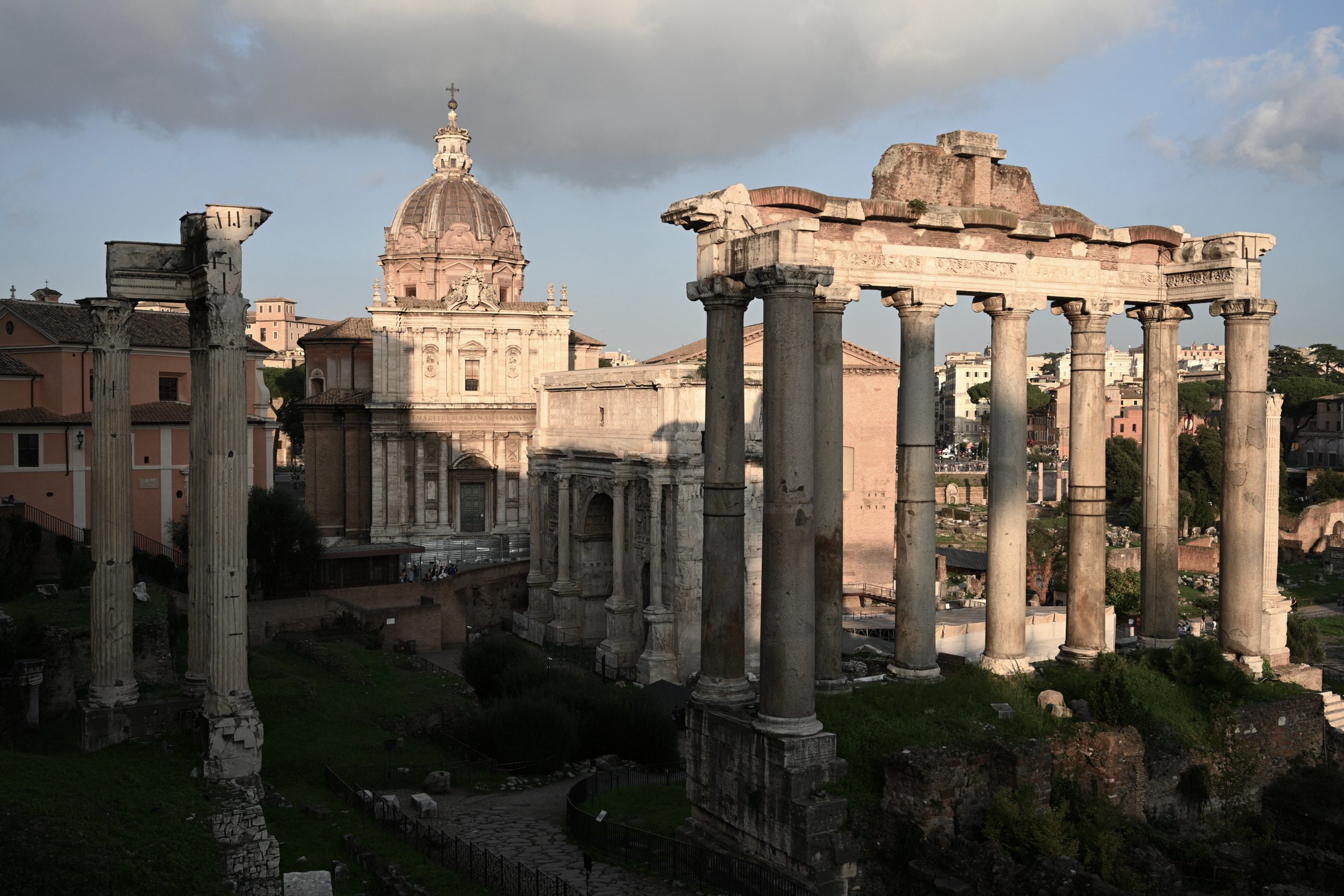
Best Views Over the Roman Forum and Palatine Hill
For a Capitoline Hill terrace view of the Roman Forum, Palatine Hill, Rome experience, let the viewpoints guide your pace. The best views of the city here don’t require a strenuous hike; they ask for presence—standing still long enough to let distances make sense. From key terraces, the Roman Forum lies open like an archaeological manuscript, with Palatine Hill rising beyond it in a calm, green sweep.
Roman Forum and Palatine Hill from atop the hill
Pause where the sightlines feel intentional, and you’ll understand why this is often described as a “top of the hill” perspective. The ancient ruins below are not just dramatic; they’re legible. You can point out routes you’ll walk later, and you can also simply enjoy the panoramic views without turning the moment into a checklist.
One traveller told me the most magical part of their visit to Rome was watching sunset light spill over the stones—gold turning to rose, then fading into a soft grey. They described it as a timeless connection, as if the city’s long memory had arrived gently, without demanding anything back.
Capitoline Museums in Rome vs Vatican Museums for a balanced day
If you’re designing a culture day, it helps to compare energy. The Capitoline Museums can feel curated for clarity—more compact, more contemplative—while a tour of the Vatican Museums is often about scale and momentum. Both are extraordinary, but pairing them on different days can help you maintain your attention and stay open to detail.
Adventure-friendly micro-itinerary and logistics for confidence:
- Start on Capitoline Hill, then walk to the Roman Forum, and continue onwards to Palatine Hill for a layered day that still feels unhurried.
- Reach the area via Colosseo metro and nearby buses; wear comfortable shoes for steeper sections.
- In summer, carry water and sun protection; in winter, pack an extra layer for breezy terraces.
- After the main attractions on Capitoline Hill, slip into a side-street eatery for something more local than the busiest cafés.
F.A.Qs: Capitoline Hill, Italy
Is Capitoline Hill worth visiting?
Yes—Capitoline Hill is worth visiting for its blend of design, legend, and views. You can experience Michelangelo’s piazza, explore the Capitoline Museums, and enjoy terrace panoramas over central Rome without needing a full day. It’s especially rewarding early morning or late afternoon, when the atmosphere feels calmer, and the light is softer.
What is the significance of the Capitoline Hill?
Capitoline Hill is significant because it has long been a civic and sacred centre of Rome. It’s tied to ancient governance, public memory, and temple traditions associated with Jupiter and Juno. Today, that legacy remains visible in the surrounding palaces, the museum collections, and the way the hill still feels like a symbolic heart of the city.
Is Capitoline Hill the same as Palatine Hill?
No—Capitoline Hill and Palatine Hill are different places. They sit close to one another in central Rome, but they offer distinct experiences: Capitoline Hill focuses on civic spaces, museums, and terraces, while Palatine Hill is more about archaeological landscapes and imperial-era ruins. Many travellers enjoy both in a single, well-paced day.
What is so special about Palatine Hill?
Palatine Hill is special for its sense of scale and origin: it’s associated with elite residences and sweeping archaeological remains above the Roman Forum. Walking there feels like stepping into layered terrain—gardens, foundations, and viewpoints—rather than a single monument. It pairs beautifully with Capitoline Hill, giving you both curated collections and open-air exploration in Rome.
Capitoline Hill in Rome, Italy, left a lasting impression on me during my reflective travel experience.
For a Capitoline Hill, Rome, Italy, reflective travel experience, what stays isn’t a list of facts—it’s atmosphere. It’s the feel of stone underfoot in Rome, the hush that settles briefly in a ceremonial square, and the way distance behaves differently when the city opens out below you. Even after you leave, Rome’s history continues to echo in small, surprising ways: in the memory of a bronze statue catching the last light, or a temple line implied by shadows rather than walls.
I think the most meaningful gift of a visit to the Capitoline is trust—trusting yourself to move slowly, and trusting the city to meet you halfway. You can be an expert planner and still let the moment lead, because Rome has a rare generosity: it allows the imagined and the real to coexist without friction.
As I walked away, I kept one image close: the silhouette of the buildings holding Piazza del Campidoglio in a quiet embrace, as if the city were carefully designed to reassure as much as to impress. And that’s the lingering invitation of the Eternal City—another hill, another museum, another evening—waiting patiently for your curiosity to return in its own season.