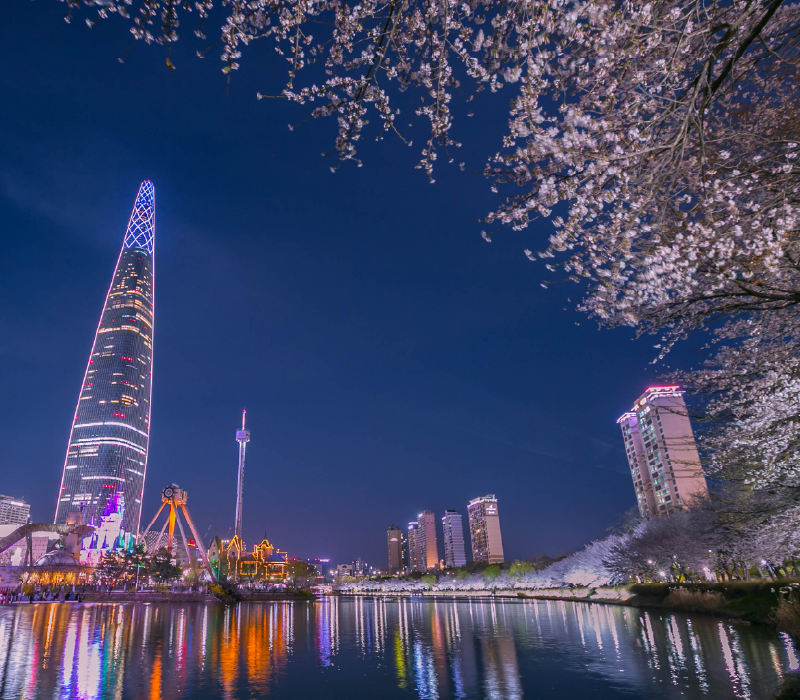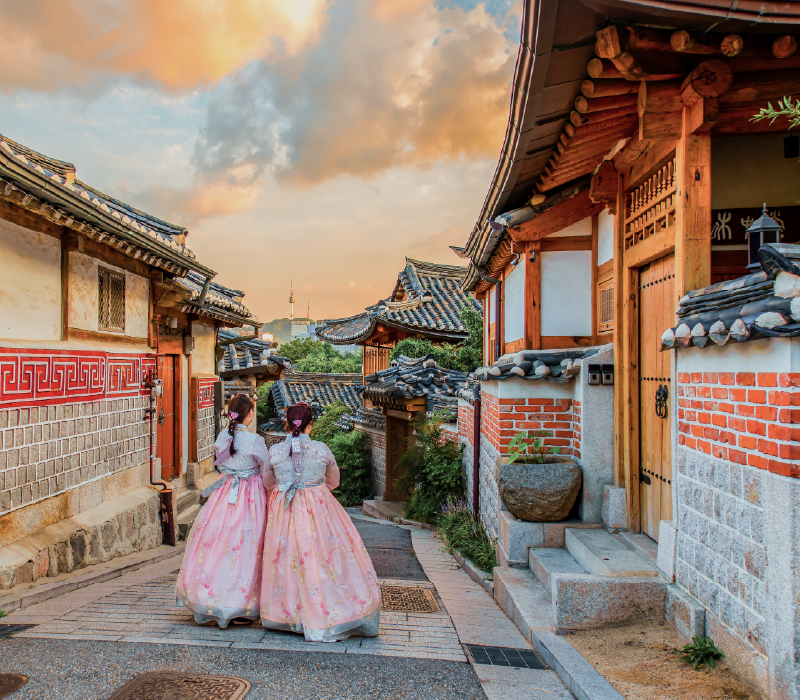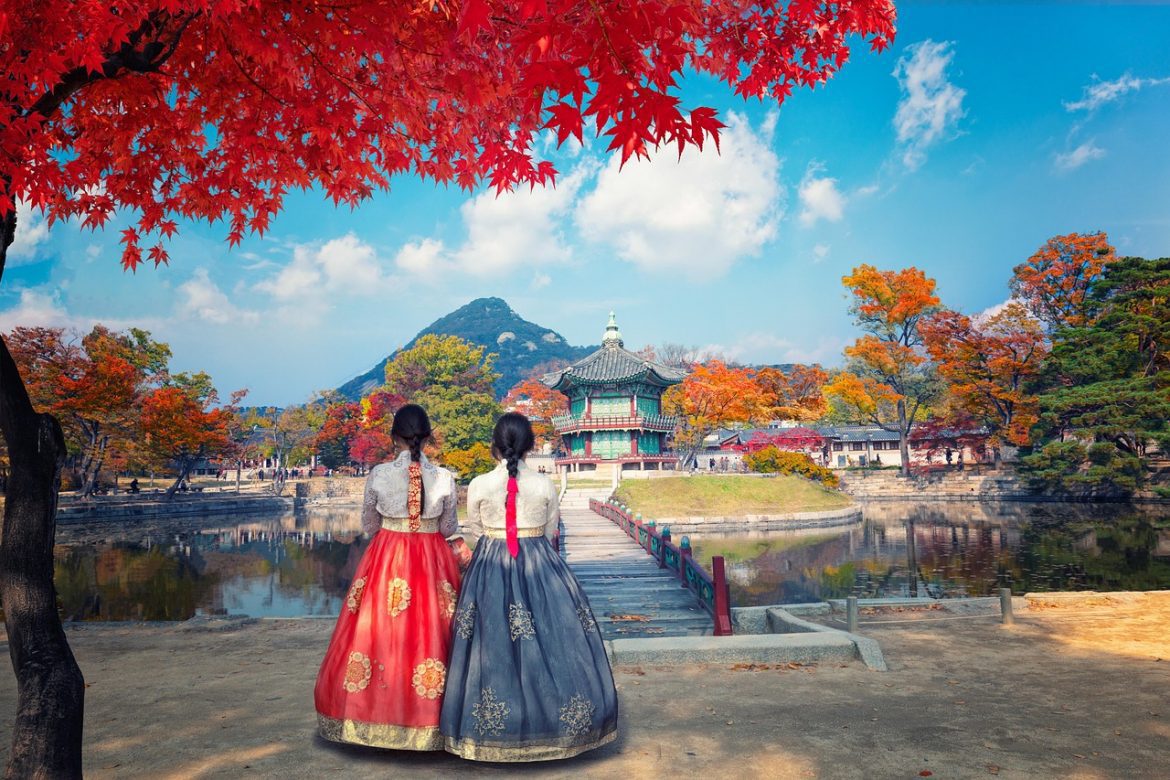
Korea weather in September usually means warm days, cooler nights and a break from the main summer rainy season. It is a good month for city trips and light hiking, especially later in the month.
There are two planning factors to watch. Chuseok can put heavy pressure on intercity transport, while September remains within the period when typhoons can affect Jeju and Korea’s southern coast.
Post Contents
- September at a glance
- South Korea weather in September by city
- South Korea weather in September and the best time to visit for average temperature insight
- Seoul weather in September
- Busan, Jeju and Gyeongju in September
- Chuseok in September: dates and trip planning
- Festivals and events in Korea in September
- Autumn colours and flowers in September
- What to wear in Korea in September
- Is September a good time to visit South Korea?
- Sample 10-day Korea itinerary for September
- FAQs
September at a glance
- Seoul average high and low: 26.2°C / 17.7°C
- Average rainfall: 141.5mm in Seoul, 160.6mm in Busan and 227.8mm in Jeju City
- Average humidity: 66% in Seoul, 73% in Busan and 74% in Jeju City
- Chuseok 2027: 14–16 September, with Chuseok Day on 15 September
- Typhoon risk: still possible, with Jeju and the south coast more exposed
- Trip timing: late September usually suits travellers who prefer cooler evenings and easier walking conditions
The city figures above are Korea Meteorological Administration 1991–2020 climate normals.
South Korea weather in September by city
September weather in Korea changes noticeably between the capital, the southern coast and Jeju Island. Seoul is the driest of the three cities in the table below. Busan stays warmer at night, while Jeju City receives substantially more September rain.
| City | Avg high | Avg low | Rainfall | Rain days | Humidity Levels | Sunshine |
|---|---|---|---|---|---|---|
| Seoul | 26.2°C / 79°F | 17.7°C / 64°F | 141.5mm | 6.5 | 66% | 180 hrs |
| Busan | 26.4°C / 80°F | 19.8°C / 68°F | 160.6mm | 9.2 | 73% | 174 hrs |
| Jeju City | 26.1°C / 79°F | 20.9°C / 70°F | 227.8mm | 11.2 | 74% | 159 hrs |
Source: Korea Meteorological Administration, 1991–2020 normals.
South Korea weather in September and the best time to visit for average temperature insight
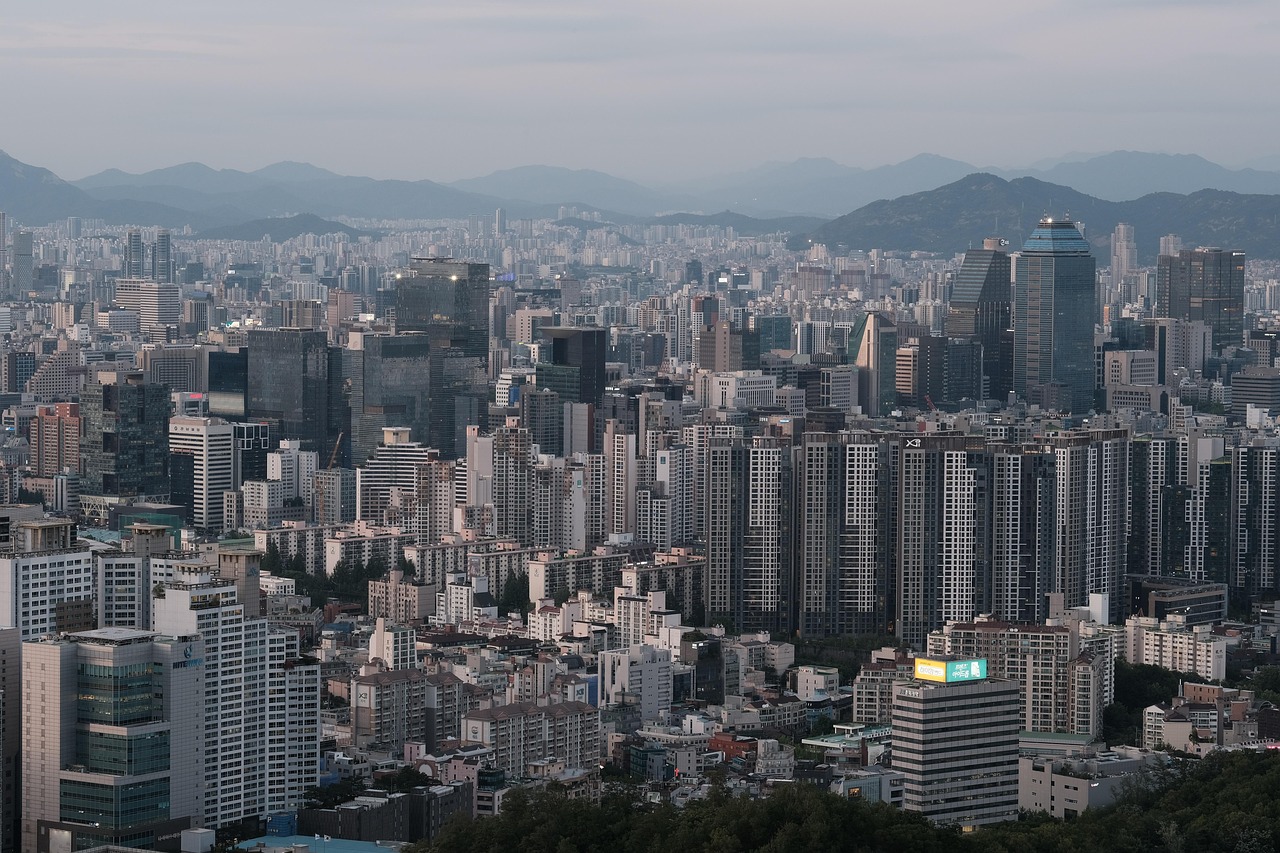
South Korea weather in September and the best time to visit for average temperature insight
For travellers comparing September weather in Korea in Celsius, daytime temperatures are fairly similar across these cities. The larger differences appear after sunset and in rainfall. Seoul nights average below 18°C, while Jeju City stays close to 21°C.
That makes packing for a multi-city trip less straightforward than the daytime highs suggest. A light layer that feels unnecessary on a warm Busan afternoon can be useful after dark in Seoul or at higher elevations.
Early vs late September weather
At the beginning of the month, September can still feel like summer. Hot spells can push daytime temperatures into the high 20s, and recent years show that 30-year averages can understate the heat that many travellers experience.
Later in the month, mornings and evenings generally become cooler. Warm weather can still return, so the change is gradual rather than a fixed switch to autumn.
| Early September | Late September | |
|---|---|---|
| Daytime feel | Summer can linger | Warm, with cooler spells |
| Evenings | Mild to warm | Cooler more often |
| Clothing | Summer clothes plus light layer | Light layers more useful |
| Hiking | Earlier starts suit hot days | More comfortable for many walkers |
| Weather planning | Heat and showers | Cooler weather, typhoon risk still possible |
The end of September is often the easier part of the month for travellers who plan long days on foot. Check the short-range forecast before mountain walks because conditions can change faster at elevation.
Rain and typhoons in September
The main jangma summer monsoon usually finishes before September, but that does not guarantee a dry month. Rainfall varies sharply by year, and tropical systems can bring periods of heavy rain or strong winds.
Jeju Island and the southern coast face greater typhoon exposure than Seoul. For a trip that includes Jeju or Busan, travel insurance and some itinerary flexibility are sensible. If a forecast disrupts an outdoor day, a museum, gallery, tea room or covered market can provide an alternative without forcing a long transfer.
A tailor-made itinerary can also keep one day relatively flexible around Jeju. That gives a local trip designer room to change the order of activities when ferry, flight or hiking conditions deteriorate.
Is September getting hotter?
Recent Korean Septembers have often run warmer than the 1991–2020 average. Korea Meteorological Administration data put the nationwide September 2026 mean temperature at 21.7°C, 1.2°C above the normal of 20.5°C. It was the sixth consecutive September in the 2020s to finish above the long-term normal.
September 2024 was hotter still, with a nationwide mean of 24.7°C, followed by 23.0°C in 2025 and 22.6°C in 2023. These are national averages rather than Seoul figures, but they are useful when packing: summer heat can persist into September even when historical averages look moderate.
Rain does not move in one direction with temperature. September 2026 was unusually dry nationwide, receiving 26.4mm, about 17% of the normal amount. That is a reminder to use climate averages for trip planning and a current forecast for each day.
Seoul weather in September
Seoul weather in September sits between the humid summer and the cooler conditions of October. An average high of 26.2°C means short sleeves still work for many afternoons. The average low of 17.7°C makes a light shirt, cardigan or thin jacket more useful after sunset.
Seoul temperatures in September also make long outdoor days easier than during the hottest part of summer, although early-month heat can linger. Plan more demanding walks for the morning when a warm spell is forecast.
September suits a mixed Seoul itinerary because outdoor stops can be paired with museums, galleries, markets and cafes without spending the whole day outside.
Evenings by the Han River and Namsan
The Han River becomes more comfortable for an evening walk as temperatures drop after sunset. Yeouido is an easy starting point if you want time beside the river before heading towards central Seoul.
Namsan is better treated as a separate evening stop rather than something to squeeze into a packed afternoon. The climb and outdoor viewpoints are more comfortable once the day’s heat has eased.
If rain is expected, keep the river walk flexible rather than building a timed reservation around it.
Palaces after dark
September is also when several Seoul palace night programmes operate.
For 2026, Gyeongbokgung’s autumn nighttime opening ran from 2 September to 2 October, from 7 pm to 9:30 pm, with last admission at 8:30 pm. The palace was closed for the night programme on Mondays and Tuesdays. Tickets cost KRW 3,000, with a limited number of same-day tickets reserved for foreign visitors who could show valid identification.
Changdeokgung’s 2026 autumn Moonlight Tour ran from 10 September to 17 October on selected evenings. The programme used timed entry and limited capacity, so advance planning was needed.
Dates change each year. Check the Royal Palaces and Tombs Centre schedule before adding a palace night programme to a future September itinerary.
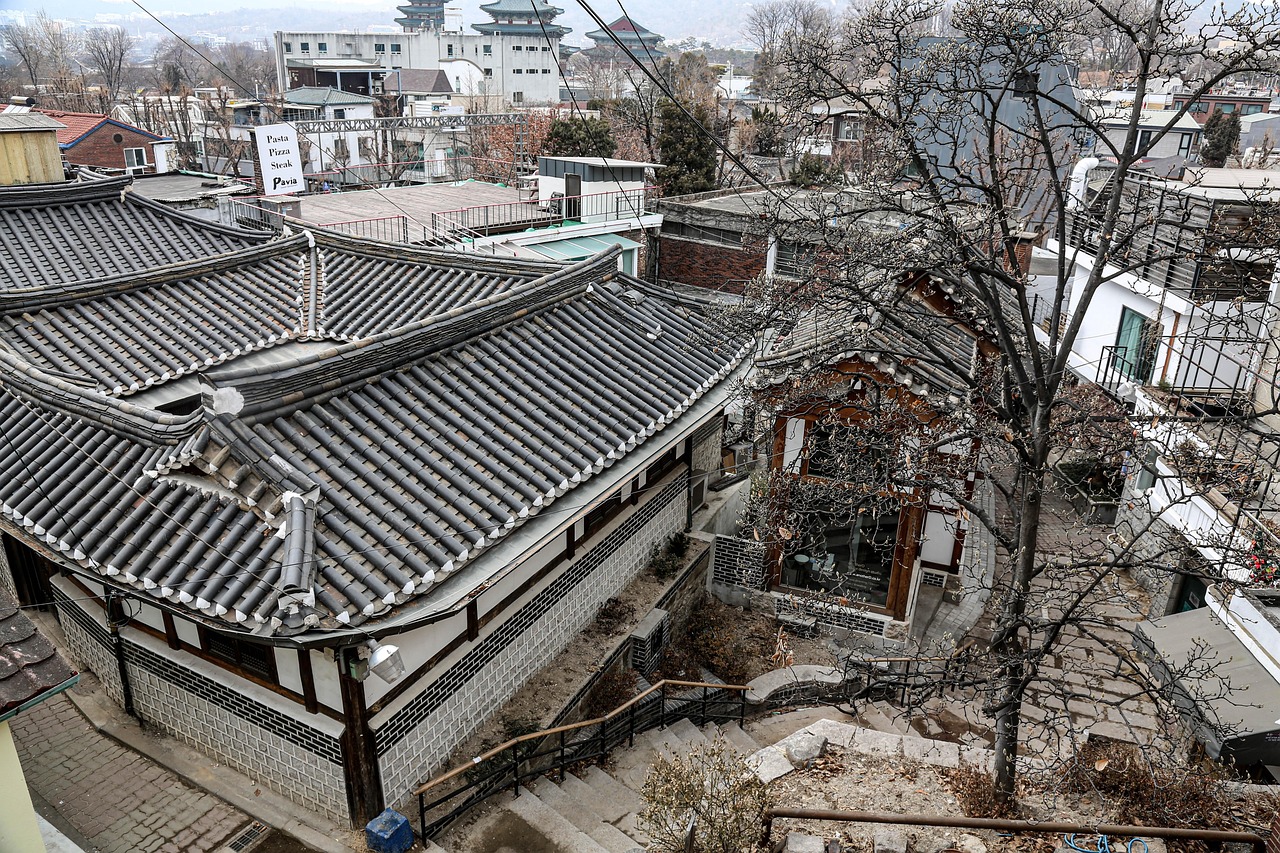
Seoul’s best time to visit in September: weather for Bukchon Hanok Village tea ceremony and palace calm
During the day, you can combine Bukchon and the palace district with a tea stop or an indoor exhibition. Keep voices low in residential lanes around Bukchon and follow local access signs, since these streets are also home to residents.
Busan, Jeju and Gyeongju in September
September conditions in southern Korea stay warmer at night than in Seoul, but rainfall also increases. This matters most on trips that combine Busan with Jeju.
Busan in September
Busan averages 26.4°C during the day and 19.8°C at night, with about 160.6mm of September rain. Beach walks remain practical on dry days, even after the main summer beach season.
A city day can combine coastal stops such as Haedong Yonggungsa with neighbourhoods and markets already used on Designer Journeys’ Seoul-to-Busan itinerary, including Gamcheon Culture Village and Jagalchi Market.
The Busan International Film Festival falls just outside September in 2026. Its 31st edition runs from 6 to 15 October, which may matter if your late-September trip extends into the following month.
Jeju weather in September
Jeju weather in September is warmer at night and wetter than Seoul. Jeju City averages 26.1°C during the day, 20.9°C at night, and 227.8mm of rain during the month.
That rainfall, together with greater exposure to tropical systems, is a reason to keep some flexibility in a Jeju itinerary. On a longer Korea trip, avoid making a time-sensitive international connection immediately after a weather-dependent Jeju flight or ferry.
Pink muhly begins appearing at some Jeju sites from around mid-September. On dry days, the cooler part of the morning works well for an oreum walk before afternoon temperatures rise.
Gyeongju in September
Gyeongju’s open archaeological areas become more comfortable as summer heat starts to ease. September works well for travellers who want to divide their time between outdoor heritage sites and museums rather than spend a full day indoors.
The city also fits naturally between Seoul and Busan by rail. On a longer route, two nights give more room for the historic centre without turning the stay into a single-day transfer stop.
Chuseok in September: dates and trip planning
Chuseok is one of Korea’s main family holidays. Its date follows the lunar calendar, so it moves each year. For visitors travelling through Korea in September, the practical issue is transport demand rather than the holiday itself.
| Year | Holiday dates | Chuseok Day | Status |
|---|---|---|---|
| 2026 | 24–26 September | 25 September | Confirmed |
| 2027 | 14–16 September | 15 September | Confirmed |
| 2028 | 2–4 October | 3 October | Preliminary calendar data |
The Korea Tourism Organisation confirmed the 24–26 September 2026 dates. Korea’s Aerospace Administration has published 15 September as Chuseok Day in its official 2027 calendar guidance.
The Korea Astronomy and Space Science Institute currently lists 2–4 October for 2028, with Chuseok Day on 3 October, but its 2028 page states that the data have not yet been received in the final annual government publication. Treat those dates as provisional until the official calendar notice is issued.
Intercity trains and express buses can sell out around Chuseok as people travel to see family. If possible, keep longer rail or road transfers away from the beginning and end of the holiday period.
Visitors do not need to avoid Seoul during Chuseok. In 2026, Gyeongbokgung and other royal heritage sites offered free holiday access, although operating arrangements can differ between institutions. Some museums, shops and restaurants close for part of the holiday, so check each place directly rather than assuming normal opening hours.
Book accommodation and intercity transport early if your Korea in September trip overlaps the holiday.
Festivals and events in Korea in September
September has a useful mix of art events, seasonal festivals and evening heritage programmes. The dates below are the latest verified 2026 editions.
| Event | Place | Verified 2026 dates |
|---|---|---|
| Frieze Seoul | COEX, Seoul | 2–5 September |
| Kiaf SEOUL | COEX, Seoul | 2–6 September |
| Pyeongchang Hyoseok Cultural Festival | Bongpyeong, Pyeongchang | 4–13 September |
| Gwangju Biennale | Gwangju | 5 September–15 November |
| Changdeokgung Moonlight Tour | Seoul | 10 September–17 October |
| Andong Maskdance Festival | Andong | 24 September–4 October |
Frieze Seoul and Kiaf SEOUL run at COEX at the start of the month, making early September useful for travellers with an interest in contemporary art.
The Pyeongchang Hyoseok Cultural Festival is timed around the buckwheat flowering season in Bongpyeong. It can work as a rural addition for travellers heading east from Seoul.
The Andong Maskdance Festival overlaps Chuseok in 2026, so transport needs extra planning. Korea Tourism Organisation material lists the 2026 festival from 24 September to 4 October.
Jarasum Jazz Festival is sometimes associated with the late-September calendar, but its 2026 edition takes place on 9–11 October. It should not be listed as a September 2026 event.
Dates verified for October 2026. Check each organiser’s official schedule before booking, since annual dates and ticket systems change.
Autumn colours and flowers in September
September is the beginning of Korea’s autumn transition rather than the peak foliage season.
At higher elevations, the first colour can begin near the end of September. For 2026, forecasts put the first autumn colour on Seoraksan around 28 September, with peak colour expected later in October. Bukhansan’s main colour period comes later.
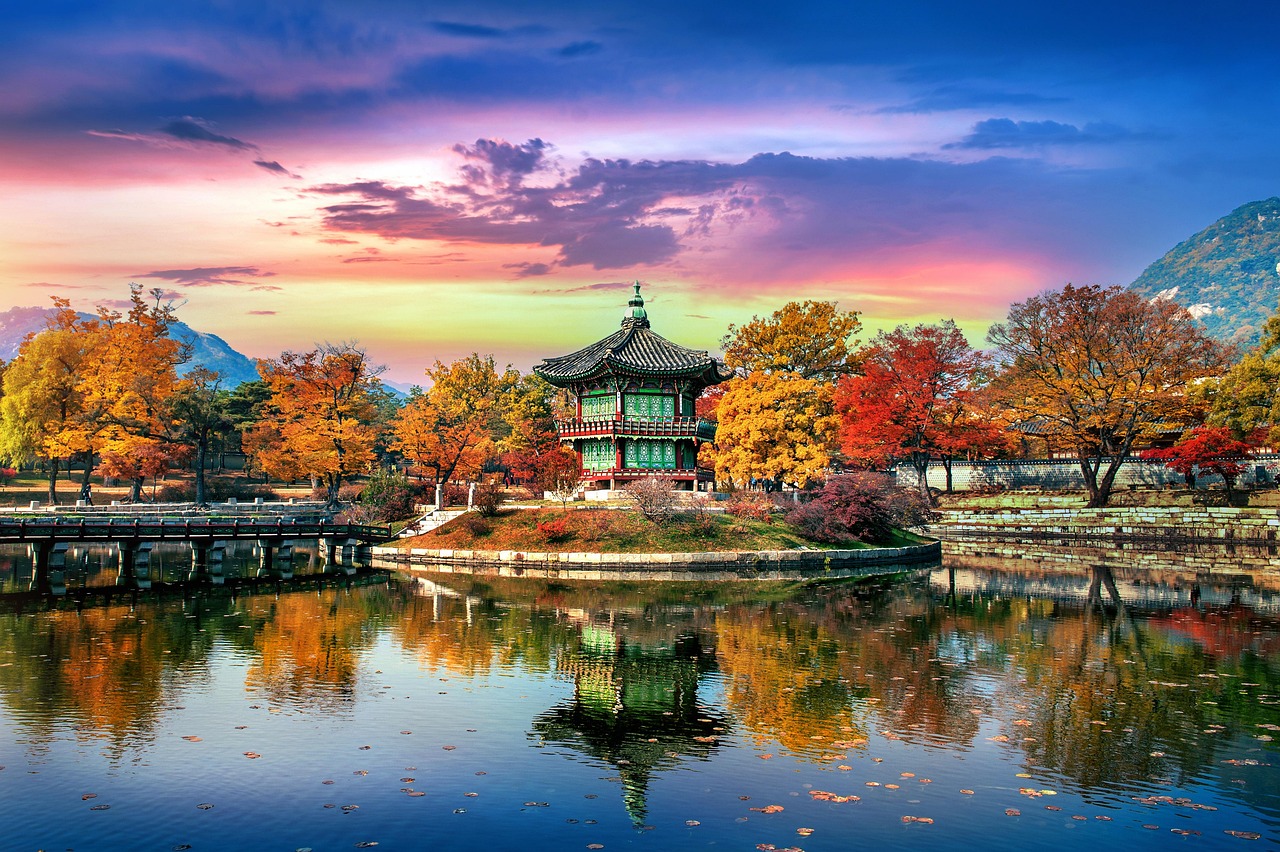
Autumn escapes near Seoul: best places in September for autumn foliage and national parks
If your main goal is autumn foliage, consider October or early November instead. The best time to visit South Korea month by month guide can help compare the seasons, while Korea in November and peak autumn foliage covers the later end of the colour season.
Nami Island, Bukhansan, and Seoraksan
Nami Island can still make sense as a day trip in September, but do not go expecting the deep autumn colour seen in October photographs.
Bukhansan National Park is close enough to Seoul for a day hike, although September heat makes an early start sensible. Seoraksan gives the earliest chance of seeing changing leaves because of its elevation, especially near the end of the month.
Stick to marked trails, carry enough water and check park notices before setting out after heavy rain.
September also brings seasonal flowers. Buckwheat is the focus in Pyeongchang early in the month, while pink muhly starts appearing at some Seoul and Jeju sites from around mid-September. You can also see cosmos in parks and rural areas in early autumn.
What to wear in Korea in September
Packing for Korea weather in September works best with light clothing plus layers rather than a full autumn wardrobe.
- Early September: breathable shirts, lightweight trousers or shorts, sun protection and a thin outer layer for air-conditioned interiors.
- Late September: add a light jacket, cardigan or overshirt for mornings and evenings, particularly in Seoul.
- Mountains and higher ground: carry an extra layer and wear shoes with reliable grip. Temperatures fall faster at elevation, and wet paths can stay slippery after rain.
- Rainy days: pack a compact umbrella or light rain shell. Comfortable walking shoes matter because palace grounds, hills and older neighbourhood streets can involve long periods on foot.
For temples and heritage sites, clothing that covers shoulders and knees is an easy option when you want to dress conservatively without carrying a separate outfit.
Is September a good time to visit South Korea?
South Korea in September is a strong choice for travellers who want warm weather without planning a trip around peak autumn foliage. Late September tends to suit walking-heavy itineraries better, while early September works for travellers who are comfortable with lingering summer heat.
| Factor | Advantage | Trade-off |
|---|---|---|
| Temperature | Warm daytime weather | Early heat can linger |
| Rain | Main monsoon period has passed | Typhoons remain possible |
| Crowds | Often calmer outside holidays | Chuseok creates travel pressure |
| Events | Art and cultural calendar active | Popular programmes need tickets |
| Autumn | First mountain colour possible | Peak foliage comes later |
September also sits before the main October foliage period. That can mean fewer visitors at some outdoor sites, although Chuseok creates a separate surge in domestic travel.
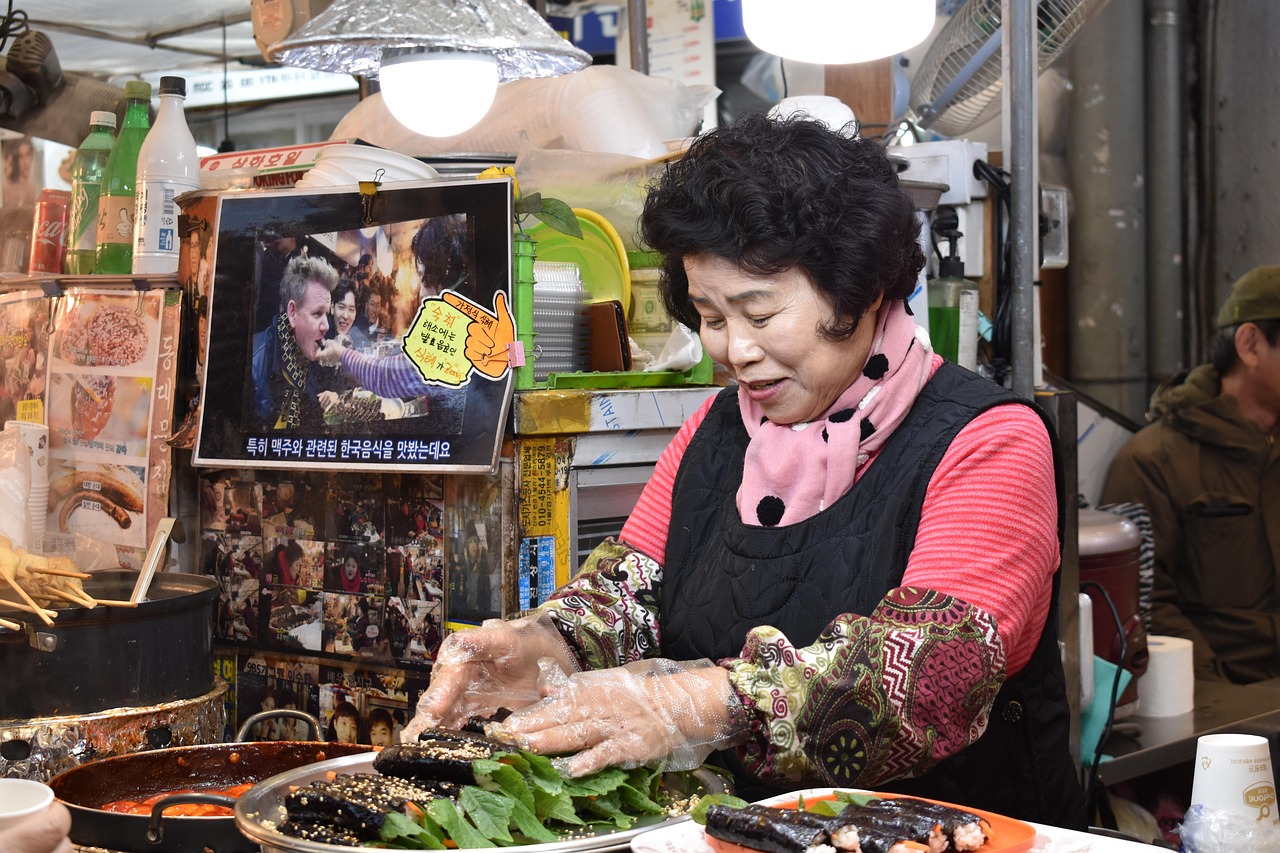
Time to visit South Korea in September: travel tips from Incheon to Busan, Jeju Island, and Gyeongju
If your priorities are Seoul, food, Gyeongju’s historic sites and some light hiking, the second half of September is particularly practical. If your trip depends on bright autumn leaves, shift it into October.
Sample 10-day Korea itinerary for September
A September route works best when the longest transfers are kept away from Chuseok and Jeju has some weather flexibility.
- Day 1: Arrive in Seoul and keep the first evening light.
- Day 2: Gyeongbokgung, the palace district and nearby neighbourhoods.
- Day 3: Seoul museums or galleries during the day, followed by the Han River or a palace night programme if dates match.
- Day 4: Travel to Gyeongju and spend the afternoon around the historic centre.
- Day 5: Continue through Gyeongju, with outdoor visits earlier in the day during hot weather.
- Day 6: Travel to Busan and visit the coast or central markets.
- Day 7: Continue through Busan, keeping outdoor plans flexible if rain is forecast.
- Day 8: Fly to Jeju and avoid a tightly timed onward connection.
- Day 9: Jeju walking or coastal sightseeing, with an indoor alternative ready.
- Day 10: Use the final day as weather flexibility or return to Seoul for departure.
If the trip overlaps Chuseok, keep more Seoul days inside the holiday and move intercity rail journeys outside the busiest travel periods.
Designer Journeys’ 8-Day Highlights of South Korea from Seoul to Busan follows the mainland part of this route. Travellers who want Jeju can also look at the 9-Day South Korea Highlights With Jeju Island.
For a route built around your dates, interests and Chuseok timing, see Designer Journeys’ tailor-made South Korea tours.
FAQs
Is it a good time to visit South Korea in September?
Yes. September has warm daytime temperatures, cooler evenings than midsummer and a lower chance of prolonged monsoon conditions. Late September is usually better for long days on foot. Travellers should still allow for early-month heat, Chuseok transport demand and possible typhoon disruption in southern Korea.
What should I wear in Korea in September?
Wear breathable summer clothes during warm afternoons and carry a light layer for evenings. By late September, a thin jacket or cardigan becomes more useful in Seoul. Pack comfortable walking shoes and a compact umbrella. Mountain days need an extra layer because conditions cool faster at elevation.
Is September rainy season in Seoul?
The main jangma rainy season generally finishes before September. Seoul still averages about 141.5mm of rain across 6.5 September rain days under KMA’s 1991–2020 normals. Individual years vary, so a dry historical average does not replace checking the forecast during your trip.
When is Chuseok in 2027?
Chuseok Day falls on 15 September 2027, with the holiday running from 14 to 16 September. Korea’s Aerospace Administration published the 2027 calendar dates in June 2026. Travellers should book intercity transport early because trains and buses experience heavy holiday demand.
Can you see autumn leaves in Korea in September?
Only the beginning. The first autumn colour can reach high elevations such as Seoraksan near the end of September, but the main foliage season comes in October and early November. September is too early if autumn leaves are the main purpose of your trip.