Post Contents
- Santa Croce Florence Italy Guide: Getting Oriented in the Monumental Complex of Santa Croce
- Inside the Basilica of Santa Croce: Nave, Transept, Frescoes and Chapel Highlights
- Tombs at Santa Croce: Monumental Memory from Michelangelo to Galileo
- Beyond the Basilica: Cloister, Pazzi Chapel, Sacristy and Refectory in the Complex of Santa Croce
- Leather School Near Santa Croce: Artisan Workshops and Local Craft in Florence
- F.A.Qs:
- Evening Light Around Santa Croce: What You Carry Home from Florence
Santa Croce Florence Italy Guide: Getting Oriented in the Monumental Complex of Santa Croce
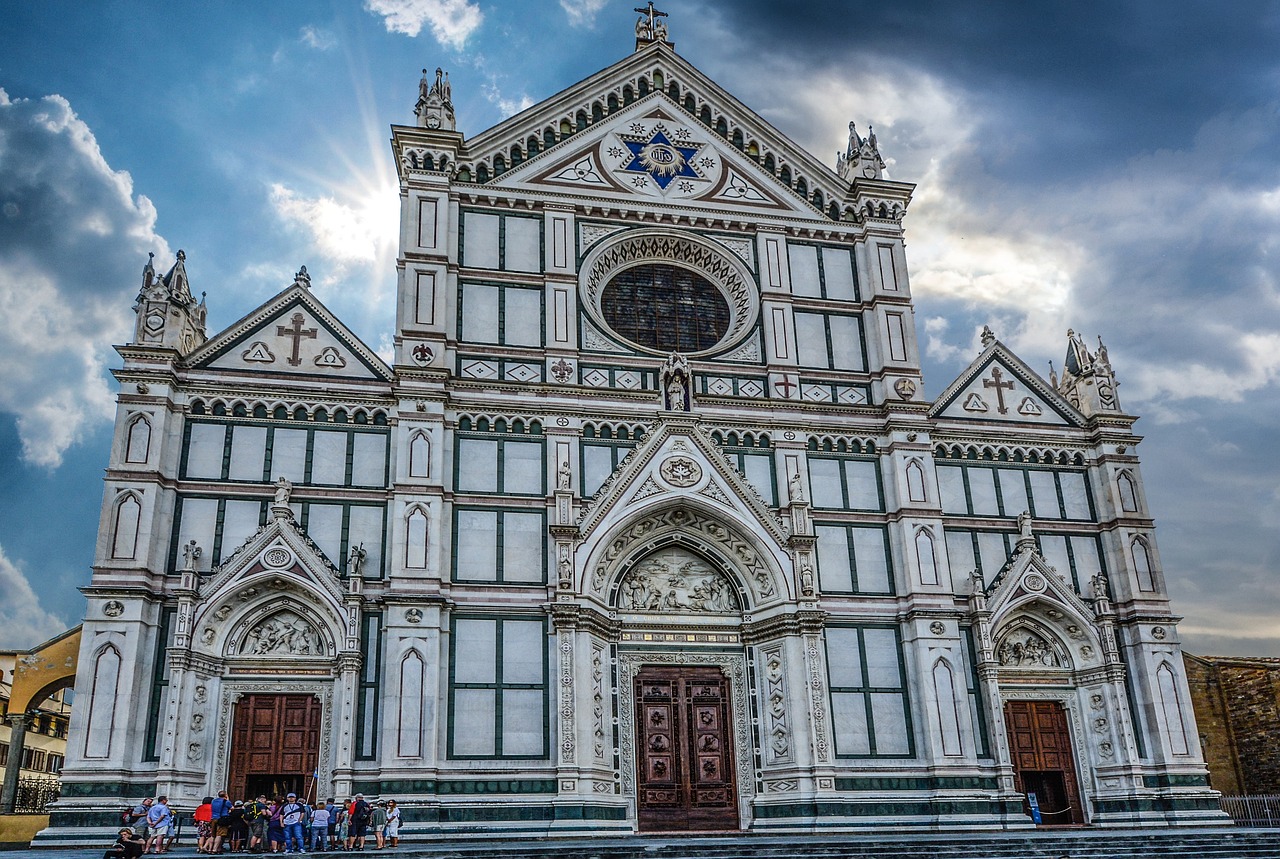
Getting oriented at Santa Croce in Florence, the monumental complex
Think of this Santa Croce, Florence, Italy guide as a calm starting point for the monumental complex of Santa Croce: a walkable anchor where Florence’s religious and civic life has unfolded in plain sight for centuries. Within the complex of Santa Croce, the Church of Santa Croce feels like a steady “base camp” you can return to—resetting your pace whenever the city gets loud, while still staying close to the action.
Arrive on foot or by bike from the historic centre, and you’ll naturally slip into the neighbourhood’s rhythm. The streets leading in are lively without being overwhelming, and your first view of the façade is a gentle reminder that adventure can be beautifully crafted rather than rushed. If you want to map a fuller day, keep a light framework and leave room for small surprises—then, later, browse our Trip gallery for design-led ideas across Italy.
Arriving in Florence: how to reach Santa Croce with confidence
Start with the square outside—yes, the one everyone photographs—then step aside to notice local life rather than chasing angles. If you arrive early, you’ll hear more birdsong than chatter; if you arrive later, you’ll feel the city’s modern pulse brushing up against stone and history. It’s a quick way to tune into everyday life in Florence before stepping inside.
Visitor essentials, kept reassuringly simple: check opening hours on the official site before you go; entry to the basilica and museum is usually around 12–15 euros. In peak seasons, booking ahead is the easiest way to create a seamless flow and avoid queue fatigue.
Best season and crowd strategy for Santa Croce’s chapels and the surrounding square
Spring and autumn offer the most comfortable weather for wandering, and they suit Adventure Seekers who enjoy covering distance without the heat. Aim for early morning if your goal is quiet chapel time and soft light; save mid-afternoon for the warm street energy around the square, when the neighbourhood feels most alive. You’ll move more smoothly, and you’ll have space to actually look—not just pass through.
- Best rhythm: morning for chapels and art, late afternoon for the neighbourhood, early evening for a slower walk back.
- Dress code: shoulders and knees covered for church spaces—pack a light layer you can throw on in seconds.
- Street-smart: Be aware of pickpockets in crowds, but you’ll find the area safe and welcoming with basic care.
A last quiet note: learning a couple of greetings (even just “buongiorno” and “grazie”) adds warmth to every interaction—small trust-building gestures that make Florence feel more personal.




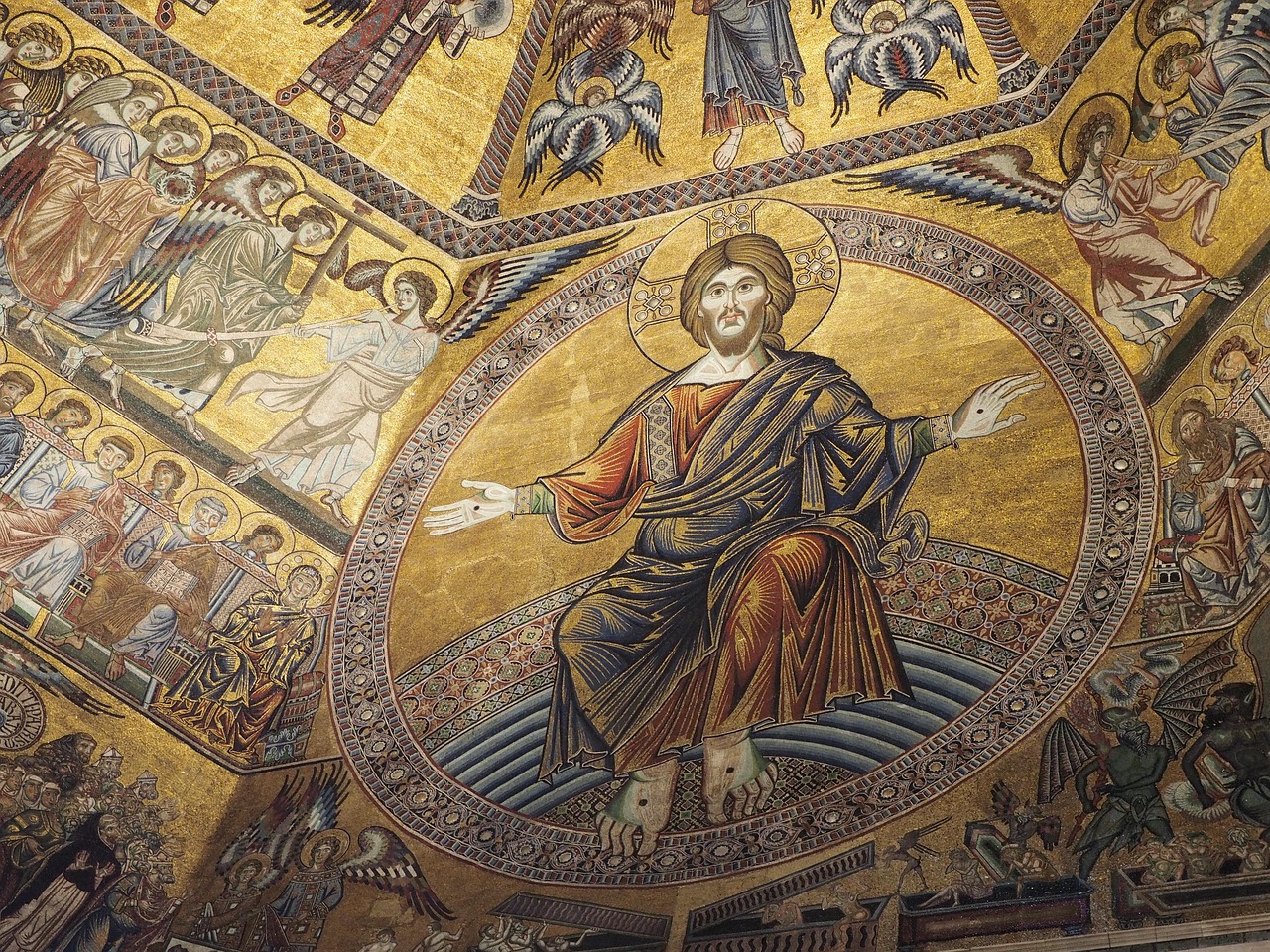
Inside the Basilica of Santa Croce in Florence: nave and chapel frescoes
Step into the basilica of Santa Croce and you’ll understand why this stop becomes a highlight of Florence for so many travellers. The nave stretches wide, yet the space still feels intimate—an architectural expression of Franciscan ideals, designed to welcome ordinary citizens as much as great patrons. Often described as the largest Franciscan church and even the one many visitors remember most, it balances scale with surprising gentleness.
Look down the right nave of the church, and you’ll sense the steady order of the layout: side chapels like storybooks along the walls, the transept opening ahead, and your line of sight pulling toward the main chapel. Instead of trying to “do” every detail, slow your eyes and let the light guide you—stone below, painted walls above, and feeling in the middle.
Giotto fresco route: Bardi and Peruzzi chapels as story-filled stops
The fresco cycle most travellers come for is tied to Giotto and his circle—the early Renaissance language of weight, tenderness, and believable grief. The Bardi and Peruzzi chapels are essential stops, and seeing them back-to-back helps you compare how patronage shaped colour, narrative, and legacy. Look for scenes featuring John the Baptist and John the Evangelist: even without an art-history lecture, you’ll feel how the storytelling shifts from symbolic to startlingly human in the 14th century.
For a simple approach, choose one scene and stay with it for a full minute. Watch hands and faces, then step back and notice how the painter controls your gaze with placement, gesture, and light.
Adventure doesn’t have to mean speed. Create your own loop: enter, take the central axis of the nave, then drift through key side chapel spaces with clear landmarks—returning to the central space whenever you want to re-orient. This keeps your visit confident, not frantic, and it helps the monumental scale feel navigable.
As you explore, keep a few names in mind rather than turning it into a test: Taddeo Gaddi and Agnolo Gaddi (both from the 14th century) extend the narrative energy you’ll feel in the Bardi and Peruzzi spaces. If you pass the Bardi di Vernio chapel, pause for a moment—one quiet stop is often enough to understand how Florentine identity was built, chapel by chapel.
Expert lens, made easy: look for restoration clues (slightly different matte finishes), symbolic gestures (a raised hand, a turned head), and light direction (where the painter expects your gaze to land). These small insights help you uncover meaning with ease—no stress, just discovery.
Tombs at Santa Croce: Monumental Memory from Michelangelo to Galileo
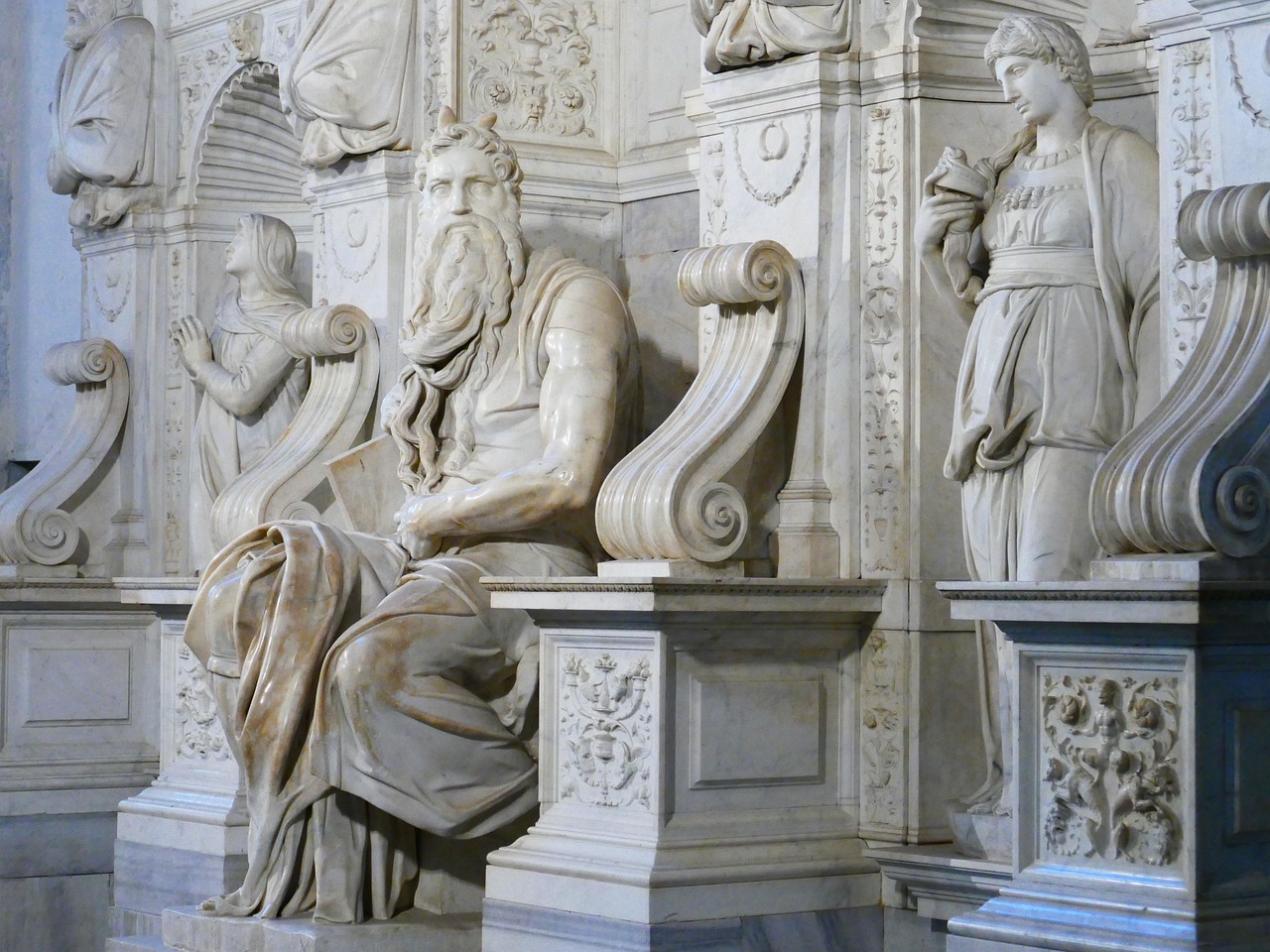
Tombs and monumental memory at Santa Croce in Florence
Even if you’re a fast-moving traveller, the story of a tomb inside Santa Croce tends to slow you down. Here, a tomb isn’t simply a marker—it’s an invitation to reflect on what a life can leave behind. The monumental scale of the interior makes it easy to feel small, yet oddly supported, as if the space is holding the silence for you.
Santa Croce has always honoured thinkers, artists, and citizens together, and that democratic spirit still reads clearly in the way memorials share the same air. You’ll encounter monumental tombs for Michelangelo and Galileo, as well as for statesmen and humanists like Leonardo Bruni and Carlo Marsuppini—whose monuments speak to Florence’s public conscience. The monument to Bruni was sculpted by Bernardo Rossellino, and even a quick glance shows how craft turns remembrance into a lasting monument. (Yes, Rossini rests here too, a reminder that creativity comes in many forms.)
Michelangelo’s tomb: a quiet pause beneath monumental vaults
A traveller once described standing at Michelangelo’s tomb and feeling unexpectedly moved by the crafted marble and the hush beneath the monumental vaults. It wasn’t the fame that landed—it was the sense of effort: generations choosing to remember, to build a monument to human possibility. If you’ve been chasing viewpoints all morning, this is where you let your breathing catch up.
How to read a funerary monument: designed by Giorgio Vasari, symbols and inscriptions
Many visitors don’t realise they already know how to read a funerary monument: symbols, poses, and inscriptions are a visual language of legacy. The monument to Michelangelo was designed by Giorgio Vasari, and that matters—Giorgio Vasari knew how to choreograph meaning, not just decoration. Nearby, the Galileo memorial is associated with Giovanni Battista Foggini, and it’s worth noticing how different forms of achievement are framed within the same sacred setting.
- Quiet etiquette: keep voices low and give others space for reflection.
- Photography: be respectful—avoid flash, and never block narrow viewing points.
- Ten-minute reset: choose one monument, then stand still for ten minutes before moving on.
This is also where “buried in Florence” becomes more than a fact: it becomes a feeling of belonging, memory, and the city’s long conversation with itself.
Beyond the Basilica: Cloister, Pazzi Chapel, Sacristy and Refectory in the Complex of Santa Croce
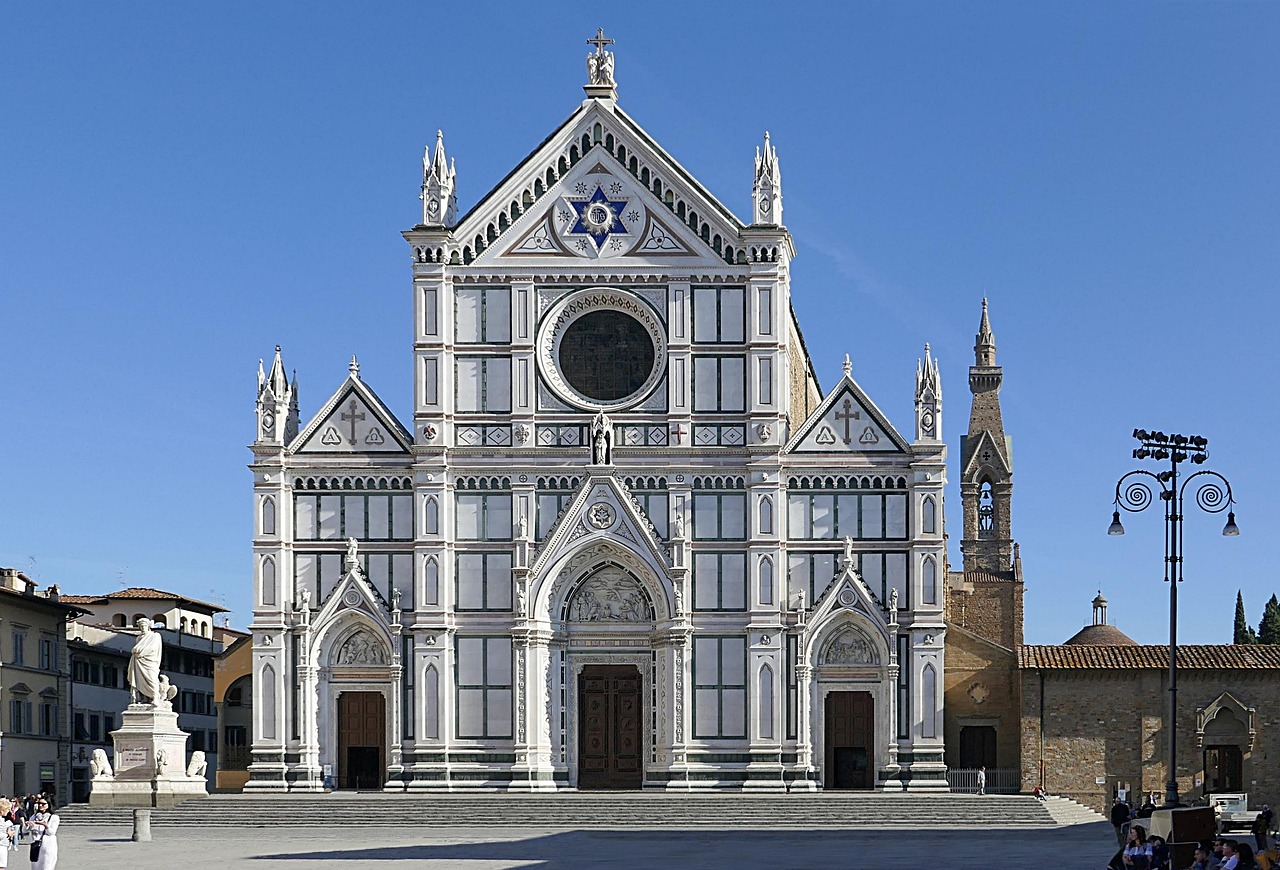
Cloister calm at Santa Croce in Florence: Pazzi Chapel and museum rooms
After the emotional intensity of monuments, the route through the monumental complex offers a reset. Step into the cloister, and you’ll feel it immediately: cooler air, softer sounds, and a calmer Florence tucked inside the Santa Croce complex. It’s a beautifully designed pause—ideal for travellers who want momentum without overwhelm.
This is where the visit becomes layered: spiritual, museum, and lived spaces overlap. You’re not just looking at history; you’re walking through the way it was organised, protected, and carried forward by generations.
Pazzi Chapel: Filippo Brunelleschi’s proportion and quiet harmony
The Pazzi Chapel is a lesson in proportion that you can feel in your body. Linked to Brunelleschi—and credited to Filippo Brunelleschi for its calm geometry—it turns stone into something almost musical. Try a simple observation exercise: stand still, trace the lines with your eyes, and notice how your attention naturally settles into balance.
That calm has its own kind of strength: it invites you to slow down, listen, and let the place do some of the work for you.
Sacristy and museum rooms: important works of art and daily rhythms
In the museum rooms, you’ll find important works of art that feel unmistakably Florentine: Donatello’s presence, Vasari’s confident lines, and della Robbia’s brilliance in the glazed terracotta roundels by Andrea della Robbia. You may also spot details linked to Andrea Orcagna, a reminder that this complex holds many artistic voices beyond the headline names. These works of art are best appreciated slowly—one room, one piece, one breath at a time.
The sacristy of the basilica and the refectory reveal daily rhythms: where vestments were kept, where meals were taken, and how a friar’s day was structured around simplicity and service. Keep an eye out for a painted crucifix as you move through—an object meant for devotion first, and admiration second.
You’ll also see how the Opera di Santa Croce (sometimes referred to as Opera di Santa) continues to preserve the site as living heritage rather than a frozen museum. And if you love origin stories, remember this: Santa Croce was founded in 1295, and the earliest structure is attributed to Arnolfo di Cambio—a detail that helps explain the building’s confident footprint in Florence. Look for subtle traces of the Medici era too, and note how the idea of a Medici chapel echoes elsewhere in the city, from Santa Maria Novella to these quieter cloistered corners.
Leather School Near Santa Croce: Artisan Workshops and Local Craft in Florence

Leather School and artisan workshops around Santa Croce in Florence
Now shift gears into something tactile: the leather school and nearby studios are where your day turns hands-on. Around Santa Croce, craftsmanship isn’t a souvenir category—it’s a living practice, passed down through tools, patience, and conversation. For Adventure Seekers, this is the kind of “museum” that moves, talks back, and sometimes lets you join in.
One group I met spoke about being warmly welcomed at the leather school: artisans offered simple steps—cutting, stamping, stitching—so the visit became a cultural exchange built on trust. Suddenly, Florence wasn’t just something to view; it was something you could make alongside locals, together.
Hands-on craft: what to watch for in local workshops
When you watch a maker work, notice the quiet decisions: the pressure of a stamp, the edge finishing, the way thread tension changes the final look. Ask questions with curiosity and care; most artisans are proud to share insight when they feel respected. If you have time, look beyond leather too: small studios nearby often focus on paper, metal, or textiles—each one another door into the city’s creative pulse.
Ethical buying tips and an easy walking loop back toward the basilica
Plan your workshop time in advance—check schedules, expected duration, and whether there’s a fee—so the experience stays seamless rather than squeezed. When you buy, choose confidence over impulse: ask about material provenance, how the item was finished, and who made it. You’ll support local makers instead of mass-produced copies, and the object you carry home will feel personal.
- Easy loop: Santa Croce → artisan side streets → back towards the neighbourhood for coffee or gelato and people-watching.
- What to ask: full-grain or split leather, where it’s tanned, and whether the piece is hand-stitched.
- What to avoid: “too perfect” low prices with vague origin stories.
It’s a different kind of masterpiece: not behind glass, but in a pair of hands that know exactly what it’s doing.
F.A.Qs:
Is the Santa Croce area a good place to stay in Florence?
Yes. Santa Croce is generally safe, welcoming, and lively, with excellent walking access to central Florence. As in any busy tourist area, keep normal street smarts—watch for pickpockets in crowds, especially around major sights and events. If you enjoy local character, small artisan streets, and an easy on-foot rhythm, it’s a very good base for exploring.
Why is Michelangelo buried in Santa Croce?
Michelangelo is buried in Santa Croce because Florence wanted to honour him publicly as one of its greatest artists. The church became a place where the city commemorated exceptional citizens, turning remembrance into civic identity. Standing by his memorial can feel surprisingly personal—not just about fame, but about what creative work can mean across generations.
Why is Santa Croce in Florence famous?
Santa Croce is famous for its art, chapels, and monumental memory. Visitors come for chapel frescoes linked to Giotto and later painters, for major works in the museum spaces, and for the celebrated tombs of figures such as Michelangelo and Galileo. It’s also admired as a vast monumental complex of Santa Croce that blends spirituality, artistry, and Florentine history in one walkable site.
Who is buried in Santa Croce, Florence?
Santa Croce is known for its burials and memorials of major Italian cultural figures. The most famous are Michelangelo and Galileo, and you’ll also encounter monuments to influential Florentines such as Leonardo Bruni and Carlo Marsuppini. It’s often called a pantheon of Italian achievement, where art, science, and civic life are honoured together.
Evening Light Around Santa Croce: What You Carry Home from Florence
By evening, Piazza Santa Croce can feel surprisingly tender. Imagine the day-trippers thinning, the air cooling, and the city settling into itself—less performance, more presence. Santa Croce feels different then: the same stone, but a softer atmosphere, as if the monumental complex is exhaling after holding so many stories.
In the square, you might drift past an artisan market or a cultural event—small clusters of locals chatting, warm sounds folding into the background. History and modern life don’t compete here; they coexist, and you get to stand in that overlap for a moment, simply as yourself.
What stays with you isn’t a checklist. It’s the hush of a chapel where colour still speaks, the weight of a tomb that made you pause, and the calm of a cloister that steadied your thoughts. In a city as extraordinary as Florence, Santa Croce’s gift can feel quietly supportive: it reminds you that courage and creativity are built over time, with care, and that travel can be both big and gentle.
If you keep a journal, borrow this line: “Today I felt small, and still held.” And as you walk away, let one question linger without needing an answer: what would you build, if you trusted your own work to last?