Post Contents
- First Steps into the Siena Cathedral Masterpiece for Siena Cathedral
- Romanesque Gothic Cathedral Story and Façade Details for Siena Cathedral architecture
- Inside the Cathedral, Marble Floor, Zodiac and Nicola Pisano Pulpit for Siena
- Piccolomini Library and the Piccolomini Altar
- Facciatone Views Museo and the Crypt plus the Baptistery of San Giovanni for Siena Cathedral
- F.A.Qs: Siena Cathedral, Italy planning essentials
- Final Thought
First Steps into the Siena Cathedral Masterpiece for Siena Cathedral
First Steps into the Siena Cathedral Masterpiece as you arrive at Piazza del Duomo
Siena Cathedral, Italy, first impressions are often the same for high-end travellers: one moment you’re in the centre of Siena, the next you’re in the Piazza del Duomo, and the city seems to soften around you. I remember pausing on the paving stones, hearing conversations fade, then stepping forward with a quiet confidence that this was going to be personal. The cathedral draws you in without rushing you—an invitation to discover detail rather than just tick sights.
If you’ve seen different names online, you’re not alone. Locals often say the Duomo, while maps may list Duomo di Siena or the Duomo Siena area; in English, you’ll also hear the Cathedral of Siena. They’re all pointing you to the same place: Santa Maria Assunta, the great Sienese landmark sitting proudly above the old streets.
For Adventure Seekers, Siena adds a thrilling contrast. On Palio days, the energy rolls from Piazza del Campo up towards the cathedral precinct—drums, flags, colour—yet inside the Duomo, the air feels still, crafted, and almost protected. That shift is part of the magic: explore the city’s pulse outside, then step into calm within.
Micro-tip for a seamless start: arrive early, especially in spring and early autumn, to beat the queue. Once you’re through, slow down on purpose—this is the rich interior of the cathedral, and it rewards a gentler pace with tiny surprises in stone, light and line.




Romanesque Gothic Cathedral Story and Façade Details for Siena Cathedral architecture
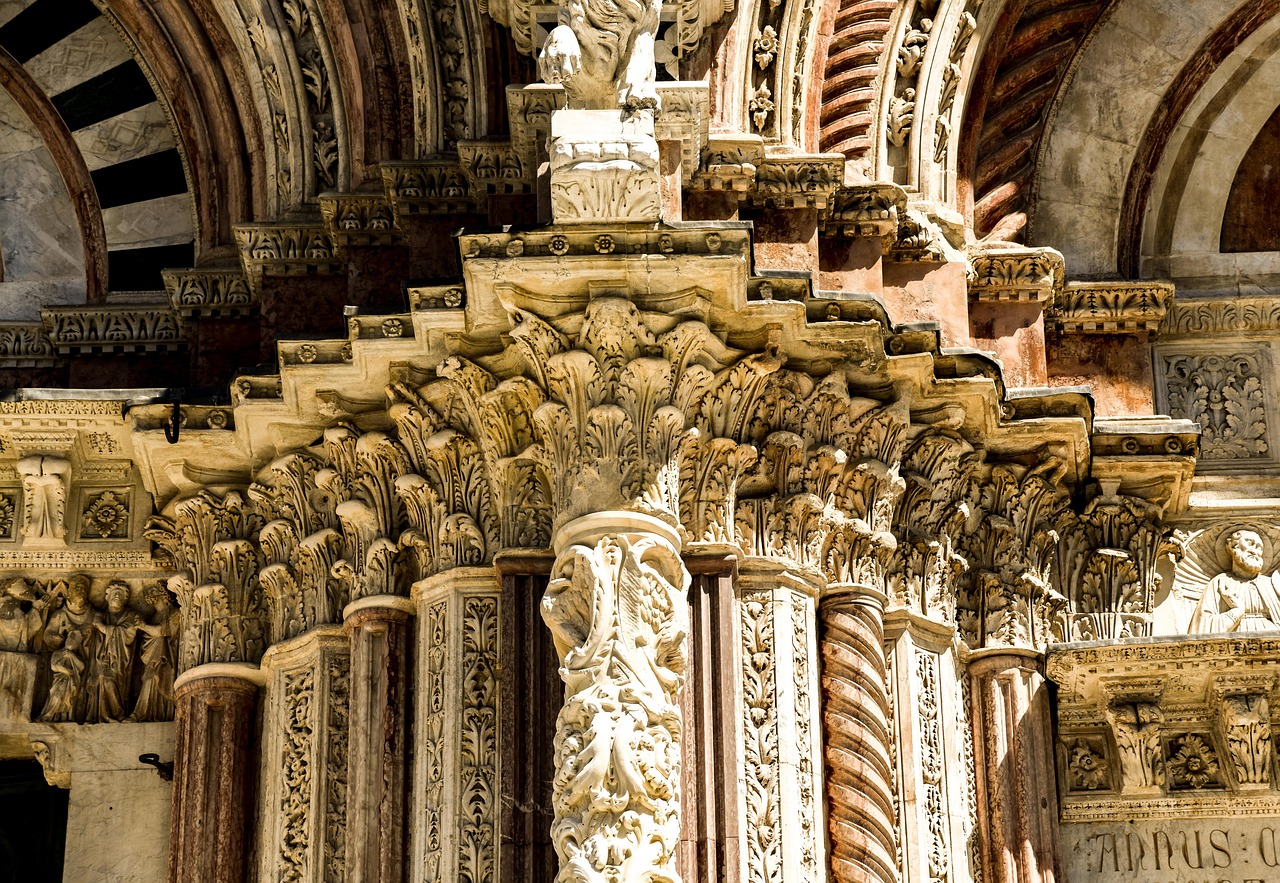
Romanesque Gothic Cathedral Story and Façade Details on the Siena Cathedral exterior
Siena Cathedral’s architecture, Romanesque-Gothic façade, Italy, Tuscany, sounds like a mouthful, but the feeling is simple: a present cathedral shaped by ambition, pride, and faith. It was consecrated in 1179 and is linked to Pope Alexander III, a Sienese pope, whose era sits just beneath the surface of what you see today. This isn’t dry history for history’s sake—it’s insight that helps you trust what your eyes are telling you.
Reading the façade with a designer’s eye
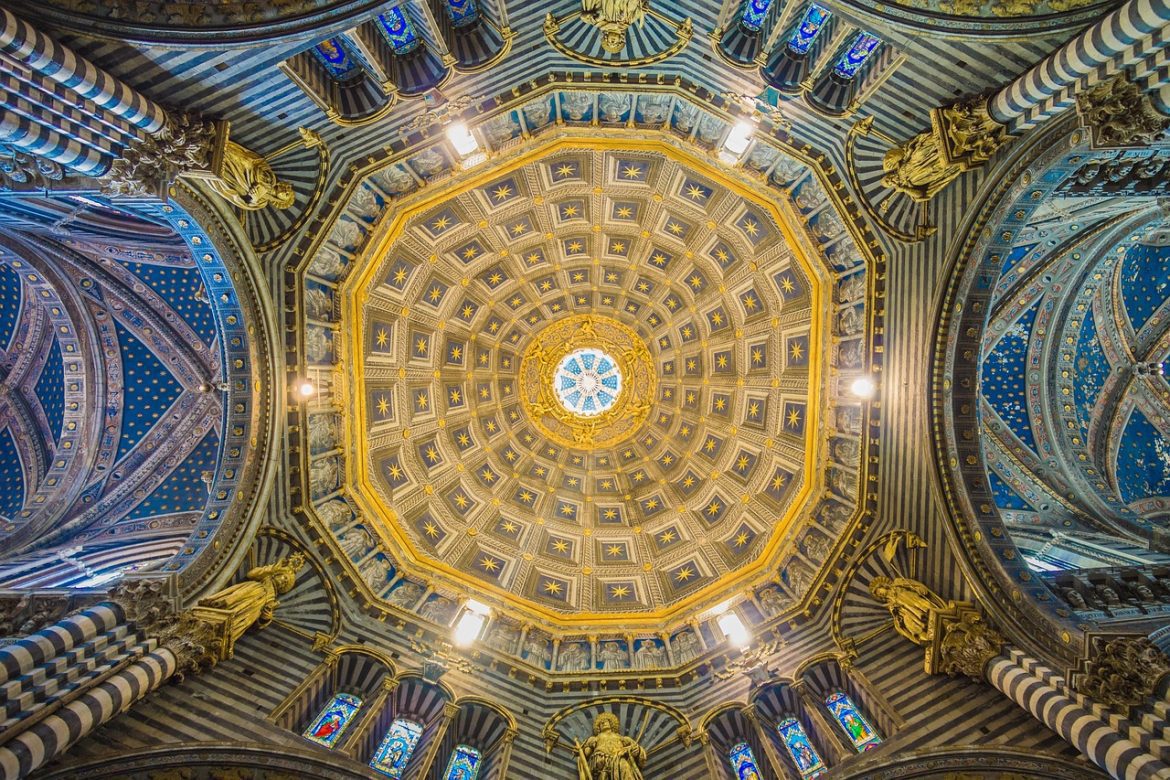
The Romanesque-Gothic transition is legible in the façade: solid confidence below, then a more soaring, lace-like lift as you look up. Watch the black-and-white rhythm (a Sienese signature) and the way portals frame figures as if the cathedral is greeting you. Look for the rose window and notice how the light around it changes across the day, especially when Tuscany’s sun turns warmer towards late afternoon.
Lift your gaze to catch glimpses of the bell tower and surrounding rooflines. Even if you’ve explored other Tuscan hill towns like San Gimignano, Siena’s Duomo precinct feels uniquely theatrical—located in the city’s highest reaches, where every angle seems designed.
Opera Duomo Siena and the monumental complex around it
If you want deeper context without feeling overwhelmed, think in layers. The Opera Duomo Siena organisation cares for what is essentially a monumental complex: the cathedral, museum spaces, viewpoints, and devotional rooms working together. It’s also where you’ll understand Siena’s bold “new cathedral” dream—an expansion that never fully happened, yet left behind dramatic fragments that today become part of the adventure.
Inside the Cathedral, Marble Floor, Zodiac and Nicola Pisano Pulpit for Siena
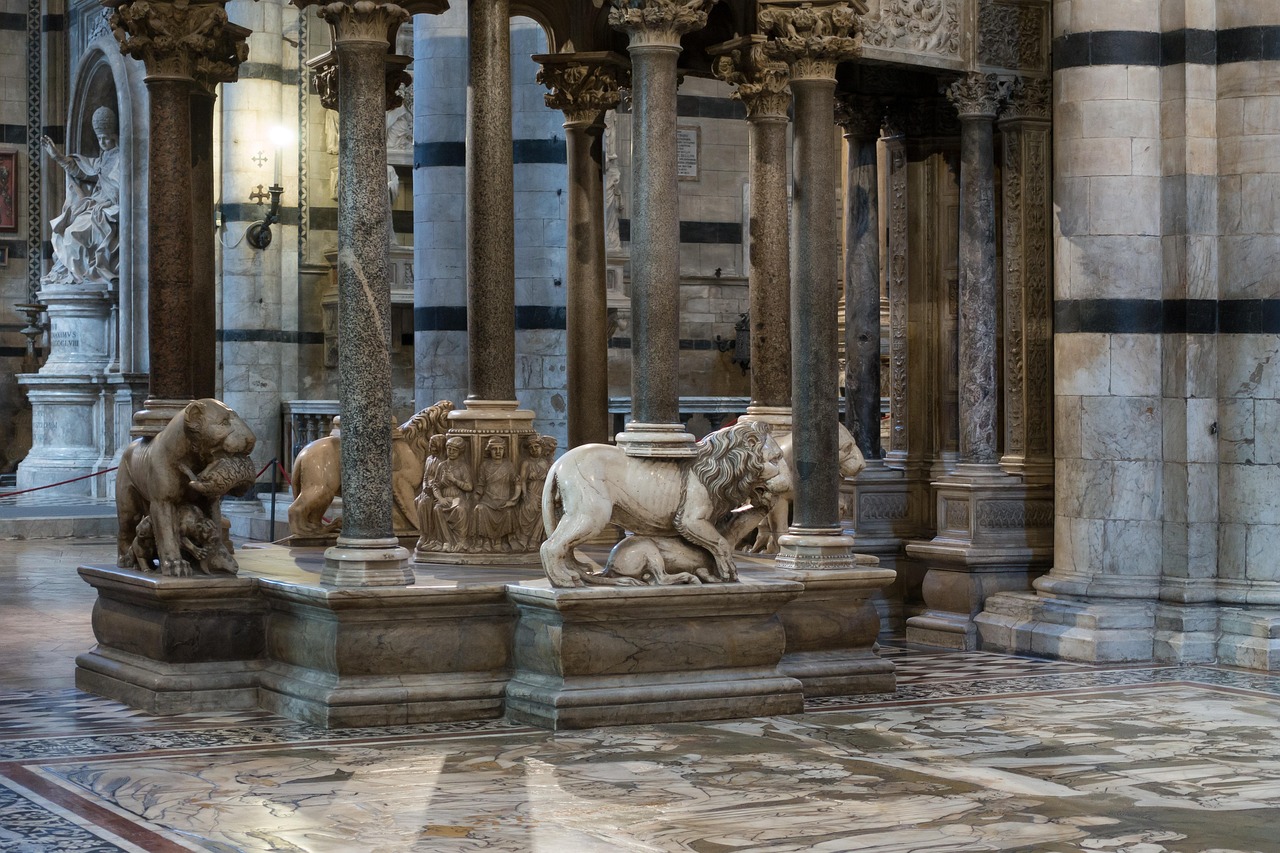
Inside the Cathedral, Marble Floor, Zodiac and Nicola Pisano Pulpit in Siena
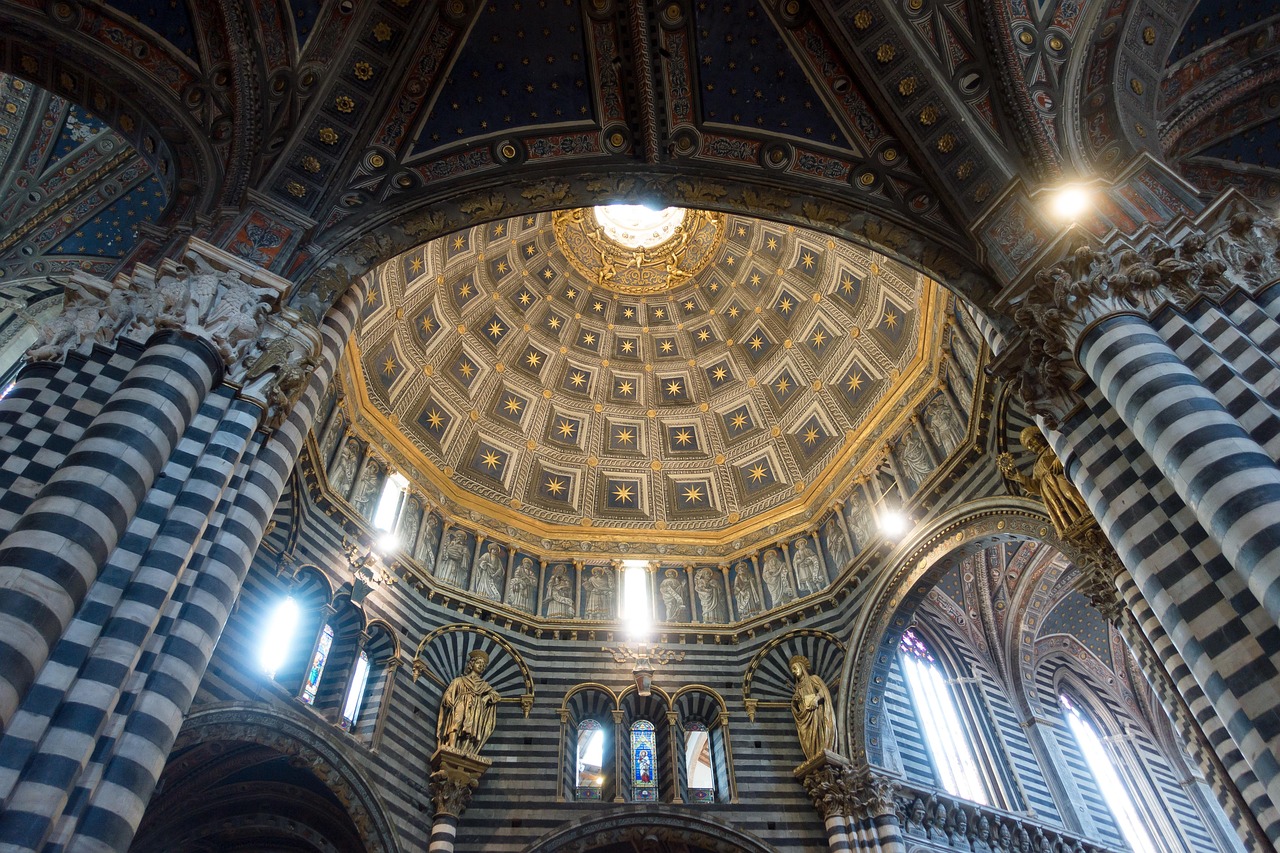
Siena Cathedral’s interior, marble floor, zodiac mosaics, and Nicola Pisano pulpit are the heart of what most travellers come to explore, and the cathedral rewards a little gentle choreography. Step into the nave and pause before moving forward; from here you get the best sightlines to stripes, arches, and the way people naturally flow. If you’re visiting during the seasonal uncovering, you’ll see more of the marble floor panels revealed—an ever-changing stage beneath your feet.
Marble floor, Zodiac panels and the Gate of Heaven
This is the largest and most magnificent floor experience many people have ever seen in a cathedral, and it’s surprisingly readable even if you’re not an art specialist. Look for the Zodiac-themed sections, the sibyls and philosophers, and the story-like sequence that culminates in the gate-of-heaven imagery—often referenced as the Porta del Cielo. The technique used in these marble inlay scenes feels both precise and human, as if each line was placed with care for a future visitor’s wonder.
Stand near the central aisle, then shift a few steps to the side to reduce glare and watch how sunlight reshapes contrast. It’s one of those crafted travel moments that can feel quietly emotional, especially when the cathedral’s hush settles around you.
Nicola Pisano’s pulpit and the sculpted drama of the 13th century
Then come close to Nicola Pisano’s pulpit, created between 1265 and 1268—an extraordinary 13th-century statement in stone. Even if you’ve never studied sculpture, you can feel the narrative: figures press forward, gesture, and almost breathe. Understanding why Nicola and Giovanni Pisano matter becomes easy here; their work bridges the medieval world and something more lifelike. If you can, notice how the carving seems to sculpt light itself across faces and folds.
Art lovers often like tracing connections, and Siena offers them without fuss. Donatello appears elsewhere in the wider complex, and conversations about influence sometimes reach towards michelangelo and bernini—yes, Michelangelo and Bernini—because Italy’s greatest names form a long, interlinked story. Even Gian Lorenzo Bernini’s later theatricality can feel faintly foreshadowed in this pulpit’s intensity.
I still remember an afternoon when the light slipped in at an angle, and the marble tones softened. In that moment, the cathedral felt less monumental and more intimate—like it was supporting everyone inside to see more carefully, together.
Piccolomini Library and the Piccolomini Altar
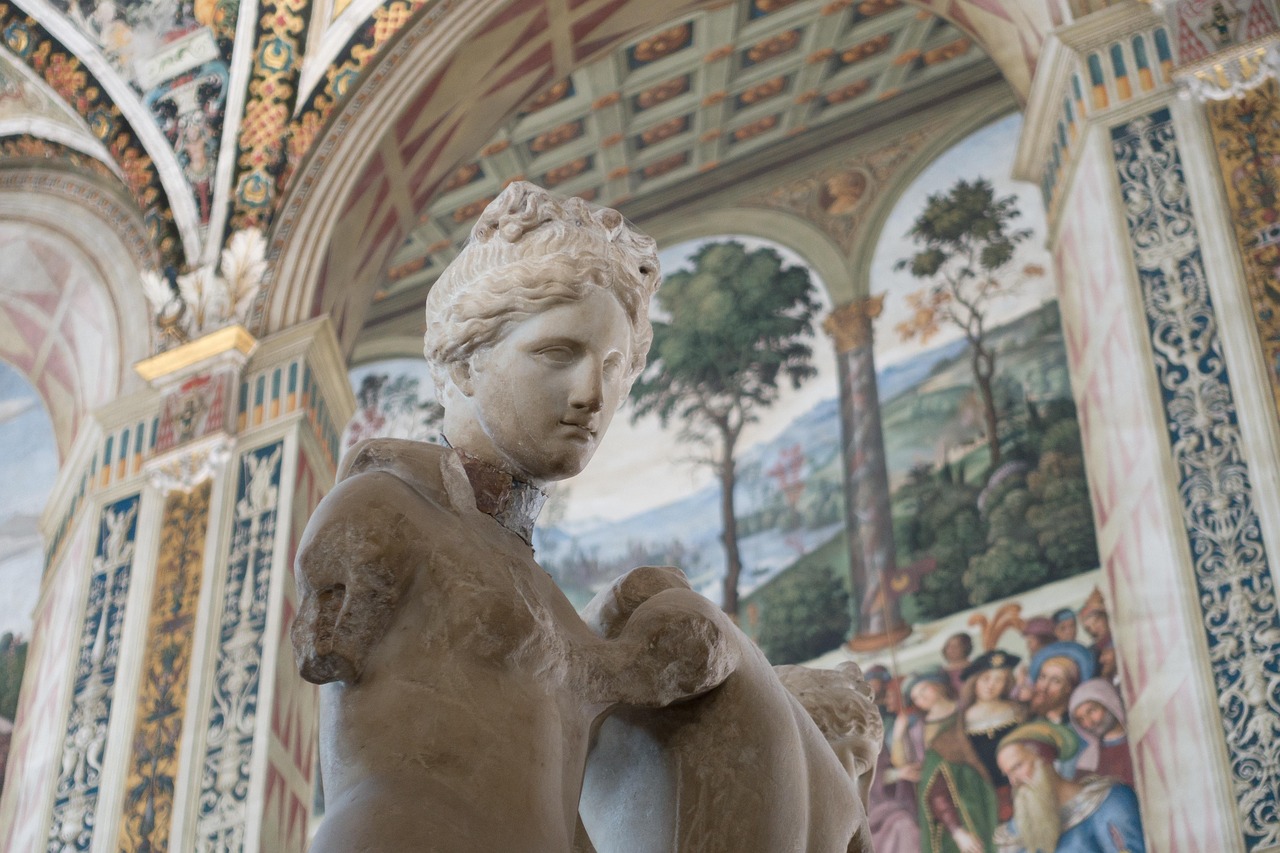
Piccolomini Library and the Piccolomini Altar: a Hidden Gem inside Siena Cathedral
Piccolomini Library Siena Cathedral Pinturicchio fresco Piccolomini altar might sound like a specialist’s itinerary, yet it’s one of the most magnificent surprises in the entire cathedral. The entrance can feel almost tucked away, which is why avid art lovers keep describing it as a hidden gem—even when the Duomo is busy. Step through, and you’ll understand why: colour, narrative, and intimacy appear at once.
Piccolomini Library fresco colour and scenes from the life
The Piccolomini Library holds a fresco cycle by Pinturicchio that feels astonishingly vivid, as if the paint still remembers the artist’s hand. The scenes from the life (of Pope Pius II) unfold in a way that reads clearly even at a glance—perfect if you want insight without needing a guidebook open. Look, too, at the collection of books; beyond decoration, the room expresses Renaissance intent: learning as a kind of spiritual and civic confidence.
If you’re travelling in a high-end style, this is where you can create your own private pause. Let other visitors drift past while you focus on a single panel, and notice how perspective pulls you in, how gold accents catch your eye, and how faces turn towards unseen conversations.
Piccolomini altar and the high altar’s emotional pull
From the library, allow the cathedral to guide you back towards the altar spaces. The Piccolomini altar and the high altar area shape how you move: you’re drawn forward, then gently turned, as if the building is directing your attention. Nearby, references to artists and architects such as Francesco di Giorgio (often remembered as Francesco di Giorgio) add another layer for those who enjoy connecting names to places.
A gentle etiquette reminder, offered with care: dress modestly and keep your voice low. It’s not a rulebook; it’s a way of supporting the space so everyone can uncover their own quiet moment.
- What to notice quickly: composition (where your eye lands first), the use of gold, and how painted architecture creates depth.
- How to make it personal: choose one figure or detail and return to it before you leave—your own small ritual of attention.
Facciatone Views Museo and the Crypt plus the Baptistery of San Giovanni for Siena Cathedral
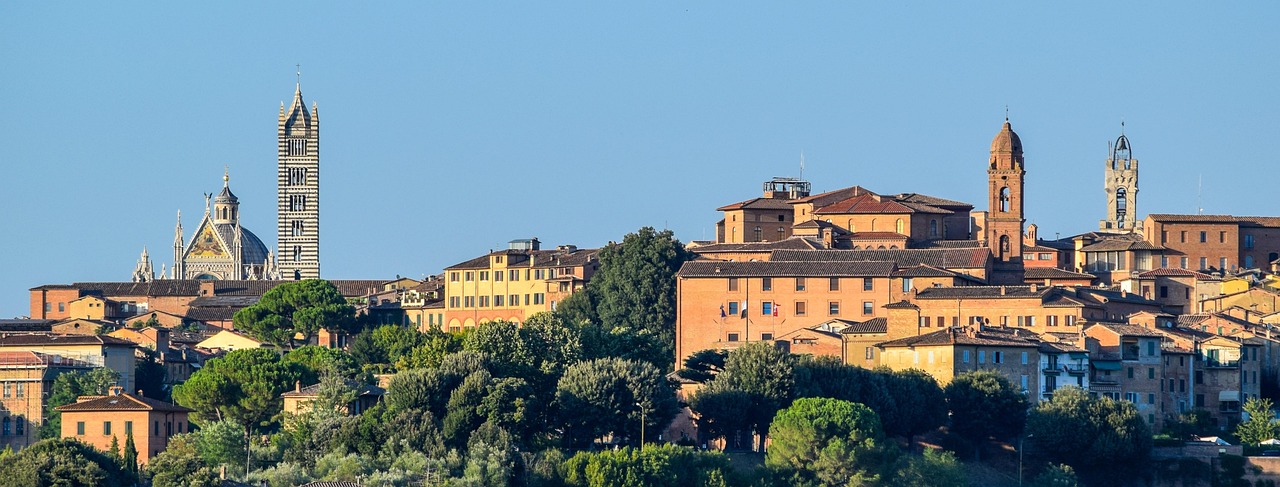
Facciatone Views Museo and the Crypt plus the Baptistery of San Giovanni in Siena
Siena Cathedral facade, climb Museo dell’Opera, crypt, and the Baptistery of San Giovanni is the route that turns a beautiful visit into a fuller, more adventurous design. It’s also the part that helps you trust Siena as more than a single interior: it’s a layered, walkable story with viewpoints, hidden rooms, and a quieter finale.
Facciatone climb and skyline views at sunset
Climbing the Facciatone is the highlight of the adventure, and the reward is immediate: Siena’s historic skyline, terracotta roofs, and the rolling countryside beyond. One evening, I timed it to within minutes of sunset and found a serene stillness up there—architecture on one side, nature on the other, held together by warm light. It felt like the city was letting me breathe, unhurried, with a little more confidence in my own pace.
Wear comfortable shoes; the stone stairs can be uneven, and you’ll enjoy the viewpoint far more when your footing feels secure. If you love planning beautiful days, this is also where you can imagine a broader Tuscan loop—perhaps pairing Siena with San Gimignano another day for a different skyline and texture.
Museo dell’Opera, the crypt, and time stacked beneath the cathedral
The Museo dell’Opera (museo dell’opera; museo) is the behind-the-scenes layer that completes the story. Here you’ll meet masterpieces from every era of Siena’s artistic life, including works linked to Duccio di Buoninsegna and other leading artists. Art historical notes don’t need to be heavy; even a small label can give you a useful insight into how the cathedral’s look was built over centuries. Some travellers also enjoy spotting references to Giorgio Vasari in broader Italian art writing, a reminder that Siena sat within a national conversation.
Then come down into the crypt, where decoration was rediscovered after centuries, and the feeling shifts again—cooler, closer, more intimate. It’s a literal uncovering of time, with painting and pattern that speak of the half of the 14th century and the way belief was made visible.
Finish at the Baptistery of San Giovanni (you may hear it said quickly as “Son Giovanni”), often calmer than the main cathedral. The 14th-century art and detailed sculpture invite reflection, and names such as Camaino (linked to Tino di Camaino) help you place the craft. It’s a space for quiet trust—your own moment of stillness before you step back into Siena’s streets.
Logistics for a seamless day: buy the combined ticket that covers the cathedral, Piccolomini Library, Facciatone, Baptistery, and crypt; it’s simpler and often a better value. Check photography restrictions at the entrance and look for designated areas, then let the rest of your attention be undistracted. If you’d like to explore curated routes beyond Siena, our Trip gallery can help you design your next steps with expert support.
- Arrive early in the morning for gentler light and fewer queues.
- Use Siena’s central bus station, then walk about 10 minutes; the old town is best explored on foot.
- Plan April–June or September–October for moderate weather and a calmer rhythm.
F.A.Qs: Siena Cathedral, Italy planning essentials
Why is Siena Cathedral famous?
Siena Cathedral is famous for its Romanesque-Gothic design, black-and-white striped stone, and exceptional art. Highlights include the intricate marble floor (often uncovered seasonally), the vivid frescoes of the Piccolomini Library by Pinturicchio, and Nicola Pisano’s masterful pulpit. The wider complex adds adventure too, with the Facciatone viewpoint, museum collections, the crypt, and the quieter Baptistery of San Giovanni.
Is the Duomo the same as the cathedral in Siena?
Yes. “Duomo” is the Italian word commonly used for a city’s main cathedral, so the Duomo di Siena refers to Siena Cathedral. You’ll see different labels—Duomo, Duomo di Siena, or Cathedral of Siena—but they all point to the same sacred building and its connected complex of spaces in the Piazza del Duomo area.
Why was the Siena Cathedral never finished?
Siena planned an ambitious expansion sometimes called the “new cathedral”, but it was never completed. A combination of factors—including changing fortunes and practical constraints—halted the project, leaving behind dramatic architectural remnants. Today, those fragments are part of what makes the visit distinctive, especially when you climb the Facciatone for views and sense Siena’s bold vision in the stone.
Can you enter Siena Cathedral for free?
Entry policies can vary by season and special services, but generally, you need a ticket to visit the cathedral and its key areas. Many travellers choose a combined ticket that includes the cathedral, Piccolomini Library, Facciatone, the museum, the crypt, and the Baptistery, creating a smoother, better-value experience. Always check official opening times and any restrictions, especially around religious events.
Final Thought
Siena Cathedral, Italy reflections: Duomo experience doesn’t arrive all at once—it lingers, then returns unexpectedly. Days later, I still felt the memory of shadow sliding across striped stone, and the way a single shaft of light made the marble seem almost warm. The cathedral had gently recalibrated my attention, as if reminding me that beauty is often a practice of looking rather than a rush of doing.
What stays with me most is the human scale inside the monumental. The fresco glowed in a side space, the quiet near an altar, the soft shuffle of footsteps in the nave—small sounds and textures that made the masterpiece feel lived-in rather than distant. Even the city’s contrasts remained: Siena’s lively streets, then that steady interior calm that seemed to offer support without asking for anything in return.
In the end, that’s why this place matters on an adventurous journey. It doesn’t just show you greatness; it invites you to move through it with care, to trust your curiosity, and to leave with a steadier kind of wonder. And somewhere in that afterglow, you may find yourself imagining what else Italy might help you uncover next.